



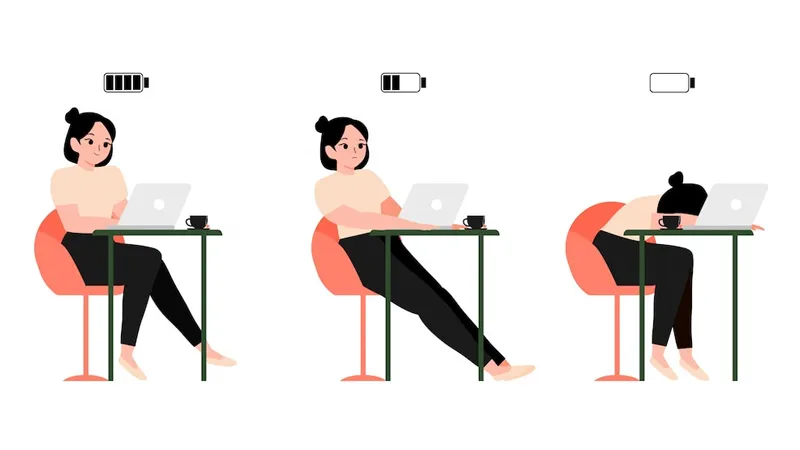
Why am I so lazy is a question millions of people silently ask themselves every single day. If you feel unmotivated, mentally drained, and stuck in a cycle of low energy, you are not broken.
Science now confirms that laziness is rarely a character flaw. It is almost always a signal — from your brain, your body, or your daily habits — that something needs to change.
What Does It Actually Mean to Be Lazy?

Laziness is broadly defined as the unwillingness to take action even when you know you should.
But that definition is overly harsh and misleading. Research psychologist Roy Baumeister found that what most people call laziness is actually ego depletion — a state of mental fatigue caused by too many decisions, too much stress, and insufficient recovery.
Your brain runs on glucose and neurochemicals. When those are depleted, your drive and willpower collapse.
The Real Science Behind Why You Feel So Lazy
Your brain is hardwired to conserve energy. This is not a flaw. It is an ancient survival mechanism.
Your ancestors lived in environments where calories were scarce. Burning energy for no clear reward could mean death. In the modern world, that same system now works against your productivity.
The Role of Dopamine in Laziness
Dopamine is your brain’s primary motivation chemical. It is the “go” signal that pushes you toward action.
When dopamine levels are healthy, starting tasks feels natural and almost automatic. When dopamine is low or your receptors are desensitized from constant overstimulation, even the simplest tasks feel like climbing a mountain.
Scrolling social media, eating junk food, and binge-watching shows all deliver fast, cheap dopamine hits. Over time, these easy rewards raise your brain’s dopamine threshold. Real-effort tasks — studying, exercising, working — can no longer produce enough dopamine to feel worth it.
How Your Prefrontal Cortex Controls Motivation
The prefrontal cortex is the part of your brain responsible for planning, initiating action, and making decisions.
When this region has reduced activity — due to poor sleep, chronic stress, or conditions like ADHD — starting tasks becomes nearly impossible. This is not a willpower problem. It is a brain activation problem.
Why Am I So Lazy and Unmotivated? Common Root Causes
Before fixing the habits, it helps to understand the root causes that top competitors identify across thousands of searches.
| Root Cause | How It Feels | Common Trigger |
|---|---|---|
| Sleep deprivation | Foggy, sluggish, zero drive | Less than 7 hours of sleep |
| Burnout | Exhausted even after rest | Prolonged overwork or stress |
| Low dopamine | Nothing feels rewarding | Excessive screens, junk food |
| Overwhelm | Paralyzed, can’t start | Giant to-do lists |
| Fear of failure | Avoidance, excuses | Perfectionism, negative self-talk |
| Poor nutrition | Low energy, brain fog | Skipping meals, processed food |
| Lack of purpose | Emptiness, why bother | No clear goals or direction |
| Sedentary lifestyle | Tired despite doing nothing | No daily movement |
Why Am I So Lazy All the Time? It Might Be These Conditions
Sometimes the question “why am I so lazy” points to an underlying condition, not just a bad habit.
ADHD makes it genuinely harder to initiate tasks, sustain focus, and manage time — not laziness, but a neurological difference in dopamine regulation.
Depression removes the emotional reward from everything. Activities that once felt meaningful feel pointless.
Hypothyroidism slows your entire metabolism, making fatigue and low motivation a medical symptom.
Chronic Fatigue Syndrome causes persistent exhaustion that rest does not fix.
If laziness has persisted for months and is affecting your life significantly, speaking with a healthcare professional is the right move.
10 Habits You Should Change to Stop Being So Lazy
Habit 1: You Are Going to Bed Too Late
Why This Habit Is Destroying Your Motivation
Sleep deprivation is the single most overlooked reason why people feel lazy all the time.
When you get less than 7 to 9 hours of quality sleep, your prefrontal cortex function drops sharply. Studies show even one night of poor sleep reduces dopamine receptor availability in the brain.
Chronic sleep debt makes you feel perpetually foggy, sluggish, and completely unmotivated. Every single morning becomes a battle.
What to Change
Set a hard sleep deadline — not a “try to sleep” time but a non-negotiable lights-out time. Start 30 minutes earlier than your current bedtime this week, then move it another 15 minutes the following week.
Habit 2: You Are Scrolling Your Phone First Thing in the Morning
Why Morning Scrolling Kills Your Drive
Checking your phone within the first 10 minutes of waking up immediately floods your brain with reactive dopamine — news, notifications, comparison content.
This puts your brain into a reactive, distracted state before you have even brushed your teeth. Your day begins in someone else’s priorities, not your own.
What to Change
Keep your phone in another room at night. Replace the first 10 minutes of your morning with something intentional — a glass of water, 5 minutes of stretching, or writing one goal for the day.
Habit 3: You Have No Clear Daily Priorities
How Decision Fatigue Fuels Laziness
When you have no clear plan for your day, your brain spends enormous energy just figuring out what to do next.
This decision fatigue drains your mental resources fast. By mid-morning, your brain is already exhausted — not from productive work, but from endless micro-decisions about where to start.
What to Change
Every evening, write down your top 3 tasks for the next day. Not 10. Not 15. Just three. Your first hour of work the next morning becomes frictionless because your brain already knows the plan.
Habit 4: You Are Eating Foods That Drain Your Energy
The Nutrition-Laziness Connection
Your brain consumes roughly 20% of your body’s total energy. When you fuel it with processed foods, high sugar, and refined carbs, you get a short spike followed by a hard crash.
That afternoon slump — the one that makes you feel like doing absolutely nothing — is largely a blood sugar crash, not genuine tiredness.
What to Change
Add one high-protein breakfast to your morning routine. Eggs, Greek yogurt, or a protein smoothie all stabilize blood sugar and provide sustained energy for 4 to 5 hours.
Habit 5: You Are Sitting Still for Hours at a Time

Why Physical Inactivity Breeds Mental Laziness
Your body and brain are deeply connected. When you sit for long stretches without movement, blood flow to the brain decreases, oxygen delivery drops, and your mental energy follows.
Studies show that just 20 minutes of moderate exercise can boost dopamine, norepinephrine, and serotonin simultaneously — the three neurochemicals most associated with drive and focus.
What to Change
Add a 10-minute walk after every 90 minutes of sitting. You do not need a gym. You do not need a workout plan. Just stand up, walk outside, and return. Your brain will reset every single time.
Habit 6: You Are Trying to Do Everything at Once
How Multitasking Creates Laziness
Multitasking is a myth that the brain cannot actually do. What your brain does instead is task-switch rapidly — and every switch costs mental energy.
Juggling 5 open tabs, 3 unfinished projects, and a running stream of notifications leaves your brain exhausted without producing real output. This exhaustion is often mistaken for laziness.
What to Change
Practice single-tasking. Close every browser tab except the one you are working on. Set your phone face-down. Work in focused 25-minute blocks using the Pomodoro technique. One task. One window. Full attention.
Habit 7: You Are Setting Goals That Are Too Big and Too Vague
Why Giant Goals Make You Do Nothing
“Get fit.” “Start a business.” “Be more productive.” These goals feel inspiring for a day, then paralyze you completely.
Your brain needs clarity to take action. When a goal is too large or too vague, your brain cannot calculate the first step — so it does nothing at all. Procrastination and laziness follow.
What to Change
Break every goal into a next physical action — a specific, small task that takes under 5 minutes. Instead of “get fit,” the next action is “put on sneakers and walk to the end of the street.” Start there. Motion creates momentum.
Habit 8: You Are Spending Time with People Who Drain Your Energy
Social Environment and Motivation
The people you spend the most time with shape your energy levels, your ambitions, and your daily habits more than most people admit.
Chronic complainers, people with no goals, and those who mock ambition subtly pull your motivation downward over time. This is not judgment — it is behavioral science. Human beings naturally sync their emotional states with those around them.
What to Change
Spend more time — even 30 minutes a week — around people who are actively building something, learning something, or working toward a goal. Their energy is genuinely contagious.
Habit 9: You Have No “Why” Behind What You Do
Purpose Is the Fuel for Action
One of the most underrated reasons people feel lazy is the absence of a compelling reason to act.
If you do not know why your work matters, why your goals are worth pursuing, or what you are building your life toward — your brain will not generate the drive to move. Motivation requires meaning.
What to Change
Write one sentence answering this: “I want to accomplish X because it will allow me to Y.” This simple exercise reconnects effort with meaning. Read it every morning for 30 days and watch your baseline motivation shift.
Habit 10: You Are Waiting Until You Feel Motivated to Start
Why Waiting for Motivation Keeps You Lazy Forever
This is the biggest myth about laziness. Most people believe motivation comes first, and action follows.
The science says the opposite. Action comes first, and motivation follows. The brain’s motivational circuits only fire properly after you have already begun. Waiting to feel ready keeps you permanently stuck.
What to Change
Use the 2-minute rule: commit to doing just 2 minutes of any task you are avoiding. Most of the time, you will continue past 2 minutes. If you do not, that is still a win — you broke inertia, which is the hardest part.
How Laziness, Procrastination, and Burnout Are Different
These three conditions are often confused but require completely different solutions.
| Condition | Core Problem | Fix |
|---|---|---|
| Laziness | Lack of activation energy | Build small habits, lower barriers |
| Procrastination | Anxiety + task avoidance | Break tasks down, address fear |
| Burnout | Total depletion of reserves | Rest, boundaries, recovery first |
Understanding which one you are dealing with prevents you from applying the wrong solution. Pushing harder through burnout makes it worse. Resting more during pure procrastination makes it worse too.
Quick Action Plan: Break the Lazy Cycle in 7 Days
You do not need to overhaul your entire life at once. Start with this 7-day reset.
| Day | One Action |
|---|---|
| Day 1 | Set a non-negotiable bedtime, 30 minutes earlier |
| Day 2 | No phone for the first 15 minutes after waking |
| Day 3 | Write your top 3 priorities the night before |
| Day 4 | Eat a high-protein breakfast |
| Day 5 | Take a 10-minute walk after sitting for 90 minutes |
| Day 6 | Work one task at a time, phone face-down |
| Day 7 | Write your one-sentence “why” and read it each morning |
One small action per day. Seven days. Zero overwhelm.
Frequently Asked Questions (FAQs)
Why am I so lazy and have no motivation?
Low dopamine, poor sleep, or burnout are the most common reasons. Your brain lacks the neurochemical signal to initiate action, which is not the same as choosing to be lazy.
Why am I so lazy and tired all the time?
Chronic tiredness combined with low motivation often points to sleep deprivation, nutritional deficiencies, or an underlying condition like hypothyroidism, anemia, or depression. A blood test can rule these out quickly.
Is being lazy a mental health issue?
Persistent laziness can be a symptom of depression, ADHD, or anxiety — but it is not a standalone mental health diagnosis. If it is affecting your daily life for weeks, speaking to a professional is worth it.
Why am I so lazy on weekends?
Weekend laziness is often your body forcing recovery after a draining work week. It can also be a sign of decision fatigue — too many open options and no structure lead the brain to default to rest.
How do I stop being lazy and procrastinating?
Start with the 2-minute rule: commit to just 2 minutes of the task you are avoiding. Action generates motivation, not the other way around.
Can laziness be caused by diet?
Yes. A diet high in refined sugar and processed carbohydrates causes energy crashes that mimic laziness. A high-protein, lower-glycemic diet significantly stabilizes energy and focus throughout the day.
Why am I so lazy even after sleeping well?
If you sleep well but still feel sluggish, the issue may be sleep quality rather than duration — check for sleep apnea, blue light exposure at night, or irregular sleep timing that disrupts circadian rhythm.
Why am I suddenly so lazy and unmotivated?
A sudden shift in motivation often signals burnout, a significant life stressor, or the early stages of depression. Track whether the change started after a specific event and consider speaking with a therapist.
How many times a day should I take breaks to avoid laziness?
Research suggests working in 90-minute focused blocks followed by 10–15 minute breaks aligns best with your brain’s natural ultradian rhythm and prevents the mental fatigue that feels like laziness.
Is it okay to be lazy sometimes?
Yes. Rest is biologically necessary. The problem is habitual laziness driven by avoidance or poor habits, not intentional rest and recovery. Planned downtime actually increases long-term productivity.
Conclusion
Why am I so lazy is not a question with a single answer — and it is definitely not evidence that something is permanently wrong with you. Laziness is most often a collection of small, fixable habits layered on top of each other over time.
Poor sleep, excessive screen time, no clear goals, bad nutrition, and a lack of purpose all compound into a daily state of inaction. The good news is that each of these habits has a clear, science-backed fix.
You do not need to change everything at once. You need to change one thing this week, then another the next week. Real momentum builds from small, consistent actions — not from sudden bursts of motivation that disappear in a day.
Start with the habit that resonated most in this article. Your future self is not lazy. They are just waiting for you to take the first step.


