


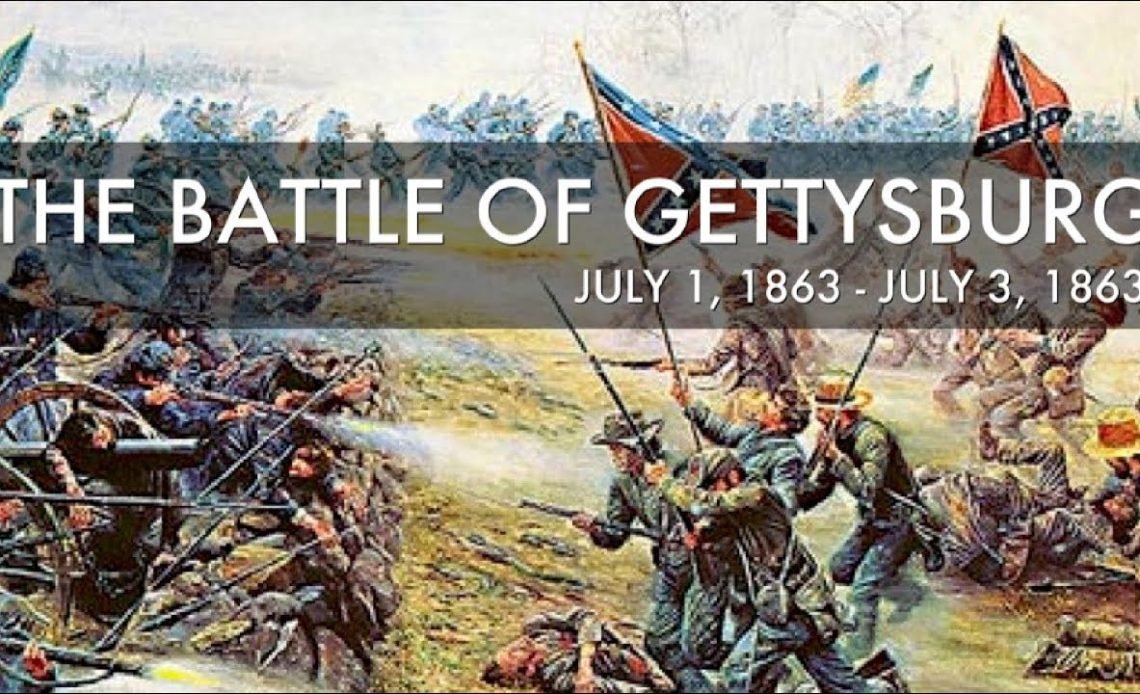
Why was the Battle of Gettysburg important? It was the single most decisive engagement of the American Civil War, fought July 1–3, 1863, in Gettysburg, Pennsylvania.
The Union victory over Confederate General Robert E. Lee permanently halted the South’s ability to invade the North, shattered Confederate momentum, and redirected the entire course of the war.
With more than 50,000 combined casualties, it remains the bloodiest battle ever fought on American soil. From military strategy to political symbolism, Gettysburg changed everything — and its legacy still shapes how Americans understand democracy, sacrifice, and national identity today.
Quick Facts: Battle of Gettysburg at a Glance
| Detail | Information |
|---|---|
| Date | July 1–3, 1863 |
| Location | Gettysburg, Pennsylvania |
| Armies | Union (Army of the Potomac) vs. Confederate (Army of Northern Virginia) |
| Union Commander | Major General George G. Meade |
| Confederate Commander | General Robert E. Lee |
| Union Strength | Approx. 93,000–100,000 troops |
| Confederate Strength | Approx. 71,000–80,000 troops |
| Total Casualties | 46,000 – 51,000 (killed, wounded, captured, or missing) |
| Union Casualties | Approx. 23,000 |
| Confederate Casualties | Approx. 28,000 (over one-third of Lee’s army) |
| Outcome | Decisive Union Victory |
| Significance | Turning point of the Civil War |
| Famous Speech | Gettysburg Address — November 19, 1863 |
| Memorial Site | Gettysburg National Military Park, Pennsylvania |
Background: What Led to the Battle of Gettysburg?
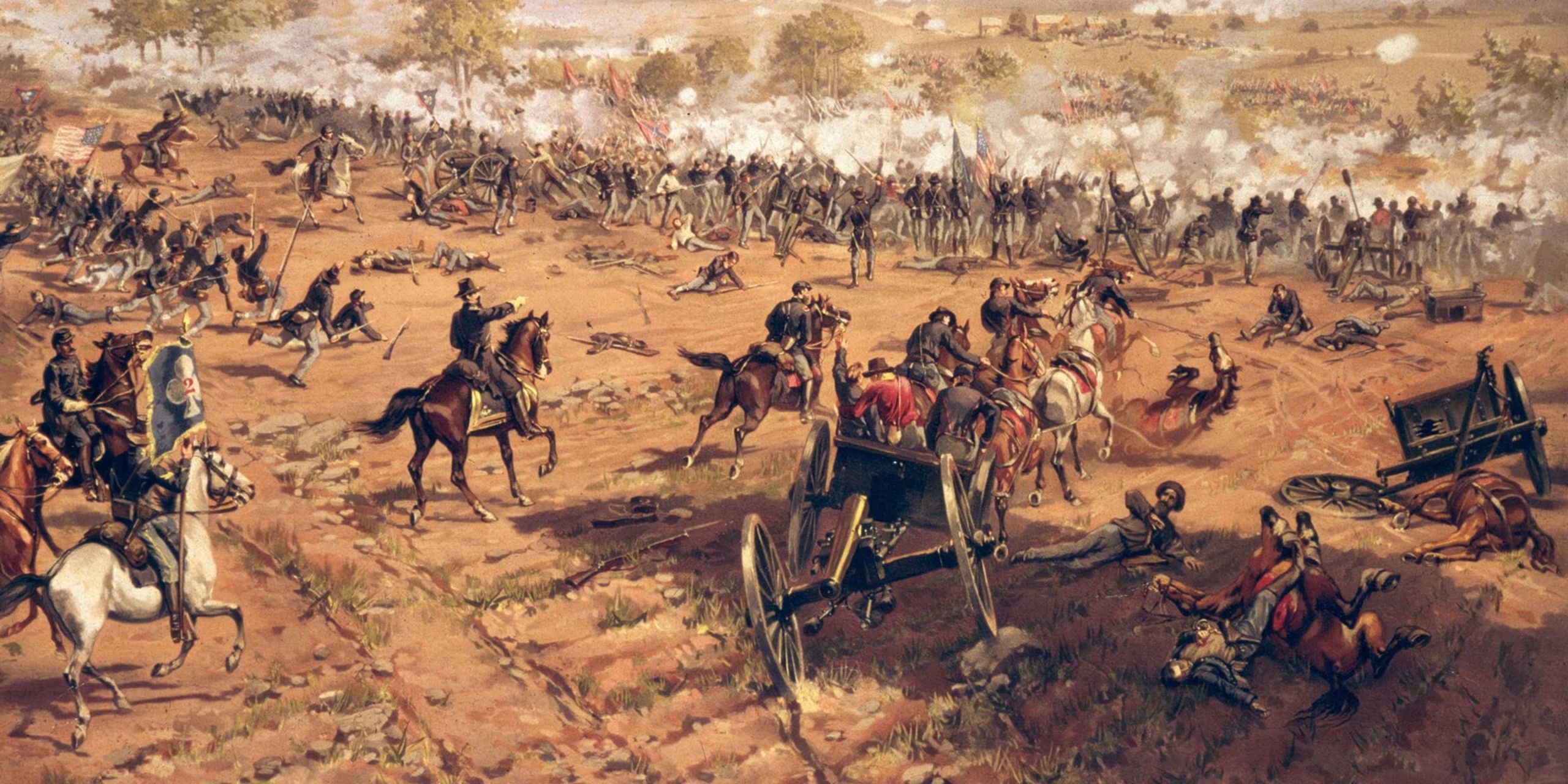
The battle did not happen by accident. By the summer of 1863, Confederate General Robert E. Lee had just won a stunning victory at the Battle of Chancellorsville in May of that year and his army was riding high with confidence.
Lee believed his Army of Northern Virginia was nearly invincible. He convinced Confederate leadership to approve a bold and ambitious plan — a second major invasion of the North, pushing deep into Pennsylvania.
His goals were strategic and political. He wanted to relieve war-torn Virginia of the burden of constant fighting, threaten major Union cities like Harrisburg and Philadelphia, demoralize Northern civilians, and potentially win European recognition for the Confederacy.
Why Did the Battle Happen at Gettysburg?
The town of Gettysburg, Pennsylvania was not a planned battlefield. It was a crossroads — a place where as many as 12 major roads converged, making it a strategically valuable location for moving troops and supplies.
On June 30, 1863, Confederate forces approached the town looking for shoes and other supplies. They encountered Union cavalry brigades scouting ahead of the main army.
What started as an unplanned encounter on the morning of July 1 rapidly escalated into one of the most consequential three-day engagements in military history, drawing in the full strength of both armies.
The Three Days of Battle: July 1–3, 1863
July 1, 1863 — The Opening Day
The first day began before 7 a.m. when Confederate forces clashed with Union cavalry under Brigadier General John Buford northwest of town. Union Major General John F. Reynolds rushed infantry reinforcements to hold the line — and was killed in action.
By afternoon, 30,000 Confederates overwhelmed approximately 20,000 Union soldiers. The Federal troops were pushed back through the streets of Gettysburg and retreated to fortify Cemetery Hill south of town.
Confederate General Richard Ewell failed to press the assault and capture Cemetery Hill before Union reinforcements arrived — a decision that many historians consider one of the great missed opportunities of the entire war.
July 2, 1863 — The Second Day
The Union army arrayed itself in a famous fishhook-shaped defensive line stretching across Cemetery Ridge, Cemetery Hill, Culp’s Hill, Little Round Top, and Big Round Top.
Lee ordered massive assaults on both Union flanks. Fierce and bloody fighting erupted across iconic locations — Devil’s Den, the Wheatfield, the Peach Orchard, and Little Round Top.
At Little Round Top, Colonel Joshua Lawrence Chamberlain and the 20th Maine regiment ran out of ammunition defending the Union’s extreme left flank. They launched a desperate downhill bayonet charge that repelled the Confederate attack and held the position — one of the most celebrated acts of bravery in the entire war.
July 3, 1863 — Pickett’s Charge and Confederate Defeat
Lee was convinced — despite his subordinates’ doubts — that one final massive assault on the Union center at Cemetery Ridge would break the enemy line and win the battle.
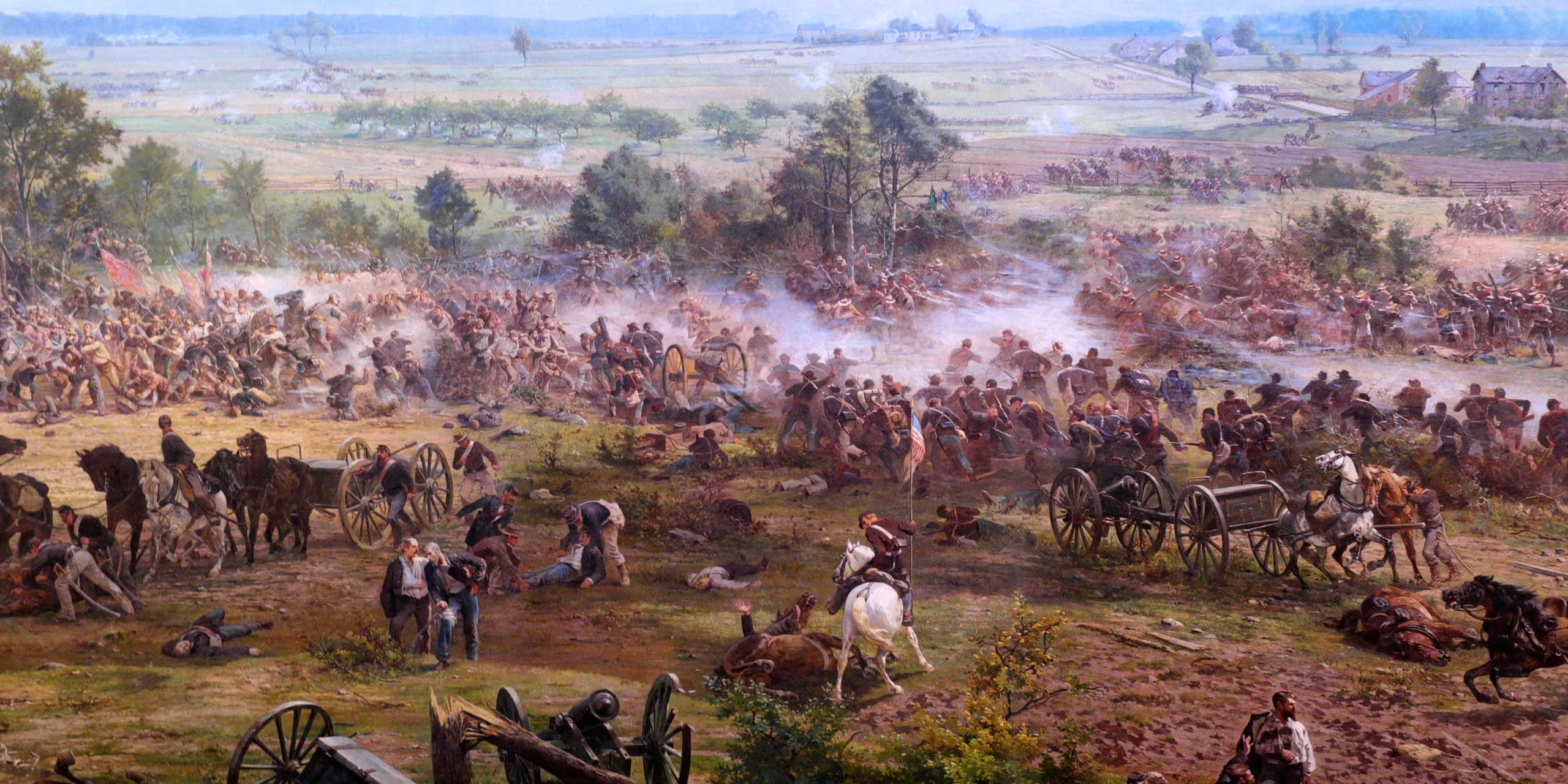
He ordered approximately 12,000 to 15,000 Confederate soldiers to march three-quarters of a mile across open fields directly into concentrated Union rifle and artillery fire. This assault, known as Pickett’s Charge, was catastrophic.
Only a single Confederate brigade temporarily reached the top of Cemetery Ridge — a point later called the High Water Mark of the Confederacy. They were quickly repelled. Confederate casualties in the charge approached 60 percent. When Lee ordered General George Pickett to reform his division, Pickett reportedly replied, “General Lee, I have no division.” On July 4, Lee began his retreat south to Virginia.
Why Was the Battle of Gettysburg Important: The Key Reasons
1. It Halted the Confederate Invasion of the North
Why was the Battle of Gettysburg important in military terms? Most directly, it permanently ended the Confederacy’s ability to wage offensive war on Northern soil.
Lee had planned to march as far as Harrisburg and possibly Philadelphia, threatening Washington D.C. itself. A victory on Northern soil could have forced President Lincoln to negotiate a peace agreement on Confederate terms.
The defeat shattered that ambition entirely. After Gettysburg, Lee’s army never again launched a strategic offensive into the North. The Confederate military was forced permanently onto the defensive for the remainder of the war.
2. It Was the Civil War’s Decisive Turning Point
Historians widely regard the Battle of Gettysburg as the turning point of the American Civil War. Before Gettysburg, the Confederacy had won the majority of major battles in the Eastern Theater.
The Union Army of the Potomac had suffered humiliating defeats at First Bull Run, Second Bull Run, Fredericksburg, and Chancellorsville. Confederate morale and military capability were at their peak heading into the summer of 1863.
Gettysburg reversed all of that. After the battle, the Confederate army conducted no more major strategic offensives. In the words of military historians, the North might still have lost the war through political failure or collapsing morale — but outright Confederate military victory was no longer achievable.
3. The Casualties Were Catastrophic for the Confederacy
Why was the Battle of Gettysburg important in terms of numbers? The losses were staggering — particularly for the South.
Between 46,000 and 51,000 soldiers from both sides were killed, wounded, captured, or missing over the three days. The Confederates suffered approximately 28,000 casualties — more than one-third of Lee’s entire army. This included irreplaceable experienced officers and commanders.
The Union lost approximately 23,000 men, also devastating — but the North had the population and industrial base to absorb such losses and keep fighting. The Confederate South did not. The manpower drain at Gettysburg fundamentally weakened the Confederate Army of Northern Virginia for the rest of the war.
4. It Combined With Vicksburg to Seal Confederate Fate
July 4, 1863 — the day after Gettysburg ended — General Ulysses S. Grant’s Union forces captured Vicksburg, Mississippi, the last Confederate stronghold on the Mississippi River.
The fall of Vicksburg cut the Confederacy in two, severing supply lines between the eastern and western Confederate states. It also cost the South an additional 30,000 soldiers and all their arms and equipment.
The double blow of Gettysburg and Vicksburg in a single 24-hour period was catastrophic for Confederate strategic capability. Northern newspapers compared the twin victories to the Battle of Waterloo — the battle that destroyed Napoleon’s empire. The Philadelphia Enquirer ran the headline “Waterloo Eclipsed” just three days after Gettysburg.
5. It Destroyed Confederate Hopes of European Recognition
One of the most critical — and often overlooked — reasons why the Battle of Gettysburg was important was its diplomatic impact.
The Confederate government had been actively courting recognition and support from England and France. European recognition would have meant access to international financing, weapons, and potentially even military intervention on the Confederate side.
A Confederate victory at Gettysburg would have significantly advanced that cause. Instead, the defeat ended all serious discussion in Europe about recognizing the Confederacy. Henry Adams, writing from London where his father served as U.S. Ambassador, noted: any lingering idea of European intervention was simply abandoned when news of the defeat reached Britain.
6. It Shattered Confederate Morale and Leadership
The Battle of Gettysburg broke the psychological confidence of the Confederate military. Before Gettysburg, the Confederate Army of Northern Virginia genuinely believed it was invincible — and its enemies largely agreed.
After the battle, Robert E. Lee offered his resignation to Confederate President Jefferson Davis, citing the defeat as a personal failure. Davis refused to accept it. But the aura of Confederate invincibility was permanently shattered.
Several of Lee’s most capable subordinates were lost or severely weakened. General James Longstreet’s reputation suffered lasting damage from his association with the doomed Pickett’s Charge, which he had argued against. The Confederate officer corps never fully recovered its pre-Gettysburg depth of talent.
7. It Boosted Union Morale and Lincoln’s Political Standing
Before Gettysburg, President Lincoln’s political position was precarious. The Union had suffered repeated embarrassing defeats. Northern antiwar sentiment — the Peace Democrat or “Copperhead” movement — was growing rapidly and threatening to unseat Lincoln in the 1864 election.
The Gettysburg victory dramatically reversed Lincoln’s political fortunes. Public confidence in the Union war effort surged. Confidence in Lincoln’s leadership climbed significantly alongside it.
The timing was critical. Had the Confederacy continued its winning streak into 1863, Lincoln may well have lost re-election in 1864 to a peace candidate who would have negotiated an end to the war on Confederate terms — preserving slavery and splitting the United States permanently.
8. It Gave Lincoln the Gettysburg Address
Four months after the battle, on November 19, 1863, President Lincoln traveled to Gettysburg to dedicate the Soldiers’ National Cemetery — a final resting place for the Union dead whose bodies had been too numerous to transport home.
At that ceremony, Lincoln delivered the Gettysburg Address — a 271-word speech that redefined the meaning and purpose of the entire Civil War. In just two minutes, Lincoln reframed the war not as a struggle over states’ rights or sectional politics but as a test of whether democratic government itself could survive.
His words — “that government of the people, by the people, for the people, shall not perish from the earth” — became one of the most famous and enduring statements in the English language. The Gettysburg Address transformed the battle from a military engagement into a moral and philosophical landmark for all of American history.
9. It Preserved the United States as One Nation
This is perhaps the most fundamental answer to why was the Battle of Gettysburg important. A Confederate victory — or even a negotiated peace on Confederate terms — would almost certainly have resulted in the permanent division of the United States into two separate nations.
One nation would have been the United States of America, covering the North and West. The other would have been the Confederate States of America, a slaveholding republic stretching across the South.
The Union victory at Gettysburg foreclosed that outcome. By ensuring the eventual defeat of the Confederacy, it preserved the territorial integrity and political unity of the United States — a fact that shaped every aspect of American history in the 160 years that followed.
10. It Secured the Future of Emancipation
The Battle of Gettysburg directly reinforced the Emancipation Proclamation, which Lincoln had signed on January 1, 1863 — just six months before the battle.
A Confederate victory could have led to a negotiated peace that left slavery intact across the Southern states. The Union victory at Gettysburg and the eventual end of the war ensured that the Proclamation would hold — and eventually be codified into the Constitution through the 13th Amendment in 1865.
The battle was therefore not just a military engagement — it was a pivotal moment in the long struggle for freedom and human rights in American history. Thousands of enslaved people recognized its significance immediately, with some Confederate camp workers seizing the opportunity of the Union victory to break free and join the Union cause.
Key Figures at the Battle of Gettysburg
| Name | Side | Role |
|---|---|---|
| General Robert E. Lee | Confederate | Commander, Army of Northern Virginia |
| Major General George G. Meade | Union | Commander, Army of the Potomac |
| General James Longstreet | Confederate | Corps commander; led Pickett’s Charge assault |
| General George Pickett | Confederate | Led the famous infantry charge on July 3 |
| Brigadier General John Buford | Union | Cavalry commander who triggered Day 1 fighting |
| Major General Winfield S. Hancock | Union | Defended Cemetery Ridge, Day 2 and 3 |
| Colonel Joshua Lawrence Chamberlain | Union | Defended Little Round Top with bayonet charge |
| General Richard Ewell | Confederate | Failed to press advantage on Day 1 evening |
| Major General John Reynolds | Union | Killed in action on Day 1; key early defender |
| Major General A.P. Hill | Confederate | Corps commander, Day 1 assault |
Battle of Gettysburg: Day-by-Day Summary Table
| Day | Date | Key Events | Outcome |
|---|---|---|---|
| Day 1 | July 1, 1863 | Confederate forces overwhelm Union at McPherson Ridge; Reynolds killed; Union retreats to Cemetery Hill | Confederate tactical advantage |
| Day 2 | July 2, 1863 | Fierce fighting at Little Round Top, Devil’s Den, Wheatfield, Peach Orchard; Chamberlain’s bayonet charge | Union holds key positions |
| Day 3 | July 3, 1863 | Pickett’s Charge fails catastrophically; Lee begins retreat on July 4 | Decisive Union victory |
The Gettysburg Address: Why It Matters
The Gettysburg Address was delivered by President Abraham Lincoln on November 19, 1863, at the dedication of the Soldiers’ National Cemetery on the battlefield grounds.
At only 271 words — delivered in roughly two minutes — it is one of the shortest and most powerful political speeches in recorded history. Lincoln was not even the main speaker that day; that honor belonged to Edward Everett, a former Harvard president and senator whose oration lasted two hours.
Lincoln’s brief remarks redefined the war’s purpose in moral and philosophical terms. He connected the struggle directly to the ideals of the Declaration of Independence — that all men are created equal — and argued that the deaths at Gettysburg obligated the living to ensure that democratic government would survive. The speech did not enter mainstream American consciousness until decades after Lincoln’s death, but it now stands as one of the greatest pieces of political rhetoric in the English language.
Long-Term Legacy of the Battle of Gettysburg
The Battle of Gettysburg created a legacy that extends far beyond military history. Today the battlefield is preserved as Gettysburg National Military Park — the world’s largest outdoor sculpture garden, with more than 1,300 monuments, markers, and memorials in stone, iron, steel, and bronze.
The battle established Gettysburg as a sacred site in American memory. Veterans from both sides returned for reunions there for decades, including massive anniversary gatherings in 1913 (50th anniversary) and 1938 (75th anniversary), when surviving veterans from both armies shook hands across the stone wall at the angle where Pickett’s Charge had broken.
The battle’s legacy also shaped how future generations understood American identity, democracy, sacrifice, and the meaning of the Civil War itself. It is studied at military academies worldwide and has generated more scholarly analysis than any other battle in American history.
What If the Confederacy Had Won at Gettysburg?
Historians have long debated the counterfactual: what if Lee had won? The consequences could have been enormous.
A Confederate victory on Northern soil would almost certainly have triggered urgent peace negotiations in Washington. The growing antiwar movement in the North would have gained enormous political power. European recognition of the Confederacy — particularly from Britain — would have become far more likely.
Lincoln himself might not have survived politically to 1865. A peace treaty preserving slavery and Confederate independence was a realistic outcome. The United States as a unified nation might not exist in its current form today.
The Union victory at Gettysburg foreclosed all of those possibilities.
Battle of Gettysburg vs. Other Major Civil War Battles
| Battle | Date | Outcome | Casualties | Significance |
|---|---|---|---|---|
| Battle of Gettysburg | July 1–3, 1863 | Union Victory | ~51,000 | Turning point; ended Confederate Northern invasion |
| Battle of Antietam | Sept 17, 1862 | Union Victory | ~22,000 | Bloodiest single day; enabled Emancipation Proclamation |
| Battle of Chancellorsville | May 1–4, 1863 | Confederate Victory | ~30,000 | Lee’s “perfect battle”; immediately preceded Gettysburg |
| Siege of Vicksburg | May–July 4, 1863 | Union Victory | ~37,000 | Split Confederacy; fell same day Gettysburg ended |
| Battle of Appomattox | April 9, 1865 | Union Victory | ~700 | Final surrender; end of the Civil War |
Gettysburg National Military Park Today
The Gettysburg battlefield is preserved as Gettysburg National Military Park, administered by the National Park Service in south-central Pennsylvania near the intersection of U.S. Routes 15 and 30.
The park is open year-round and receives over one million visitors annually. It contains more than 1,300 monuments, battlefield markers, and memorials — making it the world’s largest outdoor sculpture garden and one of the most visited historical sites in the United States.
The park includes the Soldiers’ National Cemetery, where Lincoln delivered the Gettysburg Address, as well as the Museum and Visitor Center, licensed battlefield tours, and preserved portions of the actual terrain where the fighting occurred in 1863.
Why Gettysburg Still Matters in 2026
The Battle of Gettysburg remains one of the most intensively studied military engagements in history. More books have been written about Gettysburg than about virtually any other battle in American military history.
Its themes — the cost of war, the meaning of democracy, the price of freedom, the relationship between military strategy and political outcome — are as relevant today as they were in 1863.
The question of why was the Battle of Gettysburg important is not just a historical question. It is a question about what kind of nation the United States chose to be and what sacrifices that choice required. The answer still echoes across every aspect of American civic life, political identity, and national memory in 2026.
Frequently Asked Questions (FAQs)
Why was the Battle of Gettysburg important to the Civil War?
It was the decisive turning point that ended Confederate offensive capability, halted Lee’s Northern invasion, and set the Union on a path to final victory two years later.
How many soldiers died at the Battle of Gettysburg?
Total casualties — killed, wounded, captured, or missing — were between 46,000 and 51,000 across both armies, making it the bloodiest battle in American history up to that time.
Who won the Battle of Gettysburg?
The Union Army, commanded by Major General George G. Meade, won a decisive victory over Confederate General Robert E. Lee’s Army of Northern Virginia.
What was Pickett’s Charge and why did it fail?
Pickett’s Charge was Lee’s July 3 assault of roughly 12,000–15,000 men across open fields toward the Union center. It failed because Union artillery and rifle fire cut down the advancing troops before they could break the line, resulting in nearly 60 percent Confederate casualties.
What is the Gettysburg Address and why is it famous?
It was a 271-word speech delivered by President Lincoln on November 19, 1863 at the battlefield cemetery dedication. It redefined the Civil War as a fight for human equality and democratic government, becoming one of the most celebrated speeches in American history.
Why did Robert E. Lee invade the North and go to Gettysburg?
Lee sought to relieve pressure on war-ravaged Virginia, threaten Northern cities, demoralize Union civilians, and potentially win European diplomatic recognition for the Confederacy by winning a battle on Northern soil.
Did the Battle of Gettysburg end the Civil War?
No — the Civil War continued for nearly two more years after Gettysburg, ending with Lee’s surrender at Appomattox on April 9, 1865. But Gettysburg ended Confederate hopes of winning the war outright.
What was the significance of Little Round Top at Gettysburg?
Little Round Top was a key hill anchoring the Union’s left flank. Colonel Joshua Chamberlain’s 20th Maine regiment famously held it on July 2 with a desperate bayonet charge, preventing a Confederate flanking maneuver that could have collapsed the Union line.
How did Gettysburg affect European involvement in the Civil War?
The Union victory convinced Britain and France to abandon all serious consideration of recognizing the Confederacy or intervening in the war, permanently isolating the Confederate States diplomatically.
Why is Gettysburg called the High Water Mark of the Confederacy?
The term refers to the farthest point reached by Confederate forces during Pickett’s Charge on July 3, 1863 — a brief breach of the Union line at Cemetery Ridge. It symbolizes the peak of Confederate military power before its permanent decline.
Conclusion
Why was the Battle of Gettysburg important? Because it decided the fate of the United States of America. In three brutal days of fighting across the fields and hills of a small Pennsylvania town, the Civil War reached its pivotal moment.
The Union victory stopped the Confederate invasion, shattered Southern momentum, and set in motion the chain of events that would end slavery and preserve a united nation.
Combined with the fall of Vicksburg and followed by Lincoln’s immortal Gettysburg Address, the battle became far more than a military engagement — it became a defining statement about what America stood for and what it was willing to sacrifice to protect those ideals. More than 160 years later, that statement still resonates.


