


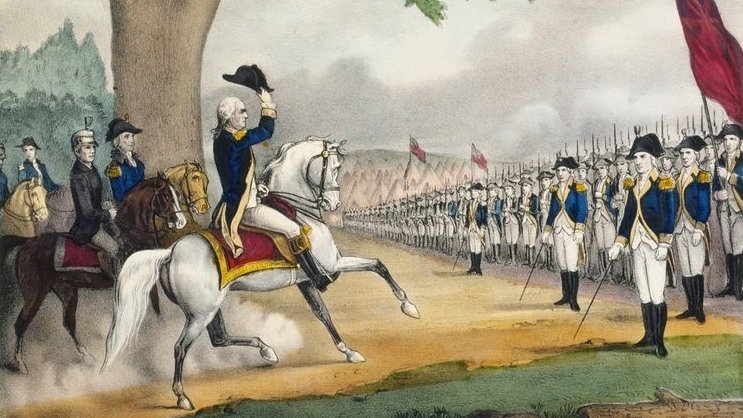
Why was the 2nd Amendment created? It was written in 1791 to address three specific fears that the Founding Fathers could not ignore: the danger of a tyrannical federal government, the need for citizen militias as a national defense force, and the natural right of individuals to protect themselves.
In just 27 words, the Second Amendment became one of the most debated sentences in all of American constitutional history.
Understanding why it was written requires going back to the fears, the debates, and the political compromises that shaped the early United States.
The Full Text of the Second Amendment
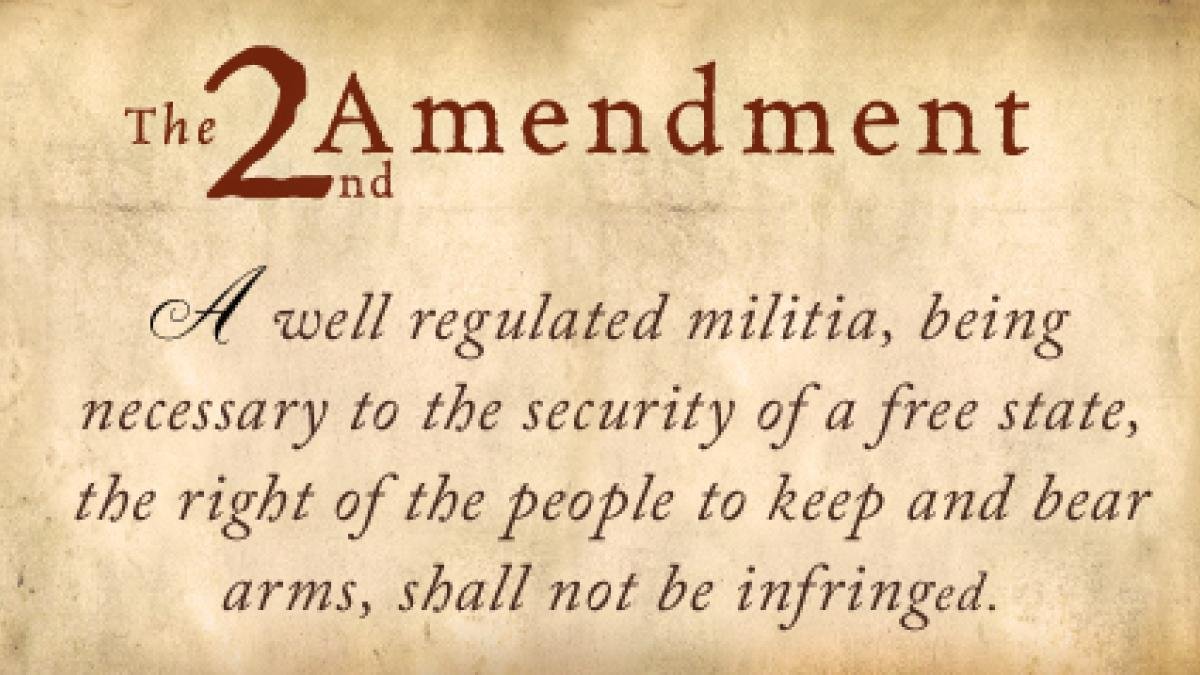
Before examining why the 2nd Amendment was created, it helps to look at exactly what it says.
The original text reads: “A well regulated Militia, being necessary to the security of a free State, the right of the people to keep and bear Arms, shall not be infringed.”
Those 27 words have generated centuries of legal argument, political debate, and Supreme Court rulings. The tension between the opening militia clause and the individual rights clause has never been fully resolved.
When Was the 2nd Amendment Created?
The Second Amendment was ratified on December 15, 1791, as part of the Bill of Rights. The Bill of Rights was the collective name for the first ten amendments to the United States Constitution.
These ten amendments were not part of the original Constitution drafted in 1787. They were added in direct response to demands from Anti-Federalists who refused to support ratification of the Constitution without explicit protections for individual and state rights.
James Madison, who authored most of the Constitution, drafted the initial text of the Second Amendment. He introduced it to the First Congress in 1789, and after debate and revision, it was sent to the states for ratification. It became law in December 1791.
The Political Climate That Made the 2nd Amendment Necessary
To understand why the 2nd Amendment was created, you have to understand the world the Founders lived in. They had just fought and won a revolution against what they saw as British tyranny.
The memory of British soldiers quartering in American homes, disarming colonial militias, and enforcing unjust laws with military force was fresh in every Founder’s mind. They were deeply suspicious of centralized government power, standing professional armies, and any arrangement that left ordinary citizens unable to resist oppression.
Fear of a Standing Army
The single biggest political fear at the Constitutional Convention was a permanent professional army controlled by the federal government. Many Founders, drawing on both British history and their own revolutionary experience, believed that standing armies were the primary tool of tyranny.
Alexander Hamilton wrote in Federalist No. 29 that standing armies are dangerous to liberty and that militias made up of ordinary citizens represented the most natural defense of a free country.
The Declaration of Independence itself listed as a grievance against King George III that he had kept standing armies among the colonists in times of peace without the consent of their legislatures.
The Anti-Federalist Demand for a Bill of Rights
When the Constitution was presented for ratification in 1787, it had no Bill of Rights. A motion by George Mason to add one at the Constitutional Convention was quickly defeated. This omission created fierce opposition from Anti-Federalists across the states.
Figures like George Mason and Patrick Henry of Virginia argued that the Constitution as written gave the federal government dangerously broad power over the military. The new Congress had authority to raise armies, maintain a navy, and organize and discipline state militias. Anti-Federalists saw this as a blueprint for eventual federal domination of all armed force.
They insisted that without a written guarantee protecting the right of the people to keep and bear arms, and protecting the existence of state militias, the federal government would eventually disarm both.
The Three Core Reasons the 2nd Amendment Was Created
Historians and constitutional scholars generally agree on three primary purposes behind the Second Amendment. All three were present in the minds of those who wrote and ratified it.
Reason 1: To Prevent Federal Tyranny
The most frequently cited reason for the Second Amendment’s creation was the desire to preserve an armed citizenry as a structural check on government power. The Founders had just fought a revolution and they took seriously the possibility that their new government might one day turn against its own people.
James Madison addressed this directly in Federalist No. 46. He argued that the American government derived its power from the people and had no reason to fear an armed population. He explicitly compared the United States favorably to European nations where governments were afraid to trust their citizens with weapons.
George Mason, one of the most influential voices behind the Bill of Rights, stated plainly that the British had resolved to enslave the American colonies by first disarming the people. He called disarmament the most effective way to reduce a free people to slavery.
The logic was straightforward. An armed population could resist oppression. A disarmed population could not. The Second Amendment was intended to ensure the former remained true.
Reason 2: To Preserve State Militias as a Defense Force
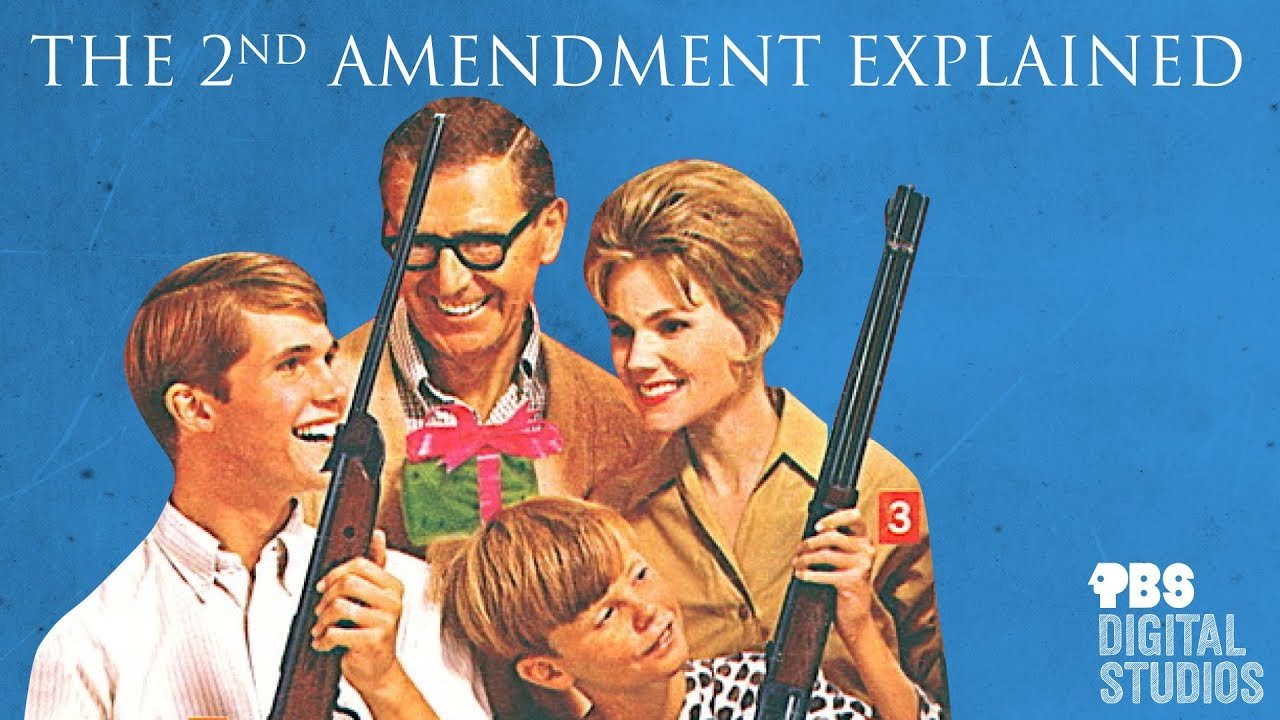
In 1791, the United States had no permanent professional military comparable to what exists today. National defense depended on state militias: part-time soldiers drawn from the civilian population who brought their own weapons.
The Founders considered well-regulated state militias to be both more effective and less dangerous than a standing army. A militia was local, rooted in the community, and loyal to its neighbors rather than to a distant federal government.
The Second Amendment was designed to ensure that state militias could remain functional. For militias to be effective, the individual men who composed them needed to own and be practiced with their own weapons. The right to keep and bear arms was thus inseparable from the functioning of the militia system.
Madison’s original draft of the amendment made this connection explicit. His proposed text read: “The right of the people to keep and bear arms shall not be infringed; a well armed and well regulated militia being the best security of a free country.”
Reason 3: To Protect the Natural Right of Individual Self-Defense
Even before the American founding, the right of individuals to defend themselves was recognized as a natural right under English law. William Blackstone, the most influential legal commentator of the era, listed the right to possess arms for personal defense as one of the principal barriers against violations of life, liberty, and property in England.
The English Bill of Rights of 1689 had already codified the right of Protestant subjects to have arms for their defense, suitable to their condition and as allowed by law. The Founders built directly on this English tradition.
While the militia purpose is explicitly stated in the Second Amendment’s text, historical evidence strongly supports the view that individual self-defense was also a motivating factor. State ratification conventions frequently framed the right to bear arms in individual terms rather than purely collective ones.
Historical Roots: Where the 2nd Amendment Came From
The Second Amendment did not appear from nothing. It drew on specific historical traditions spanning centuries.
The English Bill of Rights 1689
The direct legal ancestor of the Second Amendment is the English Bill of Rights of 1689, which arose from the Glorious Revolution that replaced King James II with William and Mary.
King James had used loyal militias to disarm Protestant dissidents and had built up his standing army to suppress political opposition. The 1689 Bill of Rights responded by guaranteeing that Protestant subjects had the right to arms for their defense.
The Founders were deeply familiar with this history. They saw the English experience as proof of what happens when a government controls all armed force and citizens have no legal right to resist.
Colonial Militias and the Revolutionary War
Throughout the colonial period, defense of American communities depended on local militias. These were not professional soldiers but ordinary farmers, craftsmen, and merchants who mustered when called and supplied their own firearms.
The revolutionary war itself was won in significant part through the efforts of these citizen-soldiers. Militia forces played critical roles alongside the Continental Army at battles like Lexington and Concord, Saratoga, and Cowpens.
The Founders did not see the militia as a historical artifact. They saw it as the living proof that an armed citizenry could defeat a professional military force and defend liberty.
Federalist No. 46 and the Balance of Power
James Madison’s Federalist No. 46 is one of the most important documents for understanding why the 2nd Amendment was created. Madison directly compared the armed American population to the disarmed populations of European nations.
He calculated that the United States could field a citizen militia of nearly half a million armed men. Even if the federal government were to raise a standing army, Madison argued, an armed citizenry would provide a structural counterbalance that would make federal tyranny practically impossible.
This argument was not purely theoretical. It was the political reassurance that Madison offered to those who feared the new Constitution would eventually produce an American monarchy or dictatorship.
Key Founding Fathers and Their Views on the 2nd Amendment
| Founder | Role | View on the Right to Bear Arms |
|---|---|---|
| James Madison | Drafted the Second Amendment | Militia-based check on federal tyranny; individual right also recognized |
| George Mason | Key Anti-Federalist; Bill of Rights advocate | Disarming the people is the first step to tyranny |
| Patrick Henry | Anti-Federalist leader of Virginia | Demanded explicit protections against federal military domination |
| Alexander Hamilton | Federalist; author of Federalist No. 29 | Standing armies dangerous; militias the natural defense of liberty |
| Thomas Jefferson | Author of Declaration of Independence | Citizens have a right and duty to be at all times armed |
| Elbridge Gerry | Congressman in First Federal Congress | Militia is the best protection against standing armies |
Madison’s Original Draft vs. the Final Text
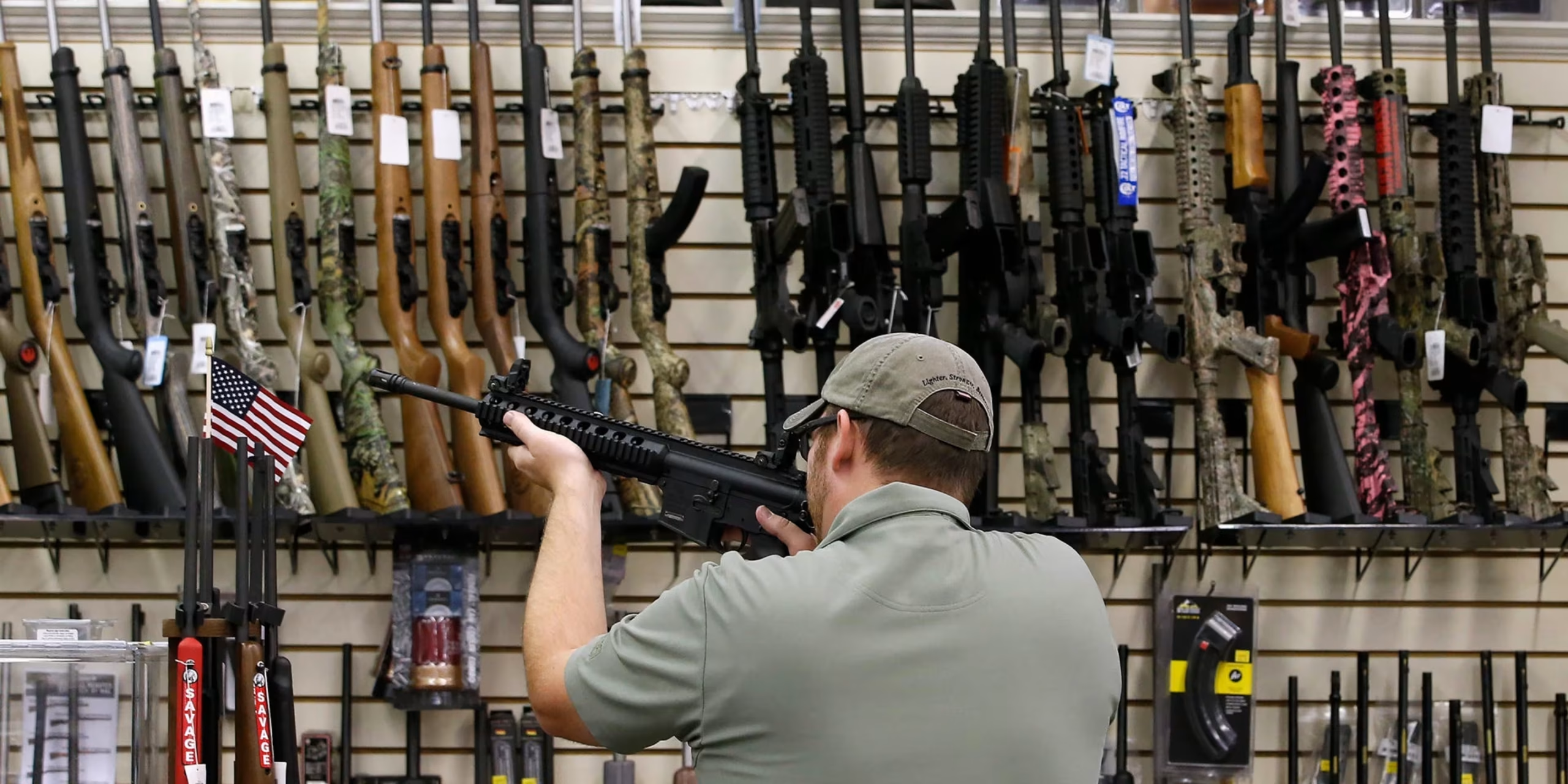
Madison’s original proposed text differed in important ways from the final version. Comparing them reveals the compromises made during the drafting process.
| Version | Text |
|---|---|
| Madison’s original draft (1789) | “The right of the people to keep and bear arms shall not be infringed; a well armed and well regulated militia being the best security of a free country: but no person religiously scrupulous of bearing arms shall be compelled to render military service in person.” |
| Final ratified text (1791) | “A well regulated Militia, being necessary to the security of a free State, the right of the people to keep and bear Arms, shall not be infringed.” |
The conscientious objector clause was removed during congressional debate. The order of the clauses was also changed, placing the militia rationale first. These textual decisions have been cited by both sides of the modern interpretation debate ever since.
The Federalist vs. Anti-Federalist Debate
The Second Amendment was itself a product of political compromise between two fundamentally different visions of American government.
The Federalist Position
Federalists like Madison and Hamilton believed a strong central government was necessary for the new nation to survive. They argued that the Constitution already provided sufficient checks and balances and that adding a bill of rights was unnecessary and potentially dangerous.
Hamilton wrote in Federalist No. 84 that specifying rights in a constitution could actually undermine rights not listed. Despite this initial resistance, Madison ultimately supported the Bill of Rights as a political necessity to secure ratification.
The Anti-Federalist Position
Anti-Federalists like George Mason, Patrick Henry, and Richard Henry Lee took the opposite view. They believed the Constitution as written concentrated too much power in the federal government and that citizens had no protection against federal military domination.
They demanded explicit guarantees that state militias would be preserved, that individuals would retain the right to be armed, and that the federal government could not use its military powers to disarm the population.
The Second Amendment was Madison’s direct response to these demands. Without addressing these concerns, ratification of the Constitution by key states, particularly Virginia, was genuinely in doubt.
How the Meaning of the 2nd Amendment Has Changed Over Time
The original understanding of the Second Amendment evolved significantly across American history. The amendment that was written to protect state militias from federal domination came to be interpreted in radically different ways.
The Militia Interpretation (1791 to 2008)
For most of American history, courts interpreted the Second Amendment as primarily protecting the collective right of states to maintain militias rather than an individual right to own firearms for personal use.
The Supreme Court’s 1939 decision in United States v. Miller held that the Second Amendment did not guarantee the right to possess a sawed-off shotgun because that weapon had no reasonable relationship to the preservation or efficiency of a well regulated militia.
This collective or militia-focused interpretation was the dominant legal view for over two centuries after ratification.
District of Columbia v. Heller 2008
The landmark Supreme Court case District of Columbia v. Heller fundamentally changed the legal landscape. In a 5 to 4 ruling, the Court held that the Second Amendment protects an individual’s right to possess firearms for traditionally lawful purposes, including self-defense in the home.
The case arose from Dick Heller’s challenge to Washington D.C.’s near-total ban on handguns. Justice Antonin Scalia, writing for the majority, argued that the Second Amendment’s prefatory militia clause did not limit the operative clause protecting the people’s right to keep and bear arms.
The ruling was historic but also explicitly limited. The Court noted that the right is not unlimited and that many forms of gun regulation remain constitutionally permissible. Laws prohibiting felons or the mentally ill from possessing firearms, bans on carrying firearms in sensitive places, and conditions on commercial sale were listed as examples of permissible regulation.
McDonald v. City of Chicago 2010
Two years after Heller, the Supreme Court decided McDonald v. City of Chicago. This 5 to 4 ruling extended the individual right recognized in Heller from federal enclaves to all state and local governments.
Chicago’s handgun ban, similar to the D.C. ban struck down in Heller, was declared unconstitutional. The Court held that the Second Amendment’s individual right to keep and bear arms is fundamental enough to be incorporated against the states through the Fourteenth Amendment.
After McDonald, no state or local government could impose a blanket ban on handgun possession in the home.
New York State Rifle and Pistol Association v. Bruen 2022
The Supreme Court’s 2022 Bruen decision further expanded Second Amendment protections. The Court held that New York’s requirement that applicants demonstrate a special need for self-defense to obtain a license to carry a firearm in public was unconstitutional.
The ruling established a new test for evaluating gun regulations. Laws must now be shown to be consistent with the historical tradition of firearm regulation at the time of the founding in order to be upheld. This historical test has become highly controversial and has been used to challenge numerous gun laws across the country.
The Modern Debate: Individual Right vs. Collective Right
The question of what the Second Amendment was originally created to protect remains fiercely contested in constitutional scholarship and public debate.
The Individual Rights View
Those who favor the individual rights interpretation argue that the phrase “the right of the people” clearly refers to individuals, just as it does in the First and Fourth Amendments. They point to historical evidence that personal self-defense was a recognized natural right and that the Founders intended to protect it.
Under this view, the militia clause is a reason given for the right, not a limitation on it. The right to bear arms belongs to individuals regardless of whether they serve in any militia.
The Collective or Militia Rights View
Those who favor the collective or militia-focused interpretation argue that the Second Amendment’s entire purpose was to protect state militias as a counterweight to federal military power. They point to the explicit militia clause, the political debates of the ratification era, and the historical context of the amendment’s creation.
Under this view, the amendment protects a right connected to participation in an organized state militia, not an unlimited individual right to own any firearm for any purpose.
Where Most Scholars Land
Even after Heller and McDonald, most constitutional historians acknowledge that both purposes were present when the Second Amendment was created. The militia rationale was primary in the political debates of the time. But individual self-defense was also recognized as a natural right that the amendment implicitly protected.
The modern Supreme Court has now settled that an individual right exists. The ongoing legal debate focuses on the scope of permissible regulation, not whether the right exists at all.
What the 2nd Amendment Does NOT Protect
Even under the broadest individual rights interpretation established by the Supreme Court, the Second Amendment has recognized limits. Understanding these limits is part of understanding the amendment’s original and current purpose.
| What the 2nd Amendment Protects | What It Does NOT Protect |
|---|---|
| Individual right to own a handgun in the home | The right to own any weapon whatsoever |
| Right to carry firearms for self-defense | The right to carry in all public places without any restriction |
| Ownership of common firearms in lawful use | Possession of weapons like machine guns deemed dangerous and unusual |
| Rights of law-abiding citizens | Rights of convicted felons or the mentally ill |
The Supreme Court in Heller explicitly stated that its ruling should not cast doubt on longstanding prohibitions on the possession of firearms by felons and the mentally ill, laws forbidding firearms in sensitive places such as schools and government buildings, or laws imposing conditions and qualifications on the commercial sale of arms.
The 2nd Amendment and Gun Control Today
Why the 2nd Amendment was created continues to shape every gun control debate in modern America. Both sides invoke the Founders’ intentions to support their positions.
Gun rights advocates argue that the Founders created the amendment to preserve an armed citizenry as the ultimate check on government and that any significant restriction on firearm ownership betrays that original purpose.
Gun regulation advocates argue that the Founders created the amendment in a specific historical context involving muskets and citizen militias, and that applying an 18th-century amendment to 21st-century semi-automatic weapons requires careful consideration of what the Founders could not have anticipated.
The Supreme Court has consistently held that some regulation is compatible with the Second Amendment. The constitutional boundaries of that regulation continue to be litigated in federal courts across the country.
Timeline: Key Moments in 2nd Amendment History
| Year | Event | Significance |
|---|---|---|
| 1689 | English Bill of Rights | Established Protestant right to arms; direct precursor to the 2nd Amendment |
| 1776 | Declaration of Independence | Listed standing armies without consent as a grievance against King George |
| 1787 | Constitutional Convention | No Bill of Rights included; Anti-Federalist opposition erupts |
| 1789 | Madison proposes amendments | First draft of the Second Amendment introduced to Congress |
| 1791 | Bill of Rights ratified | Second Amendment becomes law on December 15 |
| 1939 | United States v. Miller | Supreme Court upholds militia-focused interpretation |
| 2008 | District of Columbia v. Heller | Supreme Court recognizes individual right to bear arms |
| 2010 | McDonald v. City of Chicago | Second Amendment applied to all state and local governments |
| 2022 | NYSRPA v. Bruen | Historical tradition test established for evaluating gun laws |
Frequently Asked Questions (FAQs)
Why was the 2nd Amendment created?
The Second Amendment was created for three main reasons: to prevent federal tyranny by preserving an armed citizenry as a check on government power, to protect state militias as the nation’s primary defense force, and to recognize the natural individual right of self-defense.
Who wrote the 2nd Amendment?
James Madison drafted the original text of the Second Amendment in 1789 as part of his proposed Bill of Rights. He was responding to Anti-Federalist demands, especially from George Mason and Patrick Henry of Virginia, who refused to support the Constitution without explicit rights protections.
What does “well regulated Militia” mean in the 2nd Amendment?
In the founding era, a well regulated militia meant an organized, trained, and disciplined force of ordinary citizens who supplied their own weapons. It was not a reference to the military or National Guard, which did not exist in the same form in 1791.
Did the Founders intend the 2nd Amendment to protect individual gun ownership?
Historical evidence shows the Founders held both collective militia and individual self-defense purposes in mind. The Supreme Court ruled in District of Columbia v. Heller in 2008 that the amendment does protect an individual right to possess firearms for lawful purposes including self-defense in the home.
Was the 2nd Amendment created to allow revolution against the government?
The Founders intended the armed citizenry as a structural deterrent against tyranny, not as an open license for armed rebellion. James Madison in Federalist No. 46 framed it as a political check and balance, not an authorization for violent overthrow of a constitutional government.
When was the 2nd Amendment ratified?
The Second Amendment was ratified on December 15, 1791, when Virginia became the tenth state to approve the Bill of Rights, giving it the required three-fourths majority of the then-fourteen states.
How has the Supreme Court interpreted the 2nd Amendment?
The Supreme Court recognized an individual right to bear arms in DC v. Heller 2008, extended that right against state governments in McDonald v. Chicago 2010, and established a historical tradition test for gun regulations in NYSRPA v. Bruen 2022. The Court has consistently noted the right is not unlimited.
Can the 2nd Amendment be repealed or changed?
Yes. Any constitutional amendment can be repealed or altered through the amendment process established in Article V of the Constitution, which requires a two-thirds vote in both houses of Congress and ratification by three-fourths of the states. The 18th Amendment establishing Prohibition was repealed this way.
Does the 2nd Amendment apply to all firearms?
No. The Supreme Court has held that the Second Amendment protects ownership of firearms in common use for lawful purposes. Weapons considered dangerous and unusual, such as machine guns, can be regulated or prohibited under current constitutional interpretation.
Did fear of slave revolts influence the creation of the 2nd Amendment?
Some historians argue that Southern states, particularly Virginia, wanted the Second Amendment in part to ensure state militias could remain armed to suppress slave uprisings. This is a contested historical argument. The dominant documented motivations in the ratification debates were fear of federal military tyranny and national defense needs.
Conclusion
The 2nd Amendment created? This answer is rooted in three specific historical fears: the danger of a tyrannical federal government with unchecked military power, the practical need for armed state militias to defend the new nation, and the inherited English tradition recognizing individual self-defense as a natural right. James Madison wrote its 27 words as a compromise between Federalists who wanted a strong central government and Anti-Federalists who feared it.
Ratified in 1791, the Second Amendment became part of the Bill of Rights that secured the Constitution’s adoption. Its meaning has been debated, litigated, and reinterpreted across more than two centuries.
What remains certain is that understanding why the 2nd Amendment was created demands an honest look at the fears, the debates, and the world the Founders actually lived in, not simply the world we wish they had anticipated.


