


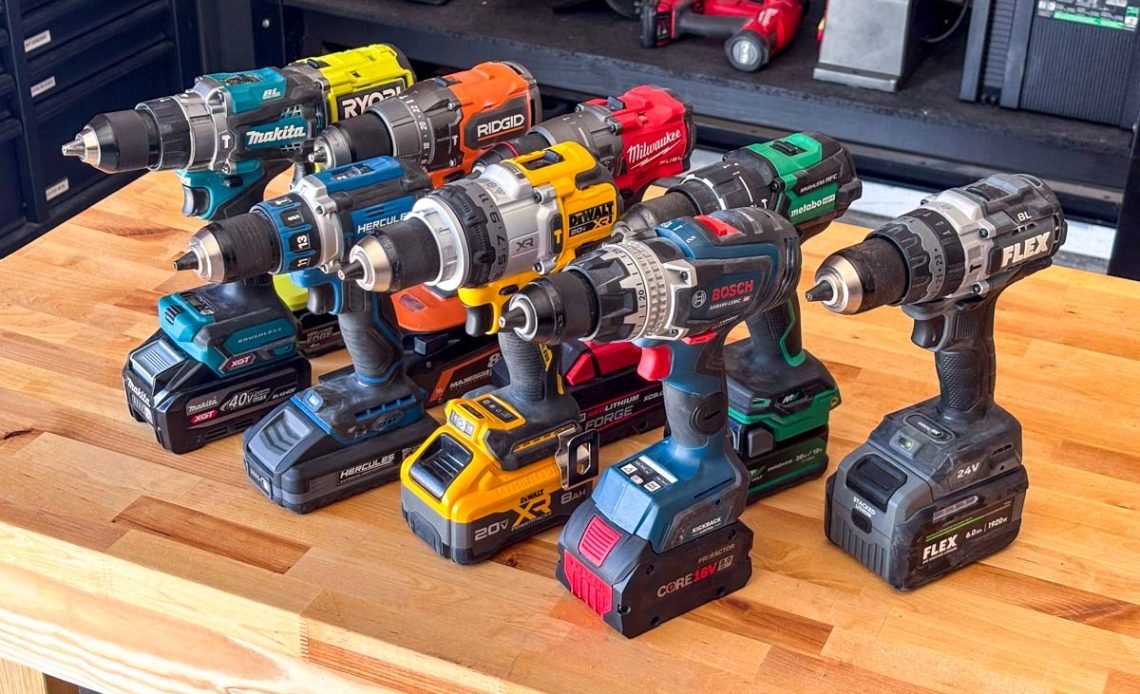
For decades, the standard advice for any serious contractor or dedicated DIYer was simple: if you want real power, you plug it in. The “corded vs. cordless” debate wasn’t even much of a contest for heavy-duty applications. If you were boring through thick masonry or ripping long sheets of wet pressure-treated lumber, a battery just couldn’t keep up with the endless, steady draw of a wall outlet. But as we move through 2026, that old hierarchy has been completely dismantled.
The job site of today looks and sounds vastly different than it did even five years ago. We are seeing a massive shift where professional-grade power tools are not just matching their corded ancestors but are actively outperforming them in efficiency, safety, and raw torque. The tether is being cut for good, and it isn’t just for the sake of convenience; it’s because the technology has finally surpassed the limitations of the copper wire.
The Death of the Voltage Drop
One of the biggest hidden enemies of corded tools has always been the extension cord itself. On a large-scale rural property or a sprawling construction site, running 100 feet of 14-gauge wire results in a significant voltage drop. By the time the electricity reaches the motor, the tool is underperforming, running hot, and risking internal damage.
Modern cordless platforms bypass this entirely. By using high-density lithium-ion cells and sophisticated brushless motors, today’s top-tier tools deliver a consistent, “clean” discharge of energy. In 2026, a high-voltage battery pack can dump more instantaneous current into a motor than a standard 15-amp circuit breaker can handle without tripping. This means more “oomph” exactly when the blade hits a knot in the wood.
The Brushless Revolution and Tool Intelligence
The secret sauce behind the dominance of cordless gear is the brushless motor. In older corded models, physical carbon brushes created friction, heat, and energy loss. Modern brushless systems use magnets and electronic controllers to manage power.
These tools are essentially “smart.” They can sense the resistance of the material you are cutting or drilling and adjust the power output accordingly. If the tool feels the load increasing, it draws more current to maintain RPMs. This level of active communication between the battery and the motor is something a “dumb” corded tool simply cannot do.
Safety Gains: Beyond Just Trip Hazards
Safety is often the primary driver for professional crews switching to battery platforms. OSHA statistics have long pointed to extension cords as a leading cause of job site accidents—not just from trips and falls, but from electrical shocks in damp conditions.
By removing the cord, you eliminate the risk of a nicked wire causing a short circuit in the rain. Furthermore, many of the newest cordless models feature electronic clutches and “kickback” protection that stops a blade in milliseconds if it binds. While some corded tools have these features, the integration is far more seamless in digital battery-powered systems.
How to Choose the Right Battery Ecosystem
If you are looking to transition away from corded gear, the most important decision you’ll make isn’t the tool itself—it’s the battery platform. In 2026, cross-compatibility is king.
- Voltage vs. Amp Hours: Think of voltage as the “horsepower” and Amp Hours (Ah) as the “fuel tank.” For heavy-duty tasks like grinding or circular sawing, look for higher voltage (60V or 80V) to ensure the tool doesn’t bog down.
- Platform Breadth: Choose a brand that uses the same battery for your drill, your chainsaw, and even your lawn mower. This reduces the total number of chargers cluttering your workspace.
- Thermal Management: Look for packs with cooling vents or heat-absorbing materials. Heat is the number one killer of battery life, especially during mid-summer projects.
Comparing Performance: The Real-World Test
To understand why the cord is disappearing, we have to look at how these tools perform under pressure. In a head-to-head rip-cut test through two-inch oak, a modern 80V cordless circular saw often completes the cut faster than a standard 15-amp corded saw.
The reason? The cordless saw doesn’t suffer from the “drag” of a long cord and its motor is tuned for high-torque bursts. While the corded saw has “infinite” runtime, it is limited by the physical capacity of the household circuit. The cordless saw, while limited by battery life, can peak at a higher wattage for short intervals, making it feel more powerful during the actual work.
Common Mistakes When Switching to Cordless
The biggest mistake is “under-buying” the battery. A tool is only as good as the cells powering it. Using a small, 2.0Ah “compact” battery in a high-draw tool like a miter saw will result in poor performance and frequent overheating.
Another error is neglecting the charger. If you are working professionally, you need a “fast charger” that can replenish a battery in the time it takes you to drain the next one. This creates a “perpetual motion” workflow where you never actually have to stop and wait for a green light.
Tips for Maintaining Your High-End Tools
To protect your investment in 2026, you need to treat your batteries with respect. Unlike the old NiCad batteries of the 90s, Lithium-ion packs do not have a “memory.” You don’t need to run them down to zero. In fact, they prefer being topped off.
- Avoid the “Red Zone”: Try to swap your battery when it hits one bar rather than running it until the tool stops completely.
- Store it Right: Never leave your batteries in a freezing shed or a scorching truck cab over the weekend. Extreme temperatures degrade the chemistry inside the cells.
- Keep it Clean: Use compressed air to blow dust out of the tool’s vents. Heat is the enemy, and sawdust acts like insulation that traps heat inside the motor.
The Economic Reality of 2026
While the initial “buy-in” for a pro-grade cordless kit is higher than a cheap corded set, the ROI (Return on Investment) is realized in labor hours. Think about the time spent hunting for an outlet, untangling 200 feet of orange cord, and taping down connections. Over the course of a year, a contractor can save dozens of hours just by grabbing a tool and pulling the trigger. In the world of professional trades, time is quite literally money.
Frequently Asked Questions
Are cordless tools really as powerful as corded ones now?
In many cases, they are more powerful. High-voltage battery systems can deliver more instantaneous torque than a standard 120V household outlet, which is often limited by circuit breakers.
How long do the batteries actually last?
It depends on the task. A modern high-capacity battery can usually handle a full morning of intermittent drilling or fastening. For high-draw tools like saws, having two batteries—one on the tool and one on the charger—allows for continuous work.
What happens to the batteries when they die for good?
Sustainability is a huge focus in 2026. Most major manufacturers have “closed-loop” recycling programs. You can drop off spent packs at major hardware retailers to ensure the lithium and cobalt are reclaimed for new batteries.
Is it worth keeping any corded tools at all?
Corded tools still have a place for stationary bench work, like a dedicated drill press or a large table saw that stays in the shop. But for anything that moves around the job site, the cord is now an unnecessary hurdle.
Final Thoughts: The Future is Unplugged
The transition to battery power isn’t just about getting rid of a trip hazard; it’s about a fundamental increase in what a single person can accomplish on a job site. The “corded” era provided the foundation for modern construction, but the “cordless” era has provided the freedom. As battery chemistry continues to improve, the gap will only widen.
If you are still holding onto that old tangled mess of extension cords, 2026 is the year to finally let go. The power is there, the runtimes are ready, and the convenience is undeniable.
Would you like me to put together a specific comparison of the best 60V versus 80V tools for heavy-duty landscaping tasks?

