


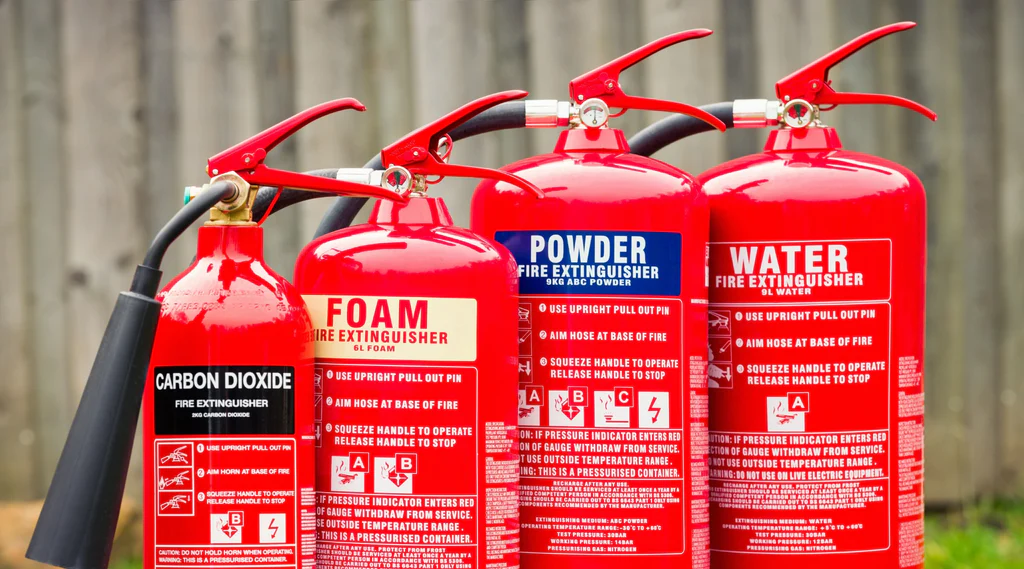
Why must fire extinguishers be routinely maintained? Because a neglected extinguisher is no different from having none at all.
Fire extinguishers are your first line of defense when a small fire breaks out.
They save lives, protect property, and give people critical seconds to act. But they only work when they are properly maintained.
Regular inspections, pressure checks, and servicing ensure that when a fire emergency happens, your extinguisher does not fail you.
The Real Purpose of a Fire Extinguisher

A fire extinguisher stops fires by cooling heat, cutting off fuel, or removing oxygen. It holds two key parts: an extinguishing agent and a pressurized propellant.
The internal pressure must stay within a specific range — typically 185 to 195 PSI — for the device to discharge properly. Without routine checks, that pressure can silently drop without any visible warning.
Most people assume their extinguisher is ready to use. The truth is, about 25% of portable fire extinguishers are not properly maintained and may fail exactly when needed most.
Why Routine Maintenance Is Not Optional
Fire extinguisher maintenance is a legal requirement under NFPA 10, the standard set by the National Fire Protection Association. OSHA’s regulation 29 CFR 1910.157 also mandates regular inspection and servicing in all workplaces.
Non-compliance can lead to serious fines, increased insurance liability, and legal consequences after a fire incident. These rules exist because unmaintained extinguishers directly cost lives.
Routine maintenance is not just about ticking boxes. It is about making sure your safety equipment works when every second counts.
What Happens When Pressure Drops
Fire extinguishers lose pressure over time due to small leaks, temperature fluctuations, and the natural aging of seals and valves. A pressure gauge showing green does not always guarantee the unit is fully functional.
During routine maintenance, a qualified technician weighs the extinguisher and compares it to its last recorded weight. If the weight has dropped by more than 10%, a leak is likely.
A unit with low pressure will not discharge its agent with enough force to suppress a fire. Regular checks catch this before it becomes a deadly problem.
Corrosion and Structural Degradation
Fire extinguisher cylinders are typically made from steel or aluminum. Over time, exposure to moisture, humidity, and temperature extremes causes corrosion.
Rust weakens the cylinder walls. In worst-case scenarios, a corroded extinguisher can rupture under pressure, turning a safety tool into a hazard.
Routine maintenance includes a full visual and physical inspection of the cylinder body, checking for dents, scratches, and signs of corrosion inside and out.
Chemical Agent Degradation Over Time
The dry chemical, CO2, wet chemical, or foam inside an extinguisher does not last forever. Dry chemical agents can clump or settle at the bottom, blocking the discharge nozzle.
CO2 units have no pressure gauge, so their weight must be checked regularly to confirm fullness. Wet chemical agents in Class K extinguishers used in commercial kitchens require special attention because they degrade faster.
An extinguisher filled with degraded or settled agent will fail to put out a fire, even when the pressure gauge reads normal.
The Clogged Nozzle Problem
Dust, insects, debris, and even dried chemical residue can block the nozzle or hose of a fire extinguisher. A blocked nozzle prevents the agent from discharging.
This type of damage is invisible from the outside. You would never know about it unless a technician checks the hose and nozzle during a routine inspection.
During servicing, technicians check for cracks in the hose, blockages in the nozzle, and worn seals around the valve assembly.
Tampering and Unauthorized Use
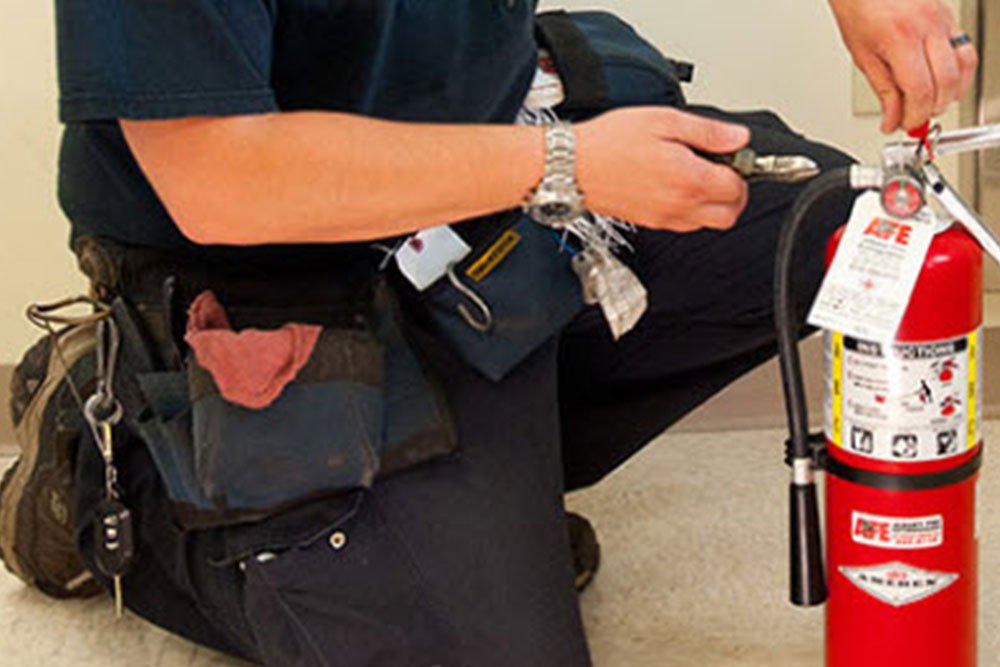
Fire extinguishers placed in public or high-traffic areas are often tampered with. Curiosity, carelessness, or even deliberate misuse can render an extinguisher useless.
Common tampering issues include a removed safety pin, broken tamper seal, partially discharged contents, or the unit moved from its designated location. Even using an extinguisher as a door stopper causes damage.
Routine checks verify that the tamper seal is intact, the safety pin is in place, and the unit is in its correct position and unobstructed.
Maintenance Schedule at a Glance
| Inspection Type | Frequency | Who Performs It |
|---|---|---|
| Visual Inspection | Monthly | Designated facility staff |
| Annual Maintenance | Once per year | Certified fire protection technician |
| Internal Examination | Every 6 years | Licensed professional |
| Hydrostatic Pressure Test | Every 5–12 years (type-dependent) | Certified technician |
| Replacement | After 10–12 years | Facility owner or manager |
Monthly Visual Checks: What to Look For
Monthly inspections are quick and can be performed by a trained employee or safety officer. They should take only a few minutes per unit.
During each monthly check, confirm the extinguisher is in its designated location, the pressure gauge is in the green zone, the tamper seal is unbroken, the safety pin is secure, there is no visible corrosion or damage, and the label is legible and complete.
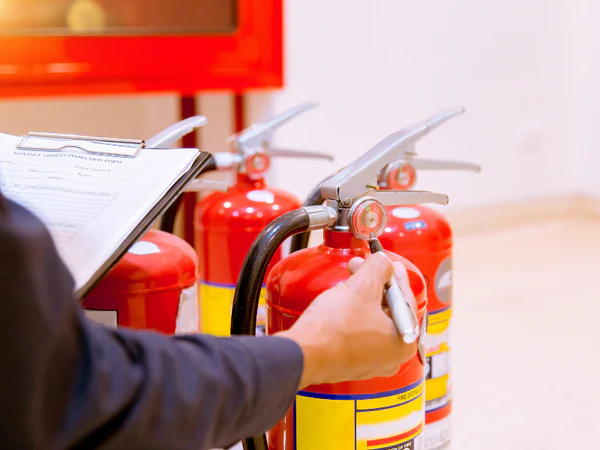
These monthly checks must be documented with a signature, date, and notes. NFPA 10 requires this record-keeping for compliance.
Annual Professional Maintenance: What It Covers
Annual maintenance by a certified technician is far more detailed than a monthly visual check. It involves opening the unit, inspecting internal components, and verifying every part functions correctly.
A technician checks the valve assembly, discharge mechanism, hose and nozzle, extinguishing agent condition, and pressure system. They also replace the tamper seal and update the service tag.
If any defect is found, the extinguisher is either repaired on-site or removed from service. An extinguisher that fails its annual check must not be left in place and counted as protection.
The 6-Year Internal Examination
Beyond annual servicing, stored-pressure dry chemical extinguishers require a full internal examination every 6 years. This involves completely emptying the unit.
The technician inspects the inside of the cylinder, replaces all O-rings and seals, cleans internal components, refills the agent, and repressurizes the unit. A new tamper seal and service label are then applied.
This process catches early-stage corrosion, agent clumping, and internal valve wear that would be missed during a standard annual inspection.
Hydrostatic Pressure Testing
Hydrostatic testing checks whether the extinguisher cylinder can safely withstand internal pressure. It is required every 5 years for CO2 and wet chemical units and every 12 years for stored-pressure dry chemical units.
During the test, the cylinder is filled with water and pressurized to a level higher than its working pressure. If the cylinder deforms or shows weakness, it is removed from service permanently.
This test is not optional. A cylinder that fails hydrostatic testing is a serious safety hazard and must be replaced immediately.
Fire Extinguisher Type vs. Maintenance Needs
| Extinguisher Type | Agent | Hydrostatic Test Interval | Best Used For |
|---|---|---|---|
| Class A | Water, foam | 5 years | Wood, paper, cloth |
| Class B | CO2, dry chemical | 5 or 12 years | Flammable liquids, gases |
| Class C | CO2, dry chemical | 5 or 12 years | Electrical fires |
| Class D | Dry powder | 12 years | Combustible metals |
| Class K | Wet chemical | 5 years | Commercial kitchen fires |
| ABC (Multi-purpose) | Dry chemical | 6-year internal + 12-year hydro | General workplace use |
Legal and Regulatory Requirements in 2026
NFPA 10 is the primary national standard governing fire extinguisher maintenance in the United States. The 2022 edition updated visibility and signage requirements. The 2026 edition, now available, introduces performance-based inspection programs that can adjust inspection frequency based on risk factors.
OSHA 29 CFR 1910.157 requires monthly inspections and annual maintenance for all portable extinguishers in workplaces. State and local fire codes layer additional requirements on top of NFPA standards.
Businesses that fail to comply risk fines, insurance claim disputes, and increased legal liability after any fire-related incident. Some jurisdictions require a licensed contractor’s tag after every annual service.
Documentation: The Overlooked Requirement
NFPA 10 requires that every inspection, maintenance session, and hydrostatic test be documented. Records must include the date, the person responsible, and findings noted during the inspection.
Poor documentation has resulted in businesses losing insurance claims. If you cannot prove your extinguisher was maintained, insurers and regulators will assume it was not.
Any designated, trained employee can conduct monthly inspections provided records are properly kept. Annual maintenance records must include a licensed technician’s details.
The Real Cost of Skipping Maintenance
Annual professional servicing costs between $15 and $50 per extinguisher. Replacement costs range from $100 to $300 per unit.
Fire damage to a business costs an average of $30,000 per incident. Workplace fires cause approximately 70 deaths and 520 injuries each year in the United States.
Properly maintained extinguishers are effective in controlling small fires 95% of the time. Neglected extinguishers contribute to nearly 10% of all fire-related injuries annually. The math clearly favors routine maintenance.
How Maintenance Extends Extinguisher Lifespan
An unmaintained fire extinguisher typically has an effective life of 5 to 8 years. A properly maintained unit can remain in service for 10 to 20 years.
Regular maintenance and inspection extend the effective lifespan of a fire extinguisher by approximately 3 to 5 years. This reduces the frequency and cost of full replacements.
Most manufacturers recommend replacing extinguishers after 10 to 12 years regardless of condition, but only routinely inspected units can realistically reach that age in safe, working condition.
Confidence, Training, and Employee Safety
An extinguisher people cannot trust is an extinguisher they will not use. If employees doubt whether the equipment works, they will hesitate during a fire emergency.
Regular maintenance builds confidence. When your team knows the extinguishers are inspected monthly and serviced annually, they are more willing and faster to use them when seconds matter.
Training on fire extinguisher use combined with maintained equipment can improve employee emergency response time by 40% and reduce fire-related costs by a significant margin.
Proper Placement and Accessibility
Routine checks also confirm that extinguishers are in the right location. NFPA 10 requires that no employee in a commercial building should have to travel more than 75 feet to reach an extinguisher.
Over time, extinguishers get moved during cleaning, renovation, or storage rearrangement. Blocked, hidden, or misplaced extinguishers are as dangerous as broken ones.
Monthly inspections must verify that each unit is visible, accessible, unobstructed, and properly mounted in its designated bracket or cabinet.
Signs Your Extinguisher Needs Immediate Attention
| Warning Sign | What It Means | Action Required |
|---|---|---|
| Pressure gauge in red zone | Pressure too high or too low | Remove from service immediately |
| Broken or missing tamper seal | Possible unauthorized use | Full maintenance inspection required |
| Visible dents or corrosion | Structural compromise | Remove and replace |
| Illegible or damaged label | Instructions unreadable | Replace label or full unit |
| Missing safety pin | May have been partially activated | Inspect and recharge |
| Unit not in designated location | Accessibility failure | Return and document |
| Weight significantly lower than label | Possible leak or discharge | Weigh, investigate, recharge |
Environmental Factors That Accelerate Wear
Fire extinguishers stored in extreme heat, extreme cold, or high-humidity environments degrade faster. Approximately 15% of extinguishers in service are improperly stored.
Outdoor extinguishers, those in warehouses without climate control, and units near industrial equipment face accelerated corrosion and seal degradation. These units need more frequent checks than standard indoor ones.
NFPA 10 allows for increased inspection frequency when environmental factors create higher risk. Facilities in coastal, industrial, or harsh-climate environments should follow this guidance carefully.
Insurance and Liability Implications
Insurance companies examine fire extinguisher maintenance records when evaluating claims. An unmaintained extinguisher at the time of a fire can result in a denied claim or reduced payout.
Many commercial insurance programs require proof of regular fire safety maintenance as a condition of coverage. Documented compliance strengthens your position in any dispute.
Beyond insurance, if someone is injured in a fire and extinguishers were found unmaintained, the business owner faces significantly increased civil and legal liability.
A Simple Maintenance Checklist for Businesses
Use this as a starting framework for your workplace fire extinguisher program:
Monthly (by staff): Confirm unit is in place and unobstructed. Check pressure gauge is in the green. Verify tamper seal is intact. Look for visible damage. Sign and date the tag.
Annually (by certified technician): Full mechanical inspection. Internal component check. Agent verification. Hose and nozzle test. Tamper seal replacement. Updated service tag.
Every 6 years: Internal examination for dry chemical stored-pressure units. Full discharge, internal cleaning, agent replacement, and repressurization.
Every 5–12 years (by type): Hydrostatic pressure test. Cylinder integrity verification. Remove from service if failed.
The 2026 Update: Performance-Based Inspection
The 2026 edition of NFPA 10 introduces a significant change: performance-based inspection programs. Facilities with strong compliance histories and low-risk environments may qualify to adjust inspection intervals.
This does not reduce the requirement for inspections. It allows certified professionals to customize the schedule based on actual risk levels, equipment history, and building data.
The 2026 edition also introduces new requirements for the disposal of condemned extinguishers, ensuring that removed units are properly decommissioned rather than informally discarded.
What Certified Technicians Check That You Cannot
A monthly visual inspection by facility staff is essential, but it cannot replace a professional annual service. Certified technicians have tools, training, and access that untrained staff do not.
They use calibrated gauges to test valve performance, borescopes to inspect the inside of cylinders, and specialized equipment to verify agent composition and quantity. They also know the specific maintenance requirements for each extinguisher type and model.
Trusting an untrained person to perform annual maintenance is a compliance failure and a safety risk. NFPA 10 is explicit: annual maintenance must be done by an approved servicing company.
Fire Classes and Matching the Right Extinguisher
Using the wrong extinguisher on the wrong fire type can make a fire worse. Maintenance ensures the correct extinguisher is in the right location and properly charged with the right agent.
Class K wet chemical units in a commercial kitchen cannot be replaced by a standard ABC dry chemical unit. CO2 units in server rooms must be specifically maintained and weighed because they have no pressure gauge.
Routine maintenance reviews confirm that the right extinguisher type is assigned to each specific area and fire risk.
How Fire Extinguisher Maintenance Supports a Full Fire Safety Plan
A fire extinguisher is one component of a larger fire safety system. Sprinklers, alarms, emergency lighting, evacuation plans, and trained staff all work together.
A maintained extinguisher integrated into a practiced safety plan gives occupants the best possible chance of controlling or escaping a fire without injury. An unmaintained extinguisher breaks the entire chain.
Regular fire drills combined with maintained extinguishers have been shown to reduce fire-related injuries dramatically and give employees the confidence to respond correctly under pressure.
Frequently Asked Questions (FAQs)
Why must fire extinguishers be routinely maintained?
Fire extinguishers must be routinely maintained to ensure they work when a fire occurs. Neglected units lose pressure, develop leaks, or experience agent degradation that makes them completely ineffective in an emergency.
How often should a fire extinguisher be inspected?
Fire extinguishers should be visually inspected monthly by staff and professionally serviced annually. Internal examinations are required every 6 years and hydrostatic tests every 5 to 12 years depending on the type.
Who is allowed to perform annual fire extinguisher maintenance?
Annual maintenance must be performed by a certified fire protection technician from an approved servicing company. Monthly visual inspections can be done by trained facility staff with proper documentation.
What does NFPA 10 require for fire extinguisher maintenance?
NFPA 10 requires monthly visual inspections, annual professional maintenance, 6-year internal examinations for dry chemical units, and hydrostatic testing at intervals based on extinguisher type. All services must be documented.
What are the signs that a fire extinguisher needs replacement?
Key signs include a pressure gauge in the red zone, visible corrosion or dents, a missing or broken tamper seal, an unreadable label, or a weight significantly below what is recorded on the maintenance tag.
Can a fire extinguisher expire?
Yes. Most manufacturers recommend replacing fire extinguishers after 10 to 12 years. A properly maintained extinguisher can stay in service longer, but age-related degradation eventually makes replacement necessary regardless.
What happens if a business does not maintain its fire extinguishers?
The business risks OSHA fines, failed insurance claims, increased legal liability after a fire incident, and most critically, equipment failure during an actual fire emergency that results in injury or death.
How much does annual fire extinguisher maintenance cost?
Annual professional servicing costs between $15 and $50 per extinguisher. This is significantly less than replacement costs of $100 to $300 per unit and far less than the average $30,000 in property damage from a workplace fire.
Does fire extinguisher maintenance affect insurance coverage?
Yes. Insurance companies review maintenance records when processing fire-related claims. Documented, regular maintenance strengthens your claim. Missing or inadequate maintenance records can result in denied or reduced payouts.
What is hydrostatic testing and why is it required?
Hydrostatic testing pressurizes the extinguisher cylinder with water to verify it can safely hold internal pressure. It is required every 5 years for CO2 and wet chemical types and every 12 years for dry chemical types to prevent catastrophic cylinder failure.
Conclusion
Why must fire extinguishers be routinely maintained? Because the cost of not doing so is measured in lives, property, and legal consequences.
A properly maintained extinguisher is effective 95% of the time against small fires. A neglected one is a false sense of security that can make a bad situation catastrophic.
In 2026, with updated NFPA 10 standards and stricter compliance expectations, there is no excuse for skipping inspections or delaying service.
Monthly visual checks, annual professional maintenance, 6-year internal examinations, and hydrostatic testing are not bureaucratic formalities.
They are the difference between a fire that gets controlled in seconds and one that destroys everything.
Invest in routine maintenance. Follow the schedule. Document every check. Protect your people, your property, and your business.


