


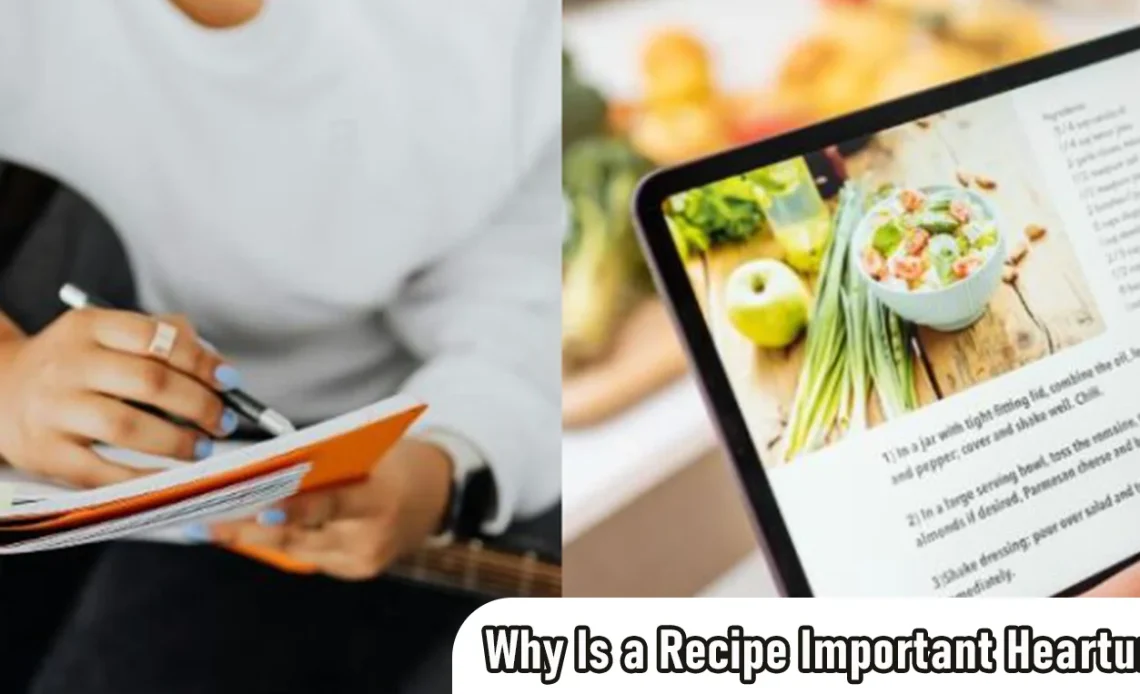
Why is a recipe important heartumental is a question that goes far deeper than kitchen instructions. A recipe is not just a list of ingredients and steps. It is a structured guide that connects your heart, your memories, your culture, and your daily wellness.
The word heartumental combines heart and instrumental — meaning something that is both emotionally meaningful and practically essential. In 2026, as home cooking continues to grow, understanding the real value of recipes through the heartumental lens has never been more relevant.
What Does Heartumental Mean?

Heartumental is a concept that blends heartfelt emotion with instrumental knowledge. It describes how certain things — like cooking — are both emotionally significant and functionally necessary.
When applied to recipes, heartumental means a recipe is more than just cooking directions. It is a tool that teaches, preserves traditions, builds confidence, and nurtures relationships.
The heartumental approach to cooking says that every recipe carries purpose beyond taste. It connects the cook to deeper feelings, memories, and experiences that go far beyond the plate.
What Is a Recipe? A Clear Definition
A recipe is a written guide that explains how to prepare a dish. It includes a list of ingredients, their exact quantities, cooking methods, temperature settings, and step-by-step instructions.
A good recipe removes all guesswork. It creates a repeatable process so anyone can recreate a dish with confidence and consistency.
Think of a recipe as a roadmap for your culinary journey. Without it, cooking becomes guesswork. With it, cooking becomes reliable, enjoyable, and creative.
Why Is a Recipe Important Heartumental? The Core Answer
A recipe is important heartumental because it serves multiple roles at once. It is a teacher, a cultural document, a wellness tool, and an emotional anchor.
The heartumental philosophy, as promoted by platforms like heartumental.net and heartumental.com, emphasizes that recipes support both the mind and the body. They give clarity to beginners and inspiration to experienced cooks.
Understanding why is a recipe important heartumental means accepting that cooking with structure and intention creates better outcomes — in the kitchen and in life.
Reason 1 — Recipes Ensure Consistency in Every Dish
Consistency is one of the strongest reasons why is a recipe important heartumental. A recipe gives you precise measurements, cooking times, and temperatures.
When you follow the same recipe repeatedly, you get the same result every time. Your family knows what to expect. Your guests trust your cooking. Your confidence grows with each successful meal.
Consistency also helps you identify mistakes. If a dish does not turn out right, you can trace back through the recipe to find where things went wrong and correct it next time.
Reason 2 — Recipes Save Time and Reduce Waste
Without a recipe, you waste time guessing what to buy, how much to use, and how long to cook. A recipe eliminates all that uncertainty before you even enter the kitchen.
Recipes help you build a shopping list with precision. You buy exactly what you need, nothing more and nothing less. This reduces food waste and saves money over time.
Time management in the kitchen improves dramatically with a recipe. You know preparation time, cooking time, and resting time in advance. This makes meal planning smooth and stress-free.
Reason 3 — Recipes Are Teaching Tools for All Skill Levels
One of the most overlooked reasons why is a recipe important heartumental is its role as a silent teacher. Every recipe teaches you something new about cooking.
A bread recipe teaches you about kneading, proofing, and the science of yeast. A curry recipe teaches you about layering spices and building flavor. A cake recipe teaches you about ratios and texture.
Over time, following recipes builds an intuitive understanding of food. You begin to understand why certain steps come before others, how heat changes ingredients, and how flavors balance each other.
| Skill Level | What Recipes Teach |
|---|---|
| Beginner | Basic techniques, measurements, and timing |
| Intermediate | Flavor building, layering, and substitutions |
| Advanced | Innovation, adaptation, and cultural context |
| Expert | Refinement, consistency, and teaching others |
Reason 4 — Recipes Preserve Culture and Family Traditions
Food is one of the strongest carriers of cultural identity. Recipes document regional flavors, local ingredients, and traditional cooking methods that might otherwise be forgotten.
A handwritten recipe passed down from a grandmother carries more than flavor. It carries memory, identity, and history. Following it keeps those stories alive.
The heartumental approach places great emphasis on this cultural preservation. When you cook from a traditional recipe, you are not just making food — you are honoring the people and places that shaped it.
Recipes also help immigrants and diaspora communities maintain connection to their roots. A familiar recipe cooked in a new country is a form of cultural resilience and emotional comfort.
Reason 5 — Recipes Support Better Nutrition and Health
Understanding why is a recipe important heartumental also means understanding its role in your health. Recipes give you full control over what goes into your food.
When you cook from a recipe, you can choose fresh ingredients, reduce salt and sugar, increase fiber, and avoid artificial additives. This is something processed food can never offer you.
Recipes help with portion control. You know exactly how many servings a dish makes. This awareness helps manage calorie intake and promotes balanced eating habits for the whole family.
| Nutritional Benefit | How Recipes Help |
|---|---|
| Balanced meals | Recipes include all food groups in correct proportions |
| Reduced sodium | You control the amount of salt added |
| Lower sugar | Sweetener amounts can be adjusted or substituted |
| Fresh ingredients | Recipes call for whole, unprocessed items |
| Portion control | Serving sizes are clearly defined |
Reason 6 — Recipes Are Emotional Anchors and Mental Comfort
Cooking a familiar recipe is one of the most powerful forms of emotional regulation. The smell of a dish linked to a childhood memory can instantly reduce anxiety and bring calm.
The heartumental philosophy recognizes this deeply. It says that a recipe is a quiet promise of care. When you cook a recipe for someone, you are saying: I remembered what you love. I took time to make it for you.
In times of grief, illness, or stress, people often turn to comfort food. Behind that comfort food is always a recipe — a structure that brings order and predictability when life feels uncertain.
Reason 7 — Recipes Build Confidence in the Kitchen
Every time you follow a recipe and succeed, your confidence grows. That confidence makes you more willing to try new dishes, new cuisines, and new techniques.
New cooks often feel overwhelmed by the kitchen. A clear recipe solves this. It breaks down a complex dish into small, manageable steps. Each step completed is a small win that builds momentum.
The heartumental.info platform highlights that confidence built through recipes eventually gives cooks the freedom to experiment. You must first learn the rules to know when to break them confidently.
Reason 8 — Recipes Encourage Creativity and Experimentation
Contrary to popular belief, recipes do not limit creativity. They provide the foundation from which creativity can grow safely.
Once you understand a recipe well, you can begin to adapt it. Swap one spice for another. Use a different protein. Add a regional twist. The recipe becomes a starting point, not a cage.
The heartumental approach views creativity as a natural outcome of mastering recipes. Just as a painter learns basic techniques before developing their own style, a cook needs recipes as a launching pad for culinary innovation.
Reason 9 — Recipes Support Family Bonding and Shared Experiences
Cooking together is one of the most powerful ways families bond. A recipe gives everyone a role. One person measures, another stirs, another chops.
Children who cook with their parents using recipes develop a love for food, an understanding of nutrition, and a sense of pride in creating something from scratch. These are lifelong gifts.
Family recipes shared across generations become traditions. They mark holidays, birthdays, and celebrations. They become part of the family’s story and identity over time.
Reason 10 — Recipes Build Meal Planning Habits
One of the most practical reasons why is a recipe important heartumental is meal planning. Recipes make it possible to plan your week of meals with precision.
When you have a recipe, you know the ingredients needed, the preparation time, and the number of servings. This allows you to plan multiple meals for the week, shop once, and cook efficiently.
Meal planning using recipes reduces the reliance on takeaway food and processed snacks. It leads to healthier eating, lower food costs, and less daily decision fatigue about what to cook.
Reason 11 — Recipes Bridge the Gap Between Generations
Grandparents who can no longer cook can still pass their knowledge forward through written recipes. A recipe is a form of legacy that survives long after the cook is gone.
When younger generations cook from the recipes of their elders, they feel connected across time. The act of cooking the same dish creates a shared experience even when separated by decades.
The heartumental value of this connection is immense. It gives families a living archive of love and identity that keeps evolving while staying rooted in its origins.
Reason 12 — Recipes Reduce Cooking Stress and Decision Fatigue
Decision fatigue is real. After a long day of work, standing in the kitchen and wondering what to make adds unnecessary mental load. A recipe eliminates that stress instantly.
When you already have a recipe selected, you only need to follow it. There are no open-ended choices to make about methods or ingredients. The path is clear from the start.
The heartumental.com platform emphasizes that stress-free cooking produces better meals. When you are calm and focused, you pay more attention to technique, flavor, and presentation.
Reason 13 — Recipes Are Tools for Professional Kitchen Efficiency
In restaurant and professional kitchen settings, recipes are non-negotiable. They ensure that every plate served is consistent regardless of which chef prepares it.
Professional chefs rely on standardized recipes to train new staff. A trainee can follow the recipe exactly and produce a dish that meets the restaurant’s quality standard without needing years of experience.
Recipes also allow kitchen managers to calculate food costs accurately. Knowing exact ingredient quantities per dish makes inventory management and budgeting far more efficient.
The Heartumental Recipe Philosophy — Key Principles
The heartumental approach to recipes is built on several core principles that set it apart from simply following instructions.
| Heartumental Principle | Meaning |
|---|---|
| Clarity | Every step is explained in simple, easy-to-follow language |
| Purpose | The reason behind each step is understood by the cook |
| Emotion | The cook connects personally to the dish being made |
| Tradition | Cultural and family history is respected and preserved |
| Creativity | Recipes are starting points, not rigid scripts |
| Wellness | Nutritional awareness is built into the cooking process |
These principles make the heartumental approach one of the most complete and meaningful frameworks for understanding why recipes matter.
How to Use Recipes the Heartumental Way
Using a recipe the heartumental way means bringing full attention and intention to the cooking process. Here is how to approach it.
Read the full recipe first. Before touching any ingredient, read the recipe from start to finish. Understand each step and what it is trying to achieve.
Prepare your mise en place. This French term means everything in its place. Measure and prepare all ingredients before you start cooking. Recipes work best when you are organized.
Understand the why. Ask yourself why each step is important. Why does the butter need to be at room temperature? Why does the dough need to rest? Understanding the purpose deepens your skill.
Cook with presence. Put away distractions. Be in the kitchen fully. The heartumental way is about mindful cooking, not mechanical execution.
Make it personal. Once you know the recipe well, make small adjustments that reflect your taste and culture. Add a spice you love. Use a local ingredient. Make it yours.
Recipes and Mental Wellbeing — A Deeper Connection
Cooking from a recipe is increasingly recognized by wellness experts as a form of mindfulness practice. The repetitive, sensory nature of following recipe steps — measuring, chopping, stirring — engages the brain in a calming, focused activity.
Research in occupational therapy and positive psychology supports the idea that structured creative activities like cooking reduce symptoms of anxiety and depression. Recipes provide the structure that makes this therapeutic benefit accessible.
The heartumental connection here is powerful. A recipe turns cooking from a chore into a ritual. And rituals, by nature, create emotional safety, routine, and meaning — all of which support mental health.
Adapting Recipes Without Losing Their Heart
Adapting a recipe does not diminish its value. The heartumental perspective says that changing a recipe to fit dietary needs, seasonal ingredients, or personal taste actually honors it.
When you adapt a recipe, you are entering into a conversation with it. You are saying that the original idea has value but that your context matters too. That is the essence of living culture.
Keep the soul of the recipe intact. If it is a slow-cooked dish, do not rush it. If it relies on fresh herbs, do not replace them with dried ones unless necessary. Respect the core while adapting the details.
Common Mistakes When Not Using a Recipe
Not following a recipe, especially for complex dishes, often leads to avoidable mistakes. Understanding these helps reinforce why is a recipe important heartumental.
| Common Mistake | Why It Happens Without a Recipe |
|---|---|
| Wrong flavor balance | Too much or too little of a key ingredient |
| Overcooked or undercooked food | No reference for timing and temperature |
| Wasted ingredients | Buying or using the wrong quantities |
| Inconsistent results | No standard process to repeat |
| Missed technique | Important steps like resting or marinating skipped |
Every one of these mistakes is easily avoided with a clear, well-structured recipe.
Recipes in the Digital Age — Heartumental’s Growing Relevance
In 2026, recipe platforms, food blogs, cooking videos, and digital cookbooks have made recipes more accessible than ever. Yet with this abundance comes confusion about which recipes to trust.
The heartumental approach provides a filter. A recipe that combines emotional context, clear technique, cultural awareness, and nutritional transparency is far more valuable than a viral recipe with only visual appeal.
Heartumental as a concept pushes creators and readers alike to go beyond the surface. A great recipe tells you not just what to do but why it matters, who it came from, and how it connects to something larger than one meal.
Tips for Beginners — Starting Your Heartumental Recipe Journey

Starting with recipes does not need to be intimidating. Here are simple tips to make it a positive experience from day one.
Start with simple recipes that have fewer than ten ingredients. Build your confidence with quick wins before attempting complex dishes.
Choose recipes from trusted platforms that explain technique alongside instructions. Heartumental-style platforms are ideal because they explain the purpose of each step.
Do not be afraid to fail. Every failed dish teaches you something valuable. Treat the recipe as a guide, not a test. Over time, your understanding will grow and your results will improve.
Why Heartumental Platforms Champion Structured Recipes
Platforms like heartumental.net, heartumental.com, and heartumental.info all share a common mission. They want cooking to be meaningful, educational, and emotionally connected.
These platforms champion structured recipes because they believe clarity reduces stress, builds skill, and makes cooking enjoyable for everyone. They also recognize that food carries stories and that recipes are the medium through which those stories travel.
The consistent theme across all heartumental content is this: a recipe is never just a list of ingredients. It is a living document that connects the cook to something greater than a single meal.
Frequently Asked Questions (FAQs)
Q1. Why is a recipe important heartumental?
A recipe is important heartumental because it combines emotional meaning with practical cooking structure. It teaches technique, preserves tradition, builds confidence, and connects the cook to deeper personal and cultural experiences.
Q2. What does heartumental mean in cooking?
Heartumental means blending heartfelt emotion with instrumental or foundational knowledge in cooking. It describes cooking that is both purposeful and personally meaningful, going beyond mechanical instruction.
Q3. How do recipes support better nutrition?
Recipes give you control over ingredients, portion sizes, and cooking methods. This allows you to reduce salt, sugar, and unhealthy fats while increasing fresh vegetables, fiber, and balanced nutrients.
Q4. Can beginners benefit from the heartumental recipe approach?
Yes, beginners benefit the most. Heartumental-style recipes break down each step with context and explanation, reducing overwhelm and building foundational skills and confidence from the very first dish.
Q5. How do recipes preserve cultural traditions?
Recipes document regional flavors, traditional techniques, and local ingredients. When shared across generations, they keep family and cultural history alive, connecting present cooks to their past.
Q6. Do recipes restrict creativity in cooking?
No, recipes are the foundation for creativity. Once a recipe is mastered, the cook understands which elements are essential and which can be adapted, making innovation safer and more informed.
Q7. How do recipes reduce kitchen stress?
Recipes eliminate the need to make on-the-spot decisions about what to cook and how. A clear plan reduces mental load, allowing the cook to focus on technique and enjoyment rather than guesswork.
Q8. What is the heartumental philosophy about recipes?
The heartumental philosophy says recipes are more than instructions. They are emotional anchors, cultural records, wellness tools, and creative starting points that make cooking a deeply human and meaningful activity.
Q9. How are recipes used in professional kitchens?
Professional kitchens use standardized recipes to train staff, maintain consistent quality across all dishes, and calculate food costs accurately for efficient inventory and budget management.
Q10. How can I start cooking the heartumental way?
Start by reading the full recipe before cooking, preparing all ingredients in advance, understanding the purpose of each step, and cooking with full attention. Then gradually personalize the recipe to reflect your own taste and story.
Conclusion
Why is a recipe important heartumental is a question with an answer that touches every part of human life. A recipe ensures consistency, teaches technique, preserves culture, supports health, builds confidence, and creates emotional connection.
The heartumental approach to recipes makes cooking purposeful rather than mechanical. It recognizes that every dish carries a story and that every cook deserves to understand not just how to cook, but why each step matters.
Whether you are a beginner standing in the kitchen for the first time or a seasoned cook looking to reconnect with your culinary roots, recipes are your most important tool.
In 2026, cooking the heartumental way means showing up fully — for your food, for the people you feed, and for yourself. Start with one recipe. Read it with care. Cook it with presence. And taste the difference that intention makes.


