



Why does my cat sleep on my chest every night is one of the most heartwarming questions cat owners ask — and it turns out the answer goes much deeper than you might expect.
Cats are deliberate about where they sleep. When your cat chooses your chest night after night, it is communicating trust, warmth, comfort, and a deep emotional bond. It is not random.
Every time your cat settles over your heartbeat, a combination of instinct, science, and genuine affection is at work.
What Does It Mean When a Cat Sleeps on Your Chest?
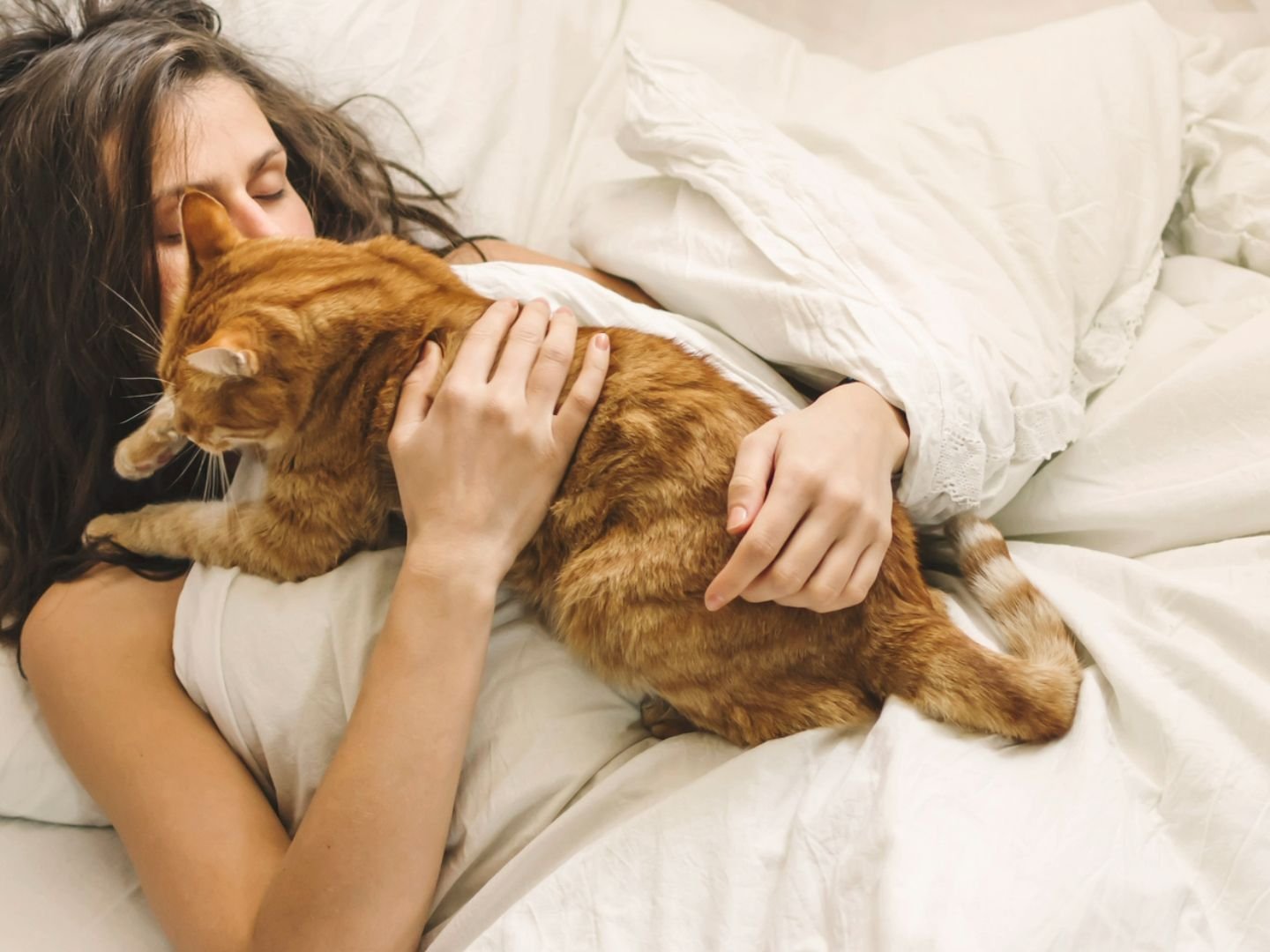
When your cat sleeps on your chest, it is choosing the most intimate sleeping spot on your body. Your chest is directly above your heart and lungs — two organs producing steady, rhythmic sounds and warmth around the clock.
This is not a coincidence. Cats are highly sensory animals. They notice heat, sound, movement, and scent before they settle anywhere.
Choosing your chest above all other locations — the couch, a cat bed, a warm blanket — is a deliberate act that communicates trust and attachment.
Why Does My Cat Sleep on My Chest? 11 Science-Backed Reasons
1. Your Body Heat Is Irresistible to Cats
Cats have a higher normal body temperature than humans, sitting at around 101 to 102.5 degrees Fahrenheit. To maintain it, they instinctively seek out warm surfaces.
Your chest radiates consistent, gentle body heat through the night. It is warmer than any cat bed, more reliable than a radiator, and softer than any blanket.
When the room cools overnight, your chest becomes the coziest spot in the house — better than anything money can buy from a pet store.
2. Your Heartbeat Is Deeply Comforting
The steady rhythm of your heartbeat has a powerful calming effect on cats. This behavior mirrors what kittens experience when nestled against their mother’s chest during the earliest weeks of life.
Young kittens feel the rise and fall of their mother’s breathing and the thrum of her heartbeat. That sensory memory stays with cats into adulthood.
When your cat presses against your chest, it is tapping into that earliest sense of safety. Your heartbeat says: this is a secure place.
3. Deep Trust and Emotional Bonding
Cats are most vulnerable when they sleep. In the wild, a sleeping cat is exposed to predators. So where a cat chooses to sleep reveals exactly who and what it trusts most.
When your cat sleeps on your chest, it is trusting you completely with its safety during its most vulnerable state. That is the highest compliment a cat can give.
Research confirms that cats form attachment bonds with their humans that parallel the bonds children form with caregivers. Your chest is your cat’s safe base.
4. Scent Mixing and Territory Marking
Cats use scent to communicate and to define their world. They have scent glands on their paws, cheeks, and body, and they use these glands to mark what belongs to them.
When your cat lies on your chest, it is blending its scent with yours. In cat language, this turns you both into a shared “scent family” — the trusted inner circle.
You will also notice that cats often love to sleep on worn clothing for the same reason. Your scent is familiar, safe, and deeply comforting to them.
5. The Oxytocin Connection
Science now confirms what cat owners have long suspected: physical closeness with a cat triggers the release of oxytocin — the bonding hormone — in both human and cat.
A February 2025 study found that owners who spent 15 relaxed minutes petting or cuddling their cats showed higher oxytocin levels, and the cats showed a parallel rise when the interaction was voluntary and comfortable.
When your cat chooses to lie on your chest, that hormonal exchange is happening. Both of you are literally bonding at a biological level.
6. Your Breathing Acts as a Lullaby
Beyond the heartbeat, the slow, deep rhythm of your breathing during sleep is another source of comfort for your cat.
The steady rise and fall of your chest mimics the motion of a mother cat’s breathing. It creates a rocking, rhythmic sensation that promotes relaxation.
Some cats even synchronize their own breathing to yours. It is a form of co-regulation — the kind of quiet, physical attunement that deepens emotional bonds.
7. Security and Protection
Cats may be skilled hunters, but they are also prey animals. Safety is always a background priority, especially during sleep.
Your body is one of the most protective places a cat can rest. You are large, familiar, and associated with shelter, food, and safety. Being on you feels guarded on all sides.
This is why cats sometimes turn their back to you while sleeping on your chest. It is not rudeness — it means they trust you completely to watch their back while they guard the room.
8. Stress Relief and Anxiety Reduction
Cats experiencing stress or anxiety often seek closeness with their trusted person. If something in the environment has changed — a new pet, a move, loud noises outside — your cat may sleep on your chest more than usual.
Your presence actively reduces your cat’s cortisol levels. The familiarity of your heartbeat, scent, and warmth acts as a direct anxiety buffer.
This is the same reason cats often choose to sleep on their person after a visit to the vet or during thunderstorm season.
9. Pillowing: An Instinctive Social Behavior
Cats that live together in social colonies engage in a behavior called “pillowing” — using each other as physical supports while sleeping. It reinforces social bonds and shared warmth.
When your cat sleeps on your chest, it is treating you as it would a trusted companion cat. You are its colony. You are its person.
This is particularly touching given that cats are often labeled as solitary and independent. Choosing to pillow on you is a conscious act of social closeness.
10. Your Voice Is Familiar and Soothing
Your chest is the closest point to your mouth when you are lying down. Your cat may instinctively position itself close to where your voice originates.
Cats learn their owner’s voice deeply. Your tone, rhythm, and pitch become associated with feeding, play, comfort, and safety over time.
Even when you are asleep and not speaking, being close to your mouth keeps your cat near the source of a voice it finds deeply reassuring.
11. Simply Because You Are Theirs
At the most fundamental level, your cat sleeps on your chest because it loves you. Cats are selective about affection in a way dogs are not.
When a cat chooses you — repeatedly, every night — it is expressing genuine preference. You are not just convenient. You are chosen.
Research in 2026 continues to push back against the outdated narrative that cats are aloof or indifferent. Multiple studies now show that cats display genuine attachment to their specific humans, not just to whoever feeds them.
What Your Cat Is Communicating When It Sleeps on Your Chest
| Behavior | What It Means |
|---|---|
| Sleeping directly on your chest | Deep trust, warmth-seeking, heartbeat comfort |
| Purring while on your chest | Contentment, relaxation, emotional bond |
| Kneading your chest while settling | Kittenhood reflex, extreme comfort and happiness |
| Sleeping with back turned to you | Total trust — letting you guard their back |
| Moving to your chest after stress | Seeking emotional comfort and security |
| Sleeping on you after a new pet arrives | Reasserting bond, scent marking, anxiety relief |
| Sleeping on you every single night | Strong attachment, routine-driven bonding |
The Science of Cat Purring on Your Chest
When your cat settles on your chest and starts purring, something remarkable happens. Cat purrs operate at frequencies between 25 and 150 Hz.
Research shows these specific frequencies are not just soothing sounds. They overlap with therapeutic frequency ranges used in medical settings to promote bone healing, tissue repair, and pain relief.
Regular exposure to a purring cat on your chest has been linked to lower blood pressure, reduced cortisol levels, better sleep quality, and decreased risk of cardiovascular disease. Having a cat is genuinely good for your heart — in more ways than one.
Health Benefits of Your Cat Sleeping on Your Chest
Letting your cat sleep on your chest is not just emotionally rewarding. The physical and psychological benefits are real and scientifically documented.
Lower stress and anxiety. Physical contact with a purring cat suppresses cortisol — the stress hormone — and promotes parasympathetic nervous system activity. The result is measurable relaxation.
Better sleep quality. Many cat owners report falling asleep faster and experiencing deeper sleep when their cat is nearby. The rhythmic purring functions as white noise, blocking disruptive sounds and quieting an active mind.
Reduced blood pressure. Studies consistently show that petting a cat — especially a purring one — lowers blood pressure and heart rate within minutes.
Increased oxytocin. A 2025 study confirmed that voluntary cat cuddles boost oxytocin in both owner and cat. This hormone promotes trust, reduces anxiety, and strengthens the emotional bond between species.
Emotional comfort. For people who live alone or manage anxiety, depression, or loneliness, the nightly presence of a cat on the chest provides consistent companionship and emotional anchoring.
Are There Any Downsides to Letting Your Cat Sleep on Your Chest?
For most people, the answer is no — the experience is genuinely positive. But there are a few situations worth considering.
Sleep disruption. If your cat is restless, shifts around frequently, or wakes you by kneading or purring loudly at 3am, your sleep quality may suffer over time.
Weight and breathing. Large cat breeds like Maine Coons or Ragdolls can weigh 15 to 20 pounds. A heavy cat on the chest can make breathing slightly more effortful for some people, particularly lighter sleepers.
Allergies. If you have a cat allergy, sleeping with your cat inches from your face dramatically increases your exposure to dander. This can worsen symptoms overnight and leave you congested or puffy-eyed in the morning.
Scratching reflex. If you roll over suddenly in your sleep, a startled cat may react by gripping with its claws. This is instinctive, not aggressive, but it can be jarring if you are in deep sleep.
Hygiene. Cats who go outdoors can bring allergens, pollen, and occasionally parasites into the bed. Regular flea prevention and keeping up with vet care minimizes this risk.
Does Every Cat Do This? Why Some Cats Prefer Not To
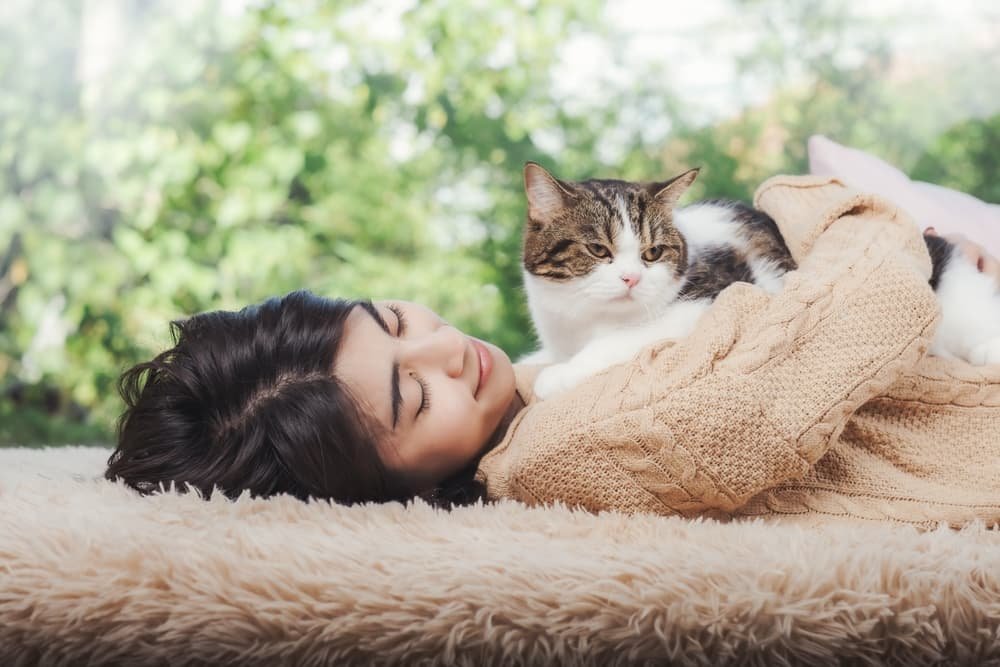
Not every cat sleeps on their owner’s chest — and that does not mean they love you less. Cats are individuals with distinct personalities and comfort preferences.
Some cats prefer to sleep beside you rather than on you. This is equally a sign of trust — they are choosing your space without needing to be physically on top of you.
Some cats prefer the foot of the bed, the pillow next to yours, or a nearby chair. Each of these positions still keeps them close while giving them the option to move freely.
Cats that were not handled much as kittens may be less comfortable with full-body contact. Cats that experienced trauma may take months or years to feel safe enough to sleep directly on a person.
If your cat sleeps near you but not on you, appreciate it for what it is: evidence of trust and affection, expressed on their own terms.
Why Does My Cat Suddenly Sleep on My Chest When It Never Did Before?
A sudden change in your cat’s sleeping behavior is worth paying attention to. Several things can trigger a new pattern of chest sleeping.
Environmental change. Moving house, a new pet, a new baby, or a change in your daily schedule can make your cat seek extra reassurance. You become their stable anchor.
Seasonal temperature drop. As it gets colder, your body heat becomes more attractive. Many cat owners notice their cats becoming clingier in autumn and winter.
Your emotional state. Cats are sensitive to human stress, grief, and illness. Research suggests that cats can detect changes in body chemistry. If you have been going through a difficult time, your cat may be responding to you — offering comfort even though you did not ask for it.
Your cat’s age. Senior cats often become more affectionate and seek closeness more than they did when younger. If your older cat has started sleeping on your chest, enjoy it.
Health changes in the cat. Occasionally, a cat that begins sleeping on its owner very frequently is experiencing discomfort and seeking warmth and reassurance. If this is paired with changes in appetite, behavior, or litter box habits, a vet check is a good idea.
Different Positions on Your Body and What They Mean
Cats do not always land on the chest. Where your cat prefers to sleep on or near you reveals something about its personality and your relationship.
| Sleep Location | What It Suggests |
|---|---|
| Directly on the chest | Maximum closeness, heartbeat comfort, deepest bond |
| On the stomach/lap | Warmth-seeking, comfort, contentment |
| Beside your head on the pillow | Strong scent connection, elevated vantage point |
| Curled behind your knees | Stability and warmth without risk of being disturbed |
| On your feet | Close proximity with easy escape route — typical of slightly reserved cats |
| Right next to you but not on you | Trust and bonding with preference for personal space |
How to Encourage or Gently Discourage Chest Sleeping
If You Want to Encourage It
Spend consistent time being still and relaxed with your cat. Cats choose to sleep on people they feel safe with in calm situations.
Avoid sudden movements, loud noises, or stressful environments before bed. Dim the lights, lower your voice, and let your cat choose to approach on its own.
Wear a consistent scent. Cats build associations quickly. If you wear the same pajamas or use the same lotion each night, your cat will begin to associate those cues with bedtime closeness.
If You Want to Gently Redirect It
Do not push your cat away abruptly or with frustration. This damages trust without solving the problem.
Instead, create an alternative that mimics what your chest offers. A heated cat bed placed at the same height as you mimics your body heat. A worn T-shirt placed in the bed transfers your scent.
Start the redirection before bed rather than at the moment your cat settles. Engage your cat in active play 20 to 30 minutes before sleep — a tired cat is more willing to settle in its own space.
If the cat bed is next to yours rather than across the room, many cats will accept the alternative more readily. They still want to be near you. They just do not need to be on you.
The Kneading Connection: Why Cats Knead While on Your Chest
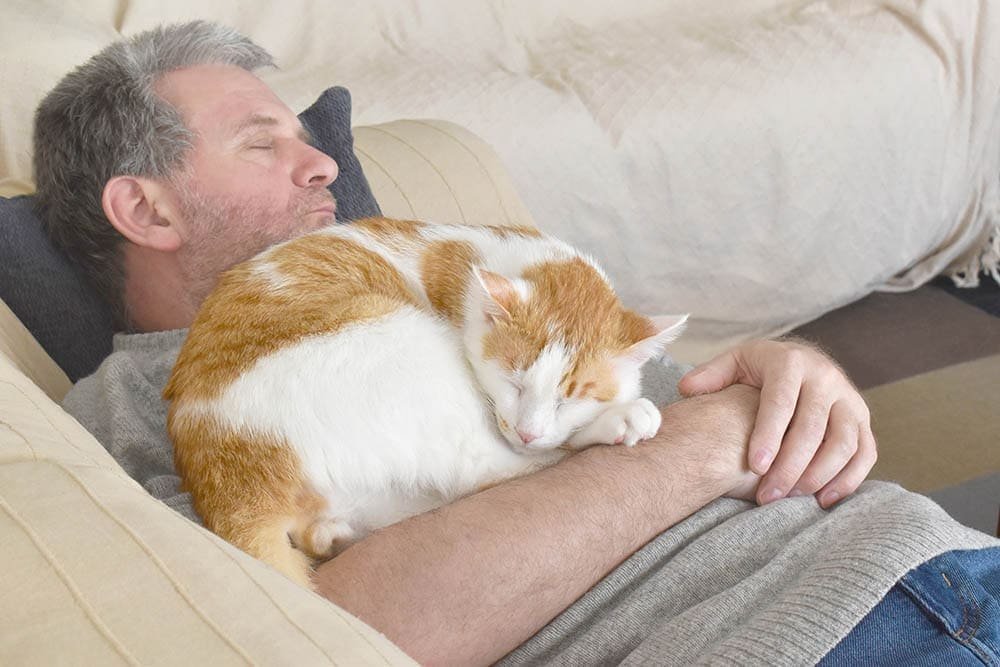
Many cats do not just lie on your chest — they knead it. This rhythmic pressing of alternate paws is sometimes called “making biscuits.”
Kneading originates in kittenhood. Kittens knead their mother’s belly to stimulate milk flow. The sensation is deeply associated with warmth, nourishment, and absolute safety.
When an adult cat kneads your chest, it is in a state of such deep comfort and happiness that it has regressed to this earliest, most joyful behavior. It is one of the purest expressions of contentment a cat can show.
Some cats knead with claws in, others with claws out. If it becomes uncomfortable, you can gently place a thick blanket between you and your cat without disturbing the moment.
What Cat Sleeping on Your Chest Says About Your Relationship
The behavior has been studied in the context of the broader human-animal bond, and the findings are consistently positive. Cats who sleep on or very near their owners display lower stress markers, more relaxed posture, and stronger attachment behaviors during interactions.
A 2026 study from Hungary explored whether all cats show attachment to owners. While results varied, the broader body of research continues to confirm that cats who choose close physical contact at rest are displaying genuine social bonding — not just opportunistic warmth-seeking.
If your cat sleeps on your chest every night, you are likely one of its most trusted and beloved figures in the world. That is not a small thing in the emotional life of a cat.
Frequently Asked Questions (FAQs)
Why does my cat sleep on my chest every night?
Your cat returns to your chest every night because it associates that spot with warmth, the sound of your heartbeat, your scent, and deep feelings of safety — all of which reinforce the habit through positive experience.
Is it safe to let my cat sleep on my chest?
For most healthy adults, yes. The main considerations are allergies, heavy breeds that may affect breathing, and light sleepers who may be disturbed by cat movement — otherwise it is safe and even beneficial.
Does my cat sleeping on my chest mean it loves me?
Yes. Cats are selective about who they sleep on. Choosing your chest repeatedly is one of the strongest signals of trust, attachment, and genuine affection a cat can display.
Why does my cat purr while sleeping on my chest?
Purring on your chest signals deep contentment and relaxation. Your cat feels completely safe, warm, and emotionally bonded — purring is its way of expressing that happiness at a physiological level.
What does it mean when my cat kneads my chest before sleeping?
Kneading is a kittenhood reflex associated with deep comfort and happiness. When your cat kneads your chest, it is in a state of complete relaxation and is expressing profound contentment and trust.
Why did my cat suddenly start sleeping on my chest?
Sudden chest sleeping is usually triggered by a change in environment, colder weather, a shift in your emotional state, or your cat seeking extra reassurance due to a new pet or disrupted routine.
Should I let my cat sleep on my chest if I have allergies?
If you have a cat allergy, sleeping with your cat on your chest will increase dander exposure significantly overnight. Using allergy-reducing bedding, bathing your cat regularly, and running an air purifier can help, but avoidance is the most effective option.
Do cats sleep on your chest because they are marking you?
Partly, yes. As your cat lies on your chest, it blends its scent with yours through its fur and body contact. In cat social language, this scent mixing is a form of marking that signals you belong to its trusted inner circle.
Why does my cat prefer my chest over a cat bed?
Your chest offers body heat, heartbeat sound, your unique scent, gentle movement from breathing, and the emotional comfort of closeness — a combination no cat bed, however expensive, can replicate.
Is my cat trying to comfort me when it sleeps on my chest?
Research suggests cats can detect changes in human emotion, body chemistry, and stress levels. Many cats actively seek closeness with their person during periods of illness or emotional difficulty — so yes, sometimes your cat is looking after you.
Conclusion
Why does my cat sleep on my chest every night comes down to one powerful truth: your cat has chosen you. The warmth of your body, the rhythm of your heartbeat, the comfort of your scent, and the safety of your presence all combine into the perfect resting place.
Science in 2026 confirms what cat owners have always felt — this behavior is rooted in real attachment, real oxytocin, and real emotional bonding.
Whether your cat has done this for years or just started, it is one of the most meaningful things a cat can do. Settle in, enjoy the purring, and know you are deeply trusted.


