


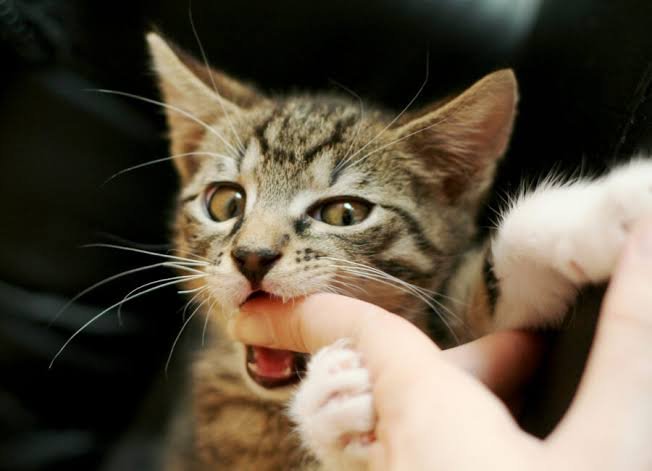
Why does my cat bite me? It’s one of the most common questions cat owners ask, especially when the bite comes out of nowhere. One second you’re petting your cat and they seem happy, the next you’re pulling your hand back in surprise.
The truth is, biting is just how cats talk. A gentle nip can mean love, overstimulation, or a simple request for space. A harder bite can signal fear, pain, or stress.
Love Bite vs Aggressive Bite: Quick Comparison
Not all cat bites mean the same thing. The table below makes it easy to compare the two at a glance.
| Feature | Love Bite | Aggressive Bite |
|---|---|---|
| Pressure | Light, no skin break | Hard, often breaks skin |
| Body language | Relaxed, slow blink, purring | Flattened ears, tense body |
| Tail | Still or gently swaying | Flicking or thumping |
| Warning | Little to none | Hissing, growling, staring |
| Follow-up | Cat stays close | Cat retreats or attacks again |
What Is a Cat Love Bite?
A love bite is a soft, gentle nip your cat gives during petting or cuddling. It rarely breaks the skin.
Cats do this because it mimics grooming behavior between littermates or a mother cat and her kittens. It’s a sign of trust, not aggression.
Why Do Cats Play Bite?
Play biting is extremely common in kittens and young cats. It comes from natural hunting instincts.
Fast-moving hands, feet, or toes can look like prey to a playful cat. Redirecting this energy toward toys instead of skin usually solves the problem quickly.
Kittens separated from their littermates too early often miss out on learning proper bite control. This can make play biting more intense in adulthood.
Overstimulation: When Petting Goes Too Far
Many cats love short bursts of affection but dislike long petting sessions. This is called overstimulation or petting-induced aggression.
Watch for tail flicking, skin twitching, or ears turning back mid-pet. These are early signs your cat has had enough.
Cats generally prefer being touched around the head, cheeks, and neck. Long strokes down the back or belly rubs are more likely to trigger a bite.
Fear-Based Biting Explained
A frightened cat may bite suddenly and with more force than usual. This is a defensive reaction, not an attack.
Loud noises, unfamiliar visitors, vet visits, or being cornered can all trigger fear biting. The cat is trying to protect itself, not hurt you.
Cats with a history of rough handling or a difficult past are often quicker to bite out of fear than cats with calm, stable histories.
Redirected Aggression in Cats
Sometimes your cat isn’t actually upset with you at all. They may be reacting to something else entirely, like another cat outside the window.
Because they can’t reach the real trigger, the nearest person or pet becomes the target. This is known as redirected aggression.
Territorial Biting
Cats are naturally territorial, especially in multi-cat households. Biting can be a way of defending space, food, or a favorite resting spot.
This type of biting is more common when a new pet, baby, or roommate has recently joined the home.
Pain and Medical Causes of Sudden Biting
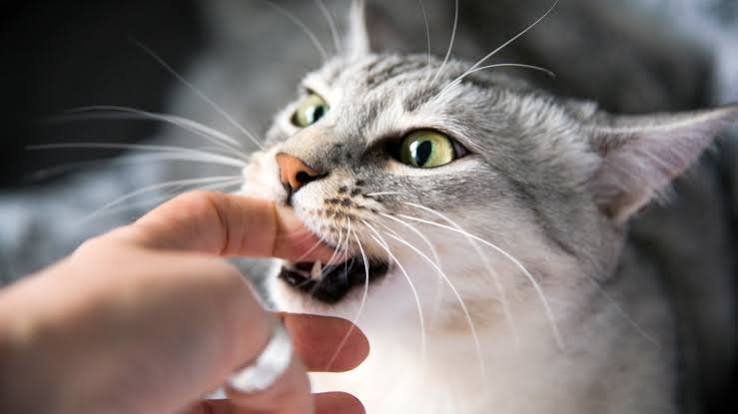
If a normally gentle cat suddenly starts biting, a health issue could be the cause. Cats often hide pain very well.
Arthritis, dental disease, skin infections, or internal pain can all make normal touch feel unpleasant. Biting becomes their only way to say “that hurts.”
A sudden change in biting behavior is one of the clearest signs it’s time to book a vet appointment.
Attention-Seeking Bites
Some cats learn that biting gets an instant reaction. If you jump, yell, or immediately pay attention, the behavior gets reinforced.
The fix is simple in theory: stay calm, remove attention, and redirect to a toy instead of reacting dramatically.
Night Biting and Crepuscular Behavior
Cats are crepuscular, meaning they’re naturally most active at dawn and dusk. This is why some cats nibble feet or hands at 2 a.m.
Providing an active play session before bedtime helps burn off that energy so it doesn’t turn into a midnight bite.
Stress and Environmental Changes
Cats are highly sensitive to change. A new pet, new furniture, moving homes, or even rearranged rooms can raise anxiety levels.
Increased stress lowers a cat’s tolerance for touch and interaction, which can show up as more frequent nipping or biting.
Warning Signs Before a Cat Bites
Most bites don’t come completely without warning. Cats usually give body language cues first.
| Warning Sign | What It Means |
|---|---|
| Flattened ears | Fear or irritation |
| Tail flicking or thumping | Growing frustration |
| Dilated pupils | Overstimulation or fear |
| Skin twitching along the back | Sensory overload |
| Low growl or hiss | Clear warning to stop |
| Stiff body posture | Tension building |
How to Tell If It’s a Love Bite
A few quick checks can help you decode the bite in the moment.
- No broken skin and light pressure usually means affection.
- Purring or slow blinking before the bite points to a love bite.
- A relaxed tail and soft eyes support a friendly interpretation.
- Sudden stiffness or a hard clamp down usually signals aggression instead.
How to Stop Your Cat From Biting
Training a cat out of biting takes patience, not punishment. Yelling or hitting almost always makes the behavior worse.
Use toys instead of hands during play so your cat never learns that skin is an acceptable target. Reward calm behavior with treats or gentle praise.
If your cat gives warning signs like tail flicking, stop petting immediately and walk away calmly. This teaches them that space is available without needing to bite.
Keep a predictable daily routine with regular play and feeding times. Cats feel calmer, and bite less, when life feels consistent.
What to Do If a Cat Bite Breaks Skin
Cat bites can be more serious than they look. Their sharp teeth create small but deep puncture wounds that trap bacteria under the skin.
Wash the area with soap and water for several minutes right away. Apply an antiseptic and keep an eye out for redness, swelling, or pus over the next day or two.
Deep or infected bites should be checked by a doctor, since bacteria like Pasteurella can spread quickly if left untreated.
When to See a Vet or Doctor
See a veterinarian if your cat’s biting is sudden, frequent, or paired with other behavior changes like hiding or appetite loss.
See a physician if a bite breaks the skin, especially on the hands or face, or if you notice signs of infection within 24 to 48 hours.
Frequently Asked Questions (FAQs)
1. Why does my cat bite me when I pet them?
This is usually overstimulation or a love bite. Watch for tail flicking or ear position to tell the difference.
2. Why does my cat bite me out of nowhere?
Sudden bites often signal fear, redirected aggression, or an underlying medical issue. A vet check is a good first step.
3. Why does my cat bite me and then lick me?
Licking followed by biting mimics grooming behavior. It’s typically a sign of affection, not aggression.
4. Why does my cat bite my feet at night?
Cats are most active at dawn and dusk, so nighttime biting is often playful hunting behavior. More evening playtime usually helps.
5. Why does my cat bite me while purring?
Purring during a gentle nip almost always points to a love bite rather than aggression or fear.
6. Is it bad if my cat bites me softly?
No, soft nips that don’t break skin are usually harmless affection. Frequent hard biting is worth addressing through training.
7. Why does my cat bite me when I stop petting?
Some cats bite to ask for more attention, while others bite because they were already overstimulated. Context and body language reveal which one it is.
8. Can stress make my cat bite me more?
Yes, stress from changes at home can lower a cat’s patience and increase nipping or biting incidents.
9. Should I punish my cat for biting?
No, punishment increases fear and often makes biting worse. Positive reinforcement and redirection work far better.
10. When should I worry about a cat bite?
Worry if the bite breaks skin, shows signs of infection, or if your cat’s biting behavior changes suddenly and repeatedly.
Conclusion
So, why does my cat bite me? The answer almost always comes down to communication. Cats use their teeth the way humans use words, whether they’re saying “I love you,” “I’ve had enough,” “I’m scared,” or “something hurts.” Learning to read the difference between a gentle love bite and a tense, aggressive one gives you the power to respond correctly every time.
Most biting can be reduced with patience, consistent play, and respect for your cat’s limits. Watch their body language, avoid punishment, and redirect play energy toward toys instead of hands. If biting suddenly changes in frequency or intensity, a vet visit can rule out pain or illness. With time and understanding, most cats bite far less, and the bond between you and your feline friend only gets stronger.


