


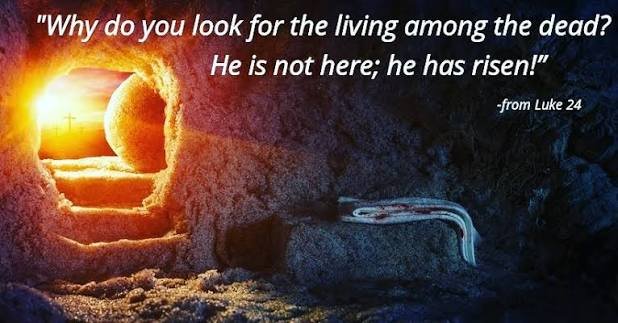
Why do you look for the living among the dead? This question, spoken by angels to the women at Jesus’ empty tomb, is one of the most powerful lines in the entire Bible. Found in Luke 24:5, it marks the moment the women realize Jesus is no longer among the dead but has risen.
The verse is short, but its meaning runs deep, touching on hope, faith, resurrection, and where we look for meaning in our own lives.
What Does Luke 24:5 Say?

In the King James Version, the verse reads: “And as they were afraid, and bowed down their faces to the earth, they said unto them, Why seek ye the living among the dead?”
Other translations phrase it slightly differently, such as “Why do you look for the living among the dead?”
The core meaning stays the same across every translation and version.
It is a question asked by two men in dazzling clothes, understood to be angels, to a group of women visiting Jesus’ tomb.
The Context of Luke 24:5
This verse appears at the very beginning of Luke’s resurrection account.
Several women had come to the tomb at dawn to anoint Jesus’ body with spices.
Instead of finding a sealed tomb, they found the stone rolled away and the body missing.
Confused and afraid, they were suddenly met by two men in shining garments who asked this striking question.
Who Were the Women at the Tomb?
Luke’s Gospel names several women present at the tomb that morning.
Mary Magdalene, Joanna, and Mary the mother of James are specifically mentioned in the passage.
These women had followed Jesus throughout his ministry and witnessed his crucifixion firsthand.
Their presence at the tomb highlights their devotion, since they came prepared to properly anoint his body.
Why Were the Women Looking for Jesus’ Body?
According to Jewish burial customs of the time, bodies were anointed with spices and oils.
Because Jesus died shortly before the Sabbath, there wasn’t time to fully prepare his body before burial.
The women waited until the Sabbath ended, then went to the tomb early Sunday morning to finish this task.
They expected to find a dead body, not an empty tomb and an unexpected message.
Who Asked the Question in Luke 24:5?
The passage describes two men in clothes that gleamed like lightning standing beside the women.
Luke does not explicitly call them angels in this verse, though the other Gospels support this understanding.
Their sudden appearance and radiant clothing align with how angels are described elsewhere in scripture.
Their question is meant to redirect the women’s understanding of what had just happened.
Table: How Different Bible Translations Word Luke 24:5
| Translation | Wording |
|---|---|
| KJV | Why seek ye the living among the dead? |
| NIV | Why do you look for the living among the dead? |
| NLT | Why are you looking among the dead for someone who is alive? |
| NKJV | Why do you seek the living among the dead? |
| ESV | Why do you seek the living among the dead? |
The Deeper Meaning of “Why Do You Look for the Living Among the Dead?”
This question is more than a simple observation about an empty tomb.
It challenges the women, and readers today, to reconsider where they expect to find life, hope, and meaning.
The question implies that searching for Jesus among the dead no longer makes sense, since he has risen.
It invites a shift in perspective from grief and death toward hope and resurrection.
Why This Question Still Matters Today
Many people, even today, search for meaning, comfort, or answers in places that cannot truly satisfy.
The angels’ question can be applied metaphorically to modern struggles with materialism, despair, or misplaced priorities.
It asks believers to examine whether they’re seeking life and hope in the right places.
This is part of why the verse continues to resonate deeply during Easter reflections and sermons.
The Theme of Resurrection and Hope
Luke 24:5 sits at the heart of the resurrection narrative, the central event of Christian faith.
Without the resurrection, the entire foundation of Christian belief would not hold together.
The verse marks the turning point from despair to joy, from death to new life.
It reminds readers that Jesus’ victory over death offers hope beyond physical mortality.
How This Verse Connects to the Rest of Luke 24
Immediately after asking the question, the angels remind the women of Jesus’ own words.
Jesus had previously told his followers he would be crucified and rise again on the third day.
Hearing this reminder, the women suddenly recall his earlier teaching and its fulfillment.
This moment of remembrance becomes a turning point, prompting them to share the news with the disciples.
Comparing Luke’s Account With Other Gospels
Each Gospel offers a slightly different angle on the resurrection morning.
Matthew’s Gospel describes an angel who rolled away the stone and spoke directly to the women.
Mark’s Gospel describes a young man in a white robe sitting inside the tomb.
John’s Gospel focuses more closely on Mary Magdalene’s personal encounter with the risen Jesus.
Table: Resurrection Accounts Across the Gospels
| Gospel | Key Detail |
|---|---|
| Matthew | An angel rolls away the stone and speaks to the women |
| Mark | A young man in white robes sits inside the tomb |
| Luke | Two men in dazzling clothes ask the pivotal question |
| John | Mary Magdalene has a personal encounter with the risen Jesus |
Why the Women Were the First Witnesses
In first-century Jewish culture, women’s testimony was not typically considered legally reliable.
The fact that women were the first witnesses to the resurrection is seen by many scholars as a mark of authenticity.
If the resurrection account were fabricated, it would have been unusual to choose women as the primary witnesses.
This detail strengthens the historical credibility of the Gospel accounts for many readers and scholars.
The Disciples’ Initial Reaction
When the women reported what they had seen and heard, the disciples did not immediately believe them.
Luke describes their words as seeming like “nonsense” to the apostles at first.
This reaction shows that even those closest to Jesus needed time and evidence to accept the resurrection.
Peter eventually ran to the tomb himself to verify what the women had said.
Applying Luke 24:5 to Everyday Life
Many pastors and teachers use this verse to challenge people to examine where they seek fulfillment.
It can be applied to searching for happiness in possessions, status, or fleeting pleasures instead of lasting hope.
It also speaks to holding onto grief or past pain instead of embracing new life and healing.
The verse invites reflection on whether we’re looking for life in places that can’t truly provide it.
Common Sermon Themes Drawn From This Verse
Pastors often use Luke 24:5 during Easter services to emphasize the reality of the resurrection.
It is frequently used to encourage believers to move from doubt to faith, following the women’s example.
Some sermons focus on the theme of misplaced searching, encouraging listeners to seek life in Christ rather than elsewhere.
Others highlight the courage of the women, who were the first to proclaim the resurrection despite their fear.
Table: Key Themes in Luke 24:5 Sermons
| Theme | Focus |
|---|---|
| Resurrection hope | Christ’s victory over death and its meaning for believers |
| Misplaced searching | Looking for fulfillment in the wrong places |
| Faith over doubt | Moving from fear and confusion to belief |
| Courage and witness | The women’s role as first messengers of the resurrection |
Why the Question Format Matters
The angels chose to ask a question rather than simply state a fact.
Questions invite reflection and self-examination in a way that direct statements often do not.
This rhetorical approach encourages readers, both then and now, to pause and reconsider their own assumptions.
It’s a technique used elsewhere in scripture to prompt deeper thought rather than passive acceptance.
Historical and Cultural Background of Tomb Visits
In ancient Jewish tradition, visiting a tomb shortly after burial was a common act of mourning and care.
Anointing a body with spices was both a practical and deeply respectful cultural practice.
The women’s visit was expected and unremarkable, until they encountered the empty tomb and angelic message.
This cultural context helps explain both their initial fear and their eventual joy.
Symbolism of Light in the Passage
The two men are described as wearing clothes that gleamed like lightning.
Light is often used throughout scripture to symbolize divine presence, truth, and revelation.
This imagery reinforces the significance of the moment as a divine encounter rather than an ordinary event.
It also visually contrasts with the darkness and fear associated with death and the tomb.
How Artists and Writers Have Interpreted This Verse
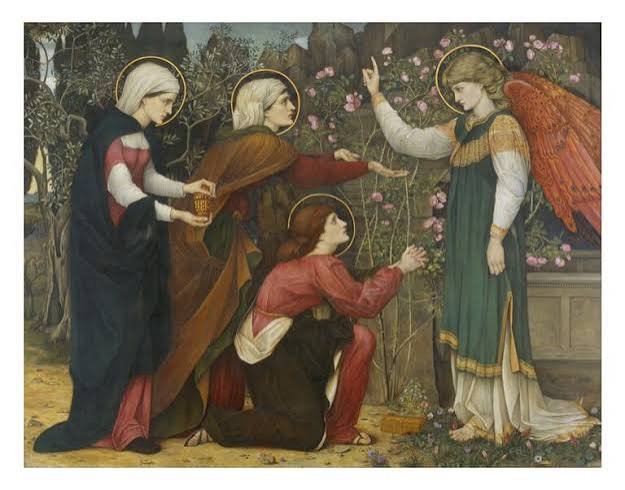
Luke 24:5 has inspired countless works of religious art depicting the empty tomb scene.
Many paintings focus on the moment of the angels’ appearance and the women’s reaction of awe and fear.
Writers and theologians have also used the verse as a metaphor in books, sermons, and devotionals.
Its poetic and thought-provoking phrasing makes it a popular reference point beyond strictly religious contexts.
Luke 24:5 in Modern Christian Reflection
Today, many devotionals use this verse to challenge readers during times of personal struggle or doubt.
It’s often paired with reflections on letting go of past grief and embracing renewed hope.
Some writers connect it to the idea of spiritual growth, encouraging believers to move beyond old patterns.
The verse’s timeless question continues to resonate across different generations and church traditions.
Frequently Referenced Related Bible Verses
Several other passages connect thematically with Luke 24:5 and its message of resurrection.
John 11:25 records Jesus saying, “I am the resurrection and the life.”
1 Corinthians 15 discusses the theological significance of the resurrection at length.
Matthew 28 and Mark 16 offer parallel resurrection accounts that complement Luke’s narrative.
Table: Related Verses Worth Studying Alongside Luke 24:5
| Verse | Connection |
|---|---|
| Matthew 28:1-10 | Parallel resurrection account with an angel’s message |
| Mark 16:1-8 | Another Gospel’s version of the empty tomb scene |
| John 20:1-18 | Mary Magdalene’s personal encounter with the risen Jesus |
| John 11:25 | Jesus’ declaration as the resurrection and the life |
| 1 Corinthians 15 | Theological explanation of the resurrection’s importance |
Why This Verse Is Popular for Easter Messages

Luke 24:5 captures the emotional turning point of the entire Easter story in a single question.
It transitions the narrative from grief and confusion to hope and celebration.
Its short, memorable phrasing makes it easy to reference in sermons, cards, and devotionals.
Many churches highlight this verse specifically during sunrise services on Easter morning.
Key Takeaways From Luke 24:5
The verse marks the moment the women discover Jesus is no longer among the dead.
It carries both a literal and metaphorical challenge to reconsider where we search for life and hope.
It connects directly to the broader theme of resurrection central to Christian faith.
Its question format continues to prompt reflection across generations of readers and believers.
The Role of Fear in the Passage
Luke describes the women as afraid when they encountered the two men in shining garments.
Fear is a common human response to encountering the divine or the unexplainable throughout scripture.
This fear quickly shifts into a mixture of confusion, wonder, and eventually joy as understanding dawns.
The emotional journey from fear to faith mirrors a pattern seen often in biblical resurrection and revelation accounts.
The Empty Tomb as Evidence
The empty tomb itself serves as a central piece of evidence in the resurrection narrative.
If Jesus’ body had remained in the tomb, the entire message of the angels would have made no sense.
The absence of the body, combined with the angelic explanation, together form the foundation of the resurrection claim.
Many theologians point to the empty tomb as one of several historical arguments supporting the resurrection’s authenticity.
Why the Stone Was Rolled Away
Interestingly, the stone was not rolled away to let Jesus out, since a resurrected body would not need a physical opening.
Instead, many scholars suggest the stone was removed to let the women, and later the disciples, see the empty tomb for themselves.
This detail shifts the focus from a miraculous escape to a revealed truth meant to be witnessed.
It reinforces the theme that the resurrection was meant to be discovered and proclaimed, not hidden.
The Women’s Response After the Angels’ Question
After being reminded of Jesus’ own words, the women immediately remembered his earlier teaching.
Luke notes that they then left the tomb and reported everything to the eleven remaining disciples.
Their quick action shows a shift from fear to conviction, prompting them to become the first messengers of the resurrection.
This response models a pattern many sermons highlight: encountering truth leads naturally to sharing it with others.
The Broader Structure of Luke 24
Luke 24 is often divided into several key sections, each building on the resurrection theme.
The chapter opens with the empty tomb account, followed by the road to Emmaus encounter.
It continues with Jesus appearing to the wider group of disciples in Jerusalem.
The chapter closes with Jesus’ ascension, tying together the full arc of his resurrection appearances.
Table: Structure of Luke Chapter 24
| Section | Verses | Key Event |
|---|---|---|
| Empty tomb | 1-12 | Women discover the tomb empty and hear the angels’ message |
| Road to Emmaus | 13-35 | Jesus appears to two disciples without being immediately recognized |
| Appearance to disciples | 36-49 | Jesus appears to the wider group in Jerusalem |
| The ascension | 50-53 | Jesus is taken up into heaven after blessing the disciples |
Why Luke’s Gospel Emphasizes Eyewitness Testimony
Luke, as a historian, places strong emphasis on eyewitness accounts throughout his Gospel.
He opens his Gospel by stating his intention to provide an orderly, carefully investigated account.
The inclusion of named women as primary witnesses fits this broader commitment to documented, credible testimony.
This emphasis strengthens the historical weight many readers place on Luke’s resurrection narrative.
How This Verse Is Used in Christian Art and Hymns
Beyond sermons, this verse has inspired hymns, songs, and devotional writings centered on Easter hope.
Many worship songs reference the empty tomb and the angels’ question as a symbol of victory over death.
Religious paintings often depict the moment of the angels speaking to the awestruck women at the tomb entrance.
This lasting creative influence shows how deeply the verse has embedded itself in broader Christian culture.
Reflecting on Where We “Look for the Living”
Beyond its historical context, many readers apply this verse to personal areas of their lives.
Some reflect on relationships or habits that no longer bring genuine life or growth.
Others consider career paths, ambitions, or comparisons that leave them feeling empty rather than fulfilled.
The verse encourages an honest evaluation of whether current pursuits truly lead toward life or merely resemble it.
Practical Ways to Apply This Verse Personally
Consider journaling about areas in life where you may be seeking fulfillment in the wrong places.
Reflect on past disappointments or losses, and consider where genuine hope and renewal might be found instead.
Discuss this verse in a small group or Bible study setting to hear different personal interpretations.
Revisit this passage each Easter season as a recurring reminder of its central message.
Frequently Asked Questions (FAQs)
1. What does Luke 24:5 mean?
It means Jesus is no longer among the dead because he has risen, challenging the women’s expectations at the tomb.
2. Who said “Why do you look for the living among the dead”?
Two men in dazzling clothes, understood to be angels, spoke this question to the women at the tomb.
3. Which women were at the tomb in Luke 24:5?
Mary Magdalene, Joanna, and Mary the mother of James are named among the women present.
4. Why is this verse significant for Easter?
It marks the turning point from grief to joy, confirming Jesus’ resurrection from the dead.
5. How does Luke’s account differ from Matthew’s or Mark’s?
Luke describes two men speaking to the women, while Matthew and Mark describe one angel or young man.
6. What is the metaphorical meaning of this verse today?
It challenges people to stop seeking fulfillment or hope in places that cannot truly provide lasting life.
7. Why were women the first witnesses of the resurrection?
Their testimony, though culturally undervalued at the time, adds historical credibility to the Gospel accounts.
8. What did the disciples think when the women reported the news?
The disciples initially doubted the women’s report, believing it sounded like nonsense.
9. What other Bible verses connect to Luke 24:5?
Matthew 28, Mark 16, John 20, and John 11:25 all relate closely to this resurrection theme.
10. Why do sermons often focus on this specific verse?
Its short, thought-provoking question format makes it a powerful, memorable centerpiece for Easter messages.
Conclusion
Luke 24:5 captures one of the most profound moments in the entire Bible: the instant the women realize Jesus is no longer among the dead. The angels’ question, “Why do you look for the living among the dead?” challenges readers then and now to reconsider where they search for hope, meaning, and life.
It marks the turning point of the resurrection story, shifting the narrative from grief to joy and from death to new life. This verse continues to inspire Easter sermons, personal reflection, and countless works of art because of its timeless, thought-provoking nature.
Whether read as historical account or personal challenge, Luke 24:5 invites believers to stop seeking life in the wrong places and instead embrace the hope found in the resurrection of Christ.


