


Why do people call cops 12? If you have heard this in a rap song, seen it on a protest sign, or caught it flying around social media and had no idea what it meant, you are in the right place.
The term is one of the most widely recognized pieces of modern American street slang, used daily in music, online conversations, and real-life situations across the country.
Despite how common it is, the exact origin of the number remains genuinely debated.
What Does “12” Mean in Slang?
In street slang and urban culture, “12” is a term used to refer to police officers or law enforcement in general. It functions primarily as a warning word.
When someone shouts “12!” it means police are nearby. It carries the same immediate urgency as yelling “run” or “scatter,” and people who know the term understand it instantly.
The number is used across rap music, social media, protests, group chats, and everyday street conversation. In hip-hop contexts, it can be neutral or charged depending on how it is used. In protest settings, it carries a significantly sharper, more openly anti-police meaning.
Why Do People Call Cops 12? Every Major Theory Explained
There is no single clean origin story, and that is part of what makes the term so fascinating to trace. Researchers, linguists, and communities themselves point to several overlapping explanations. Here is each one examined in full.
Theory 1: The 10-12 Police Radio Code
The most widely cited and best-supported explanation connects the term to the 10-code system used by law enforcement for radio communication throughout the mid-20th century.
Police departments across the United States adopted numerical radio codes starting with “10” to communicate quickly and efficiently over radio transmissions. These codes were not standardized nationally, meaning different departments used different numbers to mean different things, but many jurisdictions used “10-12” to indicate something like “visitors present,” “bystanders on scene,” or “stand by due to civilian presence.”
The theory holds that communities in close proximity to police activity, particularly Black and lower-income urban communities subject to heavy law enforcement presence, heard officers use the code “10-12” over police scanners and radios over many years.
Over time, “10” was dropped in casual speech and just “12” remained. Community members began using “12” as a shorthand warning that police were in the area, a coded way of alerting others without saying the word “police” outright.
This explanation has strong internal logic. The 10-code system demonstrably influenced other police slang, most notably “187,” which comes directly from California Penal Code Section 187 defining homicide and is now one of the most recognized pieces of American slang in the world. If one police code entered street vocabulary, others could too.
The weakness of this theory is that 10-codes were not standardized. “10-12” did not mean the same thing in every department, and no single documentation of the transition from code to street slang has been found.
Theory 2: The Adam-12 Television Show
A second major explanation points to the television show Adam-12, which ran from 1968 to 1975 on NBC. The show followed two LAPD officers patrolling Los Angeles in their patrol unit, which was called “1-Adam-12” on police radio.
The show was enormously popular. It was one of the most realistic and widely watched police procedurals of its era, created in consultation with the LAPD. Every episode opened with the dispatcher calling “1-Adam-12,” embedding the phrase and the number 12 deeply into the pop culture memory of an entire generation.
The theory is that “12” became shorthand for police in general because of how closely the show associated the number with law enforcement identity. This is exactly how “5-0” entered the language, which is a reference to the equally popular TV show Hawaii Five-O, another cop drama from the same era.
Pop culture expert Caroline Ortiz described it plainly: every episode of Adam-12 used the radio call sign “1-Adam-12” and it became part of shared pop culture memory. Given that “5-0” demonstrates that a TV show can absolutely create a lasting police nickname, this theory is credible.
The main objection is timing. Adam-12 ended in 1975, and “12” as a widespread slang term did not enter national consciousness until the 2010s, a gap of nearly four decades that is hard to explain.
Theory 3: Atlanta’s Narcotics Unit Numbers
The third theory has strong geographic and cultural support and is particularly compelling given where the term demonstrably spread from.
This explanation traces “12” to Atlanta, Georgia, in the 1970s and 1980s. Specifically, it claims that narcotics enforcement officers in Atlanta’s police department were associated with unit numbers that began with “12.”
Drug dealers and street lookouts began using “12!” as a coded shout-out whenever they spotted these specific narcotics officers approaching. The goal was practical: give everyone in the area enough time to hide drugs, flush product, or scatter before the unit arrived.
The number stuck precisely because it referred to that specific, feared type of police officer, the drug enforcement agent, rather than all police broadly. Over time in Atlanta street culture, “12” expanded from meaning narcotics officers specifically to referring to police in general.
This theory has the strongest geographic support. Atlanta is the undisputed origin point of the term’s mainstream spread. The term is documented most densely in the South, particularly in Georgia, and thinner elsewhere, which is exactly what you would expect if it originated locally and spread outward. Additionally, Migos, the rap group most responsible for the term going national, are from Gwinnett County just outside Atlanta, and their use of “12” specifically in a narcotics raid context matches this origin story perfectly.
Theory 4: The L = 12 Letter Alphabet Code
A lesser-cited theory connects “12” to the letter L, which is the 12th letter of the English alphabet. “L” in this interpretation stands for “Law,” making “12” a coded substitution for the concept of law enforcement.
This explanation is simpler and more purely symbolic than the others. It does not require a radio code, a TV show, or a specific city’s history. The idea is that in communities where coded language around police was essential for safety, substituting numbers for letters was a natural linguistic move.
This theory is considered less likely by most researchers because no documented evidence traces the usage back to this specific substitution. It reads more as a post-hoc rationalization than a traceable origin.
Theory 5: The ACAB / 1312 Connection
A more politically charged theory connects “12” to ACAB, which stands for “All Cops Are Bastards.” This phrase originated in British punk and protest culture in the 1970s before reaching the United States.
In number substitution code, where letters are replaced by their position in the alphabet, ACAB becomes 1-3-1-2. Some communities and protesters began writing “1312” as a coded version of ACAB, particularly on social media where the phrase itself might trigger content filters or account bans.
The theory suggests that “12” was shortened from “1312” as a further compression of this protest shorthand.
Most researchers and linguists consider this connection weak. The ACAB-to-1312 substitution came after “12” was already in widespread use as police slang, making it almost certainly a coincidence rather than an origin.
The Timeline: How “12” Went From Street Warning to National Slang
Understanding when and how the term spread is as important as understanding where it came from.
| Year / Period | Development |
|---|---|
| 1968 – 1975 | Adam-12 airs on NBC, embedding the number 12 in police pop culture |
| 1970s – 1980s | Atlanta narcotics unit culture uses “12” as a street warning locally |
| 1990s – 2000s | Term circulates in Atlanta street and hip-hop culture; artists use it regionally |
| June 2013 | Migos releases “F*ck 12” on mixtape Y.R.N. (Young Rich Niggas); term goes national |
| 2014 | Ferguson, Missouri protests; “Fuck 12” appears on signs and social media nationally |
| 2016 – 2019 | Future, Young Thug, Gucci Mane, and others use the term in mainstream tracks |
| 2020 | Black Lives Matter protests following George Floyd’s death; term reaches global awareness |
| 2021 – 2026 | “12” fully integrated into American slang across all demographics and regions |
The single most important moment in the national spread of “12” came in June 2013 when Migos released their song on Y.R.N. The lyrics directly referenced police and DEA agents raiding a trap house, telling people to throw drugs away because the narcotics cops were outside. Millions of listeners outside Atlanta heard the term for the first time.
By 2014, during the protests following the police shooting of Michael Brown in Ferguson, Missouri, “Fuck 12” appeared on protest signs, car windows, and social media posts across the country. A regional Atlanta street term had become a national political statement in less than two years.
Why “12” as a Number Works So Well as Slang
The fact that “12” is a number rather than a word gives it distinct advantages as street slang, and this is part of why it spread so efficiently.
Numbers carry no obvious connection to their coded meaning for outsiders. If someone who did not know the term heard it shouted on a street corner, they would have no idea it referred to police. A word like “cops” is self-explanatory; “12” is not. This opacity is precisely the point.
Numbers are also short, fast, and easy to shout across distances or text in a single character. In urgent situations where a fast warning matters, a two-syllable number beats a three-syllable word every time.
Additionally, as Bushwick Bill of the Geto Boys famously described, street slang around police has always needed to evolve constantly. Once police learn the current terms, communities develop new ones. Numbers are harder for automated monitoring tools and law enforcement to flag than obviously police-related words, giving coded numerical language a practical survival advantage in the digital age.
“12” in Hip-Hop: Songs, Artists, and Cultural Impact
Hip-hop has been the single most powerful vehicle for spreading police slang from regional to national to global. “12” is no exception, but its journey through rap culture reveals something deeper about the relationship between the genre and the communities it emerged from.
Migos and the National Breakthrough
Migos’ 2013 release is the watershed moment. The trio from Gwinnett County, Georgia, used “12” in a context that was immediately understood by Atlanta listeners and quickly decoded by everyone else through context. The song spread across streaming platforms, blogs, and social media within days of release.
Because Migos were on the verge of becoming one of the most commercially influential rap groups in America, the language they used became the language the country adopted. Their subsequent mainstream success, with hits like “Bad and Boujee” in 2016, cemented the cultural authority that made their earlier slang sticky.
Other Major Artists
Future, who emerged from Atlanta’s Kirkwood neighborhood, used “12” across multiple projects throughout the 2010s. Young Thug, also from Atlanta, embedded the term into his distinctive vocal style. Gucci Mane, another Atlanta artist with a decade-long influence on trap culture, contributed to normalizing the term through sheer volume of output.
Artists outside Atlanta adopted it after hearing it through these figures. By the mid-2010s, rappers from New York, Los Angeles, Chicago, and Houston were all using “12” as a universal shorthand for police, regardless of whether it had ever been part of their regional vocabulary.
“12” in Protest Culture
The term’s move from street warning to protest language happened rapidly between 2014 and 2020. It appeared on merchandise, murals, graffiti, and social media hashtags associated with anti-police-brutality activism.
In protest contexts, “12” carries a harder edge. It is closer in tone to “pigs” or “ACAB” than to a neutral descriptor like “cops.” The choice to use “12” in a protest sign rather than the word “police” is itself a statement of alignment with street culture and resistance rather than respectability politics.
How “12” Compares to Other Police Slang Terms
“12” is part of a long tradition of coded and cultural nicknames for police. Here is how it compares to the most common alternatives.
| Slang Term | Origin | Era | Tone | Regional Strength |
|---|---|---|---|---|
| 12 | Radio code / Atlanta narcotics / Adam-12 | 1970s–present | Neutral to hostile | South-heavy, now national |
| 5-0 (Five-Oh) | Hawaii Five-O TV show (1968) | 1970s–present | Neutral | West Coast, national |
| Po-Po | Phonetic play on “police” | 1990s–present | Neutral | Widespread, AAVE |
| Pigs | British protest slang, 1800s | 1800s–present | Hostile | Global |
| Fuzz | British slang, 1920s-30s | 1920s–present | Neutral to dated | Mostly dated, British |
| Boys in Blue | Reference to police uniforms | 1800s–present | Neutral to formal | Formal, media usage |
| The Law / Johnny Law | General authority reference | 1800s–present | Neutral | Rural, Southern US |
| One-Time | Meaning “only look once” | 1990s | Neutral | Southern US, fading |
| Babylon | Rastafari / reggae origin | 1970s–present | Critical | Caribbean, UK, hip-hop |
| Knockers | British slang | 1900s–present | Neutral to hostile | British, limited US use |
| Beast | Anti-authority metaphor | 1970s–present | Hostile | AAVE, hip-hop |
“12” stands out from this list for one key reason: it is a number rather than a word. Every other major police slang term is a noun or nickname. The numerical abstraction of “12” makes it simultaneously more coded and more versatile.
Why Communities Develop Coded Language for Police
Understanding why people call cops 12 also requires understanding the broader social function of coded police language in general. This is not a trivial question, and the answer explains a lot about American linguistic and cultural history.
Practical Warning System
The most immediate function of terms like “12” is as a rapid-fire warning system. In communities with heavy police presence, being able to alert others quickly without using words that might be overheard and understood by officers is practically valuable.
Shouting “12!” in a crowded area functions exactly like a lookout’s warning. People who know the code respond immediately. People who do not are unaffected. The word only works for the people it is meant to protect.
Creating In-Group Identity
Slang functions as a powerful marker of cultural membership. Using the term “12” instead of “police” or “cops” signals that the speaker is embedded in a particular cultural world: urban, often Black or Southern, familiar with street culture and hip-hop.
Language builds community. The shared use of coded terms creates a sense of belonging and mutual recognition among people who use them. As cultural critic Ortiz noted, slang spreads not because it is accurate but because it helps people identify with a group.
Resistance and Reclaiming Power
In communities that have experienced disproportionate policing, surveillance, and police violence, developing coded language for law enforcement is also an act of cultural resistance.
By giving police a coded name that outsiders do not understand, communities assert a form of linguistic power over those who police them. The fact that “12” spread nationally during the Black Lives Matter movement is not a coincidence. It reflects a broader reclamation of narrative around law enforcement, with communities defining their own language rather than adopting the language of institutions.
Digital Era Surveillance Avoidance
In the 2020s, a new practical dimension has emerged. Automated content moderation tools on social media platforms and messaging apps can flag specific words and phrases. “Police” and “cops” are obvious candidates.
Using “12” instead allows communities to communicate about law enforcement activity in digital spaces with reduced risk of algorithmic flagging or account suspension. A group chat posting “👀 12 alert” communicates what it needs to communicate without triggering filters set up to detect the obvious words.
Regional Variations: Where “12” Is Used Most
“12” originated as an Atlanta-specific term and its usage remains densest in the South, particularly in Georgia, Alabama, Tennessee, and surrounding states. However, it has spread to become genuinely national through rap music and social media.
| Region | Strength of “12” Usage | Primary Alternative Terms |
|---|---|---|
| Atlanta, GA and surrounding areas | Very Strong | 12 is dominant |
| Southeast (AL, TN, SC, NC) | Strong | 12 alongside One-Time |
| South (TX, MS, LA) | Moderate to Strong | 12 alongside 5-0 |
| Northeast (NY, NJ, PA) | Moderate | 5-0, Po-Po more common historically |
| West Coast (CA) | Moderate | 5-0 historically stronger |
| Midwest (IL, OH, MI) | Moderate | Mixed, 12 growing |
| International (UK, Canada, Australia) | Growing | Primarily through hip-hop |
The geographic concentration of usage in the Southeast and its relative thinning elsewhere is consistent with an Atlanta origin. Slang always spreads outward from its source, and its density decreases with distance.
Is “12” Derogatory? Understanding the Tone
This is a question without a single correct answer because the term’s tone shifts dramatically based on context, speaker, and intent.
In everyday street usage as a warning, “12” is functionally neutral. Saying “watch out, 12 around the corner” is the equivalent of a weather warning. It conveys information rather than judgment.
Hip-hop music, “12” is frequently paired with expletives, most famously in the phrase “Fuck 12,” where it carries unmistakable hostility toward law enforcement. In this context the term expresses anti-police sentiment and solidarity with communities that have faced aggressive policing.
In protest settings, the term sits closer to the hostile end of the spectrum, similar in feeling to the word “pig” but more current and embedded in living culture.
No police officer would typically use it to refer to themselves. It belongs entirely to the community side of the police-community relationship. Whether that makes it derogatory depends entirely on who is speaking, in what context, and toward what audience.
How “12” Reflects America’s Relationship With Law Enforcement
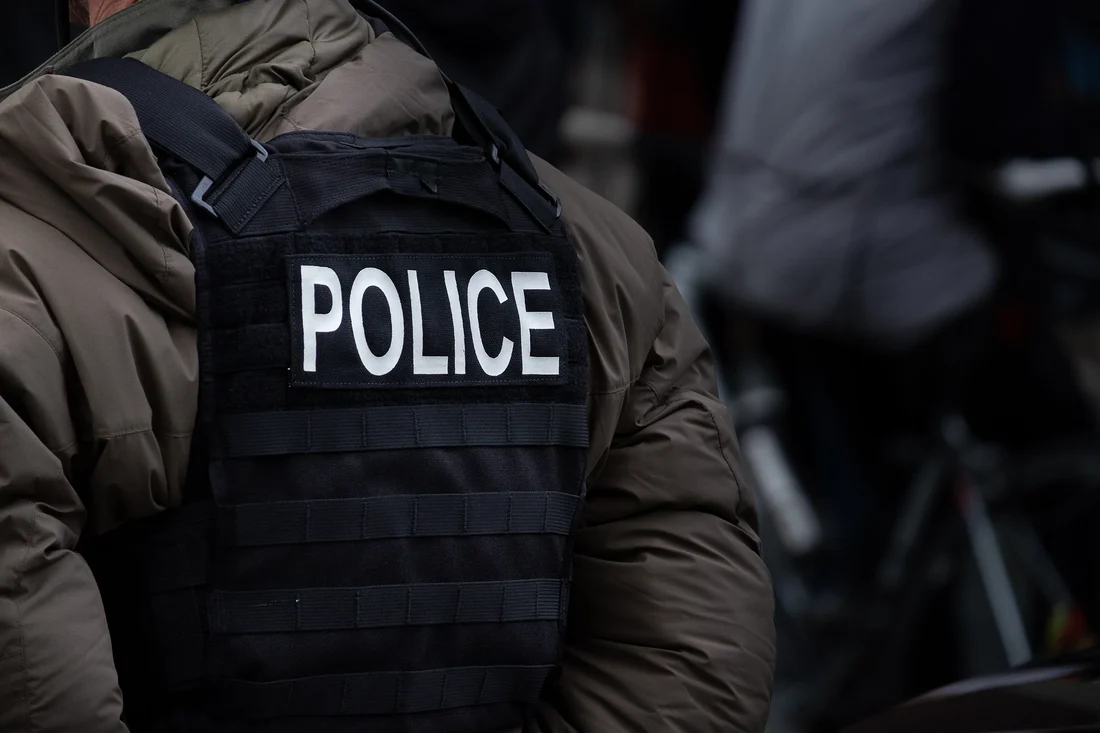
Stepping back from etymology and cultural history, the existence and spread of a term like “12” tells a story about something real.
Street slang for police has existed in every era of American history. New terms emerge when old ones become known or lose their coded value. The fact that “12” spread rapidly and widely during a period of intense national debate about police accountability is not incidental.
Language reflects the reality communities live in. When millions of people across different cities adopt the same coded term for police, it signals a shared experience of law enforcement that makes coded language feel necessary, useful, and worth passing on.
The persistence of police slang across generations, from “pigs” in the 1960s to “5-0” in the 1970s to “12” today, reflects a continuity of tension between certain communities and law enforcement that outlasts any single political moment.
Understanding why people call cops 12 is ultimately understanding that language is never just language. It is history, community, resistance, and identity compressed into a number that almost anyone under 40 in America recognizes immediately.
Frequently Asked Questions (FAQs)
Why do people call cops 12?
People call cops 12 most likely because of the police radio code “10-12,” which signaled civilians were present. The term entered street culture as a warning that police were nearby and spread nationally through Atlanta hip-hop.
What does 12 mean in slang?
In slang, 12 means police officers or law enforcement. It is used primarily as a fast verbal or written warning that cops are in the area, telling people to be aware or to move.
Did the term “12” start in Atlanta?
Strong evidence points to Atlanta as the primary origin, where narcotics unit officers were associated with unit numbers beginning with 12. Atlanta’s hip-hop scene then carried the term nationally through rap music in the 2010s.
What is the connection between 12 and the TV show Adam-12?
Adam-12 was a 1968–1975 NBC police drama whose patrol unit was called “1-Adam-12.” Some believe the repeated association of that number with police embedded it in pop culture, similar to how Hawaii Five-O gave us the slang “5-0.”
What song made “12” nationally famous?
Migos released a track on their 2013 mixtape Y.R.N. (Young Rich Niggas) that used “12” specifically in the context of a narcotics raid. The song went viral and introduced the term to audiences far outside Atlanta.
Is calling police “12” offensive or derogatory?
It depends on context. As a simple warning that police are nearby, it is largely neutral. Paired with expletives or used in a protest setting, it carries a sharper anti-police meaning, similar in tone to “pigs” but more culturally current.
Is “12” used everywhere in the United States?
“12” is most densely used in the Southeast, particularly Georgia, but has spread nationally through hip-hop and social media. It is now recognized across the country and increasingly in English-speaking countries outside the US.
What other slang terms mean police?
Common alternatives include 5-0 (from Hawaii Five-O), po-po (phonetic play on police), pigs (British protest origin), fuzz (1920s British slang), the law, Babylon (Rastafari origin), and one-time. Each has its own origin, era, and regional strength.
Is 12 related to ACAB or 1312?
This connection is considered weak by most researchers. ACAB (All Cops Are Bastards) becomes 1312 in letter-to-number substitution. However, “12” was already in circulation before the 1312 code became widespread, making it a likely coincidence rather than an origin.
Why do communities use coded language for police?
Coded police language serves multiple functions: rapid warnings in areas with heavy police presence, in-group identity building, cultural resistance against disproportionate policing, and, in the digital age, partial avoidance of automated surveillance and content moderation filters.
Conclusion
Why do people call cops 12? The honest answer is that no single, fully documented origin exists, but three explanations carry genuine weight.
The 10-12 police radio code that communities repurposed as a street warning, the iconic television show Adam-12 that embedded the number in pop culture memory, and Atlanta’s narcotics street culture where drug enforcement officers were warned about by shouting a number, all three likely contributed to the same term arriving from different directions.
What is beyond debate is how “12” spread: through Atlanta’s hip-hop scene, through Migos’ 2013 track, through the Ferguson protests, through the Black Lives Matter movement, and through millions of social media posts, until a regional street warning became one of the most recognized two-digit numbers in American English.
Understanding it means understanding something real about community, language, coded resistance, and the ongoing story of America’s relationship with law enforcement.


