


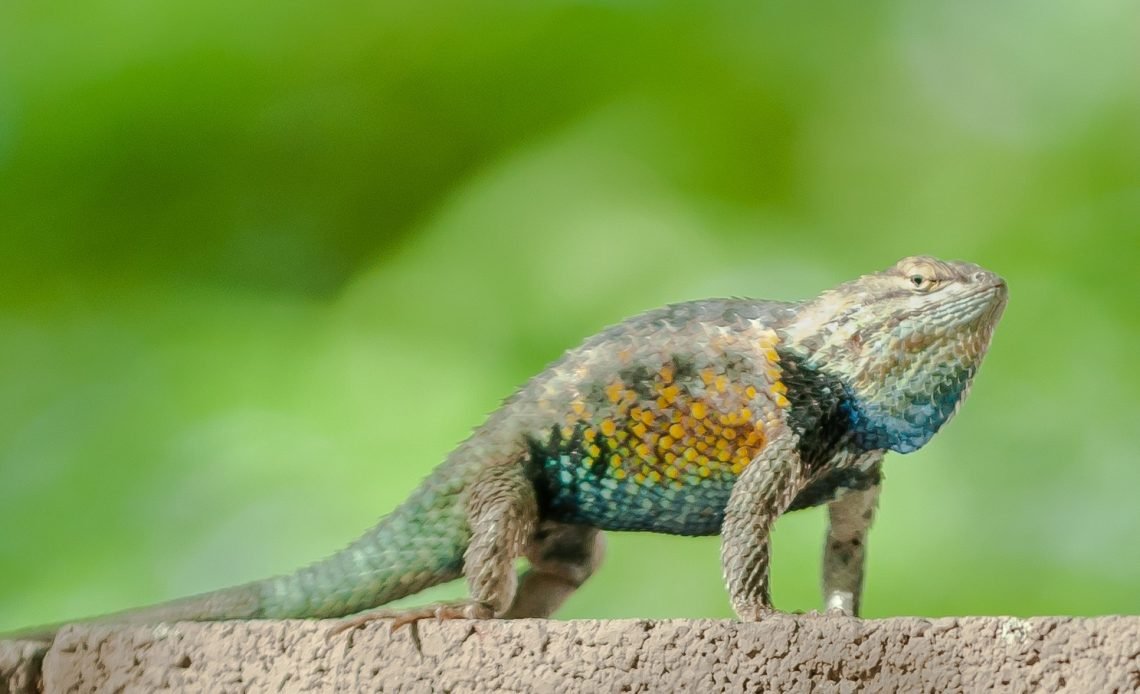
Why do lizards do push ups is a question almost anyone with a backyard, hiking trail, or reptile pet has asked at some point. Watching a small lizard repeatedly lift and lower its body on a rock or fence looks oddly like a tiny workout routine.
But lizards are not exercising for fitness the way humans do at the gym. This behavior is actually a form of communication packed with meaning.
What Are Lizard Push-Ups, Exactly?
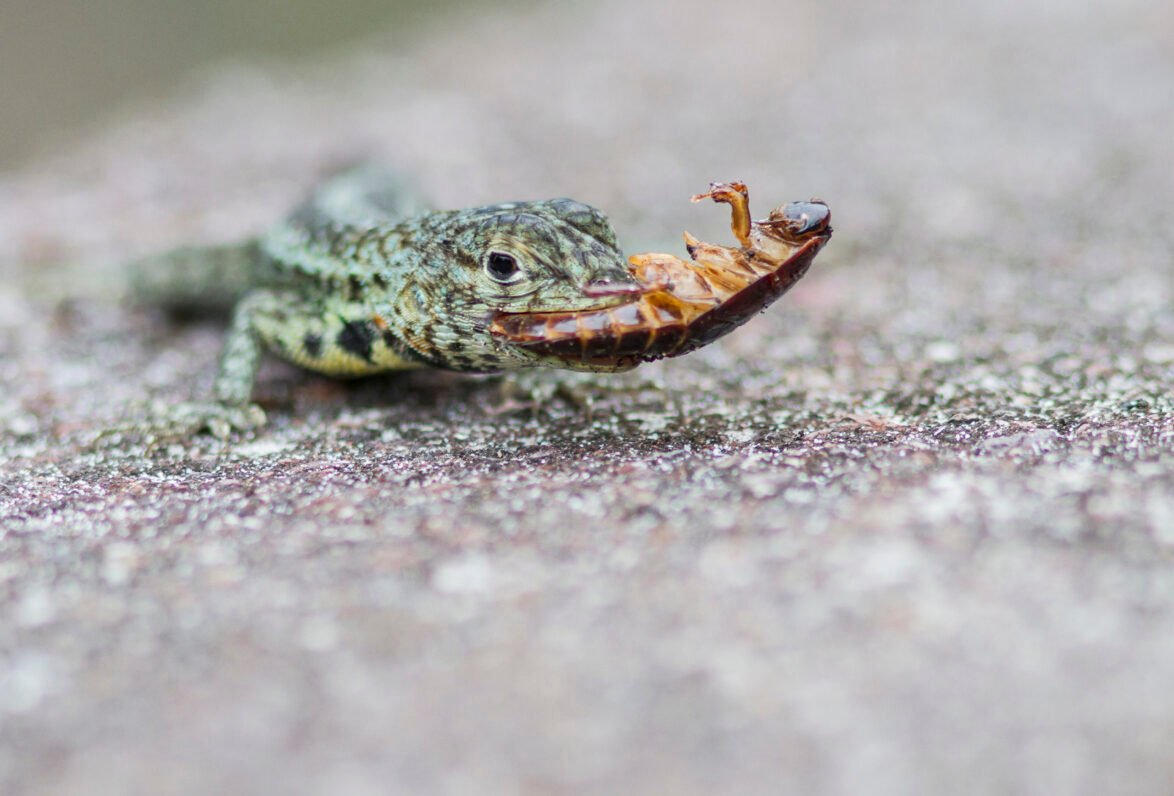
Lizard push-ups happen when a lizard repeatedly lowers the front of its body toward the ground and then lifts it back up, similar to a human push-up motion.
This movement is officially referred to by scientists as a push-up display, a type of visual signal rather than a physical exercise.
Not all lizard species perform this behavior. It is most common among territorial species, particularly those in the Sceloporus and Anolis groups, such as fence lizards and anoles.
Why Do Lizards Do Push Ups? The Main Reasons
Lizard push-ups serve several overlapping purposes, ranging from communication and territory defense to temperature regulation. Understanding each reason helps explain why this behavior is so common and so consistent.
Below are the primary reasons lizards perform push-up displays.
1. Territorial Defense
Push-ups are one of the clearest ways a lizard communicates ownership of its space to nearby rivals without engaging in physical combat.
By performing a visible, repeated display, a lizard signals to other lizards that a particular rock, fence, or patch of ground is already claimed.
2. Warning Off Rivals
Faster, more forceful push-ups often function as a direct warning aimed at another lizard that has entered claimed territory.
This rapid style of display essentially communicates a clear message to stay away, helping avoid physical confrontations that could injure either animal.
3. Attracting a Mate
During breeding season, male lizards frequently use push-ups to demonstrate strength, health, and genetic fitness to nearby females.
Faster, more energetic push-ups are generally seen as more impressive, since they suggest strong physical condition and vitality.
4. Communicating With Predators
Some researchers believe push-ups may also signal to a nearby predator that it has already been spotted, similar to how gazelles alert stalking predators.
This signal can discourage further pursuit, since the predator loses the advantage of surprise once it knows it has been noticed.
5. Thermoregulation
As ectothermic animals, lizards rely on external heat sources to regulate their body temperature rather than generating heat internally.
Lifting the body off a hot surface during push-ups can help increase airflow around the abdomen, offering a small cooling effect during warm conditions.
6. General Greeting or Acknowledgment
Not every push-up is aggressive. A slower, more relaxed push-up can simply function as an acknowledgment, similar to saying hello to a nearby lizard or observer.
This calmer style contrasts sharply with the rapid, forceful push-ups used during genuine territorial disputes.
Table: Core Reasons Lizards Do Push-Ups
| Reason | Purpose |
|---|---|
| Territorial defense | Signals ownership of space |
| Warning rivals | Deters intruders without physical fights |
| Attracting mates | Demonstrates strength and fitness |
| Signaling predators | Indicates the lizard has been spotted |
| Thermoregulation | Helps manage body temperature |
| General greeting | Calm acknowledgment of nearby presence |
The Science Behind Lizard Push-Up Displays
Researchers studying Jamaican anole lizards discovered that males consistently perform push-up displays during predictable times of day, especially around dawn and dusk.
This pattern closely mirrors the dawn and dusk vocal choruses seen in many other animal species that communicate acoustically.
Scientists observing these displays noted that individual males often perform push-ups even when no other lizard appears to be visibly nearby.
This suggests many displays are aimed at rivals hidden from human view, rather than being random or purposeless movements.
Table: Key Research Findings on Lizard Push-Up Behavior
| Finding | Detail |
|---|---|
| Peak display times | Early morning and just before dusk |
| Display consistency | Individual lizards show a repeatable daily pattern |
| Hidden audience | Displays often occur even without a visibly nearby lizard |
| Comparison to other species | Pattern resembles dawn and dusk vocal choruses |
Push-Ups as a Signal of Physical Fitness
The number and speed of push-ups a lizard can perform may directly reflect its physical condition, similar to how humans judge athletic performance.
A lizard capable of many rapid, sustained push-ups is generally viewed as being in stronger physical condition than one performing slower, less frequent displays.
This physical demonstration helps other lizards, especially potential mates, assess health and genetic quality without any direct physical contact.
How Push-Ups Help Avoid Physical Confrontation
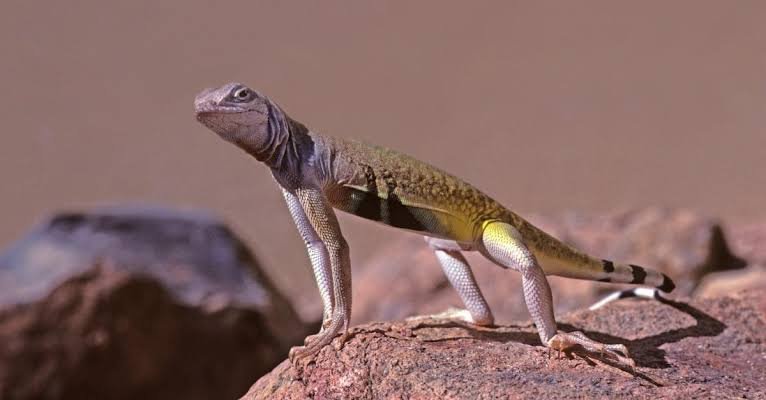
Male lizards can be surprisingly aggressive toward rivals, and physical fights carry real risk of injury for both animals involved.
Push-up displays act as a lower-risk alternative to fighting, allowing lizards to settle territorial disputes through visual demonstration rather than direct combat.
In many cases, a clearly dominant display is enough to convince a weaker rival to retreat without any physical contact occurring at all.
Table: Push-Ups vs Physical Confrontation
| Behavior | Risk Level | Typical Outcome |
|---|---|---|
| Push-up display | Low risk | Often resolves disputes without contact |
| Physical fighting | High risk | Can result in injury to either lizard |
Do Female Lizards Do Push-Ups Too?
Yes, though less frequently and often for slightly different reasons compared to males. Female push-ups are generally less dramatic and less frequent overall.
In some species, females perform push-ups specifically to signal reproductive readiness to nearby males during breeding season.
This shows that push-up displays are not exclusively a male behavior, even though males tend to perform them more often and more intensely.
Coloration and Push-Ups: A Combined Signal
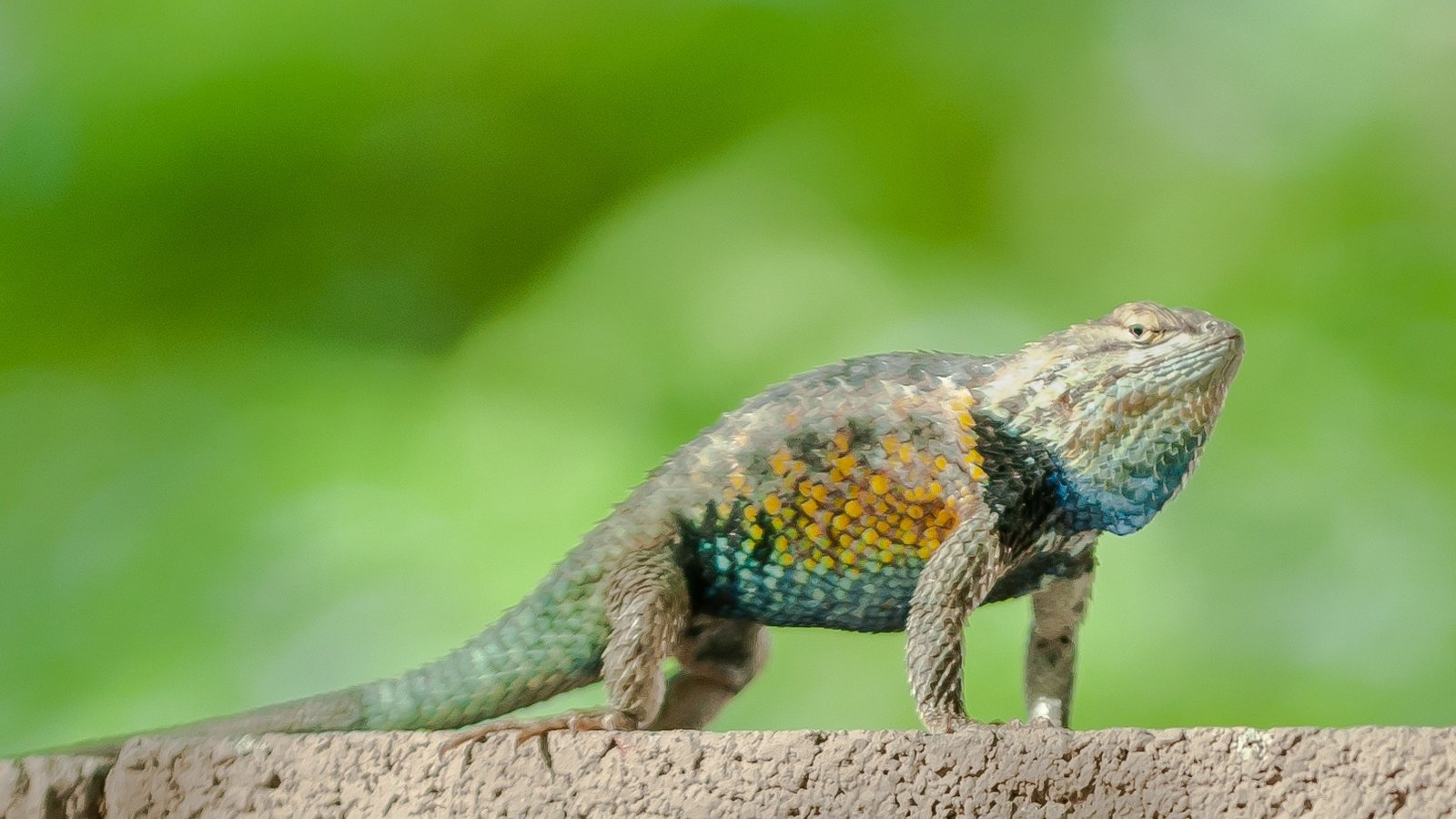
Many lizard species develop brighter coloration during breeding season, particularly around the throat, sides, and belly.
Push-ups help display these colorful patches more prominently, since the repeated lifting motion draws attention to the animal’s markings.
Anole lizards specifically extend a colorful throat flap called a dewlap during push-up displays, adding an extra visual signal alongside the movement itself.
Table: How Coloration Enhances Push-Up Displays
| Feature | Function |
|---|---|
| Bright body patches | Signals fitness and breeding readiness |
| Dewlap extension (anoles) | Adds a secondary visual display |
| Darker or lighter skin tones | Assists with temperature regulation |
Which Lizard Species Are Known for Push-Ups?
Push-up displays are most closely associated with certain lizard families, though the exact style and frequency vary noticeably between species.
Anoles
Anoles are especially well known for combining push-ups with dewlap extensions, creating a highly visible, colorful display.
Fence Lizards
Fence lizards, sometimes called blue-bellies, perform rapid push-ups that reveal bright blue patches on their undersides during territorial disputes.
Desert Spiny Lizards
Common in arid regions, these lizards use push-ups combined with basking behavior to manage both territory and temperature simultaneously.
Bearded Dragons
Popular as pets, bearded dragons also display push-up-like behavior, often alongside head bobbing, particularly toward other lizards or unfamiliar movement.
Table: Common Lizard Species Known for Push-Ups
| Species | Notable Display Feature |
|---|---|
| Anoles | Push-ups paired with colorful dewlap extension |
| Fence lizards | Rapid push-ups revealing blue belly patches |
| Desert spiny lizards | Combines display behavior with sun basking |
| Bearded dragons | Push-ups often paired with head bobbing |
Push-Ups vs Head Bobbing: What’s the Difference?
While closely related, push-ups and head bobbing are technically distinct behaviors that often appear together in lizard communication.
Head bobbing involves quicker, smaller movements focused mainly on the head, while push-ups involve the entire front half of the body.
Head bobbing generally requires less energy than a full push-up display, making it a slightly different tool in a lizard’s communication toolkit.
Table: Push-Ups vs Head Bobbing
| Behavior | Body Movement | Energy Level |
|---|---|---|
| Push-ups | Full front-body lift and lower | Higher energy |
| Head bobbing | Small, rapid head movements | Lower energy |
Why Do Pet Lizards Do Push-Ups?
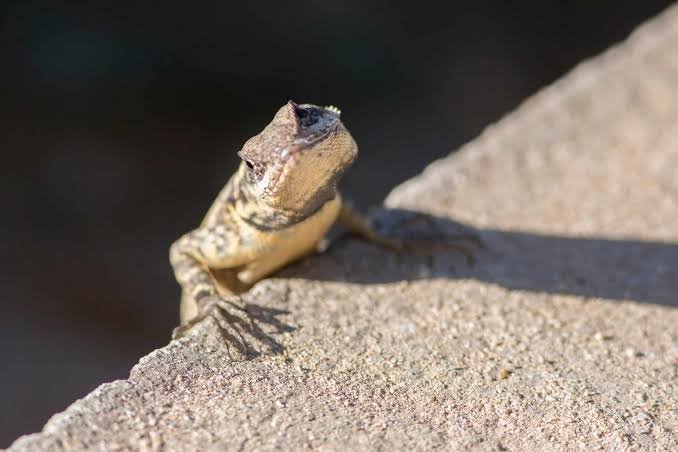
Pet lizards, including bearded dragons and anoles, often perform push-ups in response to seeing their own reflection, another pet, or even their owner.
This behavior in captivity generally mirrors the same territorial or communicative instincts seen in wild lizards, even without another lizard physically present.
If a pet lizard’s push-up behavior changes suddenly or becomes excessive, it may be worth checking their enclosure setup, lighting, and overall environment.
Table: Common Triggers for Pet Lizard Push-Ups
| Trigger | Likely Meaning |
|---|---|
| Seeing a mirror reflection | Perceived rival, triggers territorial display |
| Another lizard in the home | Territorial or social communication |
| Unfamiliar movement nearby | General alertness or mild threat response |
| Environmental changes | May indicate stress or lighting issues |
Should You Be Concerned If a Pet Lizard Does Excessive Push-Ups?
Occasional push-ups are completely normal and represent healthy communication behavior in most reptile species.
However, unusually frequent or nonstop displays, especially paired with reduced appetite or lethargy, could indicate stress or an inadequate habitat setup.
Reviewing enclosure temperature, lighting, and social factors, such as another visible reptile nearby, can help identify the underlying cause.
What It Means When a Lizard Does Push-Ups at You
Many people wonder whether a lizard performing push-ups toward them is expressing fear or aggression specifically directed at a human observer.
Most experts agree lizards generally do not view humans as direct territorial rivals in the same way they view other lizards.
Instead, researchers suggest a nearby lizard, often out of view, is usually the true intended audience for the display, even if a human happens to be watching too.
Table: Common Misunderstandings About Lizard Push-Ups
| Misunderstanding | More Accurate Explanation |
|---|---|
| It means the lizard is scared of you | Usually directed at another lizard, not a human |
| It is random, meaningless movement | It is a structured communication display |
| Only males do push-ups | Females perform them too, though less often |
| It is purely physical exercise | It serves communication and thermoregulation purposes |
How Lizards Communicate Without Sound
Unlike many animals that rely heavily on vocal calls, most lizards communicate primarily through visual signals rather than sound.
Push-ups, head bobs, arm waves, and color displays all form part of this visual communication system used across a wide range of species.
This reliance on body language makes sense biologically, since visual signals travel well in open, sunlit habitats where many lizards are commonly found.
Table: Common Visual Communication Signals in Lizards
| Signal | Typical Meaning |
|---|---|
| Push-ups | Territory defense, mating, or acknowledgment |
| Head bobbing | Quick alert or lower-energy communication |
| Arm waving | Social signaling, seen in some species |
| Dewlap extension | Adds visual emphasis during displays |
| Color changes | Indicates fitness, mood, or temperature state |
The Role of Vision in Lizard Social Behavior
Lizards generally have excellent color vision, which plays a major role in how effectively push-up displays and coloration signals are interpreted by other lizards.
This strong visual sense explains why so much lizard communication relies on movement and color rather than sound-based signals.
Because of this, subtle differences in speed, rhythm, and posture during a push-up display can carry very specific meaning to another lizard watching closely.
How Habitat Influences Push-Up Behavior
Lizards living in open, sunny environments like rocks, fences, and walls tend to display push-up behavior more frequently and more visibly.
These elevated, exposed surfaces make displays easier for other lizards to see from a distance, increasing the effectiveness of the signal.
Denser, shaded habitats may see less frequent push-up displays, since visibility across territory is naturally more limited in these environments.
Table: Habitat Type and Push-Up Display Frequency
| Habitat Type | Display Frequency |
|---|---|
| Open rocks, fences, walls | Higher, easier visibility |
| Dense vegetation or shade | Lower, limited sightlines |
| Desert or arid environments | Often combined with thermoregulation needs |
Push-Ups and Ecological Indicators
Some researchers and educators note that the frequency of visible lizard push-up displays can offer indirect clues about local ecosystem health.
Areas with stable, frequently observed lizard activity often reflect a relatively undisturbed habitat with healthy population levels.
A sudden, noticeable drop in this type of activity in a previously active area may signal environmental stress or population decline worth investigating further.
How Weather and Season Affect Push-Up Frequency
Lizard activity, including push-up displays, generally increases during warmer months when lizards are most active and breeding behavior peaks.
Cooler temperatures often reduce overall lizard activity, since these ectothermic animals rely on warmth to become fully active and energetic.
This is part of why push-up sightings tend to be far more common during spring and summer compared to cooler seasons.
Table: Seasonal Patterns in Lizard Push-Up Activity
| Season | Typical Activity Level |
|---|---|
| Spring | High, coincides with breeding season |
| Summer | High, peak activity and territorial behavior |
| Fall | Moderate, gradually declining activity |
| Winter | Low, reduced activity in cooler climates |
Common Myths About Lizard Push-Ups
A few misconceptions about this behavior tend to circulate, especially among casual observers unfamiliar with reptile communication.
Myth: Lizards Are Building Muscle Like Humans
Push-ups are not a fitness routine. They are a communication display, even though the movement visually resembles human exercise.
Myth: Every Push-Up Is Aggressive
Not all push-ups signal aggression. Some are calm greetings, mating signals, or simple acknowledgments of a nearby presence.
Myth: Only Wild Lizards Perform This Behavior
Pet lizards, including bearded dragons and anoles, commonly display push-up behavior in captivity as well, often toward reflections or other pets.
Observing Lizard Push-Ups Responsibly
If you enjoy watching lizards perform push-up displays outdoors, observing from a reasonable distance helps avoid unintentionally disrupting natural behavior.
Sudden movements or getting too close may cause a lizard to interpret you as an immediate threat rather than a passive observer.
Patient, quiet observation over time often reveals interesting patterns, such as consistent display times or specific triggers unique to that individual lizard.
Table: Tips for Observing Lizard Push-Up Behavior
| Tip | Purpose |
|---|---|
| Keep a respectful distance | Avoids disrupting natural behavior |
| Move slowly and quietly | Reduces perceived threat |
| Observe consistently over time | Reveals individual display patterns |
| Note time of day | Helps identify peak activity periods |
Why This Behavior Fascinates Scientists and Casual Observers Alike
Lizard push-ups offer a rare, easily observable window into animal communication that does not require specialized equipment to appreciate.
Unlike many animal signals that rely on sound, scent, or subtle chemical cues, push-up displays are visible to the naked eye, making them accessible to backyard observers and researchers alike.
This combination of simplicity and complexity, a basic-looking motion carrying detailed social meaning, is part of why the behavior continues to attract scientific interest even after decades of study.
Table: Why Push-Up Displays Remain a Popular Research Topic
| Reason | Explanation |
|---|---|
| Easily observable | Visible without special equipment |
| Rich in meaning | Encodes territory, fitness, and mating signals |
| Widely accessible | Common in backyards, parks, and pet habitats |
| Comparable across species | Offers insight into broader reptile communication |
Frequently Asked Questions (FAQs)
Why do lizards do push ups?
Lizards do push-ups mainly to defend territory, attract mates, warn rivals, and help regulate their body temperature.
Do all lizards do push-ups?
No, this behavior is mostly seen in territorial species like anoles and fence lizards, not all lizard types.
Why does my pet lizard do push-ups at its reflection?
It likely perceives the reflection as a rival lizard and responds with a natural territorial display.
Do female lizards do push-ups too?
Yes, though less frequently than males, sometimes to signal reproductive readiness during breeding season.
What time of day do lizards do push-ups most?
Research shows peak activity typically occurs around dawn and again just before dusk.
Are lizard push-ups a sign of aggression?
They can be, especially when fast and forceful, signaling a clear territorial warning to rivals.
Do lizard push-ups help with body temperature?
Yes, lifting the body off hot surfaces can increase airflow and provide a mild cooling effect.
Is push-up behavior the same as head bobbing?
They are related but different, with push-ups involving the full body and head bobbing focused mainly on the head.
Can lizard push-ups attract predators?
Possibly, but some researchers believe the display may actually discourage predators by signaling alertness and fitness.
Should I worry if my pet lizard does frequent push-ups?
Occasional push-ups are normal, but excessive displays paired with stress signs may warrant checking their habitat setup.
Conclusion
Why do lizards do push ups comes down to communication, not exercise. These repeated movements help lizards defend territory, attract mates, warn off rivals, and even regulate their body temperature throughout the day.
Research on species like Jamaican anoles shows this behavior follows predictable daily patterns, often peaking at dawn and dusk, and frequently targets other lizards that may not be visible to human observers.
Whether you are watching a wild fence lizard on a backyard rock or your own pet bearded dragon reacting to its reflection, push-ups reveal a surprisingly complex form of animal communication. Understanding this behavior offers a small but fascinating window into how reptiles navigate territory, health signaling, and survival heading into 2026.


