


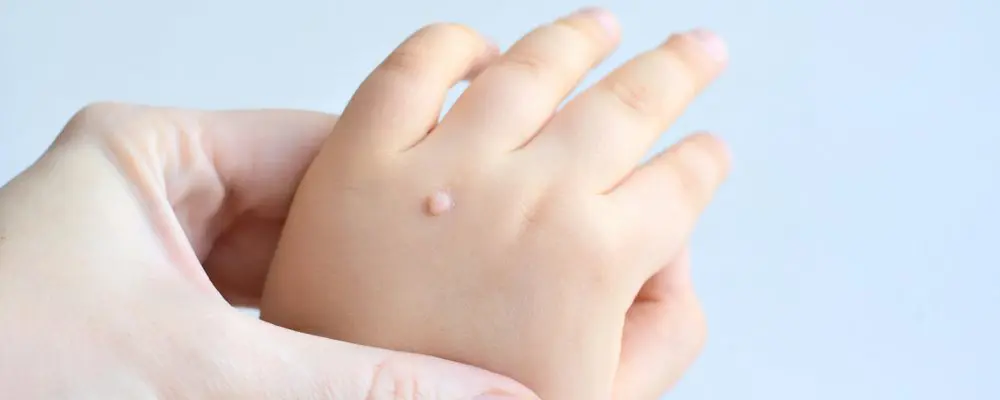
Why do kids get warts? It is one of the most common questions parents ask when they spot a strange bump on their child’s hand, foot, or face.
The short answer is that warts are caused by the human papillomavirus (HPV), and children are especially vulnerable because their immune systems are still developing and they spend most of their time in environments where the virus spreads easily.
Warts are extremely common in children, almost always harmless, and usually go away on their own.
What Are Warts?
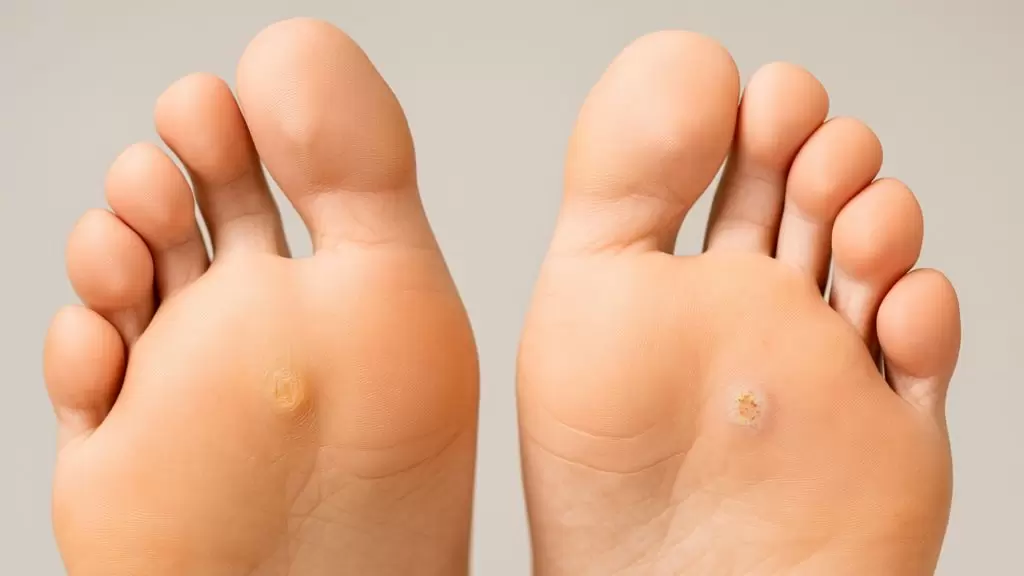
Warts are small, noncancerous growths on the skin caused by the human papillomavirus (HPV).
They appear when the virus enters the skin through a tiny cut, scratch, or break and causes the skin cells to grow faster than normal. The result is the rough, raised bump most people recognize as a wart.
Warts are not dangerous, do not cause cancer in children, and are one of the most common skin conditions in childhood. Most warts on children’s skin are completely unrelated to the sexually transmitted strains of HPV.
Why Do Kids Get Warts More Than Adults?
Children get warts far more often than adults for several clear reasons.
Immune Systems Still Developing
A child’s immune system is still learning how to recognize and fight off different viruses, including the strains of HPV that cause skin warts.
Adults who have been repeatedly exposed to these viruses have often built up a partial immunity. Children have not yet developed that defense, which makes them much more susceptible to infection when they encounter the virus.
Even if a child is exposed to HPV and does not develop a wart immediately, their immune system may not suppress the virus quickly enough to prevent one forming later.
High-Contact Environments
Children spend their days in classrooms, playgrounds, locker rooms, swimming pools, and gymnastics studios. These are exactly the environments where the HPV virus survives and spreads.
Kids touch everything, share belongings freely, and do not always practice careful hand hygiene. This combination creates frequent, repeated exposure to the virus at a time when their defenses are at their lowest.
Skin Breaks and Minor Injuries
HPV cannot penetrate intact, healthy skin. It needs an opening.
Children collect small cuts, scrapes, hangnail tears, and bitten-down fingernails constantly. Each one is a potential entry point for the virus. Even a papercut or a tiny scratch that barely bleeds is sufficient for HPV to enter the skin and begin the process of forming a wart.
Nail-biting is a particularly common risk factor in children because it creates chronic small breaks around the fingertips, exactly where common warts most frequently appear.
Shared Surfaces and Objects
The virus survives on surfaces outside the body for a period of time.
Pool decks, shower floors, gym mats, shared towels, socks, shoes, and nail tools can all carry the virus from one child to another without any direct skin-to-skin contact. A child who walks barefoot on a public pool deck where another child with a plantar wart has been walking faces genuine exposure.
How Does HPV Spread to Children?
Direct Skin-to-Skin Contact
The most straightforward transmission route is direct skin contact with an active wart on another person.
This happens naturally during sports, physical play, wrestling, gymnastics, and simply holding hands. Contact sports create particularly frequent opportunities for this kind of transmission.
Indirect Contact Through Surfaces
HPV can live on surfaces like pool decks, locker room floors, shared sports equipment, gym mats, and bathroom floors.
A child with a break in their skin who walks barefoot across a surface contaminated with HPV can pick up the virus without ever touching another person. This is why plantar warts are so common in children who use communal changing rooms and swimming pools.
Auto-Inoculation
This is when a child spreads warts to other parts of their own body.
Picking at a wart releases HPV-containing skin cells onto the fingers. Biting nails after touching a wart moves the virus to the periungual area. Scratching a wart and then touching another part of the body can spread the virus to a new location. This is called auto-inoculation and it is one of the main reasons children end up with multiple warts in different areas.
Incubation Period
One of the most important and least understood aspects of wart transmission is the incubation period.
After a child is exposed to HPV, it can take anywhere from several weeks to over a year for a wart to become visible. This long delay makes it almost impossible to identify exactly where or when a child picked up the virus. Parents often assume a wart appeared suddenly when in fact the infection happened months earlier.
Types of Warts in Children
Different types of warts appear in different locations and have distinctive appearances. Understanding which type a child has helps determine the right approach.
| Type of Wart | Location | Appearance | Painful? |
|---|---|---|---|
| Common warts | Hands, fingers, knees, elbows | Rough, raised, grayish-yellow or brown, may have black dots | Usually not |
| Plantar warts | Soles of the feet | Flat or slightly raised, rough, may have black dots, can form mosaic clusters | Often yes |
| Flat warts | Face, hands, shins | Small, smooth, slightly raised, appear in groups | Usually not |
| Filiform warts | Face, eyelids, lips, neck | Long, thin, thread-like projections | Usually not |
| Periungual warts | Around and under fingernails | Thickened skin around nails, can cause splits and fissures | Sometimes |
Common Warts
Common warts are the most frequently seen type in children and typically appear on the hands, fingers, knees, and elbows.
They have a rough, bumpy surface and are usually grayish-yellow or brown. The tiny black dots visible inside many common warts are not seeds, as the popular name suggests, but rather small, clotted blood vessels called thrombosed capillaries.
They are caused by HPV types 2 and 4 and are spread primarily by direct hand contact.
Plantar Warts
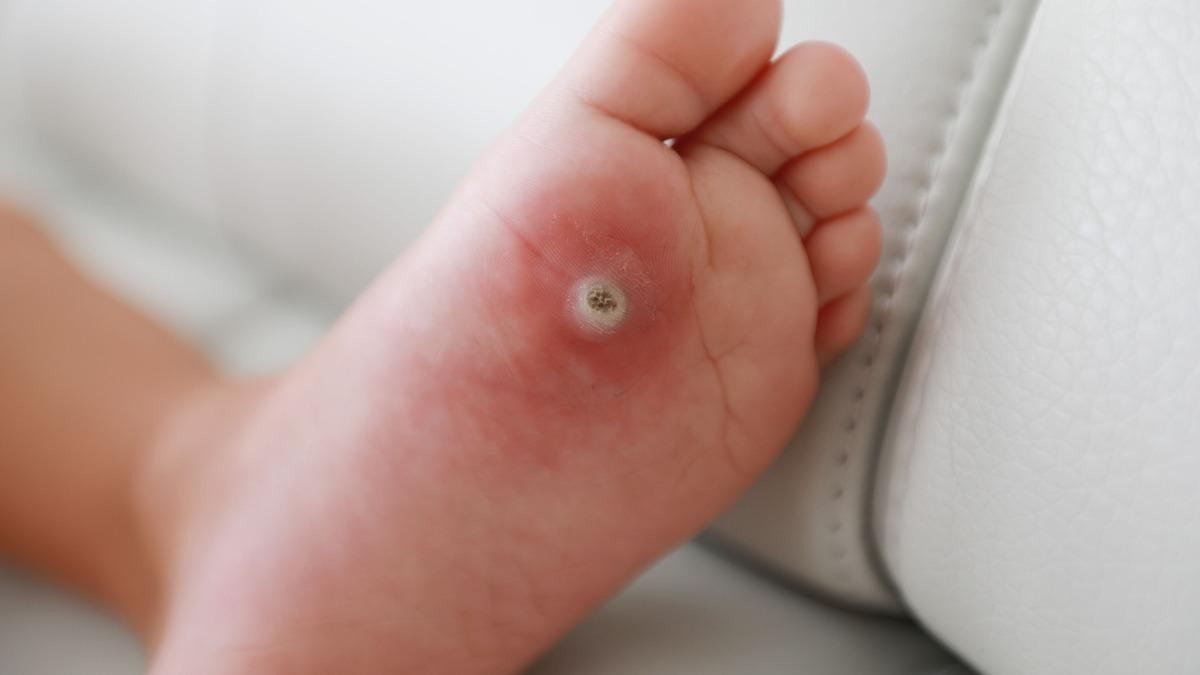
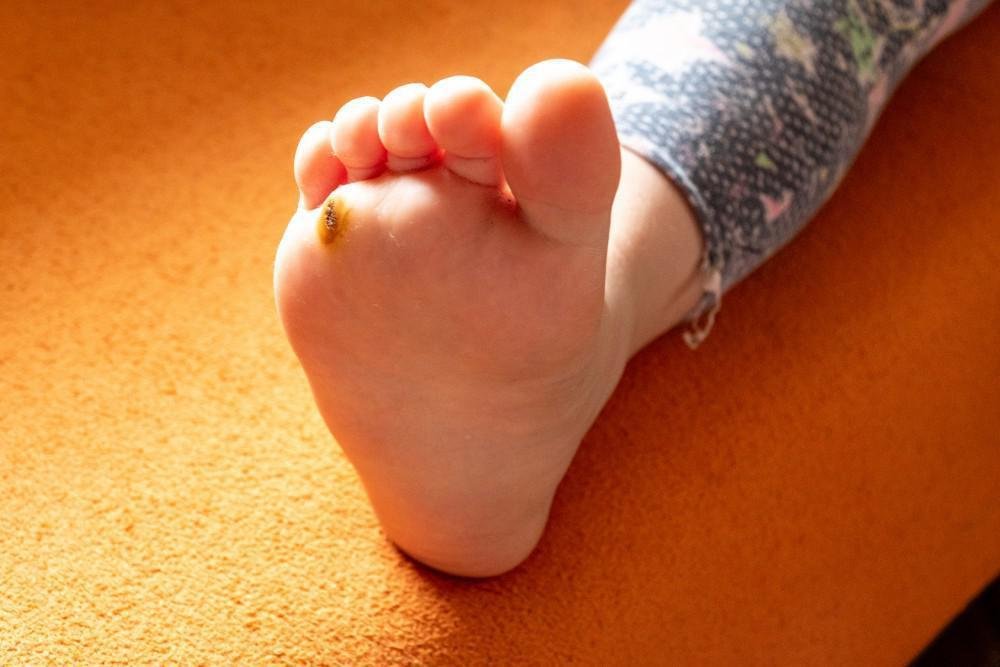
Plantar warts grow on the soles of the feet and can be one of the more uncomfortable types of warts for children.
Because they grow on a weight-bearing surface, they are pressed inward as the child walks. This can make them genuinely painful, particularly when running or standing for long periods. They sometimes look like thick, callused patches rather than the raised bumps associated with other warts.
Groups of plantar warts growing together are called mosaic warts. These can be harder to treat than isolated plantar warts.
Flat Warts
Flat warts are smaller and smoother than other types and tend to appear in clusters rather than individually.
They most often appear on children’s faces, particularly on the cheeks and forehead, but can also appear on the hands and shins. Because they often appear in groups of 20 to 100 at a time, they can be more noticeable than other types.
Flat warts are caused by HPV types 3, 10, and 28 and can spread quickly across an area if scratched or rubbed repeatedly.
Filiform Warts
Filiform warts are distinctive in appearance, long and thread-like with thin projections extending from the skin surface.
They grow rapidly and most commonly appear on the face around the mouth, eyes, and nose. While they look unusual and can cause concern for parents, they are harmless and respond well to treatment.
Periungual Warts
Periungual warts develop around and under the fingernails and toenails.
They are particularly common in children who bite their nails because repeated nail-biting creates chronic breaks in the skin around the nail folds. These warts can become painful as they grow, cause the nail to lift, and create fissures in the surrounding skin.
Are Warts Contagious?
Yes, warts are contagious, but the level of contagion is often overstated.
HPV does not spread as easily as airborne viruses. Transmission requires the virus to reach broken or softened skin. An intact skin barrier is a reasonable defense.
That said, children with cuts, scrapes, nail-biting habits, or softened feet from swimming are genuinely at risk from contact with HPV through either direct skin contact or contaminated surfaces.
The fact that not every child exposed to HPV develops a wart is significant. Whether a child develops a wart after exposure depends substantially on their immune response at the time.
Can Warts Spread Within the Family?
Yes, warts can spread within a household, though family transmission is not inevitable.
Sharing towels, bath mats, socks, shoes, and nail clippers increases the risk. A child with a plantar wart walking barefoot on bathroom floors creates a potential transmission route for barefoot family members who have any skin breaks on their feet.
Practical family hygiene steps, like keeping warts covered and not sharing personal items, significantly reduce this risk.
Should a Child With Warts Avoid School or Sports?
No. Children with warts do not need to be kept home from school or excluded from activities.
Warts are common and mild. Covering warts with a bandage during contact sports and swimming reduces the risk of spreading them to others, but complete activity restriction is not necessary or recommended by pediatric guidelines.
How Long Do Warts Last in Children?
This is one of the most reassuring facts about childhood warts.
About half of all warts in children disappear on their own within two years without any treatment. In some cases, warts resolve within a few months as the immune system recognizes the HPV strain and mounts a successful defense.
The timeline is unpredictable. Some warts disappear quickly. Others persist for two to three years. Children with normally functioning immune systems generally clear warts more effectively and more quickly than adults.
Warts do not always go away without treatment if they are in a location where auto-inoculation keeps reintroducing the virus, or if the child’s immune system is temporarily weakened.
Treatment Options for Warts in Children
Most childhood warts require no treatment at all. The decision to treat is based on whether the wart is causing pain, spreading rapidly, or causing significant distress.
Watchful Waiting
For warts that are small, non-painful, not spreading, and not causing any concern for the child, watchful waiting is often the best approach.
This simply means monitoring the wart over time and allowing the immune system to clear it naturally. Given that half of warts resolve within two years, this is a medically sound choice for most childhood warts.
Over-the-Counter Salicylic Acid
Salicylic acid is the most widely used first-line home treatment for common and plantar warts in children.
It works by peeling away the dead, HPV-infected skin layers progressively. Applied daily, it gradually reduces the wart from the outside in. Salicylic acid products are available without prescription as gels, liquids, and patches under brand names including Compound W and Duofilm.
For standard warts on hands and fingers, a 17% salicylic acid formulation is appropriate. For thicker plantar warts on the soles of the feet, stronger formulations of 30 to 40% may be used on palmar and plantar surfaces only.
Treatment with salicylic acid requires consistency and patience. It can take several weeks to several months for the wart to clear fully.
How to use salicylic acid effectively:
Soak the wart in warm water for five minutes to soften the skin. File away dead surface skin with an emery board or pumice stone reserved only for this purpose. Apply the salicylic acid product and allow it to dry. Repeat daily. If the skin becomes irritated, pause for a few days before continuing.
Duct Tape Method
The duct tape method involves covering the wart completely with duct tape for extended periods, removing it periodically to file down dead skin, then reapplying.
Evidence for its effectiveness is mixed. Some studies show modest benefit, while others find no significant advantage over placebo. It is inexpensive, painless, and risk-free, making it a reasonable option to try alongside or before other treatments.
Cryotherapy (Freezing)
Cryotherapy involves applying liquid nitrogen to freeze the wart tissue. A blister forms under and around the wart, and as the blister heals, the wart tissue is shed.
This is typically performed by a doctor or dermatologist in a clinic setting. It is more effective than salicylic acid for stubborn warts but is also more uncomfortable. Children often require repeated treatments every two to three weeks for the best results.
Cryotherapy is generally not recommended for young children because the procedure can be painful and distressing. It is more appropriate for older children and teenagers who can cooperate with the process.
Over-the-counter freezing products using dimethyl ether are also available at pharmacies. These are less cold than clinical liquid nitrogen and typically less effective, but they may help with small, early-stage warts.
Cantharidin
Cantharidin is a topical chemical applied by a doctor that causes a blister to form under the wart.
The blister lifts the wart from the underlying skin, cutting off its blood supply. The dead wart tissue is then removed at a follow-up appointment approximately one week later.
Cantharidin is painless at the time of application, which makes it a useful option for younger children who cannot tolerate the discomfort of cryotherapy.
Prescription and Medical Treatments
For warts that do not respond to standard treatments, doctors have additional options available.
| Treatment | How It Works | Best For |
|---|---|---|
| Salicylic acid (17%) | Gradually peels wart layers | Common and flat warts, first-line home treatment |
| Salicylic acid (30–40%) | Stronger peel for thick skin | Plantar warts, palms |
| Duct tape | Occlusion and mechanical removal | Small warts, painless option for young children |
| Cryotherapy (clinic) | Liquid nitrogen freezes wart tissue | Stubborn warts in older children |
| Cantharidin (clinic) | Blistering agent lifts wart | Younger children, painful wart sites |
| Immunotherapy | Stimulates immune response to HPV | Multiple or resistant warts |
| Laser treatment | Burns and destroys wart tissue | Warts resistant to all other treatments |
| Electrosurgery | Electrical current burns wart | Last-resort for persistent warts |
Immunotherapy is used for multiple or highly resistant warts and works by stimulating the child’s immune system to recognize and attack the HPV infection more effectively. This can be achieved through topical sensitizers or injected antigens applied at the wart site.
Laser treatment and electrosurgery are reserved for warts that have not responded to any other treatment. These are performed in specialist dermatology settings.
When Should You See a Doctor About a Child’s Warts?
Most warts in children can be managed at home or monitored without medical intervention.
You should consult a doctor if the wart is causing significant pain, particularly if it is a plantar wart that makes walking difficult. See a doctor if the wart is growing rapidly or spreading to new areas despite home treatment. Get professional evaluation if the wart is on the face or in a sensitive location like around the eye or nail bed.
Also seek medical advice if home treatment with salicylic acid has been applied consistently for two to three months without any reduction in the wart, if the child has a condition affecting the immune system, or if you are uncertain whether the growth is actually a wart rather than another type of skin lesion.
Genital warts in a child should always be evaluated by a doctor promptly. They are caused by a different family of HPV strains and their presence warrants careful medical assessment.
How to Prevent Warts in Children
Complete prevention of warts is not realistic given how common HPV is and how freely children move through shared environments. However, a number of practical habits meaningfully reduce a child’s risk.
Basic Prevention Habits
Encourage regular and thorough handwashing, particularly after using shared sports equipment, communal changing rooms, and public facilities.
Keep cuts, scrapes, and skin breaks clean and covered with a bandage. An intact skin barrier is the primary defense against HPV entering the skin.
Discourage nail-biting and picking at hangnails, as both create chronic breaks around the fingernails where common warts frequently establish themselves.
Footwear in Public Areas
Wearing flip-flops or shower sandals in communal changing rooms, pool decks, and public showers substantially reduces the risk of plantar wart infection.
This is one of the most well-supported preventive steps for children who swim regularly or use shared sports facilities.
Avoid Sharing Personal Items
Do not share towels, socks, shoes, nail clippers, pumice stones, or emery boards with others.
HPV can survive on these items and transfer to any skin break on the next user. This applies within families as well as between children at school or sports clubs.
Cover Existing Warts
If a child already has a wart, keeping it covered with a bandage helps prevent auto-inoculation and reduces the risk of spreading the virus to surfaces others will contact.
Cover warts before swimming, sports, or any activity involving shared surfaces or equipment.
Common Myths About Warts in Children
Myth: Toads Cause Warts
The idea that handling toads causes warts has no biological basis.
Warts are caused by HPV, a human virus. Toads cannot transmit it. The bumpy texture of toad skin may have inspired the association, but it is entirely a myth.
Myth: Warts Have Roots
Warts do not have roots that grow deep into the tissue.
The dark dots visible in warts are blood vessels, not roots. The wart exists only in the upper layers of the skin (the epidermis), which is why treatments that work layer by layer, like salicylic acid, can be effective.
Myth: You Should Pop or Cut a Wart at Home
Cutting, popping, or digging at a wart at home is counterproductive and potentially harmful.
Damaging a wart releases HPV-containing material that can spread the virus to surrounding skin and cause new warts to form. It also creates a wound that can become infected. Wart removal should be done methodically with appropriate treatments or by a doctor.
Myth: Warts Mean Poor Hygiene
Warts have nothing to do with being unclean.
They are caused by a virus that is everywhere in public environments. Clean, healthy children who wash their hands regularly can and do get warts. The presence of a wart reflects exposure to a common virus, not hygiene failure.
Warts vs. Other Skin Growths in Children
Parents sometimes confuse warts with other skin conditions. Here is a quick comparison.
| Condition | Cause | Appearance | Contagious? |
|---|---|---|---|
| Common wart | HPV | Rough, raised, may have black dots | Yes |
| Molluscum contagiosum | Different virus (MCV) | Small dome-shaped bumps with central dimple | Yes |
| Callus | Friction / pressure | Smooth, thick, no black dots | No |
| Corn | Pressure on bony area | Hard center, tender when pressed | No |
| Skin tag | Benign skin overgrowth | Soft, flesh-colored, hangs from skin | No |
Molluscum contagiosum is the condition most commonly confused with warts. It is also caused by a virus and spreads through contact, but it has a distinctive dome shape with a small dimple in the center. Unlike warts, molluscum lesions are smooth rather than rough.
Frequently Asked Questions (FAQs)
Why do kids get warts so easily?
Children’s immune systems are still developing, making it harder to fight off HPV. They also spend time in high-contact environments like schools and pools where the virus spreads freely through shared surfaces and skin contact.
Are warts in children contagious?
Yes, warts are contagious. HPV spreads through direct skin contact or through contaminated surfaces. Children do not need to be excluded from school but covering warts during sports and swimming helps reduce spread.
What causes warts in children?
Warts are caused by the human papillomavirus (HPV). The virus enters through tiny cuts or breaks in the skin and triggers rapid skin cell growth that forms a wart. These are non-sexual strains of HPV unrelated to cervical cancer.
Do childhood warts go away on their own?
Yes. About half of all warts in children disappear on their own within two years as the immune system clears the virus. Some resolve faster, within a few months, while others take longer without treatment.
What is the best treatment for warts in children?
Over-the-counter salicylic acid applied daily is the first-line home treatment and has cure rates of 50 to 70 percent with consistent use. For stubborn warts, a doctor can use cryotherapy or cantharidin depending on the child’s age and tolerance.
Should I take my child to the doctor for a wart?
Most warts can be managed at home with watchful waiting or salicylic acid. See a doctor if the wart causes pain when walking, is spreading rapidly, does not respond to two to three months of consistent treatment, or is in a sensitive location like the face or nail bed.
Can warts spread from one child to another at school?
Yes, but the risk is moderate rather than high. HPV requires a break in the skin to cause infection, and not every exposure leads to a wart. Encouraging handwashing and covering warts with bandages significantly reduces school-based transmission.
Why does my child keep getting new warts?
New warts can result from auto-inoculation, where the child spreads the virus from an existing wart to another skin area by picking or scratching. They can also result from continued exposure to HPV in shared environments. Covering warts and discouraging picking helps break this cycle.
Is there a vaccine that prevents warts in children?
The HPV vaccine (Gardasil) primarily targets genital HPV strains and reduces the risk of genital warts and cervical cancer. It may offer some protection against common skin wart strains but is not specifically indicated for the prevention of childhood skin warts.
Can a wart on a child’s foot spread to other family members?
Yes, it is possible. Plantar warts can shed virus onto bathroom floors, bath mats, and shower areas. Family members who walk barefoot in the same areas and have any skin breaks on their feet face some exposure risk. Wearing footwear in shared bathroom areas and not sharing towels reduces this risk.
Conclusion
Why do kids get warts? Because they are constantly active in environments full of HPV, their immune systems are still learning to recognize and fight the virus, and their skin picks up the minor cuts and scrapes that give the virus a way in.
Warts are one of the most common skin conditions in childhood, and while they can be frustrating, they are almost always harmless and self-limiting. Half of all childhood warts disappear without any treatment within two years.
For parents concerned about spreading or pain, over-the-counter salicylic acid is a well-supported, effective first step. Covering warts, washing hands, and wearing footwear in public pools and changing rooms are the most practical prevention measures.
When warts are painful, numerous, or not responding to home treatment after several months, a pediatrician or dermatologist can offer effective in-office options.
The good news is that warts in children are almost never something to worry about, and with time and the right approach, they go away.
This article is for general informational purposes only and is not a substitute for professional medical advice. If you are concerned about your child’s skin condition, consult a qualified healthcare provider.


