


Why do earrings smell is a question almost every person with pierced ears has quietly searched at least once.
That faint cheesy, sour, or funky odor coming from your earrings and piercing holes is not a sign that something is terribly wrong.
It is a predictable biological process caused by your own skin. Dead skin cells, natural oils, sweat, and bacteria combine around the low-airflow space of a piercing hole and create a waxy residue that smells — sometimes powerfully.
What Is the Smell Coming From Your Earrings?
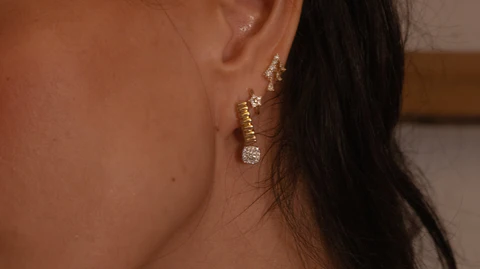
The odor has an unofficial name that most people recognize immediately once they hear it: ear cheese. It is not an infection, it is not dangerous, and it is extremely common.
Ear cheese is a waxy, off-white or yellowish residue that builds up around the earring post, on the earring backs, and inside the piercing hole channel itself. It smells sour, cheesy, or musty — similar to actual aged cheese, which is fitting because the same category of bacteria is partly responsible for both.
The piercing hole creates a small enclosed channel through the earlobe. Unlike open skin on your face or hands that gets washed and aired regularly, the skin inside that channel traps everything it produces and has almost no airflow to carry it away.
The Science Behind Why Earrings Smell
Your skin produces two main substances continuously: sebum and dead skin cells. Both are completely normal and serve important protective functions.
Sebum is the oil secreted by sebaceous glands throughout your skin. It keeps skin hydrated, protects against environmental damage, and acts as a natural antimicrobial barrier. Your earlobe skin produces sebum just like the rest of your body.
Dead skin cells shed constantly as part of your skin’s natural renewal cycle. On most of your body, these cells wash off easily in the shower. Inside a piercing channel, they get trapped and accumulate against the earring post.
When sebum and dead skin cells collect in a warm, moist, low-airflow environment — which is exactly what a piercing hole is — bacteria move in and thrive. The bacterial metabolic activity produces volatile organic compounds. Those compounds are what you smell.
Why the Earring Back Is Almost Always the Worst Offender
If you have ever taken off a stud earring and noticed the backing smells significantly worse than the front post, there is a straightforward reason for that.
The earring back sits pressed flat against the rear of the earlobe all day. It creates a sealed pocket between the metal disc and the skin with virtually no air movement at all.
Sebum, sweat, and dead skin cells collect in that pocket continuously. They cannot evaporate or wash away during a normal shower because the back is pressed firmly against the skin. That sealed pocket becomes the most concentrated site for bacterial buildup on the entire earring.
Butterfly backs — the standard push-on earring back — are the worst design for odor because they grip tightly and compress the skin. Flat back or screw-back designs that allow a small gap between metal and skin produce significantly less odor buildup.
Cause 1: Sebum Buildup
Sebum production is continuous and unavoidable. The sebaceous glands in your earlobe skin never stop working.
In a healed piercing, the skin channel that forms around the earring post has its own sebaceous glands actively producing oil. That oil coats the inside of the channel and the earring post throughout the day.
Without regular cleaning, this oil thickens and oxidizes over time, changing from a clear liquid into a yellowish waxy substance. That oxidized sebum has a distinctive rancid, cheesy smell on its own, even before bacteria get involved.
Cause 2: Dead Skin Cell Accumulation
Skin cells on the inside of a piercing channel shed on the same schedule as skin everywhere else — roughly every 28 days. But unlike the skin on your arm, which sheds into the open air and washes off easily, skin cells inside a piercing channel have nowhere to go.
They build up against the earring post, mix with sebum, and create a soft, waxy plug of cellular debris. This material is the bulk of what most people see when they squeeze around their piercing hole and notice a white or yellowish substance.
The accumulation happens faster in newer piercings because the healing process actively produces extra skin cells and lymph fluid as the body forms the skin channel around the foreign object.
Cause 3: Sweat and Moisture
Sweat is mostly water, but it also contains salt, proteins, fatty acids, and ammonia. When sweat dries around a piercing, those compounds concentrate and contribute directly to the odor profile.
Working out with earrings in, living in a hot or humid climate, or simply sweating during sleep with earrings still in all accelerate the accumulation process significantly.
Moisture is particularly problematic because bacteria reproduce much faster in moist environments. A wet environment around an earring post is a bacterial growth accelerator. Showering without removing earrings, then not drying them thoroughly, is one of the most common reasons people notice escalating odor.
Cause 4: Bacteria and Microorganisms
Bacteria are the primary odor producers. The skin around a piercing hosts a natural microbiome — a community of microorganisms that live on healthy skin — but the low-airflow environment of a piercing channel allows certain odor-producing strains to dominate.
Staphylococcus and Cutibacterium species break down sebum and skin cell proteins and produce short-chain fatty acids as metabolic byproducts. Those short-chain fatty acids are chemically similar to the compounds in aged cheese — hence the cheesy smell.
This bacterial activity is normal and not a sign of infection as long as the odor is mild, there is no pain, redness, or swelling, and the discharge is white or off-white rather than yellow-green.
Cause 5: Earring Material and Metal Quality
The material your earrings are made from plays a significant role in how much odor develops and how quickly.
| Earring Material | Odor Risk | Reason |
|---|---|---|
| Surgical steel (implant grade) | Low | Non-reactive, smooth surface, resists bacterial adhesion |
| Solid 14K or 18K gold | Low | Non-reactive, does not oxidize, easy to clean |
| Titanium | Very low | Most inert metal used in piercings, minimal bacterial adhesion |
| Sterling silver | Moderate | Can oxidize and tarnish, rough surface after oxidation traps bacteria |
| Nickel alloys | High | Reactive with skin, causes irritation and extra discharge that feeds bacteria |
| Gold-plated metals | High | Base metal exposed as plating wears, triggers skin reactions |
| Plastic and acrylic | High | Porous surface traps bacteria and sebum deeply |
| Brass and copper | High | Oxidize rapidly, react with skin chemistry, strong metallic-organic smell |
Low-quality metals cause skin irritation. That irritation increases sebum production and creates extra discharge around the piercing. More discharge means faster bacterial buildup and stronger odor.
Cause 6: Not Cleaning Earrings or Piercings Regularly
This is the most straightforward and most controllable cause. The same bacteria and sebum that build up over one week build up proportionally more over a month of no cleaning.
Many people clean their earrings when they remember to, which in practice often means rarely or never. The earrings go in every morning and come out at night without any intervention.
Cleaning earrings without also cleaning the piercing hole is only a partial solution. The earring post may be clean but gets reinserted into an uncleaned channel full of accumulated debris, immediately picking up new contamination.
Both the earring and the piercing hole need to be cleaned together for the routine to be effective.
Cause 7: Wearing Earrings Continuously Without Breaks
Wearing the same earrings continuously — day and night, through workouts, showers, and sleep — gives bacteria an uninterrupted stretch of time to colonize the earring surface and the skin around it.
During sleep particularly, earrings compress against the pillow, trapping sweat and reducing airflow to almost zero for six to eight hours straight. The result is a concentrated buildup session every night.
Sleeping with earrings also increases the risk of the earring back pressing into the skin and creating small irritation points. Irritated skin produces more discharge, feeding the bacterial population further.
Cause 8: Hair Products and Skin Care Products
Hairspray, dry shampoo, serums, and styling gels contain silicones, oils, and fragrance compounds. These products settle on the earring post and around the piercing as they drift through the air or contact the earlobe directly.
Silicones and film-forming agents in hair products are particularly problematic because they create a coating on the metal surface that traps sebum and bacteria underneath. This coating does not wash off easily with water alone.
Skincare products applied to the face and neck — moisturizers, sunscreen, toners — can also migrate to the earlobe area and contribute to residue buildup on earrings and around piercings.
Cause 9: Diet and Hydration
Diet affects sebum composition and sweat chemistry, which directly influences the type and intensity of earring odor.
High-sugar diets increase sebum production and alter the fatty acid profile of that sebum. This creates more substrate for odor-producing bacteria to metabolize.
Dehydration concentrates sweat and increases the proportion of waste compounds in perspiration. Alcohol consumption also intensifies sweat odor and increases bacterial byproduct concentration.
People who eat diets high in sulfur-containing foods — garlic, onions, cruciferous vegetables — may notice that their body odor profile, including piercing odor, temporarily intensifies after consumption.
Cause 10: Gauges, Tunnels, and Stretched Piercings
Stretched piercings present a more extreme version of the same odor problem. Tunnels and plugs — especially those made of wood, bone, or stone — are porous materials that absorb sebum and bacteria deeply into their surface texture.
The larger the gauge, the more surface area contacts the skin, and the more skin channel is exposed to produce sebum and dead cells. Stretched piercings can produce very strong odor very quickly without consistent cleaning routines.
Non-porous materials like implant-grade titanium, glass, and solid gold produce significantly less odor in stretched piercings than organic materials.
The Difference Between Normal Earring Odor and Infection
This is the most important distinction every pierced person needs to know. Not all earring smell signals the same thing.
| Characteristic | Normal Buildup (Ear Cheese) | Infection |
|---|---|---|
| Smell | Mild, cheesy, sour | Strong, foul, sweet-sick, or putrid |
| Discharge color | White or off-white | Yellow, green, or bloody |
| Pain level | None or minimal | Increasing, throbbing, or constant |
| Skin appearance | Normal color | Red, swollen, warm to touch |
| Symptom trend | Improves with cleaning | Gets worse despite cleaning |
| Fever | No | Possible |
| Streaking redness | No | Possible — seek urgent care |
Mild earring odor that improves after cleaning is normal. Earring odor that comes with increasing pain, warmth, swelling, discolored discharge, or fever is an infection and needs medical evaluation — not more home cleaning.
How to Clean Earrings: Step-by-Step
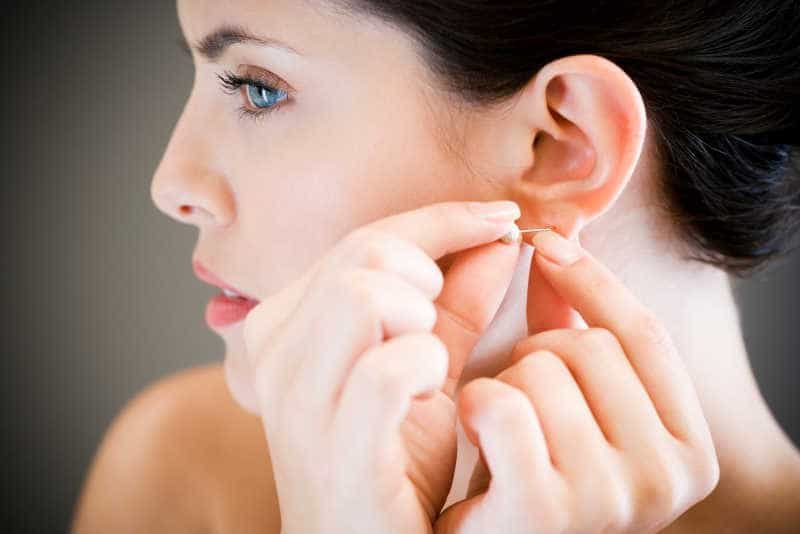
Cleaning both the earrings and the piercing hole is the only complete solution. Cleaning one without the other leaves the source of recontamination intact.
Step 1: Remove earrings completely — both post and back.
Step 2: Wash the earrings with a few drops of mild dish soap and warm water. Use a soft toothbrush or cotton swab to scrub the post, any crevices in the setting, and the earring back thoroughly.
Step 3: Rinse under running water until all soap residue is gone.
Step 4: Wipe the metal parts with a cotton pad soaked in 70% isopropyl alcohol. Let dry completely before reinserting. Do not use alcohol directly on the skin or inside the piercing hole.
Step 5: Clean the piercing hole using a cotton swab soaked in sterile saline solution. Gently clean around the front and back of the hole and along the channel. Saline is safe for skin contact; alcohol is not.
Step 6: Dry the earlobes and earrings completely before reinserting. Moisture left behind continues bacterial growth.
Most people notice a significant reduction in earring odor within three to five days of consistent daily cleaning.
Best Cleaning Methods by Earring Material
| Earring Material | Best Cleaning Method | Avoid |
|---|---|---|
| Gold and titanium | Mild soap + water, then isopropyl alcohol wipe | Bleach, acetone |
| Sterling silver | Mild soap + water, silver polishing cloth | Alcohol (causes tarnish) |
| Gemstone settings | Mild soap + soft brush, quick rinse | Soaking (loosens adhesive) |
| Acrylic or plastic | Mild soap + water only | Alcohol (damages surface) |
| Wood plugs | Jojoba oil wipe, never soak | Water immersion, alcohol |
| Stainless steel | Isopropyl alcohol wipe | None — very tolerant |
How to Clean the Piercing Hole Itself
The piercing channel — the actual skin tunnel through the earlobe — is where a large portion of the odor-causing material accumulates. Cleaning only the earrings and leaving the channel dirty means the problem returns immediately on reinsertion.
Use a cotton swab soaked in sterile saline. Work it gently around the front and back of the piercing opening. If the channel is accessible, the swab can be moved through gently.
Do not use hydrogen peroxide or alcohol directly on piercing tissue — both damage new skin cells and disrupt the healthy microbiome, which can make the odor problem worse long-term.
Saline solution cleans without harming tissue. You can make it at home by dissolving a quarter teaspoon of non-iodized sea salt in eight ounces of warm distilled water.
How to Prevent Earring Smell Long-Term
Prevention requires three consistent habits: regular cleaning, appropriate earring material, and giving the ears occasional rest.
Clean once a week minimum. Weekly cleaning of both the earrings and the piercing holes prevents buildup from reaching the threshold where it starts to smell. Daily cleaning during active buildup periods gets the problem under control faster.
Switch to hypoallergenic metals. Implant-grade titanium, solid 14K or 18K gold, and surgical steel produce dramatically less odor than nickel alloys, gold-plated metals, or plastic. The investment in quality earrings pays off in significantly reduced maintenance.
Remove earrings overnight when possible. Giving the piercing hole six to eight hours of airflow per night interrupts the nightly buildup cycle and allows the skin to breathe and dry naturally.
Remove earrings before exercise. Working out with earrings in floods the piercing area with sweat. Removing them before physical activity and cleaning before reinserting eliminates one of the biggest accelerators of odor buildup.
Avoid overtightening earring backs. A slightly loosened back allows a small air gap between the disc and the skin. That tiny amount of airflow makes a measurable difference in how quickly buildup accumulates.
Shield piercings from hair products. Apply hairspray and dry shampoo before putting earrings in, or cover the piercing area while spraying. This prevents product residue from coating the earring post and settling in the piercing channel.
Apply a light moisturizer to the earlobe. Well-moisturized skin regulates sebum production more efficiently than dry skin. A small amount of unscented moisturizer around the piercing helps normalize oil output without clogging the area.
Choosing the Right Earring Material to Reduce Odor
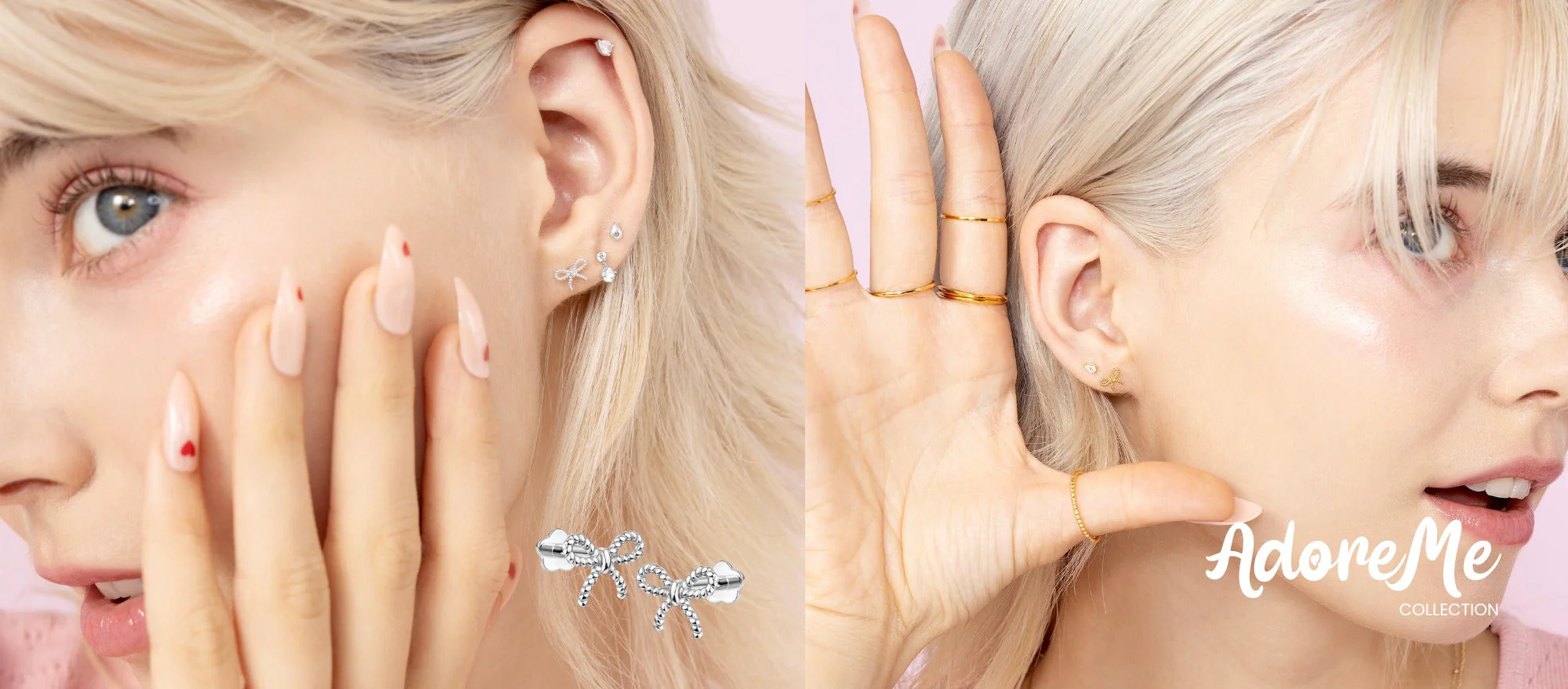
Material choice is one of the highest-impact decisions for earring odor management. Switching from reactive metals to hypoallergenic options can reduce odor dramatically without any change in cleaning habits.
Implant-grade titanium is the gold standard for piercing jewelry. It is completely inert, extremely smooth at the microscopic level, and does not cause any skin reaction in virtually all people. It is the recommended material for new piercings and for anyone with persistent odor problems.
Solid 14K or 18K gold is non-reactive, does not oxidize, and has a smooth surface that resists bacterial adhesion. It is one of the most popular upgrade choices for people moving away from cheaper metals.
Surgical or implant-grade stainless steel is a good mid-range option. It is non-reactive in most people, easy to sterilize, and widely available. People with nickel sensitivity should confirm the steel is implant-grade, as some surgical steel contains trace nickel.
Sterling silver is fine for occasional wear in fully healed piercings but not ideal for continuous wear. It oxidizes over time, and the rough surface of oxidized silver traps bacteria more effectively than polished metal.
When to See a Doctor or Dermatologist
Most earring odor is a hygiene issue and resolves with consistent cleaning and a metal switch. But there are specific situations where professional evaluation is appropriate.
See a dermatologist or doctor if: the odor persists strongly despite one to two weeks of consistent daily cleaning; the skin around the piercing is red, warm, or swollen; there is discharge that is yellow, green, or bloody; the pain around the piercing is increasing rather than stable; or you develop a fever alongside piercing symptoms.
A persistent strong smell even after rigorous cleaning often indicates either a metal allergy causing ongoing skin irritation, or an early-stage infection developing beneath the surface.
If a metal allergy is suspected, a dermatologist can perform patch testing to identify the specific metal trigger and recommend appropriate alternatives.
Special Situations: New Piercings and Children’s Earrings
New piercings produce more odor than healed ones because the healing process actively generates lymph fluid, extra skin cells, and protein-rich discharge. This is normal and temporary. New piercings should be cleaned twice daily with sterile saline only — no alcohol, no soap — until fully healed, which typically takes six to twelve months for earlobe piercings.
Children’s earrings often use lower-quality metals that cause skin reactions. Switching to implant-grade titanium or solid gold earrings for children significantly reduces the odor and irritation problems that parents frequently report. Most people notice improvement within a few days of the material switch.
Quick-Reference Summary Table
| Problem | Cause | Solution |
|---|---|---|
| Cheesy smell on earring post | Sebum and dead skin cell buildup | Weekly soap and alcohol cleaning |
| Worst smell on earring back | Sealed pocket against skin, no airflow | Switch to flat-back or screw-back design |
| Smell returns within days of cleaning | Piercing hole not being cleaned | Clean both earring and piercing channel together |
| Smell plus skin irritation | Low-quality or reactive metal | Switch to titanium or solid gold |
| Smell worse after exercise | Sweat accelerating bacterial growth | Remove earrings before workouts |
| Smell worse in mornings | Overnight sweat trapped by earrings | Remove earrings for sleep |
| Very strong smell despite cleaning | Metal allergy or early infection | Dermatologist evaluation |
Frequently Asked Questions (FAQs)
Why do earrings smell like cheese?
The cheesy smell comes from bacterial breakdown of sebum and dead skin cells that accumulate around the piercing hole. The same category of bacteria that produces the smell in aged cheese produces volatile fatty acids in the low-airflow environment of a piercing.
Is it normal for earrings to smell?
Yes, mild earring odor is completely normal and extremely common among people with pierced ears. It becomes a concern only when the smell is very strong or accompanied by pain, redness, swelling, or discolored discharge.
How do I get rid of earring smell fast?
Remove the earrings, scrub them with mild soap and warm water, wipe with 70% isopropyl alcohol, then clean the piercing holes with sterile saline. Most people notice significant odor reduction within three to five days of consistent daily cleaning.
Why do my earring backs smell worse than the post?
The earring back sits pressed tightly against the rear of the earlobe all day, creating a sealed, airless pocket where sebum, sweat, and bacteria concentrate without any ventilation or washing action.
Can cheap earrings cause more smell?
Yes. Low-quality metals like nickel alloys and gold-plated brass react with skin oils, cause irritation, and increase the discharge around the piercing — all of which accelerate bacterial buildup and intensify odor significantly.
Should I clean my earring holes or just the earrings?
Both. Cleaning only the earrings and reinserting them into an uncleaned piercing channel immediately recontaminates the clean metal. Use saline solution on the skin channel and soap plus alcohol on the metal earring parts.
Does wearing earrings overnight make them smell worse?
Yes. Overnight wear traps sweat and bacteria against the skin for six to eight hours with no airflow, significantly accelerating the buildup that causes earring odor. Removing earrings for sleep is one of the most effective prevention habits.
What earring material produces the least smell?
Implant-grade titanium produces the least odor due to its completely inert surface and excellent smoothness at a microscopic level. Solid 14K or 18K gold and implant-grade surgical steel are also excellent low-odor options.
Can hair products make earrings smell worse?
Yes. Hairspray, dry shampoo, and styling serums contain silicones and oils that coat the earring post and settle around the piercing, trapping bacteria and accelerating odor-causing sebum buildup beneath the product film.
When is earring smell a sign of infection?
Earring smell combined with increasing pain, warmth, redness, swelling, or yellow-green discharge indicates an infection, not normal buildup. Fever with piercing symptoms requires urgent medical care.
Conclusion
Why do earrings smell is a question rooted in simple biology, not poor hygiene or bad luck.
Your skin produces sebum and sheds cells continuously, and the enclosed environment of a piercing hole gives those substances nowhere to go except straight into bacterial activity.
The result is ear cheese — the cheesy, sour odor that most people with pierced ears encounter at some point.
The good news is that the cause is fully manageable with the right routine.
Clean both your earrings and your piercing holes weekly at minimum, remove earrings overnight whenever possible, upgrade to implant-grade titanium or solid gold if you are currently using reactive metals, and avoid letting hair products settle around your piercing area.
With those habits in place, earring odor becomes a problem you have already solved rather than one you keep noticing every morning.
If the smell persists despite a solid cleaning routine, a dermatologist visit can rule out metal allergy or early infection and get you on the right path quickly.


