


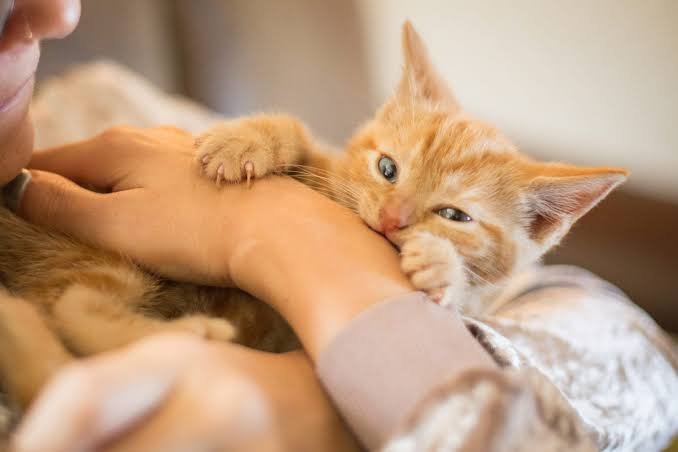
Why do cats bite is one of the most common questions cat owners search when a calm, purring pet suddenly turns into a tiny attacker.
One second you’re petting your cat, and the next you’re pulling your hand away in surprise. The good news is that biting almost always has a clear reason behind it — play, overstimulation, fear, pain, or simple communication.
Cats don’t have words, so they use their teeth to tell you something important.
What Does It Mean When a Cat Bites?
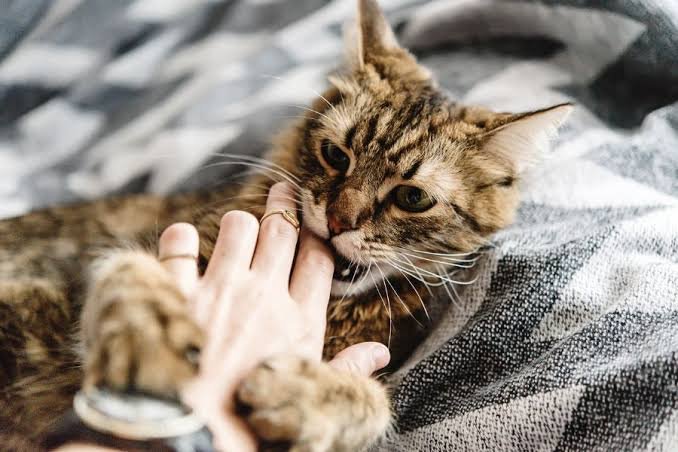
Cats rarely bite without warning. Biting is almost always a form of communication, not random aggression, even though it can feel sudden to us.
Unlike dogs, cats rely heavily on subtle body language — a flicking tail, flattened ears, or rippling skin — before escalating to a bite.
When those early signals go unnoticed, a bite becomes the cat’s clearest way of saying “stop” or “I need space.”
Understanding the context around a bite — what happened just before it, your cat’s posture, and the intensity of the bite itself — is the fastest way to figure out what triggered it.
Most bites fall into a short list of well-documented categories, which means you don’t need to guess. Once you learn the pattern, it becomes much easier to prevent.
Common Signs a Cat Is About to Bite
Learning to spot pre-bite body language can help you avoid most bites entirely. The table below breaks down the most common warning signs.
| Warning Sign | What It Usually Means |
|---|---|
| Tail flicking or thumping | Growing irritation or overstimulation |
| Ears flattened or turned back | Fear, stress, or annoyance |
| Skin rippling along the back | Overstimulation from petting |
| Dilated pupils, tense body | Fear or defensive arousal |
| Sudden stillness or staring | Focused predatory instinct |
If you notice two or more of these signs during petting or play, it’s a good time to pause and give your cat space.
Why Do Cats Bite? Top Reasons Explained
Cat biting rarely comes from one single cause. It usually falls into a handful of well-documented categories that vets and behaviorists see again and again.
1. Play Aggression
Kittens and young cats learn hunting skills through play, and biting is a natural part of that predatory sequence. Hands and fingers used as toys can easily become targets.
This is especially common in cats weaned early or hand-raised without other cats to teach them bite inhibition.
2. Petting-Induced Overstimulation
Cats enjoy affection, but only up to a point. Repetitive stroking in one spot can quickly shift from pleasant to irritating, triggering a sudden nip.
This is often called “petting-induced aggression,” and it’s one of the most common reasons cats bite during otherwise calm cuddle sessions.
3. Love Bites and Affection
Not every bite is negative. Gentle nibbles during petting or cuddling, especially paired with purring or a slow blink, are often a sign of affection called a “love bite.”
These bites rarely break the skin and are typically followed by licking, which mimics how cats groom each other.
4. Fear and Defensive Biting
A frightened cat may bite to protect itself from a perceived threat. This type of bite is usually sudden, intense, and preceded by hissing or a tense body.
Loud noises, unfamiliar visitors, or being handled roughly are common triggers for fear-based defensive biting.
5. Redirected Aggression
Sometimes a cat gets agitated by something it can’t reach, like another animal outside a window, and turns that frustration toward the nearest person instead.
This is considered one of the most dangerous and unpredictable forms of biting because it can happen well after the original trigger occurred.
6. Pain or Underlying Illness
If a normally gentle cat suddenly starts biting, pain or illness could be the cause. Arthritis, dental disease, or skin irritation can make normal touch feel unbearable.
Any sudden, unexplained change in biting behavior is worth a veterinary check-up to rule out a medical cause.
7. Kitten Teething
Kittens often bite more during teething as their gums become sore and sensitive. This is a temporary, developmental phase rather than a behavior problem.
Offering appropriate teething toys can relieve discomfort while protecting your hands from those sharp little teeth.
8. Attention-Seeking Behavior
If biting reliably gets a reaction — even a negative one — some cats learn to repeat it to get attention, especially when they’re bored or under-stimulated.
Cats are actually more likely to bite from too much attention than too little, according to feline behavior consultants.
9. Predatory Instinct
Cats are natural hunters, and even fully domesticated indoor cats retain the instinct to stalk, pounce, and deliver a “kill bite” to moving objects.
Fast-moving hands, feet under blankets, or dangling jewelry can all accidentally trigger this deeply wired hunting sequence.
10. Nighttime and Boredom-Related Biting
Cats may nip to wake you up or seek engagement if they’re hungry, restless, or under-stimulated, especially during early morning hours.
Adding a solid play session before bedtime can help burn off that pent-up energy before it turns into a middle-of-the-night bite.
Love Bite vs Aggressive Bite: How to Tell the Difference
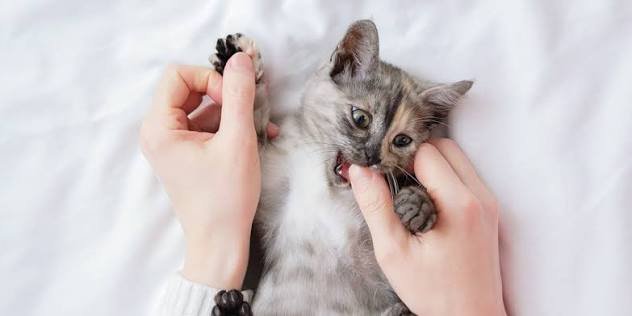
Not all bites carry the same meaning, and learning to distinguish them can prevent overreacting to a harmless nip. The table below outlines the key differences.
| Feature | Love Bite | Aggressive Bite |
|---|---|---|
| Body language | Relaxed, soft eyes, slow blink | Flattened ears, tense posture |
| Skin contact | Rarely breaks skin | Often punctures skin |
| Sound cues | Purring, silence | Hissing, growling before biting |
| Follow-up behavior | Licking, staying close | Retreating or continued tension |
| Typical trigger | Affection, bonding | Fear, pain, overstimulation |
Recognizing which type of bite you’re dealing with helps you respond appropriately without damaging your cat’s trust.
Environmental Enrichment to Prevent Biting
A bored, under-stimulated cat is far more likely to bite out of frustration or excess energy. Enrichment gives that energy somewhere productive to go.
Scratching posts, window perches, puzzle feeders, and rotating toys all help satisfy natural instincts without your hands becoming the outlet.
Even 10–15 minutes of interactive wand-toy play twice a day can noticeably reduce play-related and attention-seeking biting within a few weeks.
Rotating toys every week or two also keeps things novel, since cats quickly lose interest in the same object and may look for other outlets, including your hands.
Quick Self-Check: Why Is My Cat Biting Right Now?
Use this simple table to narrow down the likely cause of a specific biting incident. This isn’t a diagnosis, just a helpful starting point.
| If the bite happened during… | It’s likely… |
|---|---|
| Petting, especially repetitive strokes | Overstimulation |
| Active play with hands or feet | Play aggression |
| A loud noise or sudden movement | Fear-based biting |
| Watching something outside a window | Redirected aggression |
| Being touched in a specific spot | Pain or medical issue |
| Purring and relaxed body language | Love bite |
Matching the context of the bite to this table can help you choose the right response and prevent it from happening again.
The Role of Consistency in Long-Term Success
Cats learn fastest when every person in the household responds to biting the same way. Mixed reactions — one person laughing it off, another scolding — confuse cats.
Agree as a household on a single approach: redirect to toys, stop interaction immediately, and never punish. Consistency shortens the learning curve significantly.
Over several weeks of consistent responses, most cats show a clear reduction in biting frequency, even in previously persistent cases.
How Cat Biting Differs by Age and Life Stage
Biting behavior often changes significantly as a cat grows, and understanding these stages helps set realistic expectations.
| Life Stage | Common Biting Cause | What Helps |
|---|---|---|
| Kittens (0–6 months) | Teething, learning play boundaries | Teething toys, consistent redirection |
| Young cats (6 months–2 years) | Play aggression, high energy | Interactive toys, structured play |
| Adult cats (2–10 years) | Overstimulation, communication | Reading body language, shorter petting sessions |
| Senior cats (10+ years) | Pain, illness, reduced tolerance | Veterinary check-ups, gentler handling |
Most cats naturally bite less as they mature, especially when owners consistently redirect the behavior early on.
How to Stop a Cat From Biting
Once you understand the trigger, stopping the behavior becomes much easier. These strategies are widely recommended by veterinarians and certified cat behaviorists.
Redirect to Toys, Not Hands
Always use wand toys, feather teasers, or balls instead of your hands during play. This teaches your cat that hands are not appropriate targets.
Dangling toys let your cat chase, pounce, and bite safely, satisfying the predatory instinct without any risk to your skin.
Stop Interaction Immediately
The moment a bite happens, stop moving, remove your hand calmly, and end the interaction. Cats learn quickly that biting ends the fun rather than continuing it.
Avoid pulling your hand away sharply, which can accidentally mimic prey movement and encourage another bite.
Watch and Respect Warning Signs
Pay close attention to tail flicks, ear position, and skin rippling during petting sessions, and stop before those signs escalate into a bite.
Shorter, gentler interactions that end on a positive note build far more trust than pushing until your cat has had enough.
Never Punish a Biting Cat
Yelling, spraying water, or physically punishing a cat for biting can create fear and often worsens the underlying problem rather than solving it.
Instead, calmly withdraw attention and redirect to appropriate behavior, reinforcing what you do want rather than punishing what you don’t.
Try the “Touch Reset” Method
Some behaviorists recommend a short break from physical touch — a few weeks — while still engaging through play, talking, and treats.
Reintroducing brief, gentle touch afterward, especially around the head and neck, often reduces overstimulation-driven biting significantly.
Reward Gentle “Soft-Mouthing”
If your cat mouths your hand gently without pressure, offer calm praise or a treat. If they bite hard, stop play immediately and stay still.
This clear distinction helps cats learn exactly which mouth pressure is acceptable during play and bonding.
Rule Out Medical Causes
If biting appears suddenly in an adult or senior cat with no clear trigger, schedule a veterinary exam to check for pain, dental issues, or illness.
Treating the underlying medical cause often resolves the biting far more effectively than behavior training alone.
Daily Habits That Reduce Cat Biting
Small, consistent daily habits can make a noticeable difference in how often your cat resorts to biting. The table below highlights helpful versus unhelpful patterns.
| Habit That Increases Biting | Habit That Reduces Biting |
|---|---|
| Using hands as play toys | Using wand toys and teasers |
| Long, uninterrupted petting sessions | Short, attentive petting sessions |
| Ignoring early warning signals | Responding to tail and ear cues |
| Inconsistent reactions from family members | Everyone responding the same way |
| No scheduled play time | Daily structured play sessions |
Consistency across everyone in the household is one of the biggest factors in successfully reducing biting behavior long-term.
What to Do If a Cat Bite Breaks the Skin
Cat bites can carry bacteria and lead to infection, so proper care matters even for a small puncture wound. Don’t dismiss a bite just because it looks minor.
Cat mouths harbor bacteria like Pasteurella, which can cause infection quickly even from what feels like a small nip, so treating every bite seriously is worth the extra few minutes.
Wash the area immediately with soap and water, then apply an antiseptic and a clean bandage to reduce infection risk.
If the wound is deep, swollen, red, or you’re unsure of the cat’s vaccination history, seek medical care from a doctor or urgent care clinic promptly.
Does Breed or Personality Affect Biting?
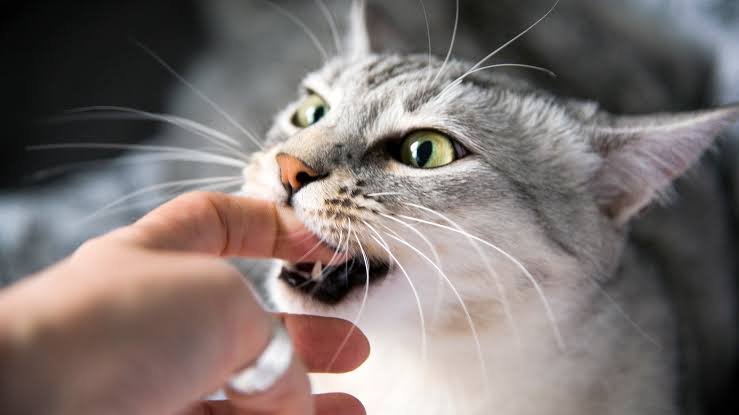
While any cat can bite, individual temperament plays a bigger role than breed in most cases. Confident, high-energy cats often show more play-related biting.
Cats with a history of rough handling, early weaning, or limited socialization tend to have a lower bite threshold than cats raised with gentle, consistent handling.
Some breeds known for high energy and strong hunting drive, like Bengals or Abyssinians, may need more structured play to prevent redirected biting on hands.
Common Myths About Cat Biting
A few misconceptions make it harder for owners to respond effectively when their cat bites. Clearing these up leads to better outcomes for both cat and owner.
Myth: Biting means a cat is “bad” or untrainable. Biting is a communication behavior that almost always responds well to consistent, gentle training over time.
Myth: Cats bite out of spite. Cats don’t experience spite the way humans do. Biting is reactive — driven by overstimulation, fear, pain, or instinct, not revenge.
Myth: Punishment stops biting fastest. Punishment often increases fear and can make biting worse or push it toward more unpredictable, defensive aggression.
Cat Biting in Multi-Cat and Multi-Pet Households
Biting behavior can shift when a new pet enters the home. Cats may redirect frustration toward humans if they can’t reach another animal that’s triggering them.
Introducing new pets slowly, with separate spaces and gradual scent swapping, reduces the stress that often fuels redirected aggression toward owners.
If one cat in a multi-cat household is being bullied or stressed by another, biting toward humans can increase as overall tension in the home rises.
Watch for signs of tension between cats, like staring, blocking access to resources, or stiff body language, since resolving that conflict often reduces bites toward people too.
How Children Should Interact With Cats to Avoid Bites
Children are more likely to be bitten because they often miss subtle warning signs like tail flicks or flattened ears that adults would catch.
Teach kids to pet gently, avoid picking cats up against their will, and always let the cat approach first rather than chasing or cornering them.
Supervised, toy-based play is the safest way for children to interact with cats, keeping little hands away from teeth entirely.
When to Seek Professional Help for Cat Biting
If biting is frequent, sudden, unusually aggressive, or paired with hissing and prolonged tension, it’s time to consult a vet or certified cat behaviorist.
A professional evaluation can rule out pain, illness, or anxiety-driven aggression and provide a tailored plan for your specific cat.
Key Takeaways Before You Go
Cat biting is almost always communication, not random aggression, and it usually falls into a clear, identifiable category once you know what to look for.
Play aggression, overstimulation, fear, pain, and predatory instinct account for the vast majority of biting incidents in pet cats.
Redirecting to toys, respecting body language, and staying consistent across your household are the most effective long-term solutions.
If biting changes suddenly or becomes severe, a veterinary visit should always be the first step to rule out an underlying medical cause.
Frequently Asked Questions (FAQs)
1. Why does my cat bite me when I pet them?
This is usually petting-induced overstimulation. Repetitive touch in one spot can shift from pleasant to irritating, triggering a warning nip.
2. Is it normal for cats to bite their owners?
Yes, occasional biting is normal and usually linked to play, communication, or overstimulation rather than true aggression.
3. Why does my cat bite me gently while purring?
Gentle biting while purring is typically a “love bite,” a sign of affection and bonding rather than a warning.
4. How do I stop my cat from biting my hands?
Avoid using your hands as toys and redirect biting energy toward wand toys or feather teasers during every play session.
5. Can stress cause a cat to bite?
Yes, stress and anxiety can trigger defensive biting, especially around loud noises, new pets, or unfamiliar visitors.
6. Why does my kitten bite so much?
Kittens often bite due to teething discomfort and learning play boundaries, both of which are normal developmental phases.
7. Are cat bites dangerous to humans?
Deep cat bites can cause bacterial infections, so cleaning the wound properly and monitoring for redness or swelling is important.
8. Should I punish my cat for biting?
No, punishment can create fear and often worsens biting. Calm redirection and ending interaction work far better.
9. Can medical issues cause sudden biting?
Yes, pain, arthritis, or dental disease can make a previously gentle cat start biting when touched in sensitive areas.
10. What’s the difference between a love bite and an aggressive bite?
Love bites are gentle, rarely break skin, and come with relaxed body language, while aggressive bites are hard, sudden, and preceded by tension or hissing.
Conclusion
Cat biting can feel confusing and even a little hurtful, but it’s almost always a clear form of communication rather than random aggression.
Whether it’s playful overstimulation, a love bite, fear, pain, or simple predatory instinct, every bite has a reason behind it once you know what to look for.
Learning to read your cat’s body language — the tail flick, the flattened ears, the rippling skin — gives you the chance to step back before things escalate.
Combine that awareness with consistent redirection to toys, shorter petting sessions, and zero punishment, and most biting habits improve significantly over time.
If biting ever changes suddenly or becomes severe, don’t hesitate to loop in your veterinarian or a certified cat behaviorist. With patience and the right approach, you and your cat can build a safer, more trusting bond.


