


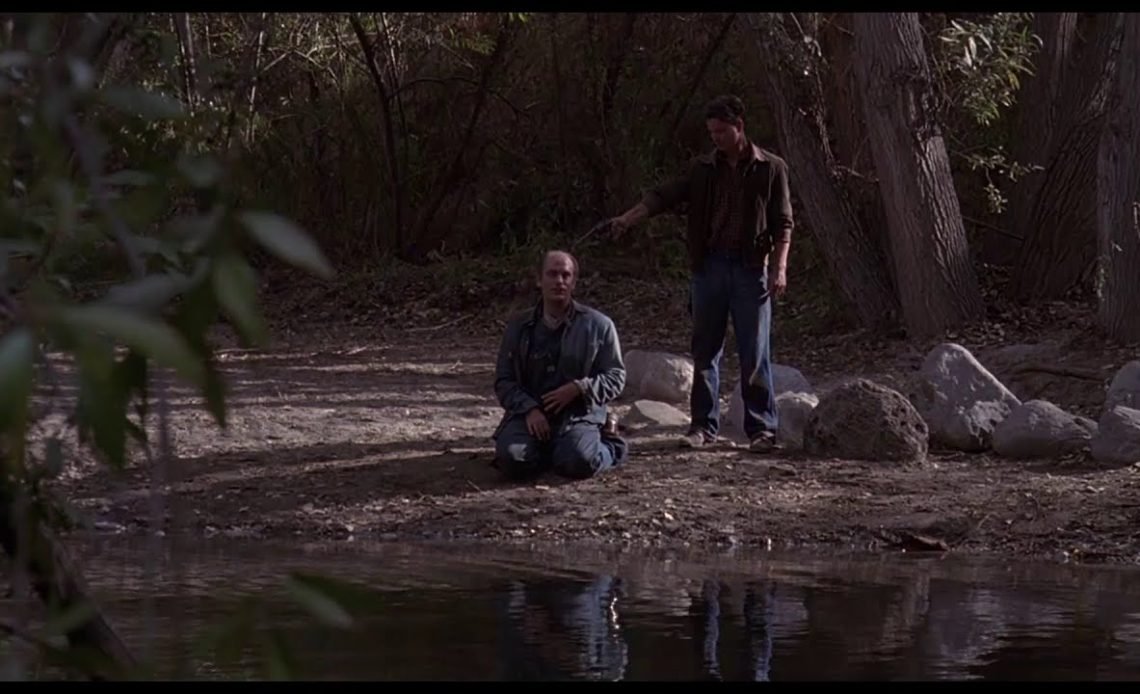
Why did George kill Lennie is one of the most debated questions in American literature — and it deserves a thorough, honest answer.
In John Steinbeck’s 1937 novella Of Mice and Men, George Milton shoots his best friend Lennie Small in the back of the head at the end of the story. It is a devastating moment.
It is also one of the most carefully constructed endings in literary history.
About the Book: Of Mice and Men
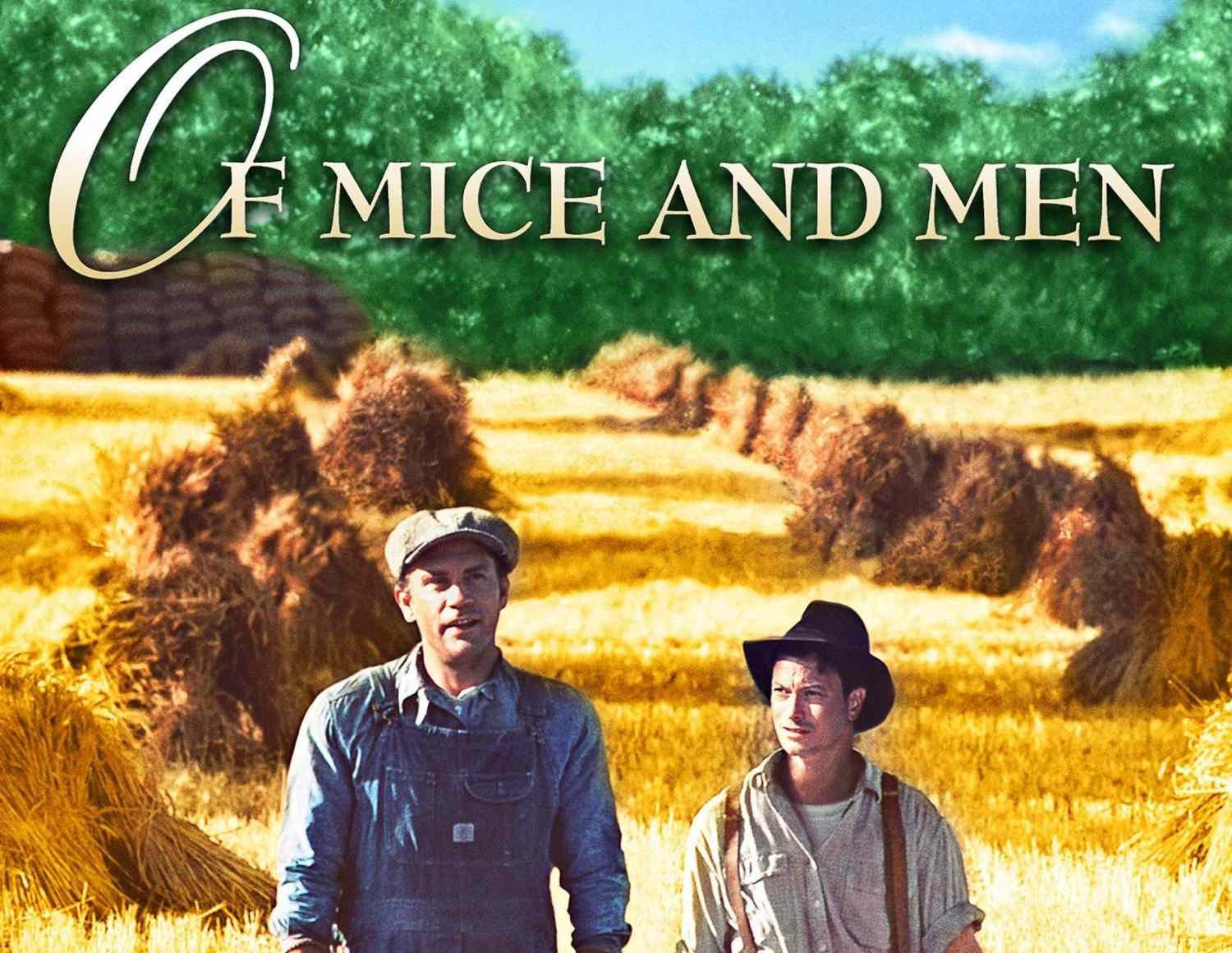
Of Mice and Men was published in 1937 by John Steinbeck. It is a short novella set during the Great Depression in California’s Salinas Valley.
The story follows two migrant farm workers — George Milton and Lennie Small — as they travel from ranch to ranch looking for work. George is small, quick-witted, and protective. Lennie is enormous, physically powerful, and intellectually disabled.
Steinbeck drew from his own experience working alongside migrant laborers in California. The title comes from a Robert Burns poem: “The best-laid plans of mice and men / Often go awry.” That line is the whole story in two sentences.
Who Are George and Lennie?
Understanding why George killed Lennie starts with understanding who they were to each other.
| Character | Description | Role in the Story |
|---|---|---|
| George Milton | Small, sharp, quick-witted | Caretaker, decision-maker, dreamer |
| Lennie Small | Huge, strong, intellectually disabled | Dependent, innocent, dangerous |
| Curley | Boss’s son, aggressive, jealous | Antagonist |
| Curley’s Wife | Lonely, flirtatious, unnamed | Catalyst for the tragedy |
| Candy | Old ranch hand, lost his dog | Mirror for George and Lennie |
| Slim | Wise, calm, respected | Moral voice of the ranch |
| Crooks | Black stable hand, isolated | Symbol of racial marginalization |
George and Lennie had been friends since childhood. George promised Lennie’s Aunt Clara he would look after him. Their friendship was rare and real — every other character in the story was completely alone.
The Shared Dream: The Farm and the Rabbits
Before understanding the ending, you must understand the dream.
George and Lennie shared a vision: someday they would own a small piece of land. They would grow their own food, raise animals, and answer to no one. Lennie’s specific obsession was tending rabbits because he loved soft things.
This dream kept them going. George told it to Lennie like a bedtime story — over and over, chapter after chapter. It was their reason to keep working, keep moving, keep hoping.
The dream also drew in Candy, the old ranch worker who had just watched his dog get shot. He offered his life savings to buy in. For one brief moment, the dream felt real.
When George kills Lennie at the end, he first retells the dream one final time. In doing so, Steinbeck makes clear: the dream dies with Lennie. George kills his best friend and his own hope in the same moment.
What Happened Before George Killed Lennie?
The events that led to Lennie’s death were a chain of accidental tragedies.
The mice and the puppy: Lennie loved soft things but never understood his own strength. He killed mice by petting them too hard. He accidentally killed the puppy Slim gave him for the same reason — squeezing it too tightly when it nipped him.
Weed incident: Before the story begins, Lennie and George were run out of a town called Weed. Lennie grabbed a woman’s red dress to feel how soft it was. When she screamed, he panicked and held on tighter. The town thought he had attacked her. They barely escaped.
Curley’s hand: Early in the story, Curley — the boss’s aggressive son — picks a fight with Lennie. Lennie does not want to fight. George tells him to defend himself. Lennie grabs Curley’s fist and crushes it completely. It shows, again, that Lennie has no control over the damage his strength causes.
Curley’s wife: In Chapter 5, Curley’s wife finds Lennie alone in the barn. She lets him feel her soft hair. When she pulls away and screams, Lennie grabs her head and shakes her to make her be quiet. He breaks her neck. He does not understand what he has done.
Lennie runs to the hiding spot George told him to go to if anything went wrong — a riverbank south of the ranch.
Why Did George Kill Lennie? The Five Core Reasons
1. To Protect Lennie from a Worse Death
Curley was furious. He organized a mob to hunt Lennie down. His exact instruction was to shoot Lennie in the stomach — a slow, agonizing death meant to punish, not end suffering.
George knew what was coming if the mob found Lennie first. He stole Carlson’s Luger pistol and misled the men by telling them Lennie went north. Then he slipped south to find Lennie at the riverbank.
George reached Lennie first. He made a choice: Lennie would die, but he would die peacefully, in a moment of happiness, at the hands of someone who loved him — not from fear and violence at the hands of people who hated him.
2. The Lesson of Candy’s Dog
Steinbeck foreshadowed George’s decision with one of the most important parallel scenes in the novella.
Earlier in the story, Carlson pressures the old ranch worker Candy to let him shoot Candy’s elderly, suffering dog. Candy reluctantly agrees and lets a stranger take the dog outside and shoot it.
Afterward, Candy tells George: “I ought to of shot that dog myself, George. I shouldn’t ought to of let no stranger shoot my dog.”
George heard that. He absorbed it. When the time came to decide Lennie’s fate, that line was still with him. He was not going to let a stranger — or a mob — be the last thing Lennie experienced. He was going to be there himself.
3. Lennie Could Not Be Saved or Changed
George was honest with himself about Lennie’s limitations. Lennie could not learn from his mistakes. He could not remember instructions. He could not control his strength.
After Weed, they ran. After Curley’s wife, there was nowhere left to run. Even if George had helped Lennie escape, Lennie’s pattern of accidental harm would have continued. George knew it. The ranch hands knew it. Even Lennie’s own hallucinated vision of a giant rabbit in Chapter 6 tells him: “George done ever’thing he could to jack you outa the sewer, but it don’t do no good.”
Lennie could not be fixed. He could not be jailed — he would not have understood it. He could not be left alone — he would have harmed someone else. George was out of options.
4. It Was an Act of Mercy and Love
Steinbeck wrote this ending as a mercy killing — what is sometimes called euthanasia in the ethical sense. George did not kill Lennie out of anger, convenience, or self-interest. He killed him out of love.
He made Lennie’s last moments as peaceful and joyful as possible. Told him to look out over the river. He told him again about the farm — the little house, the vegetable patch, the rabbits. Lennie died happy, mid-dream, feeling safe.
George told him: “I ain’t mad. I never been mad, an’ I ain’t now. That’s a thing I want ya to know.”
Lennie died hearing that he was loved and that he had not let George down. That was George’s final gift.
5. To Preserve Lennie’s Dignity
Lennie was childlike, innocent, and incapable of understanding the full weight of what he had done. He could not navigate a trial, a prison, or a mob’s idea of justice.
Allowing the mob to catch Lennie would have meant terror, pain, and humiliation for someone who genuinely did not understand why it was happening. George gave Lennie a death with dignity — something the world had rarely offered either of them.
The Symbolism of How George Killed Lennie
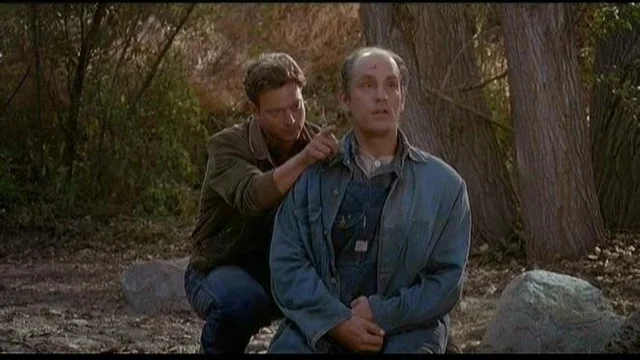
The method and setting of the killing are loaded with literary meaning.
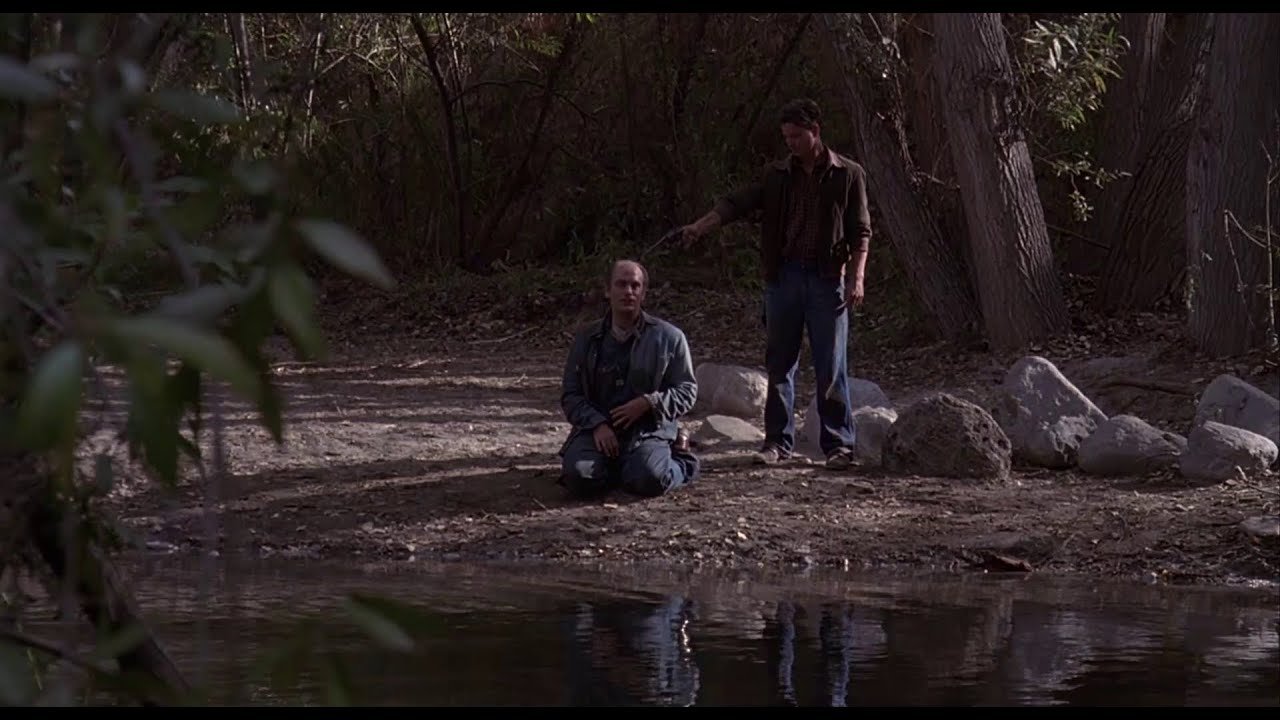
The location: George kills Lennie at the same riverbank where the story opened — the peaceful, secluded place in nature that represented safety and escape. The story ends where it began. The circle closes.
The gun: George uses Carlson’s Luger — the same gun used to shoot Candy’s dog. Steinbeck connects the two mercy killings directly. The weapon is a symbol of both compassion and finality.
The shot: George shoots Lennie in the back of the head — the same painless, instant method Carlson described before killing the dog. George chose the most humane method available to him.
The dream retold: Before pulling the trigger, George describes the farm one last time. He kills Lennie at the peak of Lennie’s happiness. Lennie dies in a dream, not in fear.
Slim’s response: After the killing, Slim is the only one who truly understands what George has done. He says, “You hadda, George. I swear you hadda.” Slim is Steinbeck’s moral compass in the story — his approval confirms that George did the right thing.
What Does George Killing Lennie Symbolize?
The killing operates on multiple symbolic levels simultaneously.
| Symbol | What It Represents |
|---|---|
| Death of Lennie | Death of the dream, death of innocence |
| Death of the shared farm dream | Failure of the American Dream for the poor |
| George killing Lennie himself | True friendship, loyalty, and mercy |
| The riverbank setting | Return to the beginning, loss of Eden |
| Retelling the dream before shooting | The dream was all they ever truly had |
| Slim’s understanding | Moral validation; society rarely gave it |
The killing of Lennie symbolizes the crushing of hope. It shows that for people at the bottom of society — the poor, the disabled, the marginalized — the American Dream is a beautiful story that never comes true.
Themes Connected to George Killing Lennie
The American Dream and Its Failure
George and Lennie’s dream of owning land is Steinbeck’s version of the American Dream. It is humble, attainable in theory, and deeply human.
Steinbeck shows that for migrant workers during the Depression, no amount of hard work guarantees a better life. Forces outside their control — Lennie’s disability, Curley’s power, social inequality — make the dream impossible.
When George kills Lennie, he also kills the dream. After the shooting, George no longer talks about the farm. He is alone, the way every other character in the book has always been alone.
Friendship and Loneliness
Every other character in Of Mice and Men is isolated. Crooks lives alone in the stable because of racism. Candy lost his dog and has no one. Curley’s wife has no name and no friends. The ranch hands are temporary, replaceable, forgotten.
George and Lennie had each other. That made them different. That made them lucky, by the standards of their world.
By killing Lennie, George loses the one thing that set him apart from every other lonely drifter. He becomes exactly what he always said he never wanted to be: a man with no one.
Mercy vs. Justice
The killing raises an ethical question Steinbeck leaves open on purpose: was it right?
The legal answer is no — it was murder. The moral answer is much more complicated.
Lennie had killed a woman. He had no real understanding of consequences. He could not be rehabilitated. The justice system of 1930s rural California was not going to show him mercy. Curley was not going to show him mercy. A quick death from the person who loved him most is the most compassionate outcome in a world with no good options.
Steinbeck does not tell the reader what to think. He shows the act, shows Slim’s quiet approval, and lets the weight of it sit.
Disability and Marginalization
Lennie’s intellectual disability is central to the entire story. Steinbeck portrays Lennie with deep humanity and no condescension — he is innocent, loving, and dangerous entirely because the world around him has no place for someone like him.
The tragedy is not simply that Lennie dies. The tragedy is that a society built on productivity, toughness, and self-sufficiency could never have accommodated Lennie. His death was inevitable from the first page.
Power and Powerlessness
Steinbeck populated the book with powerless people — migrant workers, an old man, a Black man barred from the bunkhouse, a woman with no name. All of them dream. None of them win.
George and Lennie’s story is not special because it ends badly. It is special because Steinbeck shows exactly how and why it ends badly — and how ordinary that tragedy is.
Was George Right to Kill Lennie?

This is the essay question every student of Of Mice and Men eventually faces. Here are both sides.
Arguments that George was right:
- Lennie would have died painfully at Curley’s hands
- Lennie could not understand or survive prison or a trial
- Lennie’s pattern of accidental harm would have continued
- George gave Lennie peace, dignity, and love in his final moments
- Candy confirmed the right lesson: you should be the one to do it yourself
Arguments that George was wrong:
- Taking a human life is never justified on consequentialist grounds alone
- George could have tried to help Lennie escape
- Lennie was not evil — he never intentionally hurt anyone
- There may have been alternatives George did not fully explore
- George made the decision alone, quickly, without any real alternatives considered
Most literary scholars and educators land on the side of George being morally justified — not legally, but humanly. The context of the mob, the era, and Lennie’s condition make the act one of genuine love rather than convenience or cruelty.
How the Ending Connects to the Rest of the Book
Steinbeck prepared readers for this ending from the very first chapter. Every element of the plot mirrors or foreshadows the conclusion.
| Earlier Event | How It Foreshadows the Ending |
|---|---|
| Lennie kills the mouse | Shows he cannot control his strength |
| The incident in Weed | Establishes the pattern of accidental harm |
| Carlson shoots Candy’s dog | Directly mirrors George shooting Lennie |
| Candy’s regret about the dog | Teaches George what he must do himself |
| Lennie crushes Curley’s hand | Shows the scale of damage he can cause |
| Lennie kills the puppy | Final warning before the tragedy |
| Curley threatens to shoot Lennie in the gut | Makes George’s method an act of mercy by contrast |
The novella is structured so that every scene quietly pushes toward the same conclusion. Steinbeck called his original draft “Something That Happened” — a title that captures the book’s core philosophy: this was not evil, not heroism, just the inevitable result of who these people were and what world they lived in.
Steinbeck’s Purpose: Why He Wrote the Ending This Way
Steinbeck wrote Of Mice and Men as a work of Social Realism. He wanted to show the lives of people who were forgotten by American prosperity — migrant laborers, the disabled, the marginalized.
He did not want a happy ending because a happy ending would have been dishonest. The Great Depression did not give happy endings to people like George and Lennie. Their dreams were real, their friendship was real, and the crushing of both was real.
By having George kill Lennie — rather than having the mob do it, or Curley, or a stranger — Steinbeck made the ending an act of love within a loveless world. That is the point. Even in circumstances stripped of every other comfort, human beings are capable of choosing tenderness over cruelty.
That choice costs George everything. And Steinbeck makes sure the reader feels every bit of it.
Frequently Asked Questions (FAQs)
Why did George kill Lennie instead of letting him run away?
George knew the mob would catch Lennie and torture him before killing him. He chose to do it himself to give Lennie a quick, peaceful, loving death.
Was killing Lennie an act of mercy?
Yes, most literary scholars consider it a mercy killing. George gave Lennie a painless death in a moment of happiness rather than leaving him to suffer at Curley’s hands.
What chapter does George kill Lennie?
George kills Lennie in Chapter 6, the final chapter of Of Mice and Men, at the riverbank where the story first began.
What does George say to Lennie before killing him?
George tells Lennie he is not angry and never was, then retells their shared dream of the farm and the rabbits while Lennie looks out over the river.
How does George kill Lennie?
George shoots Lennie in the back of the head with Carlson’s Luger pistol — the same method described when Carlson shot Candy’s dog, chosen for being instant and painless.
Did George feel guilty about killing Lennie?
Yes. After the shooting, George is left alone and shattered. Slim recognizes his grief and takes him away. George loses his purpose, his companion, and his dream all at once.
What does Lennie’s death symbolize in Of Mice and Men?
Lennie’s death symbolizes the destruction of the American Dream, the impossibility of hope for the marginalized, and the end of the only true friendship in the story.
Is George justified in killing Lennie?
Morally, most readers and scholars say yes — given Lennie’s fate if caught by the mob, his inability to be rehabilitated, and George’s intention to spare him suffering.
How does Candy’s dog foreshadow Lennie’s death?
Candy lets a stranger shoot his old dog and regrets it. His regret teaches George that when the time comes, he must be the one to end Lennie’s life — not a stranger who feels nothing.
What happens to George after he kills Lennie?
George is left alone. His dream is gone. Slim takes him to get a drink. The ending implies George will become just another lonely drifter — the life he and Lennie always feared.
Conclusion
Why did George kill Lennie is a question that cuts to the heart of what Of Mice and Men is about. George did not kill Lennie out of cruelty, impatience, or selfishness.
He killed him to protect him from a worse fate, to honor a lesson he learned from Candy’s mistake, and to give the person he loved most in the world a peaceful, dignified death.
Steinbeck built the entire novella toward this moment — every scene, every foreshadowing detail, every parallel between the dog and Lennie pointed here. The ending is devastating precisely because it is not simple.
It is an act of love inside a system that gave people like George and Lennie no good options. The dream died with Lennie. George’s loneliness began the second he pulled the trigger. And readers have been sitting with that weight since 1937.


