



Why am I suddenly lactose intolerant is a question many adults ask after years of eating dairy without any problem. One day, milk, cheese, or ice cream feels fine, and the next, the same foods cause bloating, cramps, or diarrhea.
This shift can feel confusing, but sudden lactose intolerance is more common than most people realize. It usually happens because your body starts producing less lactase, the enzyme needed to digest lactose.
What Is Lactose Intolerance

Lactose intolerance happens when your small intestine doesn’t produce enough lactase to break down lactose, the natural sugar found in milk and dairy.
Undigested lactose travels to the colon, where gut bacteria ferment it, producing gas, bloating, and discomfort.
This is different from a milk allergy, which involves the immune system rather than digestion.
Can You Suddenly Become Lactose Intolerant
Yes, adults can develop lactose intolerance suddenly, even after years of consuming dairy without issues.
This shift usually reflects a change in how your digestive system works, not a new disease appearing overnight.
Sudden lactose intolerance can be temporary or permanent, depending on what’s causing it.
Why Does Lactose Intolerance Appear Suddenly
There are several reasons lactose intolerance can develop or worsen unexpectedly in adulthood.
1. Natural Age-Related Decline in Lactase
Lactase production naturally decreases with age in most people, a condition known as primary lactose intolerance.
This decline can happen gradually, but symptoms often become noticeable only after they cross a certain threshold.
2. Gastrointestinal Infections
Infections like gastroenteritis, rotavirus, or Giardia can damage the lining of the small intestine and reduce lactase production temporarily.
This is known as secondary lactose intolerance, and it often resolves once the gut heals.
3. Inflammatory Bowel Conditions
Conditions like Crohn’s disease, ulcerative colitis, and irritable bowel syndrome can irritate the intestine and disrupt lactase production.
Managing the underlying condition often improves lactose tolerance over time.
4. Celiac Disease
Celiac disease damages the small intestine lining in response to gluten, which can also impair lactase production.
Many people with undiagnosed celiac disease experience lactose intolerance symptoms as a secondary effect.
5. Small Intestinal Bacterial Overgrowth (SIBO)
SIBO involves excess bacteria in the small intestine that can interfere with normal lactose digestion.
Treating the bacterial overgrowth often reduces or eliminates lactose intolerance symptoms.
6. Surgery or Intestinal Injury
Abdominal surgery, radiation, or chemotherapy can damage cells that produce lactase, leading to sudden lactose intolerance.
This type usually improves gradually as the intestine heals after treatment.
7. Medications
Certain antibiotics and other medications can disrupt gut bacteria balance, temporarily affecting lactose digestion.
Symptoms often resolve once the medication course ends and gut flora rebalances.
8. Reduced Dairy Consumption Over Time
Eating less dairy over months or years can cause your gut to produce less lactase, since the enzyme adapts to usage.
This means occasional dairy eaters may notice symptoms appear more easily than regular consumers.
Primary vs Secondary Lactose Intolerance
Understanding the difference between these two types helps explain why your symptoms appeared and whether they might go away.
| Type | Cause | Duration |
|---|---|---|
| Primary | Natural age-related decline in lactase | Permanent, may worsen with age |
| Secondary | Illness, infection, surgery, or medication | Often temporary, improves once healed |
| Congenital | Rare genetic mutation present from birth | Lifelong, very rare |
Knowing which type you have helps determine whether dietary changes alone will help or whether treating an underlying condition is necessary.
Common Symptoms of Lactose Intolerance
Symptoms typically appear 30 minutes to two hours after consuming dairy, though timing varies between individuals.
Digestive Symptoms
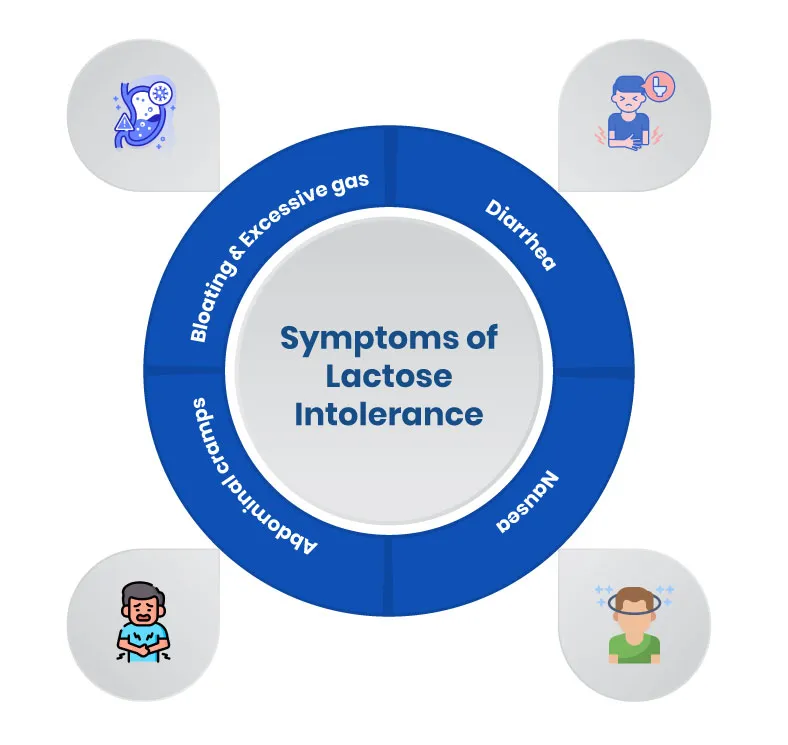
- Bloating and abdominal fullness
- Gas and flatulence
- Stomach cramps or pain
- Diarrhea or loose stools
- Nausea, and occasionally vomiting
Less Common Symptoms
- Fatigue after eating dairy
- Headaches in sensitive individuals
- Skin issues like acne flare-ups in some people
Symptom severity depends on how much lactose you consume and how much lactase your body can still produce.
Symptom Timeline Table
| Time After Eating Dairy | Possible Symptom |
|---|---|
| 30 minutes | Nausea, stomach discomfort |
| 1 hour | Bloating, gas |
| 1–2 hours | Cramping, diarrhea |
| Several hours | Fatigue, headache in some cases |
This timeline can help you connect specific meals to your symptoms more accurately.
How Much Dairy Triggers Symptoms
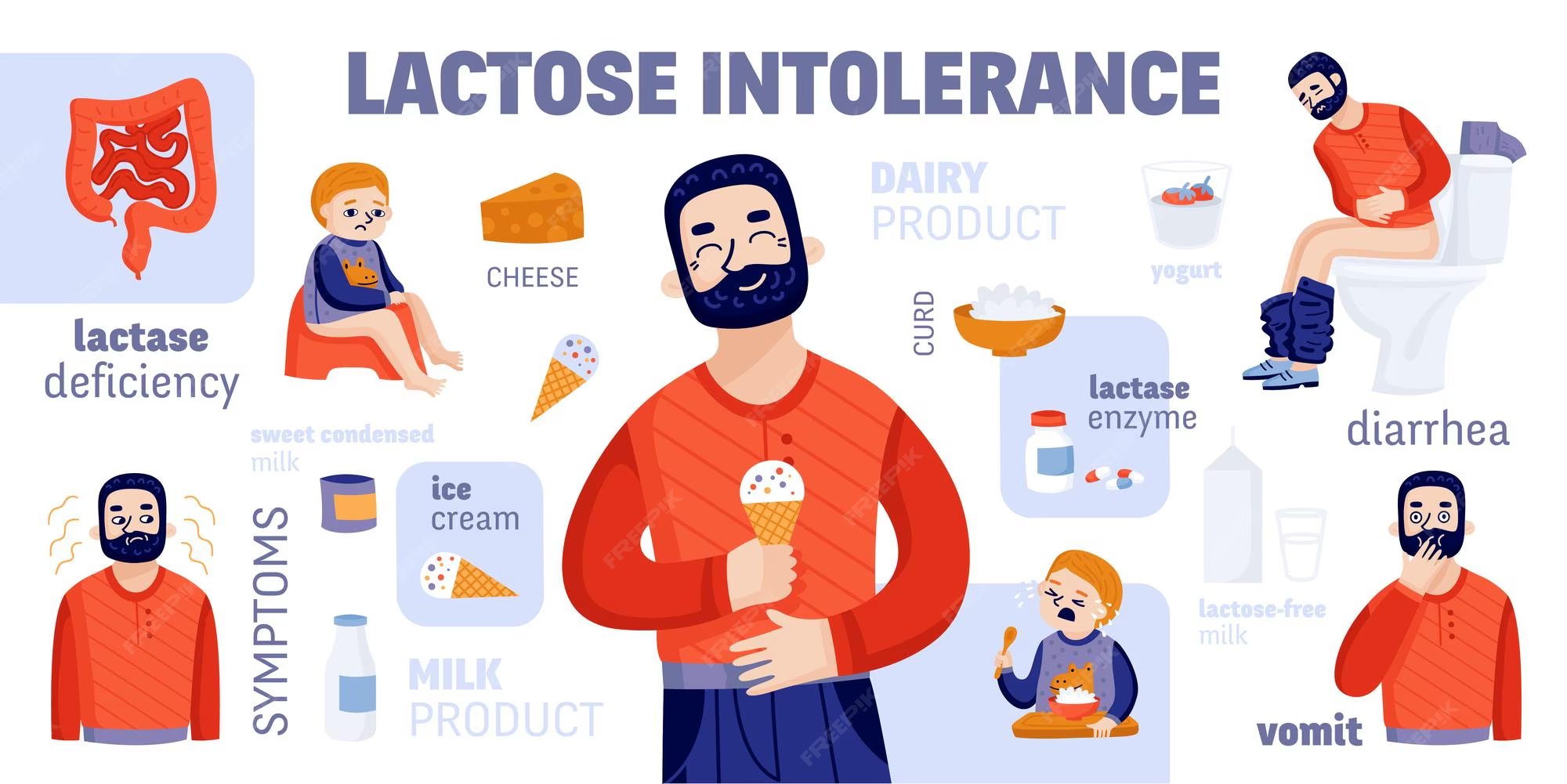
Tolerance levels vary widely between individuals, even among people with confirmed lactose intolerance.
Many people can tolerate small amounts of dairy, often up to 12 grams of lactose, without noticeable symptoms.
Larger amounts, such as a full glass of milk, are more likely to trigger digestive discomfort in sensitive individuals.
How Sudden Lactose Intolerance Is Diagnosed
Diagnosis usually starts with a review of your symptoms, diet, and medical history.
Common Diagnostic Tests
| Test | What It Measures |
|---|---|
| Hydrogen breath test | Hydrogen gas produced by undigested lactose fermentation |
| Lactose tolerance test | Blood sugar response after consuming lactose |
| Stool acidity test | Acid levels in stool, often used for children |
| Elimination diet | Removing dairy to observe symptom changes |
Your doctor may also test for celiac disease, IBS, or other gut conditions if secondary lactose intolerance is suspected.
Lactose Intolerance vs Milk Allergy
These two conditions are often confused, but they involve completely different body systems.
| Feature | Lactose Intolerance | Milk Allergy |
|---|---|---|
| System involved | Digestive system | Immune system |
| Onset of symptoms | 30 minutes to 2 hours | Minutes to a few hours |
| Severity | Uncomfortable, not dangerous | Can be life-threatening |
| Common symptoms | Bloating, gas, diarrhea | Hives, swelling, breathing issues |
If you experience swelling, hives, or difficulty breathing after dairy, seek emergency care immediately, as this may indicate a milk allergy.
Who Is More Likely to Develop Lactose Intolerance
Lactose intolerance affects a large portion of the global population, with prevalence varying by ethnicity and genetics.
It is more common among people of Asian, African, Hispanic, and Native American descent compared to those of Northern European descent.
Older adults are also more likely to develop lactose intolerance due to natural declines in lactase production over time.
Foods That Commonly Contain Hidden Lactose
Lactose can appear in foods you might not expect, making it easy to accidentally trigger symptoms.
- Bread and baked goods
- Salad dressings and sauces
- Processed breakfast cereals
- Protein powders and supplements
- Certain medications and vitamins
Reading ingredient labels carefully helps you avoid hidden sources of lactose in packaged foods.
How to Manage Sudden Lactose Intolerance
Managing lactose intolerance doesn’t always mean eliminating dairy completely.
1. Try Lactase Enzyme Supplements
Over-the-counter lactase enzyme tablets can help your body digest lactose when taken before eating dairy.
These supplements are widely available and considered safe for most adults.
2. Choose Low-Lactose Dairy Products
Hard cheeses, yogurt, and lactose-free milk contain little to no lactose and are often well tolerated.
Fermented dairy products also naturally contain lower lactose levels due to bacterial fermentation.
3. Introduce Dairy Gradually
Slowly reintroducing small amounts of dairy can help your gut adjust and may improve tolerance over time.
This approach works best for mild to moderate lactose intolerance.
4. Pair Dairy With Other Foods
Eating dairy alongside other foods can slow digestion and reduce the severity of symptoms.
Avoid consuming large amounts of dairy on an empty stomach if you’re sensitive.
5. Treat the Underlying Cause
If secondary lactose intolerance is caused by an infection, SIBO, or inflammatory bowel disease, treating that condition often restores lactose tolerance.
Working with a doctor or gastroenterologist ensures the right treatment plan for your specific cause.
Dairy Alternatives Worth Trying
| Alternative | Notes |
|---|---|
| Lactose-free milk | Regular milk with lactase enzyme added |
| Almond milk | Naturally lactose-free, lower in protein |
| Oat milk | Creamy texture, lactose-free |
| Soy milk | Higher protein content, lactose-free |
| Coconut yogurt | Dairy-free alternative to traditional yogurt |
These alternatives allow you to maintain similar textures and flavors while avoiding lactose-related symptoms.
Lactose Intolerance and Weight Management
Some people worry that cutting back on dairy will affect their weight or nutrition goals, but this usually isn’t a concern with proper planning.
Plant-based milk alternatives and lactose-free dairy products can provide similar protein and calorie profiles to regular dairy.
Focusing on overall balanced nutrition, rather than dairy specifically, keeps weight and energy levels stable while managing symptoms.
Getting Enough Calcium Without Dairy
Reducing dairy intake raises concerns about meeting daily calcium needs for bone health.
Calcium-Rich Non-Dairy Foods
- Leafy greens like kale and spinach
- Fortified plant-based milks
- Almonds and sesame seeds
- Canned fish with soft bones, like sardines
A doctor may also recommend calcium supplements if dietary intake alone isn’t sufficient.
Is Sudden Lactose Intolerance Permanent
Whether sudden lactose intolerance is permanent depends on its underlying cause.
Primary lactose intolerance, linked to natural aging, tends to be lifelong and may gradually worsen.
Secondary lactose intolerance caused by infection, medication, or illness often improves once the underlying issue resolves.
When to See a Doctor
While lactose intolerance itself isn’t dangerous, certain symptoms warrant medical evaluation.
- Severe or persistent diarrhea
- Unexplained weight loss
- Blood in stool
- Symptoms that don’t improve after removing dairy
- Signs of a possible milk allergy, like swelling or difficulty breathing
A doctor can rule out other digestive conditions that share similar symptoms, such as IBS or celiac disease.
Lactose Intolerance and Gut Health
Emerging research suggests gut bacteria composition may influence how well someone tolerates lactose over time.
Some people with lactose intolerance can gradually improve tolerance by regularly consuming small amounts of dairy, allowing gut bacteria to adapt.
Probiotic-rich foods may also support better lactose digestion for some individuals, though results vary.
Lactose Intolerance in Different Age Groups
Intolerance can present differently depending on your stage of life, and recognizing these patterns helps with faster diagnosis.
Lactose Intolerance in Children
Children rarely develop primary lactose intolerance early in life, since lactase levels are naturally high during infancy.
Secondary lactose intolerance in kids often follows a stomach virus like rotavirus and typically resolves within a few weeks.
Lactose Intolerance in Teens and Young Adults
Lactase production can begin declining as early as the teenage years for some ethnic groups with higher genetic predisposition.
Young adults may also develop secondary lactose intolerance after food poisoning, antibiotics, or a diagnosis of IBS.
Lactose Intolerance in Older Adults
Lactase decline becomes more pronounced with age, making primary lactose intolerance far more common after midlife.
Older adults are also more likely to be on medications that can disrupt gut bacteria and worsen symptoms.
Lactose Intolerance and Pregnancy
Hormonal changes during pregnancy can sometimes affect digestion, including how the body processes lactose.
Some pregnant individuals report new or worsened lactose intolerance symptoms, though this typically resolves after delivery.
Maintaining adequate calcium intake during pregnancy is especially important, so discussing dairy alternatives with a doctor is recommended.
The Role of Gut Bacteria in Lactose Digestion

Your gut microbiome plays a bigger role in lactose digestion than many people realize.
Certain gut bacteria can help ferment lactose in ways that reduce uncomfortable symptoms, even when lactase levels are low.
This is part of why some people with lactose intolerance tolerate yogurt and fermented dairy better than plain milk.
Probiotics and Lactose Tolerance
Some studies suggest that specific probiotic strains may improve lactose digestion and reduce bloating or gas.
Fermented foods like kefir, yogurt, and sauerkraut may support a healthier gut environment overall.
Results vary between individuals, so it’s worth tracking your own response to probiotic-rich foods.
Lactose Intolerance and Irritable Bowel Syndrome (IBS)
IBS and lactose intolerance share overlapping symptoms, which can make diagnosis confusing without proper testing.
Many people with IBS are also sensitive to lactose, since both conditions involve heightened gut sensitivity.
A hydrogen breath test can help distinguish true lactose intolerance from general IBS-related dairy sensitivity.
Building a Dairy-Friendly Meal Plan
Managing lactose intolerance doesn’t have to mean giving up your favorite meals entirely.
Breakfast Ideas
Try lactose-free yogurt with fruit and granola, or oat milk in your morning coffee or cereal.
Hard cheeses like cheddar or parmesan in small amounts are often well tolerated at breakfast.
Lunch and Dinner Ideas
Use lactose-free milk or cream substitutes in soups, sauces, and mashed potatoes.
Choose aged cheeses over soft cheeses when adding dairy to pasta or salads.
Snacks and Desserts
Dairy-free ice cream made from coconut or oat milk offers a similar texture without lactose-related discomfort.
Dark chocolate, which contains little to no lactose, is generally a safer treat option.
Tracking Your Symptoms Effectively
Keeping a simple food and symptom diary can help you and your doctor identify exact triggers faster.
What to Record
- Foods and drinks consumed, including hidden dairy sources
- Time symptoms started after eating
- Severity of symptoms on a simple scale
- Any medications or supplements taken that day
Reviewing this information over two to three weeks often reveals clear patterns tied to specific foods or amounts.
Long-Term Outlook for Lactose Intolerance
Most people with lactose intolerance can lead a completely normal, comfortable life with a few dietary adjustments.
Primary lactose intolerance tends to be a lifelong but manageable condition, rarely leading to serious health complications.
Secondary lactose intolerance often improves significantly once the underlying cause, such as infection or inflammation, is properly treated.
Myths About Lactose Intolerance
Myth 1: You Must Avoid All Dairy Completely
Many people with lactose intolerance can tolerate small amounts of dairy without symptoms.
Myth 2: Lactose Intolerance and Milk Allergy Are the Same
These conditions affect different body systems and require different management approaches entirely.
Myth 3: Only Older Adults Develop Lactose Intolerance
While more common with age, younger adults can also develop secondary lactose intolerance after illness or infection.
Myth 4: Lactose-Free Products Are Less Nutritious
Lactose-free dairy products contain the same nutrients as regular dairy, just with added lactase enzyme.
Related Terms Covered in This Guide
This guide also addresses related searches, including sudden onset lactose intolerance, secondary lactose intolerance causes, lactase deficiency symptoms, and dairy intolerance in adults.
Other related terms covered include lactose intolerance test, lactose intolerance diet, dairy alternatives for lactose intolerance, and lactose intolerance vs milk allergy.
Covering these related terms ensures you get a complete picture rather than a single narrow explanation of your symptoms.
Frequently Asked Questions (FAQs)
Why did I suddenly become lactose intolerant as an adult?
This usually happens due to a natural decline in lactase production with age, or a temporary issue like infection or illness. Both types are common and manageable.
Can lactose intolerance go away on its own?
Secondary lactose intolerance caused by infection or illness often resolves once the gut heals. Primary lactose intolerance typically doesn’t go away.
What are the first signs of lactose intolerance?
Bloating, gas, stomach cramps, and diarrhea after consuming dairy are usually the first noticeable signs. Symptoms typically appear within two hours of eating.
Is lactose intolerance the same as a dairy allergy?
No, lactose intolerance is a digestive issue, while a dairy allergy involves the immune system and can be more dangerous. Allergy symptoms include hives and swelling.
How much dairy can a lactose-intolerant person eat?
Many people can tolerate small amounts, such as up to 12 grams of lactose, without symptoms. Tolerance varies by individual.
Can stress cause lactose intolerance?
Stress doesn’t directly cause lactose intolerance, but it can worsen digestive symptoms and gut sensitivity. Managing stress may help reduce flare-ups.
What foods should I avoid with lactose intolerance?
Milk, soft cheeses, ice cream, and cream-based sauces are common triggers. Hard cheeses and lactose-free products are usually better tolerated.
Do lactase supplements really work?
Yes, over-the-counter lactase enzyme supplements help many people digest dairy without symptoms when taken before eating. Effectiveness varies by individual.
Can lactose intolerance cause fatigue?
Some people report fatigue after consuming dairy, though it’s less common than digestive symptoms. It may relate to gut inflammation or poor sleep from discomfort.
When should I see a doctor about lactose intolerance?
See a doctor if symptoms are severe, persistent, or accompanied by weight loss or blood in stool. This helps rule out other digestive conditions.
Quick Reference: Sudden Lactose Intolerance Checklist
| Question to Ask Yourself | What It Suggests |
|---|---|
| Did symptoms start after an illness? | Likely secondary lactose intolerance |
| Have symptoms gradually worsened with age? | Likely primary lactose intolerance |
| Do symptoms happen with even tiny amounts of dairy? | Possible milk allergy, seek testing |
| Do symptoms improve with lactose-free products? | Confirms lactose as the trigger |
Running through this quick checklist can help you decide whether home management is enough or a doctor’s visit is the next right step.
Conclusion
Sudden lactose intolerance in adulthood is common and usually linked to either natural aging or an underlying digestive issue like infection, SIBO, or inflammatory bowel disease. Understanding whether your case is primary or secondary helps determine the best management approach.
Simple strategies like lactase supplements, low-lactose dairy alternatives, and gradual reintroduction of dairy can help most people manage symptoms effectively. Reading food labels and tracking your reactions also makes daily life easier.
If symptoms are severe, persistent, or paired with warning signs like weight loss or blood in stool, consult a doctor for proper testing. With the right approach, most people with lactose intolerance can still enjoy a balanced, comfortable diet in 2026.


