


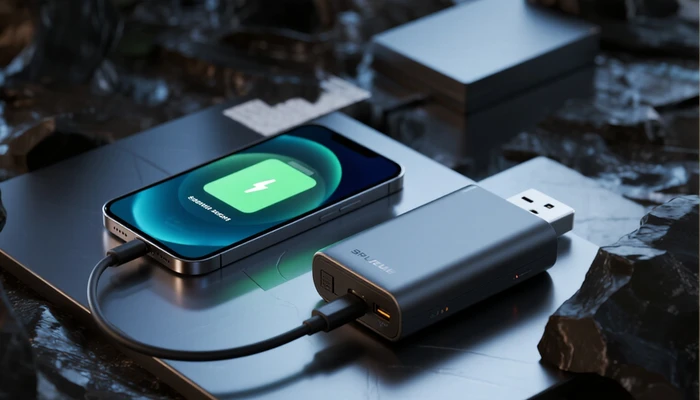
People usually notice a power bank when they need one urgently. A phone is dropping toward single digits, a day out is running longer than expected, or a charging cable has been left behind. In those moments, capacity and charging speed matter. But over time, those are not always the things that shape whether a power bank feels genuinely easy to live with.
What often determines the experience is how little effort it asks from the user. The best portable charging products fit into daily routines so naturally that they almost disappear. They do not create extra steps, take up unnecessary space, or make people rethink how they carry and use their devices. That is what makes a power bank feel effortless to use.
The first part of that feeling comes from accessibility. A power bank that is easy to reach and easy to start using will always feel more convenient than one that technically offers more power but stays buried in a bag. In real life, people do not always want to stop what they are doing, untangle a cable, and rearrange what they are holding just to get a little extra battery. The easier the charging process is to begin, the more likely people are to actually use it in everyday situations rather than saving it only for emergencies.
That is one reason magnetic charging has changed expectations. A Magsafe Power Bank feels more intuitive for many users because it removes part of the setup process. The connection happens quickly, and the phone remains more usable while charging. That matters because portable charging is no longer just about getting from low battery to full battery. It is also about staying active on the move, whether someone is checking directions, replying to messages, taking photos, or navigating an airport.
Size also plays a bigger role than many buying guides admit. Large-capacity models sound impressive, but they are not always the easiest to carry every day. A product can have strong specs and still feel inconvenient if it adds too much weight to a pocket, takes up too much room in a tote, or creates a bulky shape in the hand. Effortless use often starts with the decision to bring the charger along in the first place. If it feels like an extra burden before the day even begins, it already introduces friction.
That is why many people searching for the Best Power Bank are often looking for more than battery size. They are trying to find the balance between enough power and easy portability. A charger that supports daily habits without feeling heavy or awkward usually offers more real-world value than one that looks better on a comparison chart but gets left at home.
Another important factor is cable dependence. Many users do not mind carrying one cable. What becomes tiring is having to think about cables all the time. Is the right one packed? Is it long enough? Is it tangled with other things in the bag? Does it work properly with the device being charged? The more a power bank reduces those small points of friction, the smoother the experience feels. Built-in cables, better cable storage, or wireless attachment all help because they cut down on the little decisions that interrupt everyday use.
A power bank also feels more effortless when it supports the way people actually use their phones while charging. Some chargers technically work well, but they make the phone awkward to hold, too thick to grip comfortably, or too inconvenient to keep using. That creates a disconnect between charging and usability. On paper, the power solution is doing its job. In practice, it makes the device less functional in the moment when the user still needs it. Good portable charging design solves this by making charging feel like a natural extension of device use rather than a pause in it.
There is also a psychological side to effortless design. People tend to trust products that are predictable. Clear battery indicators, simple attachment, stable charging, and easy recharging all reduce uncertainty. Users do not want to guess whether their charger has enough remaining power or whether it is working properly. The less mental energy a product requires, the more seamless it feels. Ease is not only physical. It is cognitive too.
This is where product design and user behavior meet. A well-designed power bank respects moments that are usually rushed or inconvenient, such as commuting, waiting in line, switching between meetings, or moving through unfamiliar places. In those situations, even a small reduction in friction has a noticeable effect. That is why a Magsafe Power Bank often appeals to users who value immediacy and convenience over maximum capacity alone. It aligns better with short, frequent, low-effort top-ups throughout the day.
In the end, what makes a power bank feel effortless is not one feature by itself. It is the combination of portability, easy access, low setup friction, and the ability to keep charging from interrupting everyday life. The Best Power Bank for most people is often the one that works so smoothly with their routine that they barely have to think about it. And in portable tech, that kind of ease is often what turns a useful accessory into an everyday essential.

