



Pitching instrumental tracks often falls flat because vocalists struggle to visualize the final product over an empty beat. Producers spend hours meticulously crafting syncopations, only to have tracks passed over because listeners cannot immediately hear where their voice sits. This imagination gap is a major hurdle in a saturated market, forcing producers to present instrumentals as realized commercial songs rather than mere backing tracks.
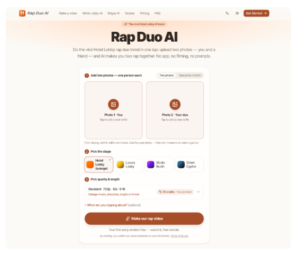
Relying on generic sample packs or session vocalists rarely yields the cohesive result your arrangement demands. Pre-recorded loops compromise harmonic structure, and hiring talent is financially unsustainable for daily pitching. You need a method to rapidly prototype custom layouts that demonstrate the precise rhythmic pockets of your track, and testing different flows with tools like Rap Duo AI provides a streamlined way to draft these reference layers. This guide details the workflow for constructing convincing vocal placeholders that make your portfolio attractive to serious artists.
Evaluating the Rhythmic Pockets of Your Instrumental Mix
Before introducing vocal elements, you must critically analyze your existing mix to identify available rhythmic pockets. A dense, heavily layered beat leaves no sonic space for articulation, resulting in a muddy demo. Arrangement requires ensuring the kick, bassline, and vocal rarely compete for the exact same frequency band. You need to locate the gaps in your drum sequence where a vocalist naturally needs to breathe.
Start by isolating your primary drum bus and bass channel, muting secondary melodic elements. Listen closely to the syncopation between your hi-hats and snare drum. The spaces between hi-hat hits dictate the subdivisions the vocal cadence will follow. By mapping these gaps, you ensure the upcoming arrangement actively complements the underlying groove rather than fighting the established momentum of the rhythm section.
Fade melodic elements back in and monitor midrange frequencies between 1kHz and 4kHz, where the human voice naturally cuts through. If synthesizers heavily saturate this range, apply dynamic EQ or sidechain compression to carve out a dedicated pocket. A well-prepared instrumental track anticipates a vocal line long before lyrics are recorded.
Designing the Call and Response Vocal Blueprint
Hip-hop thrives on dynamic interplay, mimicking the high-energy interaction of multiple vocalists. Establishing a structured call-and-response interaction between different vocal timbres adds depth to your demo and keeps listeners engaged throughout a lengthy verse.
1.Establish the Primary Narrative Cadence
Map out the lead vocal rhythm by tapping the main syllables over your high-hat pattern. This cadence establishes the foundational flow dictating the verse’s energy. Lock this rhythm to the snare, ensuring accented words land precisely to drive the song forward.
2.Identify Spaces for Ad-Libs and Responses
Locate intentional gaps at the end of phrases where a secondary voice can emphasize the rhyme scheme. These spaces are reserved for counter-rhythmic textures that fill the silence while the imaginary lead takes a breath. Strategic placement prevents the arrangement from feeling static.
3.Contrast the Tonal Frequencies of the Voices
Ensure lead and response voices occupy different equalization spaces to avoid frequency masking. Pairing a deep baritone lead with a higher-pitched, saturated secondary voice creates a wide stereo image and prevents midrange congestion. This contrast is vital for maintaining clarity.
Generating and Integrating Custom Reference Stems
Once mapped out, you require actual audio files to fill structural gaps. Relying on pre-recorded loops heavily degrades pitch quality. Static samples cannot adapt to BPM fluctuations or deliver thematic lyrical content necessary to sell a concept. You need bespoke lines matching the tempo, key, and aggression level of your framework.
Constructing bespoke layers requires inputting lyrics, selecting tones, and specifying rhythmic delivery. Utilizing Rap Duo Video AI allows you to generate synchronized assets reflecting the dynamic interaction planned in your blueprint. By defining tempo, vocal style, and breaks, you can render distinct stems tailor-made for your project, giving you complete control over the lyrical narrative to pitch specifically to your target artist.
Import the rendered stems into your workstation alongside your beat, checking transient alignment against your drum markers. Even high-quality renders may require timing adjustments using your DAW’s warp features. Manually slice clips at major phrases and nudge them so initial consonants strike perfectly in time, locking the simulated performance into the rhythmic pocket.

Processing the Vocal Layers for Demo Authenticity
Unprocessed reference stems need immediate spatial and dynamic processing to belong inside the same acoustic environment as your drum bus. Without proper mixing, placeholders sit awkwardly on top of the track, sounding detached. The goal is to blend these layers seamlessly so they guide the listener’s ear without drawing attention to their temporary nature.
Apply a high-pass filter to vocal tracks to eliminate low-end rumble below 100Hz, freeing up headroom for kicks. Follow this with a fast-acting compressor, utilizing a fast attack to catch plosives and a medium release for consistent dynamic range. Heavy compression ensures syllables remain intelligible even when the instrumental reaches maximum density.
Address spatial dimensions using time-based effects, avoiding long reverbs that destroy rhythmic articulation. Instead, utilize short slap-back delays and subtle plate reverbs to provide stereo width while maintaining upfront presence. Route all channels to a dedicated vocal bus and apply light saturation to glue the lead and response layers, creating a unified sonic texture.
Finalizing the Demo Arrangement for Artist Submissions
A successful demo serves as an inspiring collaborative starting point rather than a rigid final product. Integrated vocals should demonstrate commercial potential without overpowering the underlying instrumental craftsmanship. The artist needs to hear your vision while visualizing their own performance taking its place. If reference stems are mixed too loudly or with extreme effects, they become a frustrating distraction rather than a helpful guide.
When exporting the final mix, provide industry professionals with a structured presentation. Deliver the fully arranged demo to showcase the vibe, but crucially include a high-quality unmastered instrumental track free of reference stems. This dual-format delivery proves you understand collaborative audio production. It shows artists how the track can sound while leaving them the pristine space to write, record, and mix their definitive performance over your composition.

