


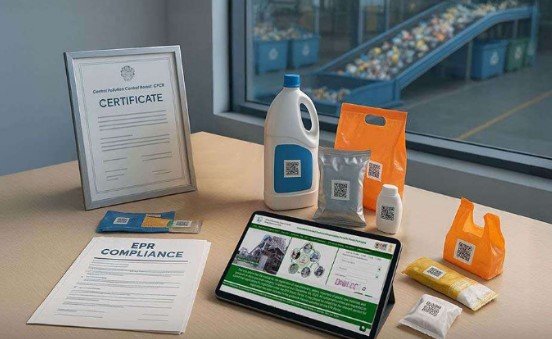
Extended Producer Responsibility (EPR) calls for producers, importers, and brand owners to be responsible for the treatment and disposal of their products and packaging after consumer use. Up until recently, that responsibility was exercised by most companies not as a guiding principle, but rather as a cost of regulation—something to be minimized, often in a reactive manner, to avoid being punished.
That mindset is rapidly changing. Compliance has retreated from the outermost fringes of the business world and into the boardroom as regulations ramp up and stakeholders demand transparency. EPR compliance extends beyond legal compliance to operational stability, reputation protection, and scalable growth today.
Now, organizations with a foresighted vision understand that competitive compliance frameworks eliminate the uncertainty, foster expansion, and incorporate sustainability pledges with business priorities. At its core, the concept is straightforward yet potent: compliance, if managed wisely, transforms from being a barrier into a pillar for sustainable commercial success.
How EPR Compliance works and How it Affects Your Business
A solid footing in compliance is built on an appreciation for obligations and fundamentals of how they impact the business. These EPR frameworks cover producers, importers, and brand owners within defined categories in the jurisdiction of regulated goods like plastic packaging, e-waste, batteries, etc.
Key elements generally include:
- Registration with regulatory authorities.
- Achieving annual recycling or recovery targets.
- Timely reporting and approved documentation.
- End-to-end traceability through authorized partners.
The global and Indian landscape for regulations is tightening due to:
- Greater emphasis on accountability and transparency.
- Achieving circular economy and ESG targets.
- Digital tracking and enforcement mechanisms have also been strengthened.
Inconsistent or poor management of EPR compliance leads businesses to face:
- Higher regulatory scrutiny.
- Disrupted operations.
- Partners and customers lose trust in that.
- They’re critical to managing risk and protecting growth plans.
Reasons Weak EPR Compliance Drags Business Growth
Weak compliance directly hampers business expansion. Addressing obligations solely on the basis of deadlines creates unnecessary risk for the business.
Common consequences include:
- Regulatory penalties, notices, and audits.
- Operational distractions from leadership.
- Slow down the pace of the introduction of products or entry to markets.
- Fostering distrust with customers, investors, and partners.
Reactive approaches also increase costs:
- In case of an emergency, taking corrective measures becomes expensive.
- This means that missed deadlines incur their own penalties.
- Internal teams are distracted from revenue-generating efforts.
In such a scenario, EPR compliance can become a bottleneck instead of a safeguard and prevent the organization from making confident long-term plans.
Strong EPR Compliance: A cornerstone for sustainable growth
It leads to predictability, which is the basis of a sustainable growth cycle through a structured compliance framework. This means no more firefighting and also means clarity and control for businesses.
Key advantages include:
- Predictable operations through standardized processes.
- Lowered uncertainty in regulation and risk of compliance.
- Alignment of ESG targets with the growth plan.
- Capable of scaling production without compliance bottlenecks.
In fact, EPR compliance is not a limiting factor, but with solid systems at hand, it enables expansion. Organizations, in turn, enable their leaders to make decisions with confidence, knowing that compliance obligations are being met consistently and transparently.
Ways Strong EPR Compliance Drives Business Growth
By adding to the day-to-day of the business instead of bolting it on as an afterthought, it contributes directly to growth.
1. Helps Maintain Operational Continuity and Mitigate Risk
Strong systems help businesses:
- Prevent fines, penalties, and halts in operations.
- Be agile in your audits and inspections.
- Maintain uninterrupted production and distribution.
2. Enables New Product Launch and a Broader Market Penetration
When compliance is already there, it leads to faster growth initiatives.
- Quicker approvals of new product types.
- Easier entry into new geographies.
- Reduced friction during scale-ups.
3. Build Trust in Your Brand
Responsible practices enhance credibility:
- Transparent waste management builds trust.
- Shows customers and regulators accountability.
- Supports long-term brand equity.
4. Improves Investor and Partner Confidence
Investors increasingly evaluate compliance maturity:
- Compliance with ESG expectations and reporting.
- Lower due diligence risk for partnerships.
- Stronger positioning in long-term contracts.
5. Promotes Cost-Effectiveness and Efficient Resource Allocation
Planned compliance delivers financial discipline:
- Spending is under your control rather than swinging to avoid a penalty.
- Maximized partnerships with recyclers and PROs.
- Improved internal resource allocation.
On the contrary, better handling of EPR compliance will create a push for becoming efficient and more resilient.
EPR in the context of ESG and Sustainability
Compliance, if well implemented, is a key to strong ESG performance over the long term. Regulatory harmonization backs up good governance by fostering environmental sustainability.
Strategic benefits include:
- Measurable contribution to sustainability goals.
- Accurate data and traceability for ESG reporting.
- Reduced exposure to regulatory and reputational risk.
Following strict EPR standards is a sign of maturity and responsibility and assists businesses in fulfilling stakeholder expectations while building sustainable and robust operations for the future.
When Should Businesses Create Their EPR Compliance Framework?
There comes a certain point in business where better systems are required. These include:
- Production and sales volume are growing by leaps and bounds.
- Diversifying into new markets or product segments.
- Regulatory changes or stricter enforcement.
- Struggle to meet deadlines or targets related to reporting.
A risk-based approach to compliance at these stages will help avoid disruption and protect long-term value.
Final Words
A strong compliance framework does not just mandate compliance; it nurtures a stable, reliable, and expandable ecosystem. If you invest early enough, then things become predictable, they are lower risk, and all of the stakeholders involved have more confidence. Implemented correctly, EPR compliance realizes the potential for sustainable growth instead of stifling it.
Equally, having working ecosystem partners is half the battle. Plastic recycling is one of the core competencies of organizations such as Banyan Nation, which are critical to ensuring visible, trackable compliance output. So, the businesses that go about compliance in a well-thought-out and strategic way will make it a long-term investment and will be more resilient and successful as a result.

