


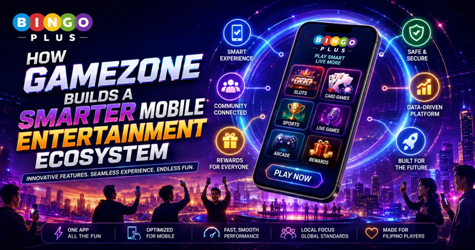
Explore how GameZone combines local content, intelligent game discovery, mobile performance and responsible design for Philippine users.
How GameZone Is Building a Smarter Mobile Entertainment Ecosystem
A successful mobile entertainment platform needs more than a large collection of games. It must help users understand what is available, find relevant content quickly and move through the platform without unnecessary friction.
GameZone illustrates how a locally focused entertainment service can combine recognizable Filipino games with modern content discovery, mobile-first design and account-management technology. Its wider value lies in the ecosystem surrounding the games rather than any single title.
For technology companies and digital product teams, GameZone also offers an interesting case study. It demonstrates how content organization, user education, platform performance and responsible participation can work together to create a more sustainable mobile experience.
What Makes a Digital Entertainment Ecosystem?
A digital ecosystem connects several services within one coordinated experience. Instead of treating every feature as an isolated page, it creates a consistent journey from content discovery to account support.
For a GameZone platform, that ecosystem may include:
- A mobile game lobby
- Filipino card-game categories
- Search and filtering tools
- Game instructions
- Account registration and login
- Identity-verification information
- Transaction records
- Promotional terms
- Customer-support channels
- Responsible-participation controls
Each part affects the others. A well-designed game lobby cannot compensate for confusing account recovery. Fast registration cannot create lasting confidence if users struggle to locate rules or transaction information.
The platform therefore needs to be evaluated as a complete system. Users should be able to move from one task to another while encountering consistent terminology, navigation and security information.
Why Content Discovery Matters
As a digital library grows, finding the right content becomes increasingly difficult. A platform may provide dozens of titles, but users can still feel that there is little to explore if the lobby is poorly organized.
GameZone content discovery should help users answer several immediate questions:
- What types of games are available?
- Which titles are locally familiar?
- Which games are suitable for beginners?
- Which options require multiple participants?
- What has recently been added?
- Where can complete rules be found?
- How can a previously played title be reopened?
Clear categories reduce the amount of effort required to make a decision. Instead of presenting every GameZone game in one continuous grid, the platform can create useful collections based on format, popularity or user familiarity.
Examples may include Filipino card games, multiplayer titles, recently played games and beginner-friendly selections. Search, filters and saved favorites can provide additional paths into the library.
The objective is not to push users toward the first available option. It is to help them understand the collection and make an informed selection.
Local Content Creates a Stronger Starting Point
Localized platforms often have an advantage over completely generic services because they can begin with content the audience already recognizes.
GameZone Philippines is commonly associated with Filipino card-game experiences such as Tongits, Pusoy and Lucky 9. These titles can create immediate familiarity for people who have encountered similar games through family or community settings.
However, local recognition should not be confused with universal understanding. Rules may vary between informal groups, and a digital version may introduce its own scoring system, timers or valid-action controls.
Every title should therefore provide:
- A concise description
- The main objective
- The number of participants
- The basic turn structure
- Scoring information
- Winning conditions
- Platform-specific rules
- Disconnection procedures
- Access to complete instructions
Localization works best when familiar content is supported by precise information. The platform can respect a game’s cultural background while clearly defining how its digital version operates.
GameZone Needs More Than Attractive Thumbnails
Images play an important role in game discovery, but a thumbnail cannot communicate the complete experience.
A useful GameZone listing should combine visual identity with structured information. Before opening a title, users should be able to determine whether it is turn-based, multiplayer, timed or appropriate for newcomers.
Descriptive content can also improve accessibility and search visibility. A game page with a meaningful title, summary and rule guide is more useful than a screen composed almost entirely of images.
A complete listing may contain:
- A recognizable game title
- A short plain-language summary
- The game category
- Participant requirements
- Estimated session characteristics
- Access to the rules
- Device-orientation information
- Relevant eligibility notices
Consistent metadata also helps the platform organize its own content. When every title uses the same category and description standards, search and recommendation systems can produce more relevant results.
Designing a Useful Recommendation System
Recommendations can reduce discovery time, but they need to be handled carefully.
A basic recommendation system may use non-sensitive signals such as recently viewed categories, saved favorites or previously opened titles. It can then present related content without requiring the user to search from the beginning.
Useful recommendation areas might include:
- Continue exploring
- Similar Filipino card games
- Recently added titles
- Popular multiplayer games
- Beginner guides
- Previously viewed content
The purpose should be convenience rather than pressure. Recommendation labels must be understandable, and users should remain free to browse the complete GameZone games library.
Platforms should also avoid creating the impression that a recommended game is more likely to produce a favorable result. Content relevance and outcome probability are entirely different concepts.
A game can be recommended because it belongs to a familiar category. That recommendation does not predict what will happen when it is played.
Mobile Performance Shapes Content Discovery
Content discovery depends heavily on technical performance. A carefully organized library still becomes difficult to use when images load slowly, filters fail or the interface repeatedly changes position.
GameZone operates in a mobile market that includes a wide range of devices and network conditions. Its interface should therefore prioritize essential content before loading decorative or secondary elements.
Useful performance practices include:
- Compressing game images
- Using correctly sized thumbnails
- Loading off-screen content only when needed
- Minimizing unnecessary scripts
- Caching stable interface assets
- Preventing layout movement
- Providing visible loading states
- Supporting recovery after interrupted requests
- Testing on mid-range mobile devices
Fast loading is not only a technical metric. It influences whether users can understand and trust the platform.
If a button does not respond immediately, the interface should show that the request is being processed. Without this feedback, users may press it repeatedly or assume that the platform has stopped working.
Navigation Should Match User Intent
People enter a platform with different objectives. One visitor may want to understand a particular game, while another may need account assistance or transaction information.
GameZone navigation should provide clear routes for these different needs.
A practical mobile menu might include:
- Home
- Game categories
- Search
- Guides
- Promotions
- Account
- Transactions
- Help
- Responsible-play tools
Navigation labels should remain consistent throughout the platform. If the account section is called “Profile” on one screen and “Member Center” on another, users may not realize that both links lead to the same area.
Important controls should also remain accessible without covering the game interface. On smaller screens, expandable menus and clearly labeled bottom navigation can conserve space while preserving usability.
Good navigation reduces uncertainty. Users should always know where they are, how they arrived there and how to return to the previous section.
Search Content Should Support Real Questions
Many people encounter GameZone through search engines before visiting a platform. They may search for a game name, account instructions, mobile-access information or an explanation of how a feature works.
Helpful content should answer these questions directly.
A strong GameZone content strategy may include:
- Beginner guides
- Individual game explainers
- Rule comparisons
- Mobile-access instructions
- Account-security articles
- Verification guidance
- Payment-process explanations
- Troubleshooting pages
- Frequently asked questions
Each page should address a distinct search intent. Publishing several articles that repeat the same general introduction can create competition between the platform’s own pages without providing additional value.
Readers evaluating locally relevant games, mobile-access requirements and important account considerations can use this comprehensive guide to gamezone in the Philippines as a focused reference point, especially when they need a structured overview before exploring more specialized rules or platform features.
A contextual resource like this supports the reader’s research journey without turning the article into a series of repetitive promotional links.
User Education Can Improve Retention
Retention is often discussed as if it depends entirely on promotions or notifications. In reality, users are more likely to return when they understand how a product works.
GameZone can support user education through progressive guidance. New visitors may first receive a short explanation, while more detailed instructions remain available when needed.
Educational elements can include:
- First-use walkthroughs
- Short rule summaries
- Interactive demonstrations
- Contextual tooltips
- Glossaries
- Visual examples
- Searchable help articles
- Game-specific FAQs
These tools should explain the system without making strategic decisions for the user. The objective is to clarify controls and rules, not to imply that a particular action guarantees a result.
Information should also be accessible after onboarding. Users frequently skip introductory screens and later need to review a rule during a session.
A visible help button is therefore more useful than a tutorial that appears once and can never be reopened.
Account Design Is Part of the Product
Games may attract initial attention, but account management strongly affects the long-term experience.
A GameZone account area should allow users to understand their status without navigating through unrelated promotional pages. It should present personal settings, security controls, verification information and transaction history in a structured format.
Important account features may include:
- Secure password management
- Verified recovery options
- One-time-code protection
- Active-session information
- Device-management controls
- Privacy preferences
- Verification status
- Transaction records
- Responsible-participation settings
Sensitive actions should receive additional confirmation. Changes to passwords, contact information or withdrawal details should not be completed silently.
Users should also receive clear notices when an action requires further review. A precise message such as “document verification is pending” is more useful than a generic account error.
Transparent Verification Reduces Friction
Identity verification can become a major source of confusion when it is introduced without advance explanation.
A transparent GameZone experience should tell users why verification may be required, what documents are accepted and how information can be submitted securely.
Useful guidance should cover:
- Accepted document types
- Document-validity requirements
- Image-quality standards
- Name-matching requirements
- Secure submission channels
- Expected review stages
- Common reasons for rejection
- Official support options
This information should be available before a transaction becomes urgent.
Users should submit identification only through an authenticated platform process. Documents, passwords and one-time codes should never be sent to private individuals claiming to provide special or faster support.
Clear instructions reduce mistakes and protect users from social-engineering attempts.
Transaction Information Must Be Easy to Review
A familiar payment option does not automatically create a transparent transaction experience.
Before using any financial function, GameZone users should be able to review applicable limits, verification requirements, fees and processing estimates.
A readable transaction record should display:
- Date and time
- Transaction type
- Amount
- Payment method
- Current status
- Reference information
- Available support route
Status language should be consistent. Terms such as pending, processing, completed, rejected and reversed need clear definitions.
The interface should also explain what users can do when a transaction takes longer than expected. An official support process is safer and more useful than encouraging users to seek assistance through unverified social-media contacts.
Responsible Design Supports Sustainable Engagement
A mature entertainment ecosystem gives eligible adults control over their activity.
Responsible-participation tools should be treated as central account features rather than minor legal notices. They may include:
- Deposit limits
- Spending controls
- Session reminders
- Time limits
- Cooling-off periods
- Self-exclusion options
- Transaction histories
- Direct access to support resources
These controls should be visible and understandable on mobile devices.
Promotional messages should not imply guaranteed success, predictable results or the certainty of recovering a previous loss. Random or uncertain outcomes cannot be changed by continuing for a longer period.
Users should decide on personal time and spending limits before participating. Gambling should be treated only as paid entertainment, never as an income strategy or a solution to financial difficulty. Access must remain restricted to people who satisfy all applicable legal-age and eligibility requirements.
What Other Mobile Platforms Can Learn From GameZone
The GameZone ecosystem highlights several principles that extend beyond digital games.
First, content volume is less important when users cannot understand or navigate the collection. Organization creates practical value.
Second, localization requires more than translated labels. Relevant content, device performance, payment expectations and support processes all contribute to the local experience.
Third, education can support retention. Users are more likely to return to a product when its rules and controls remain understandable.
Fourth, technical performance affects trust. Stable layouts, responsive buttons and clear system messages show that the platform is behaving predictably.
Finally, responsible controls strengthen the ecosystem. Giving users meaningful control over accounts, time, spending and privacy demonstrates greater product maturity.
These principles are also relevant to streaming services, financial applications, digital marketplaces and other content-heavy mobile platforms.
Final Thoughts
GameZone demonstrates how locally relevant entertainment can be organized into a broader mobile ecosystem. Its long-term value depends not only on recognizable Filipino games but also on how effectively users can discover content, understand rules and manage their accounts.
The strongest GameZone experience should combine structured navigation, mobile performance, transparent information, secure account tools and visible participation controls.
For users, these features provide a better basis for evaluating a platform than promotional messages alone. For product teams, they offer a clear reminder that sustainable engagement begins with usability and trust.
A smarter entertainment ecosystem does not simply encourage people to open more content. It helps them make informed choices, understand every important process and remain in control of their digital experience.

