


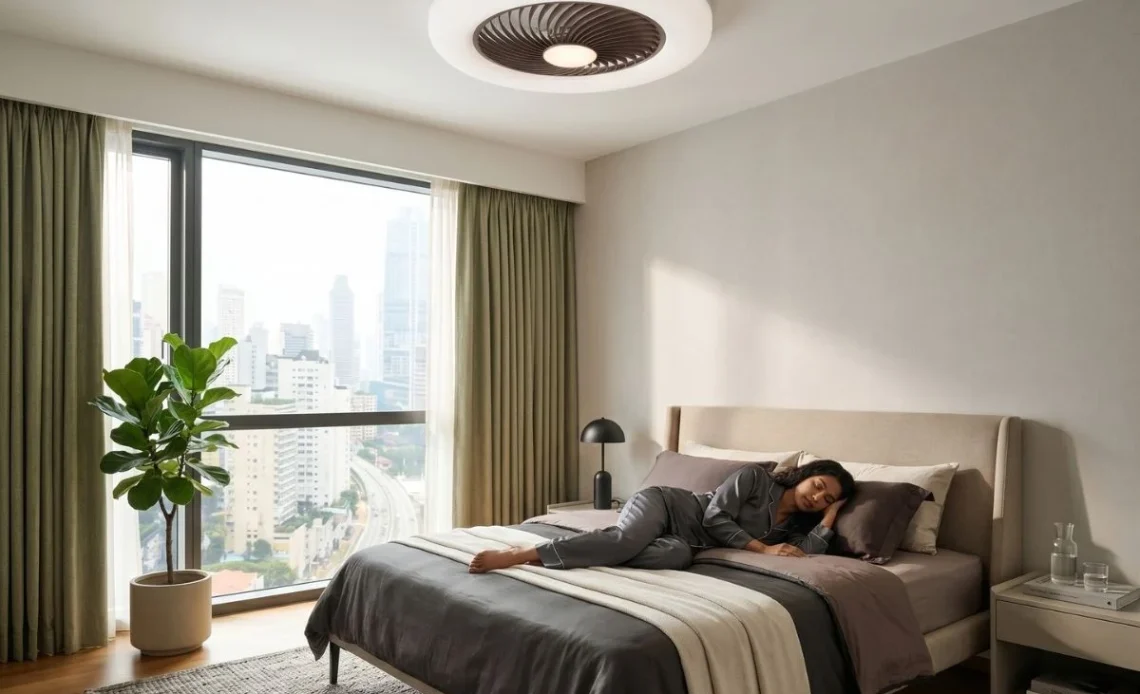
A ceiling fan with an integrated light can solve two needs with one fixture: air movement and general illumination. The decision becomes less straightforward when comparing a familiar exposed-blade fan with a compact design marketed as “bladeless”. Both can suit modern homes, but they differ in airflow pattern, visual scale, ceiling clearance and maintenance.
The right choice depends on the room rather than the trend. A large living area may benefit from broad blades that move air across a wider zone, while a bedroom or compact room may need a lower-profile fixture with a softer visual presence. Lighting quality and controls matter just as much as fan style.
How Standard Ceiling Fans With Lights Work
Ceiling Fans With Lights usually place an LED module or bulb-based light beneath a central motor with visible blades extending around it. They are available in many diameters, blade counts, finishes and mounting styles. This variety makes it easier to match room size, ceiling height and interior design.
The broad blade sweep is useful when the goal is to circulate air through a larger area. Depending on the model, controls may include several fan speeds, a timer, reversible operation, adjustable light colour and dimming. Specifications vary, so compare individual features rather than assuming every conventional fan offers the same functions.
What “Bladeless” Usually Means
The name can be misleading. Most ceiling-mounted “bladeless” fans still use moving blades, but the blades are smaller, hidden inside the housing or enclosed behind a protective grille. From below, the fixture may resemble a flush ceiling light, a decorative drum or a compact modern pendant.
Bladeless Ceiling Fans With Light can appeal to homeowners who dislike the visual span of traditional fan blades. Their enclosed form often feels tidier in small bedrooms, studies, children’s rooms or interiors where a large fan would dominate the ceiling. The compact appearance does not automatically mean identical performance to a full-size fan.
Compare Airflow With the Room Size
Room dimensions should guide the decision. A larger blade diameter can generally influence a broader area, provided the fan is properly sized and installed. An enclosed fan may create a more concentrated airflow beneath the fixture, which can work well above a bed, desk or compact seating zone.
Do not judge performance by appearance alone. Check the manufacturer’s airflow data, recommended room size, motor information and speed settings. Furniture placement also changes how air is experienced. A powerful fan poorly positioned at one end of a long room may feel less effective than a correctly sized model centred over the main occupied area.
Think About Ceiling Height and Clearance
Standard fans may use a flush mount or a downrod. A downrod can position the blades more effectively beneath a tall ceiling, while a flush-mounted model reduces the overall drop in a lower room. Always follow the manufacturer’s minimum clearance requirements around and below the blades.
Enclosed designs often have a compact profile, which can make them visually comfortable on lower ceilings. However, “low profile” does not guarantee suitability for every space. Check the fixture’s complete height, diameter and installation requirements. Doors, wardrobes, bunk beds and tall furniture should not interfere with the fan or its airflow.
Review the Light as a Separate Feature
An attractive fan can still disappoint if its light is too dim, too harsh or difficult to control. Compare lumen output, colour temperature, dimming capability and whether the light source is integrated or replaceable. A bedroom may benefit from warm, dimmable light, while a home office may need brighter, clearer illumination.
Many enclosed fans use a large diffuser that creates an even ceiling-light effect. Traditional fans may offer a central dome, multiple shades or a decorative light kit. In either case, one ceiling fixture may not provide enough task lighting. Bedside lamps, desk lights and wall lights can complete the room without forcing the fan light to remain at full brightness.
Consider Noise and Controls
Motor quality, blade balance, installation and speed all influence sound. Neither category is automatically silent. For a bedroom, compare published noise information where available and read the operating instructions. A correctly installed fan should remain secure and balanced, without wobbling or producing avoidable vibration.
Remote controls are common, particularly on compact enclosed models, but wall control and app compatibility vary. Check whether fan speed and light settings can be adjusted independently. Also consider what happens after a power interruption: some fixtures remember the previous setting, while others return to a default mode.
Which Type Should You Choose?
Choose a conventional fan with light when you want a wide range of sizes, strong visual airflow coverage or a design suited to a larger room or taller ceiling. Choose an enclosed bladeless-style model when compact proportions, hidden blades and a ceiling-light appearance are higher priorities.
Neither design is best for every home. Measure the room, check ceiling clearance, compare verified airflow and lighting specifications, and consider how the controls will be used each day. When the fixture matches both the space and the routine, it can provide comfortable air movement and useful light without making the ceiling feel crowded.

