


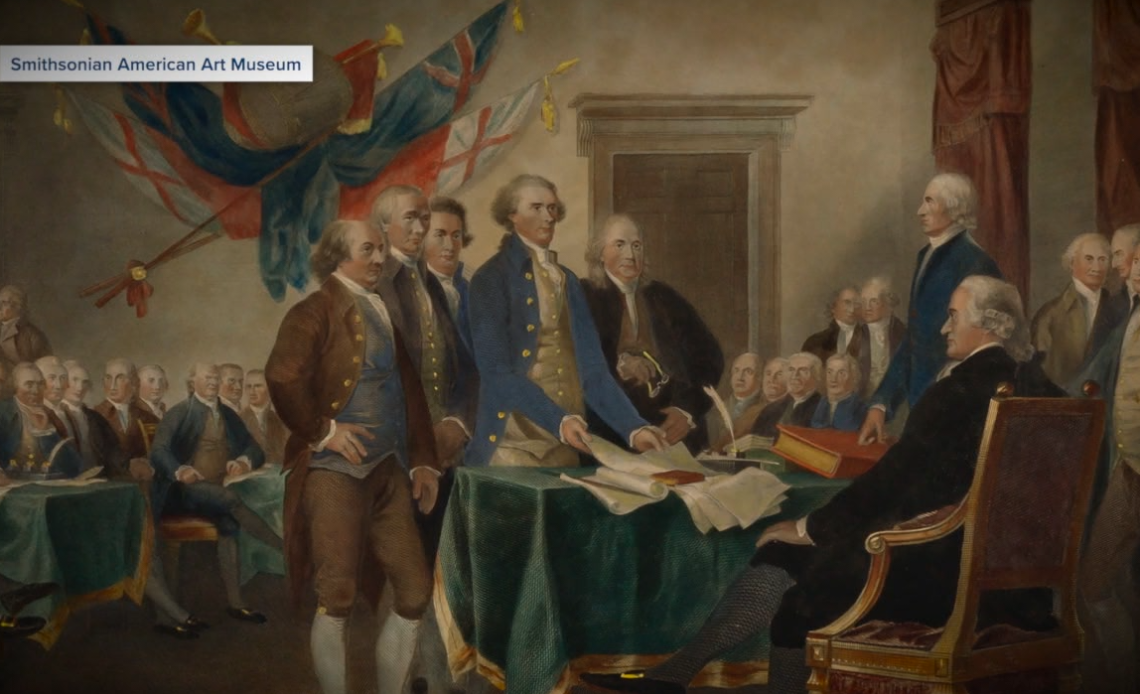
Why was the Second Amendment created is one of the most searched constitutional questions in American history.
Ratified on December 15, 1791, as part of the Bill of Rights, this 27-word amendment has shaped American identity, law, and politics for over two centuries.
The Founders did not write it by accident. They had lived through British tyranny, fought a revolution, and feared what an unchecked government could do to an unarmed people.
The Full Text of the Second Amendment
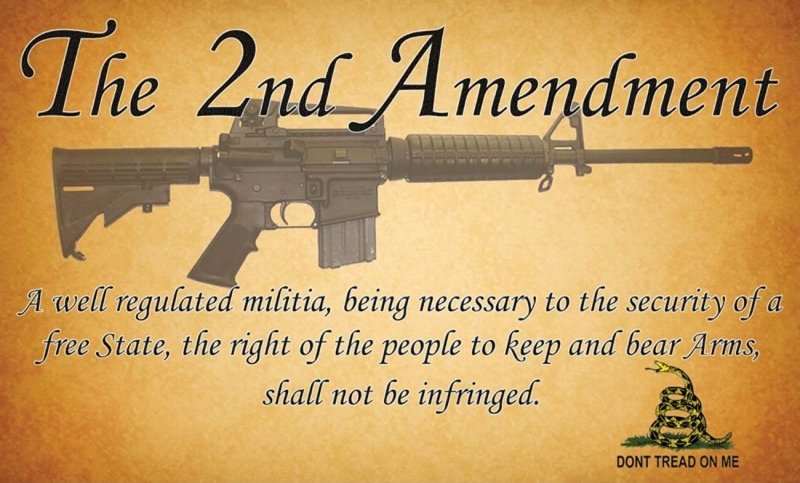
The Second Amendment reads:
“A well regulated Militia, being necessary to the security of a free State, the right of the people to keep and bear Arms, shall not be infringed.”
These 27 words carry enormous legal and historical weight. Every phrase was debated, revised, and chosen deliberately by the Founders.
| Phrase | Meaning |
|---|---|
| “A well regulated Militia” | Organized civilian defense force |
| “necessary to the security of a free State” | Essential to protecting liberty |
| “the right of the people” | Individual citizens, not just soldiers |
| “to keep and bear Arms” | Own and carry firearms |
| “shall not be infringed” | Government cannot remove this right |
Historical Background: Where Did the Idea Come From?
English Roots and the 1689 Bill of Rights
The Second Amendment did not appear out of nowhere. The Founders drew heavily from English legal tradition.
The English Bill of Rights of 1689 gave Protestant subjects the right to possess arms for their own defense. This was seen not as a privilege but as a natural right of free people.
William Blackstone, one of the most respected legal scholars of the era, listed the right to bear arms among the core protections of liberty. His writings were read widely by American lawyers and Founders.
Colonial Experience Under British Rule
American colonists had a direct, personal reason to fear government disarmament.
King George III sent tens of thousands of soldiers to occupy American cities. These troops enforced unpopular laws, intimidated civilians, and lived in private homes. The colonists saw standing armies as tools of oppression, not protection.
When tensions reached a breaking point, British General Thomas Gage marched troops to Lexington and Concord specifically to seize colonial weapons and gunpowder. This act of disarmament lit the fuse of revolution.
The Revolutionary War and Militia Forces
During the Revolutionary War, militias played a critical role. These were not professional soldiers but ordinary farmers, tradesmen, and citizens who took up arms to defend their communities.
The Founders saw these militias as proof that a free people could defend themselves without relying on a standing army. They believed an armed citizenry was both a military asset and a political safeguard.
Why Was the Second Amendment Created? The 5 Core Reasons
1. To Protect Against Government Tyranny
The single most important reason the Second Amendment was created was to guard against tyrannical government.
The Founders had just fought a war against a government that taxed them without consent, quartered soldiers in their homes, and tried to disarm them. They were not willing to let the new American government have that same power.
James Madison argued in Federalist No. 46 that an armed population combined with state governments would form an “insurmountable barrier” against federal overreach. The idea was simple: a government that fears its people will not oppress them.
George Mason, who played a major role in drafting the Bill of Rights, said plainly that disarming the people was the most effective way to enslave them. He wanted to make sure no American government could do what Britain had done.
2. To Maintain a Well-Regulated Militia
Before the United States had a large professional military, citizen militias were the primary defense force.
The Founders deeply distrusted standing armies. They had seen how European monarchs used professional armies to crush political opposition and enforce unjust laws. Alexander Hamilton acknowledged in Federalist No. 29 that standing armies are dangerous to liberty.
State militias made up of ordinary citizens were seen as a democratic alternative. Because militiamen supplied their own weapons, protecting the right to keep arms meant protecting the militia’s ability to function.
The Second Amendment was designed to ensure that no federal government could disarm these state militias and leave citizens defenseless.
3. To Recognize the Natural Right of Self-Defense
The Founders believed in natural rights — rights that existed before government and could not be taken away by government.
Self-defense was the most basic of these rights. Thomas Jefferson wrote about it, Blackstone described it, and the Declaration of Independence was built on it. The right to life necessarily implies the right to defend that life.
The Second Amendment did not create this right. It recognized a right that the Founders believed God and nature had already given every person.
This individual right to self-defense was just as important to the Founders as the collective militia purpose. Both were woven into the amendment’s text.
4. To Balance Power Between States and the Federal Government
The newly created federal government made many Founders nervous, particularly the Anti-Federalists.
They worried that a powerful central government with a large standing army could override state authority and trample individual rights. The Bill of Rights was written largely to address these fears.
By protecting state militias and the right of citizens to bear arms, the Second Amendment gave states a degree of military independence from the federal government. It was a structural check on centralized power.
James Madison specifically used the armed citizenry and state militias as examples of why Americans had less to fear from federal tyranny than people in Europe did.
5. To Secure Liberty as a Foundation of the Republic
Beyond specific threats, the Founders saw an armed citizenry as the foundation of a free republic.
St. George Tucker, one of the earliest commentators on the Constitution, called the right to bear arms “the true palladium of liberty.” He and others believed that when a people were disarmed, freedom itself was at risk.
This was not an abstract idea. It was based on centuries of history showing that unarmed populations became subject populations.
The Second Amendment was, in this sense, the amendment that gave force to all the others.
Who Wrote the Second Amendment?
James Madison’s Role
James Madison is known as the “Father of the Constitution” and the primary architect of the Bill of Rights.
He drafted the Second Amendment after reviewing proposed amendments from several states. Virginia, New York, and other states had submitted proposals emphasizing both militia rights and individual arms rights.
Madison was initially reluctant to add a Bill of Rights but agreed to support it to win ratification of the Constitution. The Second Amendment was his attempt to address concerns from both Federalists and Anti-Federalists.
George Mason’s Influence
George Mason refused to sign the Constitution because it lacked a Bill of Rights. His Virginia Declaration of Rights, written in 1776, was a major source of inspiration for Madison.
Mason had explicitly written about the right of citizens to bear arms and warned against the danger of disarmed populations. His thinking deeply shaped the Second Amendment’s philosophy.
Anti-Federalist Pressure
Anti-Federalists like Patrick Henry and Richard Henry Lee pushed hard for strong protections against federal military power.
They feared a standing army would be used against the American people, as British armies had been. Their pressure ensured that the Second Amendment addressed militia rights alongside individual rights.
The Second Amendment and Key Founding Quotes
The Founders spoke and wrote extensively about why the right to bear arms mattered. Their words leave little ambiguity about their intentions.
| Founder | Quote | Source |
|---|---|---|
| James Madison | Armed citizens with state governments form a barrier against federal ambition | Federalist No. 46 |
| George Mason | Disarming the people is the best way to enslave them | Virginia Ratifying Convention, 1788 |
| Thomas Jefferson | The strongest reason for people to keep arms is to protect against tyranny | Legal Commentaries |
| St. George Tucker | The right to bear arms is the true palladium of liberty | Blackstone Commentaries, 1803 |
| Alexander Hamilton | Standing armies are dangerous to liberty | Federalist No. 29 |
How the Second Amendment Was Drafted and Ratified
From Proposal to Ratification
Madison introduced a draft amendment in the House of Representatives in June 1789. It went through several revisions before reaching its final form.
The Senate made additional changes, removing a clause protecting conscientious objectors from military service. They also sharpened the language around the militia’s necessity for a free state.
The final version was sent to the states for ratification on September 25, 1789. It was officially ratified on December 15, 1791, along with the rest of the Bill of Rights.
State-Level Influence
Several states had already included arms rights in their own constitutions before the federal amendment was ratified.
Pennsylvania’s 1776 constitution stated that the people have a right to bear arms for defense of themselves and the state. Virginia, Kentucky, Ohio, and Indiana had similar provisions.
These state-level documents show that protecting the individual right to bear arms was already a well-established American value before the Bill of Rights was written.
The Second Amendment’s Two Interpretations: A Ongoing Debate
The Collective Rights View
For most of American history, many legal scholars and courts interpreted the Second Amendment primarily in terms of militias.
Under this view, the right to bear arms existed in connection with service in an organized state militia. Individuals outside that context had no specific constitutional protection from gun regulations.
This interpretation shaped federal court decisions for much of the 20th century and supported broad government authority to regulate firearms.
The Individual Rights View
The individual rights interpretation holds that every American citizen has a personal constitutional right to own and carry firearms, independent of any militia service.
This view was always present in American legal thinking but gained major ground in the late 20th century. It became the law of the land in 2008.
District of Columbia v. Heller (2008)
The Supreme Court’s landmark decision in District of Columbia v. Heller settled the debate for modern law.
Justice Antonin Scalia, writing for a 5-4 majority, ruled that the Second Amendment protects an individual right to keep and bear arms unconnected with militia service. The case struck down Washington D.C.’s handgun ban.
The Court acknowledged that this right is not unlimited and that reasonable regulations are permissible. But the core right to keep a firearm at home for self-defense was declared constitutionally protected.
McDonald v. City of Chicago (2010)
Two years later, McDonald v. City of Chicago extended the Heller ruling to state and local governments through the 14th Amendment.
This meant that not just the federal government, but every state and city in America was bound by Second Amendment protections. It was a major expansion of gun rights at the constitutional level.
New York State Rifle & Pistol Association v. Bruen (2022)
The Bruen decision created a new legal test for Second Amendment cases.
The Court ruled that gun regulations must be consistent with the historical tradition of firearm regulation in America. Laws cannot simply claim to serve public safety — they must have historical analogues dating to the Founding era.
This decision significantly raised the bar for gun control legislation and led to numerous legal challenges across the country.
What the Founders Thought About Standing Armies
One of the least discussed but most important reasons for the Second Amendment was the Founders’ deep fear of professional standing armies.
In the 18th century, European monarchs used standing armies to maintain control over populations, collect taxes by force, and suppress political dissent. The Founders had watched the British do exactly this in the colonies.
The Declaration of Independence specifically listed the maintaining of standing armies in peacetime without legislative consent as one of the grievances against King George III.
By protecting state militias and the right of citizens to bear arms, the Founders created an alternative to a large federal military force. They wanted a system where the people themselves could serve as the nation’s defense — a defense that would never be turned against them.
Founding-Era Gun Laws: What the Founders Actually Regulated
It is important to note that the Founders also regulated firearms even as they protected the right to bear arms.
This context matters for understanding their original intent. They were not establishing an unlimited, unregulated right.
| Type of Regulation | Example |
|---|---|
| Militia enrollment requirements | All able-bodied men required to register |
| Weapons inspections | Government could inspect militia arms |
| Prohibitions for certain groups | Enslaved people and loyalists often barred from guns |
| Weapons requirements | Citizens required to own specific types of arms |
These regulations show that the Founders understood gun rights as existing within a framework of civic responsibility, not as a license for anyone to have any weapon anywhere without restriction.
The Second Amendment in the Modern Context
How Modern Courts Apply the Founders’ View
Modern courts, following Heller, Bruen, and McDonald, try to apply the Founders’ original intent to contemporary gun laws.
This means asking whether a modern regulation has a historical parallel from the Founding era. If it does not, it may be struck down as unconstitutional.
This originalist approach has been used to challenge restrictions on carrying firearms in public, bans on certain types of weapons, and regulations on who can own guns.
What the Founders Could Not Have Foreseen
The Founders wrote the Second Amendment in a world of single-shot flintlock muskets. They could not have envisioned semi-automatic rifles, high-capacity magazines, or military-grade weapons in civilian hands.
This creates genuine tension in applying their intent to modern firearms. Courts and scholars continue to debate where the line should be drawn between protected arms and regulable weapons.
The Ongoing National Debate
The Second Amendment remains the center of one of America’s most contentious political debates.
Those who emphasize the individual rights interpretation argue that any restriction on gun ownership infringes on a fundamental constitutional freedom. Those who emphasize the militia or collective rights view argue that the Founders intended firearms to be regulated for public safety.
Both sides cite the same historical record but reach different conclusions. This debate is likely to continue for generations.
Second Amendment vs. Other Bill of Rights Provisions
The Founders modeled the Second Amendment’s language on other amendments that clearly protect individual rights.
The Fourth Amendment uses identical phrasing — “the right of the people” — to protect against unreasonable searches. The First Amendment protects individual rights to speech and religion.
This parallel language strongly suggests the Founders intended the Second Amendment to protect an individual right, not merely a collective one tied to militia service.
State Constitutions and the Right to Bear Arms
Long before the federal Bill of Rights, many states had already protected the right to bear arms in their own constitutions.
Pennsylvania’s 1776 constitution, Virginia’s Declaration of Rights, and Massachusetts’s 1780 constitution all referenced arms rights in various forms.
These state documents are important evidence that the Founders saw the individual right to bear arms as a widely recognized, pre-existing right — not something newly invented by the federal Second Amendment.
Timeline: Key Events in Second Amendment History
| Year | Event |
|---|---|
| 1689 | English Bill of Rights protects Protestant arms rights |
| 1776 | Pennsylvania and Virginia constitutions protect arms rights |
| 1789 | James Madison drafts the Second Amendment |
| 1791 | Second Amendment ratified as part of the Bill of Rights |
| 1803 | St. George Tucker’s first major commentary on the amendment |
| 1939 | United States v. Miller — militia-focused ruling |
| 2008 | District of Columbia v. Heller — individual right confirmed |
| 2010 | McDonald v. Chicago — applied to states via 14th Amendment |
| 2022 | New York State Rifle & Pistol Association v. Bruen — historical test created |
Common Myths About Why the Second Amendment Was Created
Myth 1: It Was Only About Hunting
The Founders said almost nothing about hunting when debating the Second Amendment. Their discussions focused on militia defense, tyranny, and self-preservation. Hunting was never the point.
Myth 2: It Only Applies to Militias
The Supreme Court ruled in Heller that the Second Amendment protects an individual right unconnected to militia service. The militia clause explains one purpose but does not limit the right only to militia members.
Myth 3: The Founders Wanted No Gun Regulations
Founding-era laws included mandatory militia enrollment, weapons inspections, and prohibitions on certain groups owning firearms. The Founders clearly accepted that gun rights could be regulated for public safety.
Myth 4: It Was Created Only to Fight the British
The Second Amendment was ratified after the Revolution was won. It was designed for the future, not the past — to protect Americans from any government, including their own, that might one day become tyrannical.
Frequently Asked Questions (FAQs)
Why was the Second Amendment created?
It was created to protect citizens from government tyranny, maintain armed state militias, and recognize the natural individual right to self-defense, based on the Founders’ experiences under British rule.
Who wrote the Second Amendment?
James Madison drafted the Second Amendment as part of the Bill of Rights in 1789, drawing on proposals from Virginia, New York, and other states.
When was the Second Amendment ratified?
The Second Amendment was ratified on December 15, 1791, as part of the first ten amendments to the Constitution, collectively known as the Bill of Rights.
What does “well regulated Militia” mean?
At the time of the Founders, a well-regulated militia meant an organized, trained, and properly armed civilian defense force — essentially able-bodied citizens prepared to defend their community.
Did the Founders intend gun ownership as an individual right?
Yes, based on historical evidence and the Supreme Court’s 2008 Heller ruling, the Founders intended to protect an individual right to own and carry firearms beyond just militia service.
What Supreme Court case defined Second Amendment rights?
District of Columbia v. Heller (2008) is the landmark case that confirmed the Second Amendment protects an individual right to keep and bear arms for self-defense, independent of militia service.
Why did the Founders fear standing armies?
They had experienced British soldiers occupying American cities and enforcing unjust laws at gunpoint. They believed professional armies were a tool of tyranny and preferred citizen militias as a democratic defense.
Does the Second Amendment allow any gun regulations?
Yes. Even the Heller ruling acknowledged that reasonable regulations are permissible. The Founders themselves regulated firearms through militia laws, weapons inspections, and ownership restrictions.
How does the Second Amendment relate to the English Bill of Rights?
The 1689 English Bill of Rights gave Protestant subjects the right to bear arms for their defense. American Founders built directly on this tradition when drafting the Second Amendment.
What is the current legal standard for Second Amendment cases?
After the 2022 Bruen decision, courts must evaluate gun regulations based on whether they are consistent with the historical tradition of firearm regulation dating to the Founding era.
Conclusion
Why was the Second Amendment created? The answer is clear when you read the Founders’ own words and understand the world they lived in.
They had fought a revolution against a government that disarmed them, taxed them without consent, and occupied their cities with soldiers. They were not about to let the new American republic do the same.
The Second Amendment was created to protect individual self-defense, to maintain armed state militias as a check on federal power, and to ensure that liberty could always be defended by the people who valued it most.
It was built on centuries of English legal tradition, shaped by revolutionary experience, and written with deliberate care by men who understood what it meant to live under tyranny.
More than two centuries later, the debates continue. Courts still interpret the amendment, legislatures still pass gun laws, and Americans still argue about what the Founders meant.
But the core answer to why was the Second Amendment created remains the same: the Founders believed that an armed people was a free people, and they wanted to make sure that freedom could never be quietly legislated away.


