


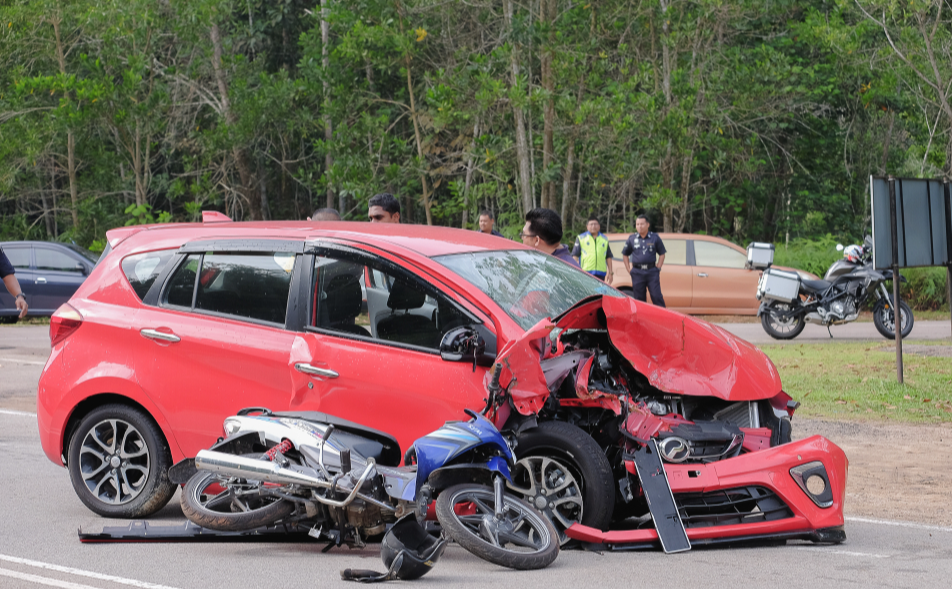
In busy urban environments like Philadelphia, traffic rarely moves in clean, predictable patterns. Vehicles shift lanes, adjust spacing, and respond to constant changes in flow. Within this environment, motorcycles operate in a much narrower space, where even small changes in positioning can have a significant impact on visibility and reaction time.
What often makes these situations complex is that lane positioning is not always interpreted consistently after an accident. Two people may describe the same moment differently simply because they were observing from different angles or focusing on different elements of the road. This is one of the reasons why cases involving a motorcycle accident lawyer in Philadelphia often require careful reconstruction of how vehicles were positioned in the seconds leading up to a collision.
Why Lane Positioning Plays a Larger Role in Motorcycle Accidents
Unlike larger vehicles, motorcycles do not occupy a wide footprint on the road. This makes them more sensitive to small lateral movements within a lane. A slight shift to the left or right can change whether a motorcycle is fully visible to surrounding drivers or partially obscured by other vehicles.
In dense traffic conditions, these positioning differences become even more important. Cars, trucks, and buses naturally create shifting visual barriers, meaning a motorcycle’s visibility can change from moment to moment depending on where it is located relative to other vehicles.
Because of this, lane positioning is not just a matter of where a motorcycle “was,” but how it was perceived by others at that exact time.
How Slight Lane Shifts Affect Visibility in Philadelphia Traffic
Philadelphia’s roadways often involve closely packed lanes, frequent merging, and unpredictable traffic movement. In these conditions, even minor lane shifts can significantly alter visibility.
A motorcycle moving slightly within a lane may:
- become more visible between gaps in traffic
- temporarily enter another driver’s blind area
- appear closer or farther depending on the surrounding vehicles
- or briefly disappear from a driver’s direct line of sight
These shifts happen quickly and are often unintentional. However, they play a major role in how other drivers interpret the situation in real time.
Why Blind Spot Overlap Is Especially Important
Blind spots are one of the most significant factors in lane positioning analysis. Larger vehicles such as SUVs, trucks, and vans have extended blind zones where smaller vehicles can become temporarily invisible.
When a motorcycle enters or moves alongside these zones, visibility becomes inconsistent. A driver may look directly into a lane and still not see the motorcycle if it is positioned within a blind area at that exact moment.
In multi-vehicle environments, these blind spot overlaps can occur simultaneously across different vehicles, making it difficult to reconstruct exactly what each driver was able to see.
How Vehicle Spacing Influences Perception and Reaction
Spacing between vehicles also plays a key role in how lane positioning is interpreted. In tightly packed traffic, reaction time becomes compressed, and drivers have less space to adjust when conditions change.
A motorcycle that appears to be maintaining a consistent position may still be perceived differently depending on:
- following distance
- angle of approach
- relative speed of surrounding vehicles
- and traffic density at the moment
These factors can influence not only how quickly a driver reacts but also how the sequence of events is later remembered and described.
Why Road Crowding in Philadelphia Adds Another Layer of Complexity
Urban traffic in Philadelphia is rarely static. Lanes often carry multiple streams of movement, and vehicles frequently adjust position to accommodate turns, merges, or sudden stops. This creates a constantly shifting environment where lane positioning is always relative, not fixed.
In many situations involving a motorcycle accident lawyer in Philadelphia, reconstruction efforts must account for how crowding affected visibility and spacing at the exact moment of impact. Dense traffic can compress reaction windows, reduce available escape space, and limit how clearly each vehicle’s position can be observed.
When multiple vehicles are moving within close proximity, even a brief positional shift can influence how the entire sequence is interpreted later.
How Investigators Use Lane Positioning in Reconstruction
Accident reconstruction relies heavily on understanding where each vehicle was positioned before, during, and after impact. Lane positioning helps establish:
- line of sight between vehicles
- possible blind spot interactions
- spacing and braking distance
- and movement patterns leading up to the collision
By analyzing physical evidence such as skid marks, damage points, and roadway positioning, investigators can begin to map out how lane positioning contributed to the incident.
Importantly, this process is not based on a single account. It involves comparing multiple perspectives to build a more complete and structured understanding of the event.
Why Small Positional Differences Can Lead to Different Interpretations
One of the most challenging aspects of motorcycle accident analysis is that small differences in perceived positioning can lead to very different interpretations of the same event.
A motorcycle that was slightly ahead or slightly behind another vehicle may be described differently depending on the observer’s angle and focus. Similarly, a vehicle that was partially in a blind spot may not be consistently remembered by all witnesses.
These variations are not unusual—they reflect the natural limitations of human perception in fast-moving traffic environments.
Conclusion
Lane positioning differences play a critical role in how motorcycle accidents are analyzed, especially in complex urban environments like Philadelphia. Small shifts in position can influence visibility, spacing, and reaction timing, all of which shape how events unfold in real time.
Because traffic conditions are constantly changing, no single perspective captures the full picture on its own. Instead, understanding how each vehicle was positioned within the flow of traffic helps reconstruct a clearer timeline of events.
Ultimately, lane positioning is not just about where a motorcycle is on the road—it is about how that position interacts with surrounding traffic, visibility conditions, and timing in a constantly moving environment.

