


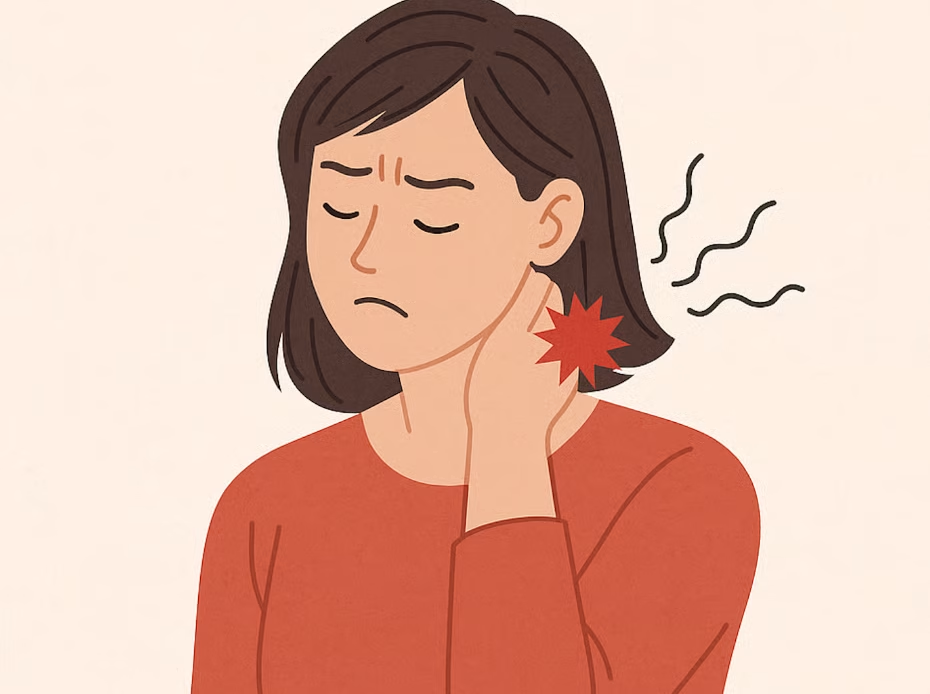
Why is my neck so stiff? If you have woken up unable to turn your head, sat at a desk all day with tightening shoulders, or felt a deep ache creeping up the back of your skull — you are not alone.
Neck stiffness is one of the most common physical complaints in the world, affecting people of every age.
Most cases resolve within a few days with simple home care. But some causes are serious, and knowing which is which could protect you from lasting damage.
Understanding Your Neck: What Makes It Stiffen?

The Anatomy Behind the Stiffness
Your neck — the cervical spine — is made up of seven vertebrae stacked from the base of your skull down to your upper back, labeled C1 through C7. Between each vertebra sits a disc that absorbs shock and allows movement. Surrounding everything are layers of muscles, tendons, ligaments, and nerves.
When any of these structures become strained, inflamed, compressed, or irritated, the result is the familiar sensation of stiffness — your neck resisting movement, tightening when you turn your head, or aching at rest.
Why Stiffness and Pain Go Together
Stiffness and pain are not the same thing. Stiffness means reduced range of motion — the neck simply will not move as freely as it should. Pain is the discomfort that often accompanies it. You can have stiffness without significant pain, and pain without meaningful stiffness.
Understanding which you are experiencing — and in which direction the restriction occurs — gives important clues about what is causing the problem.
Why Is My Neck So Stiff? The 10 Most Common Causes
Muscle Strain from Poor Posture
Poor posture is the single most common reason people ask why is my neck so stiff. Sitting at a desk with your head tilted forward, hunching over a laptop, or leaning your chin down toward your chest for extended periods places enormous strain on the muscles at the back of the neck.
These muscles are designed to hold the weight of your head — approximately 4.5 to 5.5 kg — in a balanced, upright position. The further forward your head tilts, the more force those muscles must generate. Over hours and days, they fatigue, tighten, and go into protective spasm.
The stiffness often builds slowly throughout the day and peaks in the evening. It is usually felt across the back of the neck and upper shoulders.
Sleeping in the Wrong Position
Waking up with a stiff neck is one of the most universally recognized experiences. It happens when you sleep with your neck bent at an awkward angle — on a pillow that is too flat, too high, too firm, or not supportive enough — for hours without adjusting.
The muscles on one side of the neck are held in a shortened or overstretched position through the night. By morning, those muscles have tightened and gone into mild spasm. The result is pain and restricted rotation, usually more pronounced on one side.
Stomach sleeping is the position most likely to cause a stiff neck because it requires the head to be rotated fully to one side for the entire sleep duration. Side sleeping with proper pillow support is generally the safest option for neck health.
Text Neck
Text neck is a term used to describe the neck strain caused by looking down at a phone, tablet, or screen for prolonged periods. It is increasingly recognized as a major cause of chronic neck stiffness, particularly in younger adults and teenagers.
When you look straight ahead, your head weighs around 5 kg. At a 15-degree forward tilt, the effective load on your cervical spine increases to about 12 kg. At 60 degrees — roughly the angle most people use when scrolling through their phones — that load reaches 27 kg. The muscles, discs, and ligaments sustain this pressure repeatedly every day.
Text neck causes stiffness, aching, and reduced range of motion in the lower cervical spine. Over time it contributes to accelerated degenerative changes in the neck discs.
Muscle Tension from Stress and Anxiety
Chronic stress and anxiety are well-documented physical causes of neck stiffness. When the body perceives stress, the nervous system activates the fight-or-flight response, which includes tensing the muscles of the neck, shoulders, and upper back.
Many people carry this tension for hours without noticing, only becoming aware of it when the tightness becomes painful. Stress-related neck stiffness often develops gradually and tends to peak in the afternoon or evening after a demanding day.
Identifying and managing stress — through exercise, mindfulness, adequate sleep, and professional support when needed — reduces the frequency and severity of this type of neck tightness significantly.
Cervical Spondylosis (Neck Arthritis)
Cervical spondylosis is the age-related wear and tear of the discs and joints of the cervical spine. It is extraordinarily common — over 85% of adults over 60 have some degree of spondylosis visible on imaging, though many never develop symptoms.
In those who do develop symptoms, the result is neck stiffness, pain, and sometimes crunching or grinding sensations during movement. The stiffness tends to be worst in the morning and may ease with gentle movement throughout the day. It can also be aggravated by cold, damp weather.
Cervical spondylosis is a chronic condition managed rather than cured. Physical therapy, anti-inflammatory medications, posture improvements, and in some cases injections or surgery form the basis of treatment.
Herniated Cervical Disc
A herniated disc in the neck occurs when the soft inner material of an intervertebral disc pushes through a crack in its outer wall. If the herniated material presses on a nearby nerve root, it causes a specific pattern of symptoms called cervical radiculopathy.
Symptoms include neck stiffness paired with pain, tingling, numbness, or weakness that radiates into the shoulder, arm, forearm, or fingers — typically on one side. The exact distribution of symptoms depends on which disc level is affected.
Herniated discs are most common at the C5-C6 and C6-C7 levels. Diagnosis is confirmed with an MRI scan. Treatment ranges from physical therapy and anti-inflammatory medication to epidural steroid injections and surgery in severe cases.
Whiplash Injury

Whiplash is a rapid, forceful back-and-forth movement of the neck — most commonly caused by rear-end vehicle collisions, sports impacts, or falls. This violent motion strains and tears the soft tissues of the cervical spine including muscles, tendons, and ligaments.
Whiplash stiffness and pain often do not appear immediately. Symptoms may not peak until 24 to 48 hours after the injury, which catches many people off guard. The neck becomes acutely stiff, painful, and difficult to move. Headaches starting at the base of the skull are common, along with shoulder pain and dizziness.
Most people recover from whiplash within a few weeks to months with appropriate treatment. A small proportion develop chronic pain that requires longer-term management.
Spinal Stenosis
Cervical spinal stenosis is the narrowing of the spinal canal in the neck. As the canal narrows — most often due to age-related changes, bone spurs, or thickened ligaments — it compresses the spinal cord itself. This is called cervical myelopathy.
Symptoms include neck stiffness and pain, along with difficulty with fine motor tasks like buttoning a shirt, coordination problems, weakness in the arms or legs, and in severe cases, bladder or bowel dysfunction. These symptoms appear because it is the spinal cord — not just a nerve root — that is being compressed.
Cervical myelopathy is a serious condition requiring prompt medical evaluation. Untreated compression of the spinal cord can cause permanent neurological damage.
Torticollis (Wry Neck)
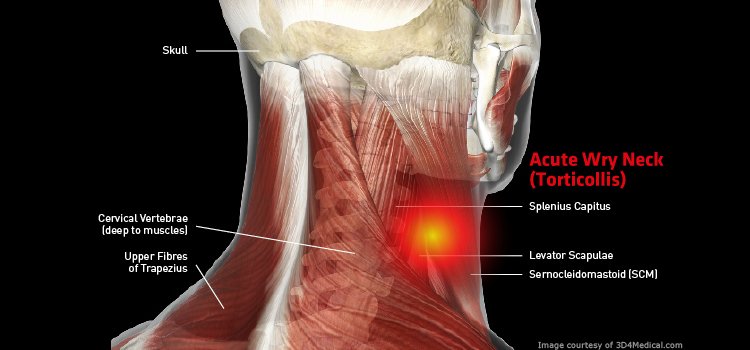
Torticollis is a condition in which the muscles of the neck contract involuntarily, pulling the head into a twisted or tilted position. It can appear suddenly in adults — often overnight or after a minor movement — producing acute, severe neck stiffness that is completely resistant to normal movement.
Acute torticollis in adults is often caused by a minor muscle tear or spasm triggered by an awkward movement, cold air exposure, or sleeping position. It is usually self-limiting and resolves within a few days with rest, heat, and gentle stretching. Chronic torticollis may require botulinum toxin injections or specialist treatment.
Meningitis — The Serious Warning You Must Know
Neck stiffness can, in rare cases, be a symptom of meningitis — inflammation of the protective membranes surrounding the brain and spinal cord. Bacterial meningitis is life-threatening and requires immediate emergency treatment. Minutes genuinely matter.
The neck stiffness in meningitis is described as nuchal rigidity — the inability to flex the neck forward without intense resistance or pain. It is caused by inflammation of the meninges, which makes stretching the membranes extremely painful.
The key distinguishing feature is the combination of symptoms. Neck stiffness alone is not meningitis. But neck stiffness paired with a sudden high fever, a severe headache unlike any previous headache, sensitivity to light or sound, nausea, vomiting, confusion, or a rash that does not fade under pressure — this combination is a medical emergency. Call emergency services immediately.
Severity Guide: How Serious Is Your Stiff Neck?
Reading Your Symptoms at a Glance
| Symptom Pattern | Likely Cause | Action |
|---|---|---|
| Stiff after sleeping, no other symptoms | Sleeping position, pillow issue | Home care, stretches, heat |
| Builds through the day at a desk | Poor posture, text neck, stress | Ergonomics, movement breaks, stretches |
| Stiff one side, sharp with movement | Muscle spasm, torticollis | Rest, heat, gentle stretches; vet if persistent |
| Tingling or numbness down arm | Herniated disc, cervical radiculopathy | See doctor within days |
| Stiff plus crunching sound, morning worst | Cervical spondylosis | Physiotherapy, anti-inflammatories |
| Neck won’t turn plus coordination issues | Cervical myelopathy | Urgent medical review |
| Stiff neck plus fever plus severe headache | Possible meningitis | Emergency — call services now |
| After car accident or fall | Whiplash | Medical evaluation same day |
Emergency Red Flags: When to Seek Immediate Help
Symptoms That Cannot Wait
Most neck stiffness is benign and self-limiting. These specific combinations of symptoms are exceptions that require urgent or emergency medical care.
Stiff neck with sudden high fever and severe headache is the classic meningitis triad. Do not monitor at home. Go to an emergency department immediately.
Neck pain with weakness, numbness, or tingling radiating down one or both arms suggests nerve or spinal cord involvement. This requires prompt medical evaluation to prevent permanent neurological damage.
Neck pain after a head or neck injury — even if mild — should be assessed medically before any movement is attempted. Do not try to self-treat whiplash or traumatic neck injuries.
Severe sudden neck pain that feels different from anything you have experienced before, especially with dizziness, vision changes, or difficulty speaking, may indicate a cervical artery dissection — a rare but serious vascular emergency.
Neck stiffness with unexplained weight loss, persistent fever without other symptoms, or progressive weakness over weeks warrants a full medical workup to exclude cancer, autoimmune disease, or infection.
Home Remedies That Actually Work
Heat and Cold Therapy
For the first 24 to 48 hours after a stiff neck develops, cold therapy can reduce inflammation. Apply an ice pack wrapped in a cloth — never directly on skin — for 15 to 20 minutes at a time, several times a day.
After 48 hours, heat becomes more effective. A warm shower, heating pad, or warm compress helps relax tight muscles and improve blood flow to the area. Many people find alternating heat and cold gives the most relief.
Over-the-Counter Pain Relief
NSAIDs like ibuprofen and naproxen reduce both pain and inflammation, making them more effective for most types of neck stiffness than acetaminophen alone. Acetaminophen treats pain but does not address inflammation.
Do not take NSAIDs for more than 10 consecutive days without medical guidance. People with stomach ulcers, kidney conditions, or cardiovascular disease should check with their doctor before using NSAIDs.
Gentle Neck Stretches
Gentle movement is one of the best things you can do for a stiff neck. Staying completely still weakens the supporting muscles and can prolong recovery. Move within a pain-free range only.
Neck tilt — slowly bring one ear toward the shoulder and hold for 15 to 20 seconds, then switch sides. Neck rotation — slowly turn the head to look over one shoulder, hold 10 seconds, return to center and repeat the other way. Chin tuck — gently pull the chin straight back as if making a double chin, hold 5 seconds, repeat 10 times. This exercise counteracts the forward head position caused by text neck and desk work.
Massage and Manual Therapy
Gentle self-massage of the neck and upper trapezius muscles can release muscle knots and reduce spasm. Use fingertips in circular motions on the tender areas. A professional massage from a licensed therapist provides deeper relief and may be especially beneficial for stress-related neck stiffness.
Chiropractic care and osteopathic manipulation are options some people find helpful for certain types of neck stiffness, particularly those related to joint restriction. Always ensure any manual therapist is qualified and fully informed about your symptoms before treatment.
Professional Treatments for Persistent Neck Stiffness
When Home Care Is Not Enough
If neck stiffness persists for more than 2 weeks despite home care, worsens instead of improving, or is accompanied by neurological symptoms, professional treatment becomes necessary. Your doctor may recommend physiotherapy and a structured exercise program, prescription anti-inflammatory medications, muscle relaxants for acute spasm, referral to a spine specialist, imaging including X-ray or MRI, epidural steroid injections for nerve-related pain, or surgery for serious structural problems like herniation or myelopathy.
Physiotherapy for Long-Term Relief
A physiotherapist can assess the specific mechanics of your neck stiffness and design a program targeting your individual weaknesses. This typically includes postural re-education, strengthening of the deep cervical flexor muscles, manual therapy techniques, and a progressive home exercise program.
Regular physiotherapy for chronic neck stiffness has strong evidence supporting both short-term and long-term benefits, particularly when combined with lifestyle modifications.
Preventing Neck Stiffness from Coming Back
Ergonomic Improvements at Your Desk
Th screen should be at eye level so your head sits directly over your shoulders without tilting forward or down. Your chair should support your lower back and allow your feet to rest flat on the floor. Your keyboard and mouse should be close enough that you are not reaching forward with your arms.
Even a perfect ergonomic setup does not compensate for sitting still for hours. Set a timer to take a 1 to 2 minute movement break every 45 to 60 minutes — stand up, roll your shoulders, and gently move your neck through its range of motion.
Pillow and Sleep Position
Your pillow should keep your head in a neutral position — aligned with your spine — regardless of whether you sleep on your back or your side. A pillow that is too thick or too flat creates lateral bending or forward flexion that persists for hours.
Memory foam or contoured cervical pillows are often recommended for people with recurrent sleep-related neck stiffness. Stomach sleeping should be avoided entirely if you experience regular morning stiffness.
Phone and Screen Habits
Raise your phone to eye level rather than tilting your head down to it. Use a stand for tablets and laptops rather than holding or balancing them in your lap. Reduce total daily screen time or ensure it is broken into shorter sessions rather than long uninterrupted periods.
Strengthening the Neck and Upper Back
Weak deep neck flexors and weak upper back muscles are major contributors to chronic neck stiffness. A regular exercise program incorporating chin tucks, scapular retractions, rows, and shoulder blade squeezes builds the muscular endurance that protects the cervical spine throughout the day.
Swimming, yoga, and Pilates are especially effective because they combine strengthening, stretching, and postural awareness in a low-impact format.
Stiff Neck in Special Situations
Stiff Neck Every Morning
If your neck is consistently stiff every morning but improves throughout the day, the most likely culprits are your pillow, your sleeping position, or early-stage cervical spondylosis. Track whether the stiffness improves once you are moving around — if it does, the cause is positional or degenerative rather than systemic.
Stiff Neck Only on One Side
Stiffness on one side only usually points to a muscle issue — a spasm, a minor strain, or torticollis. It can also indicate that one nerve root is being irritated. Note whether turning your head to the stiff side or away from it is more restricted — this helps your doctor identify whether muscle or joint involvement is more likely.
Stiff Neck with Headache
A stiff neck paired with a headache that starts at the base of the skull and radiates toward the front — often called a cervicogenic headache — is a very common combination. The muscles and joints at the top of the cervical spine share nerve pathways with those that produce headache pain.
If the headache is mild and familiar and you have no fever, the combination is unlikely to be serious. If the headache is sudden, severe, and unlike anything you have experienced before, treat it as an emergency.
Stiff Neck After Exercise
Stiffness after a new or intense workout usually means the neck muscles were overloaded. Exercises like heavy deadlifts, overhead pressing, or contact sports can all strain the cervical muscles. Rest for 1 to 2 days, apply heat, and allow the muscles to recover before returning to training.
Frequently Asked Questions (FAQs)
Why is my neck so stiff?
The most common causes are muscle strain from poor posture, sleeping in an awkward position, stress-related tension, or early cervical spondylosis — most cases resolve within a few days with home care.
Is a stiff neck serious?
Most stiff necks are not serious and improve on their own. However, a stiff neck combined with high fever, severe headache, and sensitivity to light is a medical emergency that may indicate meningitis.
Why do I wake up with a stiff neck every morning?
Morning neck stiffness is usually caused by an unsupportive pillow, stomach sleeping, or early cervical arthritis — switching to a contoured pillow and sleeping on your side or back often resolves it.
How long does a stiff neck usually last?
A stiff neck from a muscle strain or poor sleeping position typically improves within 1 to 4 days. If stiffness persists beyond 2 weeks or worsens with home care, see a doctor.
What is the fastest way to fix a stiff neck?
Alternating ice and heat, taking an NSAID like ibuprofen, and performing gentle neck stretches — tilt, rotation, and chin tuck — give the fastest relief for most common cases of neck stiffness.
Can stress cause a stiff neck?
Yes — chronic stress and anxiety trigger the fight-or-flight response, which tightens the neck and shoulder muscles and is a well-documented cause of persistent neck stiffness and tension headaches.
When should I see a doctor for a stiff neck?
See a doctor if stiffness lasts more than 2 weeks, is getting worse, includes tingling or numbness in the arm, follows an injury, or is paired with fever, severe headache, or confusion.
What is text neck and can it make my neck stiff?
Text neck is chronic neck strain caused by tilting your head down to look at a screen — at 60 degrees of tilt the neck carries up to 27 kg of force and causes significant stiffness and disc stress over time.
Can a herniated disc in the neck cause stiffness?
Yes — a herniated cervical disc can cause neck stiffness paired with pain, numbness, tingling, or weakness radiating into the shoulder, arm, or fingers, and requires medical diagnosis with an MRI scan.
What exercises help a stiff neck?
Neck tilts, slow rotations, chin tucks, shoulder rolls, and scapular retractions are the most evidence-supported exercises for relieving and preventing neck stiffness when performed gently and consistently.
Conclusion
Why is my neck so stiff? The answer is almost always one of a handful of everyday causes — poor posture at a screen, an unsupportive pillow, accumulated stress, or age-related changes in the cervical spine.
The good news is that the majority of cases respond well to simple home care: heat, gentle stretching, short-term NSAIDs, and fixing whatever posture or ergonomic habit triggered the problem.
The important skill is recognizing the warning signs that demand more than home care — nerve symptoms radiating into the arms, stiffness that fails to improve after two weeks, and most urgently, the combination of neck stiffness with high fever and severe headache that signals meningitis.
Protect your neck long term by improving your screen setup, choosing the right pillow, strengthening the supporting muscles, and taking regular movement breaks throughout your day.
Early attention to the small habits makes the biggest difference.


