


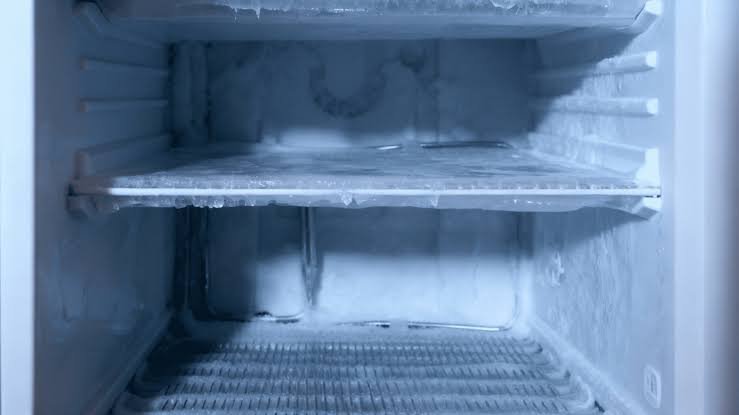
Why is my freezer frosting up? In most cases, it’s because warm, moist air is getting inside your freezer and turning to ice the moment it touches a cold surface. This can happen through a worn door seal, a door left slightly open, or a defrost system that isn’t working properly.
While a little frost is completely normal, especially in manual defrost models, thick or fast-returning frost usually points to a specific, fixable cause.
Quick Facts About Freezer Frosting
Here’s a fast snapshot before we dig into individual causes.
| Fact | Detail |
|---|---|
| What causes it | Warm, moist air meeting a cold surface |
| Most common cause | Damaged or dirty door seal |
| Normal amount | A thin layer in manual defrost freezers |
| Warning sign | Thick frost returning quickly after cleaning |
| Two freezer types | Manual defrost and frost-free (auto defrost) |
| Who to call | Appliance repair technician for persistent issues |
This table sets the stage. Now let’s look at the science behind why frost forms in the first place.
What Causes Frost to Form in a Freezer?
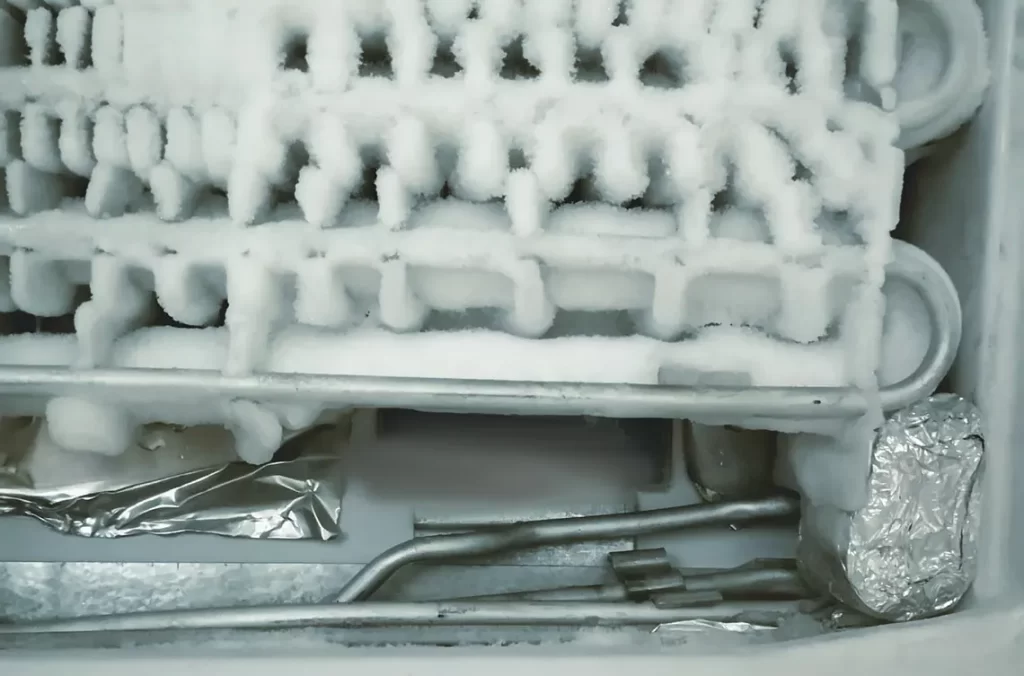
Frost is simply frozen moisture from the air. When warm, humid air enters a very cold space, the moisture inside it turns to ice the moment it touches a cold surface.
Inside your freezer, this usually means the evaporator coils, shelves, walls, or even your food packaging. These are the coldest points, so they’re where frost forms first and fastest.
Every time you open the freezer door, a bit of room-temperature, humid air rushes in. That moisture has nowhere to go but to freeze onto the nearest cold surface.
This is a completely normal process in small amounts. Problems start when frost builds up faster than your freezer’s defrost cycle, or your own habits, can keep up with.
Common Causes of Freezer Frosting Up
There are several well-documented reasons freezers develop frost. Below are the most frequent causes identified by appliance technicians and manufacturers.
1. Damaged or Worn Door Seal
A damaged door seal, also called a gasket, is the most common cause of frost buildup. This rubber strip is designed to keep cold air in and warm air out.
Cracks, tears, or hardened spots in the gasket let moist air leak in continuously. You’ll often notice frost concentrated near the edges of the door, top, or bottom when this is the issue.
Crumbs, grease, or hardened spills can also prevent the seal from closing tightly, even if the gasket itself isn’t damaged. A simple wipe-down can sometimes solve this instantly.
2. Door Left Open or Not Closing Fully
A freezer door left open even a small amount allows a steady stream of moist air to enter. Over time, this creates noticeably more frost than usual.
Items pushed too close to the door, overfilled shelves, or bins blocking the seal are common culprits. Even a fraction of an inch of gap is enough to let in significant moisture.
Making sure the freezer is level also matters here, since a tilted unit can prevent the door from sealing properly no matter how careful you are.
3. Frequent Door Openings
Every time the freezer door opens, cold air spills out and warm, humid air rushes in to replace it. Frequent openings, especially in busy households, add up quickly.
This is one of the most overlooked causes because no single opening seems like a big deal. It’s the cumulative effect of many short visits throughout the day that drives frost buildup.
Organizing your freezer so items are easy to find can meaningfully cut down on how long the door stays open each time.
4. Placing Hot or Warm Food Inside
Adding hot or warm food directly into your freezer introduces a burst of humidity into the compartment. That moisture then freezes onto nearby surfaces almost immediately.
This is a common mistake after meal prepping or batch cooking. The food itself may cool down fine, but the surrounding air takes on extra moisture that turns into frost.
Letting food cool to room temperature in the refrigerator first, before moving it to the freezer, helps avoid this issue entirely.
5. Faulty Defrost Timer
In frost-free freezers, a defrost timer controls when the unit switches between cooling mode and defrost mode. It typically runs on a set schedule throughout the day.
If the timer fails, the defrost cycle may never activate, allowing frost to accumulate steadily on the evaporator coils. This is a mechanical issue rather than a sealing or habit-related one.
A freezer that suddenly starts frosting heavily after months of working fine is a common sign of a failing defrost timer.
6. Faulty Defrost Heater
The defrost heater is responsible for melting frost off the evaporator coils during each defrost cycle. If it malfunctions, frost simply keeps building with no way to clear itself.
This issue is common in older frost-free freezers where components naturally wear out over time. You may notice frost specifically concentrated around the back wall, where the coils are located.
A failing heater usually requires a technician, since testing and replacing it involves accessing internal components safely.
7. Faulty Defrost Thermostat
The defrost thermostat monitors the temperature of the evaporator coils and signals when the heater should turn on or off. A defective thermostat can prevent the heater from activating at all.
This creates a similar effect to a failed heater, frost steadily accumulating without any defrost cycle interrupting it. Diagnosing this typically requires a multimeter and some appliance repair knowledge.
If you’ve ruled out the door seal and habits, a thermostat or heater issue becomes the next likely suspect.
8. Clogged Defrost Drain
During each defrost cycle, melted frost is supposed to flow through a drain tube into a pan beneath the freezer, where it evaporates. If this tube becomes clogged, the water has nowhere to go.
A clogged drain often results in a sheet of ice forming along the bottom of the freezer compartment. In some cases, water may even drip out onto the floor near the door.
Flushing the drain tube with warm water can often clear minor clogs without needing professional help.
9. Incorrect Freezer Temperature Settings
Setting your freezer too cold can actually accelerate frost formation by freezing moisture more aggressively the moment it enters. The ideal freezer temperature is generally around 0°F, or negative 18°C.
A built-in or standalone thermometer makes it easy to confirm your freezer is running at the right setting. Checking this monthly is a simple habit that prevents avoidable frost issues.
If your freezer’s temperature display seems inaccurate, this could point to a sensor problem rather than a true cooling issue.
10. Manual Defrost Freezer Type
If you own a chest freezer or an older manual defrost upright, some frost buildup is simply expected and normal. These models don’t have an automatic system to clear frost on their own.
Manual defrost freezers rely on you to periodically unplug the unit, remove food, and let accumulated frost melt away. This is typically needed once every six to twelve months, depending on usage.
Understanding which type of freezer you own helps set realistic expectations for how much frost is actually a problem versus routine maintenance.
Causes at a Glance
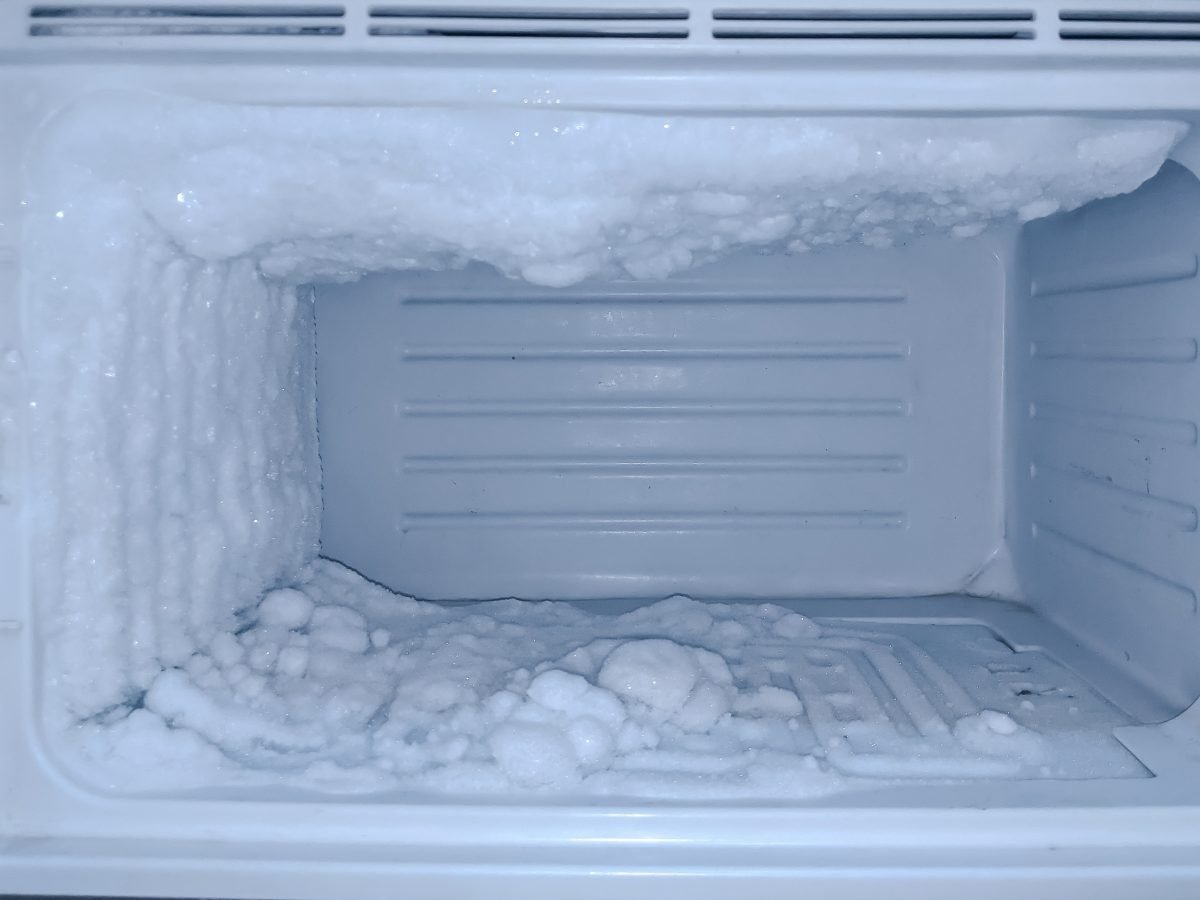
Here’s a simple comparison table summarizing the causes covered above.
| Cause | Typically Serious? | Common Fix |
|---|---|---|
| Damaged door seal | Sometimes | Clean or replace the gasket |
| Door left open | No | Check for obstructions, close fully |
| Frequent door openings | No | Organize freezer, minimize visits |
| Hot food added | No | Cool food before freezing |
| Faulty defrost timer | Yes | Technician diagnosis and replacement |
| Faulty defrost heater | Yes | Technician diagnosis and replacement |
| Faulty defrost thermostat | Yes | Technician diagnosis and replacement |
| Clogged defrost drain | Sometimes | Flush the drain tube |
| Incorrect temperature setting | No | Adjust to around 0°F |
| Manual defrost model | No | Routine scheduled defrosting |
Manual Defrost vs Frost-Free Freezers
Understanding which freezer type you have makes a big difference in how you interpret frost buildup. The two systems work very differently behind the scenes.
How Manual Defrost Freezers Work
Manual defrost freezers, including nearly all chest freezers, have cooling coils built directly into the walls or shelves. There’s no fan or heater to clear frost automatically.
Frost naturally accumulates on these surfaces over weeks or months and must be cleared by hand. This is considered completely normal and isn’t usually a sign of a problem.
How Frost-Free Freezers Work
Frost-free, or auto-defrost, freezers place the evaporator coils behind the back wall, hidden from view. A fan circulates air across these coils and throughout the compartment.
A heater periodically melts any frost that collects on the coils, usually every ten to twenty hours, with the meltwater draining into a pan where it evaporates. This is why frost-free freezers rarely show visible frost on shelves or walls.
Quick Comparison
| Feature | Manual Defrost | Frost-Free |
|---|---|---|
| Visible frost on walls | Common and expected | Uncommon |
| Maintenance needed | Periodic manual defrosting | Minimal, automatic |
| Energy use | Generally lower | Generally higher |
| Common in | Chest freezers | Upright freezers |
| Moving parts | Few | Fan, heater, timer, thermostat |
Myths vs Facts About Freezer Frost
There’s a fair amount of confusion around freezer frost. Here’s a quick table to clear up common misconceptions.
| Myth | Fact |
|---|---|
| Any frost means your freezer is broken | Light frost is normal, especially in manual defrost models |
| Frost-free freezers never get any frost | They can still frost if the defrost system fails |
| Scraping off frost with a knife is safe | This can damage the evaporator coils and void warranties |
| Frost only forms from an open door | Hot food, humidity, and defrost system failures matter too |
| You should replace the freezer once it frosts | Most frost issues are simple, affordable repairs |
How to Stop Your Freezer From Frosting Up
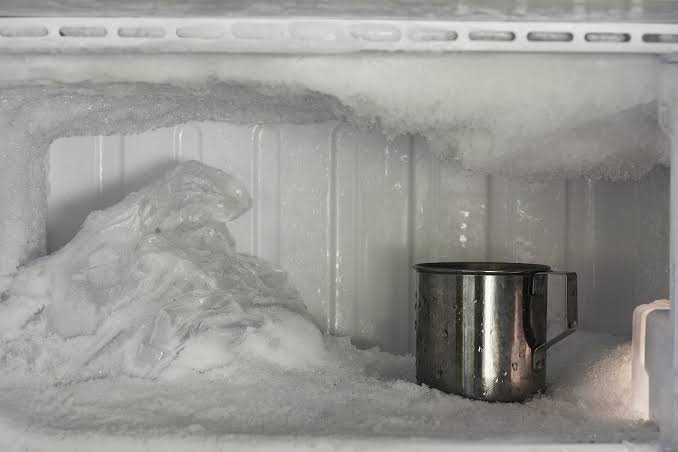
Once you understand the likely cause, reducing frost buildup is usually manageable with a few practical steps.
Inspect and Clean the Door Seal
Check the gasket all the way around the door for cracks, tears, or hardened areas. Clean it with mild soap and warm water to remove grease and debris that may prevent a tight seal.
Make Sure the Door Closes Completely
Check for bins, boxes, or food packages pushed too close to the door. Confirm your freezer is level so the door can swing shut and seal evenly every time.
Cool Food Before Freezing
Always let hot or warm food cool to room temperature, ideally in the refrigerator first, before placing it in the freezer. This single habit can noticeably reduce humidity-related frost.
Minimize Door Openings
Try to plan what you need before opening the freezer, and close it as soon as you’re done. Labeling shelves or bins can help you find items faster.
Check and Set the Correct Temperature
Use a freestanding thermometer to confirm your freezer is running at approximately 0°F. Adjust the dial if needed and recheck after 24 hours.
Flush the Defrost Drain
If you notice ice forming along the bottom of the compartment, try flushing the defrost drain tube with warm water. This can clear minor clogs without professional help.
Perform a Manual Defrost
If frost has already built up significantly, unplug the freezer, remove the food, and let the frost melt completely. Wipe up all moisture before plugging the unit back in.
Call a Technician for Component Failures
If you’ve checked the seal, door, and temperature, but frost keeps returning quickly, the defrost timer, heater, or thermostat may be at fault. These typically require professional diagnosis and replacement.
Tools and Products That Can Help
Beyond basic troubleshooting, a few simple tools make ongoing freezer maintenance easier. Here’s a quick breakdown of what each one does.
| Product | What It Helps With |
|---|---|
| Freezer thermometer | Confirms accurate temperature settings |
| Replacement door gasket | Restores a tight, airtight seal |
| Mild soap and warm water | Safely cleans gaskets and surfaces |
| Plastic scraper | Removes frost without damaging coils |
| Multimeter | Helps diagnose defrost component failures |
| Door alarm accessory | Alerts you if the door is left ajar |
These tools work best when paired with identifying the actual cause rather than guessing. A technician can confirm which component, if any, needs replacing.
Risks of Ignoring Freezer Frost
Letting frost buildup go unaddressed can cause more than just a messy-looking freezer. Over time, it creates real problems for both your appliance and your food.
Thick frost reduces usable storage space, often forcing food into awkward positions that block proper airflow. This can lead to uneven cooling, with some areas staying colder than others.
Frost buildup also makes your compressor and fan work harder to maintain temperature, which increases energy bills over time. In severe cases, this added strain can shorten the lifespan of your freezer’s components.
Food stored in a heavily frosted freezer is also more prone to freezer burn and unpleasant odors. Catching frost early, before it becomes severe, helps protect both your appliance and everything stored inside it.
When to Call an Appliance Technician
Light, slow-forming frost that you can manage with occasional cleaning usually isn’t a cause for concern. However, certain signs point to a problem that needs professional attention.
Watch for frost that returns within days of being cleared, ice sheets forming on the floor of the compartment, or a fan that sounds like it’s grinding against built-up ice. These often indicate a defrost system component has failed.
You should also call a technician if food is warm or partially thawed despite the freezer running, since this can signal that frost has interfered with airflow or cooling performance. Catching these issues early often means a simpler, less expensive repair.
Key Takeaways
Before wrapping up, here’s a short recap of the most important points covered in this guide.
- Frost forms when warm, moist air meets a cold surface inside your freezer.
- A damaged door seal and frequent door openings are the most common, easily fixed causes.
- Manual defrost freezers, especially chest freezers, are expected to show some frost over time.
- Frost-free freezers shouldn’t show much visible frost unless a component has failed.
- Simple habits like cooling food first and checking the gasket can prevent most frost buildup.
- Frost that returns quickly after cleaning usually points to a defrost system issue worth a technician visit.
Keeping these points in mind makes it easier to judge whether your freezer’s frost is normal or a sign of something that needs fixing.
Frequently Asked Questions (FAQs)
1. Is some frost in my freezer normal?
Yes, especially in manual defrost models like chest freezers. Thin, slow-forming frost is expected and not a cause for concern.
2. Why does my freezer frost up right after I defrost it?
This usually means warm air is still getting in through a damaged seal or open door. Recheck the gasket and door closure carefully.
3. Can a frost-free freezer still get frost?
Yes, if the defrost timer, heater, or thermostat fails. In that case, the automatic system can no longer clear frost on its own.
4. Should I scrape frost off with a knife?
No, sharp objects can puncture the evaporator coils and cause damage. Use a plastic scraper or simply let the frost melt during a manual defrost.
5. Why is there frost on my food inside the freezer?
This often happens when food isn’t sealed tightly or warm food was added recently. Proper packaging and cooling food first usually solves this.
6. How often should I defrost a chest freezer?
Most manual defrost freezers need defrosting once every six to twelve months. Defrost sooner if frost exceeds a quarter inch thick.
7. Can a clogged drain cause frost buildup?
Yes, a clogged defrost drain can lead to ice sheets forming on the floor of the compartment. Flushing the tube with warm water often clears the issue.
8. What temperature should my freezer be set to?
Most freezers should be set to around 0°F, or negative 18°C. Use a thermometer to confirm the actual internal temperature.
9. Why does my freezer frost up more in summer?
Higher humidity levels mean more moisture enters every time the door opens. This naturally increases frost formation during warmer, humid months.
10. When should I call a repair technician for freezer frost?
Call a technician if frost returns within days of cleaning or if food feels warm despite the freezer running. This usually points to a defrost component failure.
Conclusion
A freezer frosting up is one of the most common appliance issues, and in most cases, it traces back to manageable causes like a worn door seal, frequent door openings, or adding warm food. These triggers are easy to identify and often just as easy to fix with a bit of cleaning and a few adjusted habits.
In other cases, persistent frost is your freezer’s way of signaling that a defrost component, like the timer, heater, or thermostat, has failed and needs professional attention. Paying attention to how quickly frost returns and where it concentrates can help you figure out which category you’re dealing with.
If your freezer keeps frosting up despite checking the seal, the door, and your habits, don’t wait to call an appliance technician. A proper diagnosis can restore your freezer’s efficiency and protect your stored food.


