


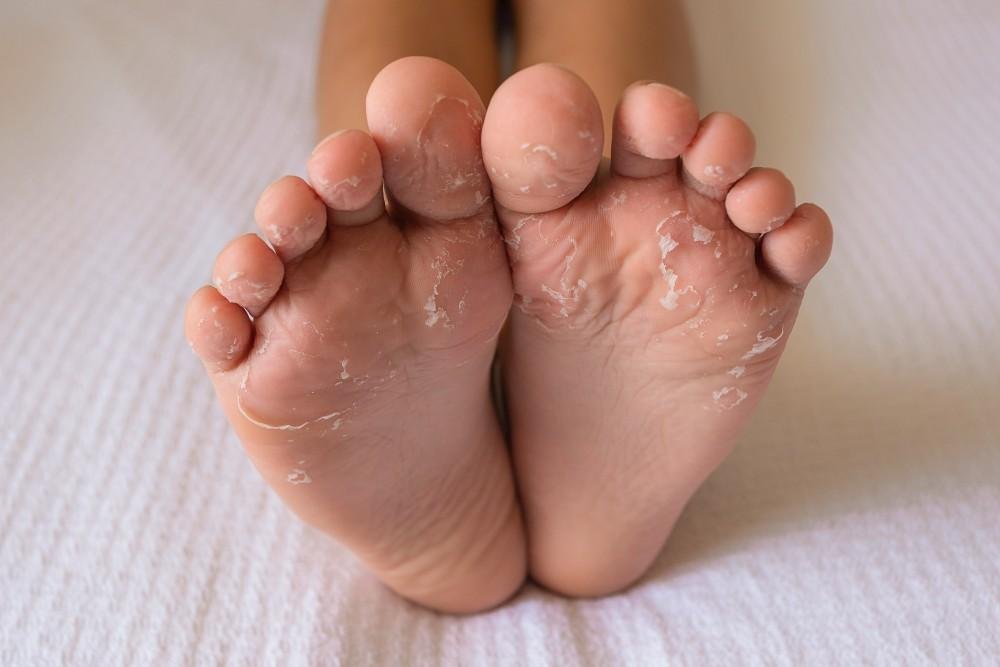
Why is my feet peeling is a question that podiatrists, dermatologists, and general practitioners hear every single day.
Peeling skin on the feet is incredibly common and can happen to anyone regardless of age, fitness level, or how well you care for your skin. Sometimes the cause is as simple as dry winter air or a hot shower.
Other times it signals a fungal infection, a chronic skin condition, or even an underlying health issue that deserves attention.
Understanding Why Feet Peel More Than Other Body Parts
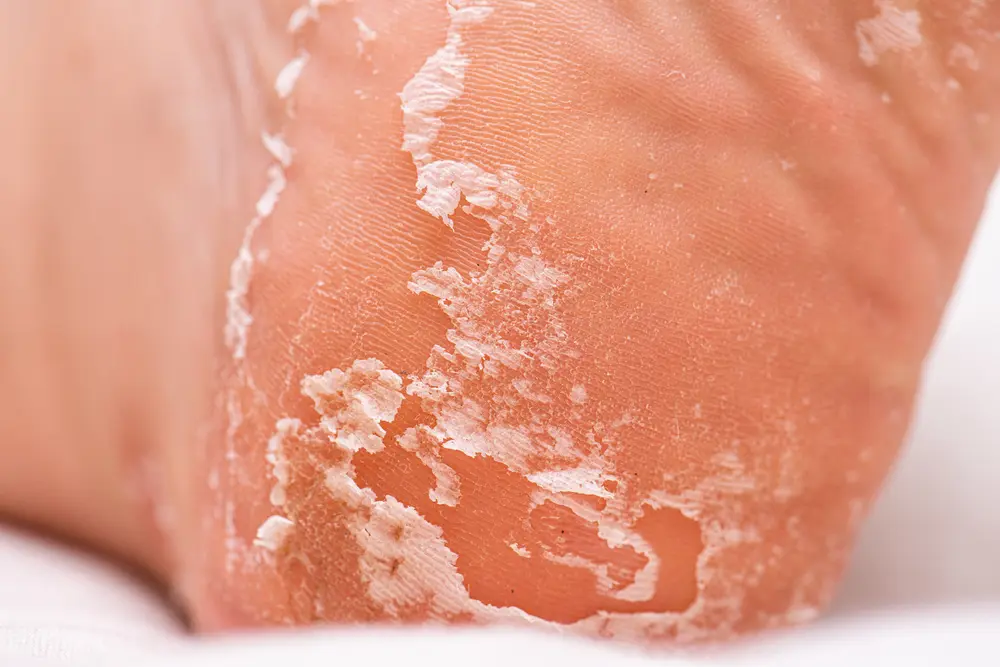
Your feet carry your entire body weight every single day. That constant pressure slows blood circulation in the lower extremities, which means less moisture and nutrients reach the skin cells on your feet compared to skin elsewhere on your body.
The soles of your feet also have no sebaceous glands — the oil-producing glands found on most other skin surfaces. Without natural oils, foot skin relies entirely on external moisture, which makes it far more prone to dryness and peeling than skin on your arms, chest, or face.
Add tight shoes, friction, sweat, and regular exposure to contaminated floors, and it becomes clear why feet are such a common site for peeling, cracking, and irritation.
Dry Skin vs Fungus: How to Tell the Difference Fast
Before diving into every cause, here is the fastest way to distinguish between the two most common culprits.
| Feature | Dry Skin | Athlete’s Foot (Fungus) |
|---|---|---|
| Location | Heels, soles, all over foot | Between toes, sides of foot |
| Itch level | Mild or none | Moderate to intense |
| Odour | None | Often unpleasant |
| Redness | Rare | Common |
| Blisters | No | Sometimes |
| Burning sensation | No | Yes |
| Contagious | No | Yes |
| Responds to moisturiser | Yes | No |
| Responds to antifungal | No | Yes |
If moisturising your feet regularly makes no difference to the peeling, fungus is the more likely cause. If the peeling is between your toes and comes with itching and burning, do not waste time on lotions — start with an antifungal treatment.
Cause 1: Dry Skin (Xeroderma)
Dry skin, medically called xeroderma, is the single most common reason feet peel.
The skin on the soles and heels lacks oil glands, which means it depends entirely on you for moisture. When that moisture is stripped away — by hot showers, cold dry air, harsh soaps, dehydration, or age — the outer layer of skin cells dries out, hardens, and sheds in flakes or strips.
Peeling from dry skin is most common on the heels and the bottom of the foot. It does not usually itch significantly and rarely causes redness or burning.
What makes it worse: hot baths or showers, low humidity environments, air conditioning, smoking, dehydration, open-toe shoes like flip-flops that expose the skin to dry air, and simply getting older as skin produces less natural moisture over time.
Treatment: Moisturise twice daily with a fragrance-free, dye-free cream or ointment. Ointments are the most effective because they create a barrier that locks in moisture. Apply immediately after showering while the skin is still slightly damp to seal moisture in. Products containing urea, lactic acid, or petroleum jelly work particularly well for foot skin.
Cause 2: Athlete’s Foot (Tinea Pedis)
Athlete’s foot is the most commonly cited cause of peeling feet worldwide, and it is a fungal infection — not a hygiene problem.
The fungus responsible, most often Trichophyton, thrives in warm, damp environments like locker rooms, public showers, swimming pool decks, and the inside of sweaty shoes. It spreads through direct contact with contaminated surfaces or by sharing towels, socks, or shoes.
The infection typically starts between the fourth and fifth toes, causing peeling, itching, and scaling. It can spread to the soles and sides of the foot if left untreated. Alongside peeling skin, you may notice redness, blistering, a burning or stinging sensation, and an unpleasant odour.
What makes it worse: wearing the same pair of shoes every day without allowing them to dry out, non-breathable synthetic socks, walking barefoot in communal wet areas, and stopping treatment too early.
Treatment: Over-the-counter antifungal creams, sprays, or powders — containing clotrimazole, miconazole, or terbinafine — are highly effective. Apply consistently for the full recommended course, typically two to four weeks, even after symptoms clear. Stopping early is the most common reason athlete’s foot returns. Keep feet dry, change socks daily, and rotate shoes so they dry fully between wears.
Cause 3: Eczema (Atopic Dermatitis)
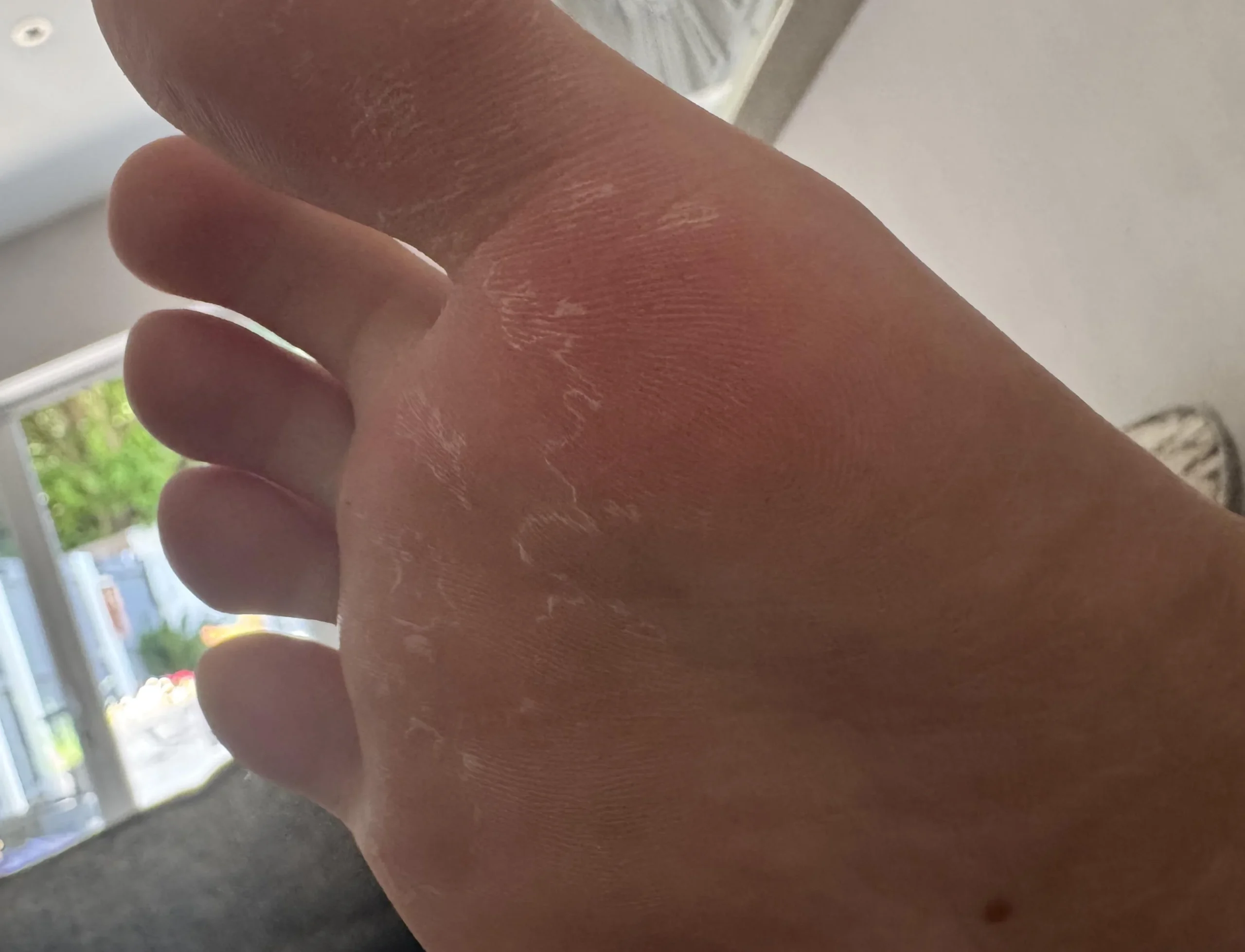
Eczema is a chronic inflammatory skin condition that causes the skin to become dry, itchy, red, and prone to peeling or cracking.
It can appear anywhere on the body, including the feet. Foot eczema often appears on the soles, between the toes, or across the tops of the feet as patches of red, irritated, flaky skin. It is not contagious.
Flare-ups are triggered by allergens, stress, harsh soaps or detergents, heat, sweat, and certain fabrics. People with a personal or family history of asthma or hay fever are more likely to develop eczema.
A specific type called dyshidrotic eczema causes intensely itchy small blisters on the soles and sides of the feet and between the toes before the blisters dry and the skin peels. This form is commonly mistaken for athlete’s foot.
Treatment: Fragrance-free moisturisers applied generously and regularly form the foundation of eczema care. During flare-ups, over-the-counter hydrocortisone cream can reduce inflammation. Prescription topical corticosteroids or calcineurin inhibitors are available for more severe cases. Identifying and avoiding personal triggers reduces the frequency of flare-ups significantly.
Cause 4: Psoriasis (Palmoplantar Psoriasis)
Psoriasis is an autoimmune condition where skin cells multiply much faster than normal, causing a build-up that leads to thick, scaly patches that peel.
When it affects the feet and hands, it is specifically called palmoplantar psoriasis. It produces thick red patches covered with silvery scales on the soles, heels, and sides of the feet. In severe cases, the entire sole of the foot is affected. The skin may crack and bleed when you walk, making it significantly more painful than standard dry skin.
Psoriasis is chronic and tends to cycle through periods of flare and remission. Triggers include stress, skin injury, infections, certain medications, and cold weather.
Treatment: Keeping skin moisturised reduces discomfort. Over-the-counter hydrocortisone cream and coal tar products provide mild relief. Prescription options include topical corticosteroids, retinoids, and calcineurin inhibitors. For moderate to severe cases, phototherapy (UV-B light treatment) and systemic medications including biologics are used. A dermatologist should guide treatment for psoriasis on the feet.
Cause 5: Hyperhidrosis (Excessive Sweating)
Hyperhidrosis is a condition where the body sweats excessively — far beyond what is needed for temperature regulation.
When it affects the feet, the skin is constantly damp. This creates two problems. The excess moisture softens and breaks down the outer skin layer, making it prone to peeling. The warm, wet environment also makes fungal infections far more likely.
People with hyperhidrosis often notice peeling combined with itching, inflammation, and cracked skin between the toes. The condition may also cause an unpleasant odour as bacteria thrive in the damp environment.
Treatment: Shower or bathe frequently and dry feet thoroughly, especially between the toes. Wear breathable, moisture-wicking socks and shoes made from natural materials. Over-the-counter antifungal powder helps manage moisture. For more severe cases, a doctor may recommend prescription antiperspirant solutions containing aluminium chloride, medicated glycopyrronium wipes, or in persistent cases, Botox injections to reduce sweating.
Cause 6: Contact Dermatitis
Contact dermatitis is a skin reaction triggered by direct contact with an irritant or allergen.
On feet, it is often caused by the materials in shoes — rubber, glues, dyes, leather treatment chemicals, or synthetic fabrics. It can also be triggered by socks, foot sprays, lotions, or topical medications applied to the feet.
The resulting peeling is usually accompanied by redness, swelling, and intense itching. The rash often follows a pattern that mirrors the contact area — for example, a symmetrical rash across the top of the foot matching the upper of a shoe.
Treatment: Identify and remove the irritant. Switch to shoes with natural materials, choose fragrance-free and dye-free skincare products, and opt for cotton socks. Topical hydrocortisone cream reduces inflammation while the skin heals. A dermatologist can perform a patch test to identify the specific allergen if it is not obvious.
Cause 7: Sunburn
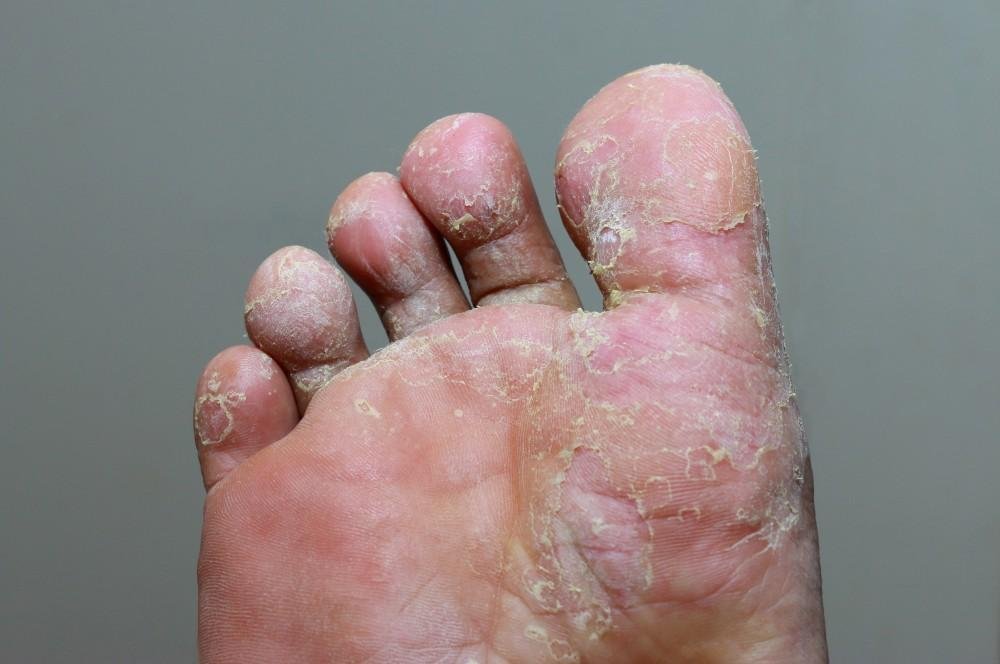
Sunburn is a frequently overlooked cause of peeling feet — particularly across the tops of the feet and around the toes.
Many people remember to apply sunscreen to their arms and face but neglect their feet when wearing open sandals or walking barefoot. Ultraviolet radiation damages the top layer of skin, which then peels away as it heals — exactly as it does on the shoulders or back.
Sunburn on feet causes redness and tenderness immediately after sun exposure, followed by peeling two to five days later.
Treatment: Apply aloe vera gel or a soothing after-sun lotion to cool the skin. Stay hydrated, take over-the-counter pain relief if needed, and keep the skin moisturised as it heals. Avoid peeling the skin away forcibly. Going forward, apply SPF 30 or higher sunscreen to the tops and sides of your feet whenever they are exposed.
Cause 8: Trench Foot (Immersion Foot)
Trench foot occurs when the feet are exposed to cold, wet conditions for extended periods.
It does not require extreme cold to develop. Prolonged dampness — from wet shoes, flooding, or outdoor work in rain — causes tissue damage that results in peeling, blistering, numbness, and in severe cases, tissue death. It was first documented extensively in soldiers during World War I, hence the name.
Treatment: Dry and warm the feet gently. Do not rub or apply direct heat. Change into dry socks and shoes as soon as possible. Mild cases resolve with proper drying and warming. Severe cases require medical attention, particularly if there are open sores, significant blistering, or signs of infection.
Cause 9: Allergic Reaction or Medication Side Effect
Some systemic allergic reactions cause widespread skin peeling, including on the feet.
Certain medications — including cancer chemotherapy drugs, retinoids used for skin conditions, and some antibiotics — list skin peeling as a known side effect. When peeling accompanies a rash that appeared shortly after starting a new medication, this is the likely cause.
Severe allergic reactions can also cause a condition called Stevens-Johnson syndrome, a rare but serious disorder where the skin blisters and peels over large areas. This is a medical emergency.
Treatment: If peeling began after starting a new medication, contact your prescribing doctor immediately. Do not stop prescription medications without medical guidance. For medication-related side effects, your doctor may adjust the dose or switch to an alternative.
Cause 10: Underlying Health Conditions
Certain systemic health conditions can manifest as peeling skin on the feet as a symptom.
Diabetes reduces blood circulation to the extremities and impairs the body’s ability to regulate skin moisture, making severe dryness and peeling common. In diabetics, cracked and peeling foot skin is especially serious because poor healing ability can allow minor cracks to develop into serious wounds or infections.
Thyroid disorders — particularly hypothyroidism — slow metabolism and reduce sweat and oil production, leading to abnormally dry, flaky skin including on the feet. Kidney disease and liver disease can also affect skin hydration and texture, sometimes presenting with peeling on the extremities.
Treatment: Managing the underlying condition is the primary treatment. People with diabetes should inspect their feet daily, moisturise consistently, wear well-fitted shoes, and report any changes to their podiatrist or doctor promptly. Diabetic foot complications can escalate quickly and require professional management.
Where on Your Foot Is the Peeling? Location Matters
The location of peeling on your foot provides a strong clue to the cause.
| Location of Peeling | Most Likely Cause |
|---|---|
| Between toes | Athlete’s foot, dyshidrotic eczema, contact dermatitis |
| Heel and sides | Dry skin, psoriasis, cracked heels |
| Sole / bottom of foot | Dry skin, psoriasis, athlete’s foot |
| Top of foot | Sunburn, contact dermatitis, eczema |
| All over foot | Severe dry skin, medication reaction, systemic condition |
| Single spot | Wart, callus, or localised injury |
| Toes only | Athlete’s foot, dry skin, tight shoes, eczema |
Using location alongside other symptoms like itching, odour, and redness narrows down the cause quickly and helps you choose the right treatment without wasting time on the wrong one.
Home Remedies That Work for Peeling Feet
For most causes of peeling feet, effective home care can resolve the problem within days to a few weeks.
Moisturise Immediately After Bathing
Apply a thick, fragrance-free moisturiser within one to two minutes of stepping out of the shower — while your skin is still slightly damp.
This timing locks in the water that was just absorbed by your skin cells. Products containing urea (10–25%), lactic acid, or petroleum jelly are the most effective for thick foot skin. Use an ointment or cream rather than a lotion for maximum effect.
Use Lukewarm Water, Not Hot
Hot showers and baths strip the natural lipid barrier from skin, leaving it dry and vulnerable.
Switching to lukewarm water — comfortable but not steaming — makes a noticeable difference for chronic foot dryness within a week. Limit bath or shower time to ten minutes or less.
Wear Moisture-Wicking Socks
Cotton socks absorb and hold moisture, which can worsen fungal infections and hyperhidrosis-related peeling. Wool or synthetic moisture-wicking socks draw sweat away from the skin and keep the environment drier.
Change socks at least once a day, or more frequently if your feet sweat heavily.
Soak and Gently Exfoliate
A fifteen-minute warm foot soak softens dead skin cells, making them easier to remove without pulling or tearing.
After soaking, use a pumice stone or foot file to gently buff away thickened, peeling skin — particularly on the heels. Do this no more than once or twice a week to avoid over-exfoliating, which can remove the protective layer and worsen irritation.
Apply Aloe Vera Gel
Pure aloe vera gel soothes inflamed, peeling skin and provides lightweight moisture without clogging pores.
It is particularly effective for sunburn-related peeling and mild contact dermatitis. Apply directly to the affected area two to three times daily. It works well as a daytime option when heavier ointments feel too thick.
Saltwater Soaks
Dissolving a tablespoon of salt in a bowl of warm water and soaking your feet for ten minutes can reduce minor fungal and bacterial growth on the skin surface.
It also helps dry out between-toe moisture that contributes to athlete’s foot. Follow with thorough drying and apply antifungal treatment if fungal infection is suspected.
Stay Hydrated
Dehydration reduces skin moisture from the inside out. Your skin — including on your feet — reflects your internal hydration status.
Drinking at least eight glasses of water per day supports healthy skin cell function throughout the body. Combined with external moisturising, good hydration significantly reduces recurrence of dry, peeling foot skin.
Do Not Peel or Pull the Skin
This is the most important rule. Pulling peeling skin away before it is ready damages healthy tissue beneath, creates entry points for infection, and delays healing.
Let skin fall away naturally or remove softened layers gently after soaking. Never peel dry, firmly attached skin.
Home Remedy Quick Reference
| Remedy | Best For | How to Use | How Often |
|---|---|---|---|
| Fragrance-free ointment | Dry skin, eczema, general peeling | Apply after bathing on damp skin | Twice daily |
| Antifungal cream / spray | Athlete’s foot | Apply to affected area as directed | Once or twice daily for 2–4 weeks |
| Pumice stone exfoliation | Heels, thick callus, dead skin build-up | After soaking, buff gently | 1–2 times per week |
| Aloe vera gel | Sunburn, contact dermatitis, mild inflammation | Apply directly to skin | 2–3 times daily |
| Lukewarm foot soak | General softening and relief | 15 minutes in warm water | Daily or as needed |
| Saltwater soak | Mild fungal / bacterial concerns | 1 tbsp salt in warm water, 10 min | 3–4 times per week |
| Urea cream (10–25%) | Thick, dry, cracked heels | Apply to heels after soaking | Nightly |
| Hydrocortisone cream (1%) | Eczema, psoriasis, contact dermatitis | Thin layer on inflamed area | Twice daily, short term |
Prevention: How to Stop Peeling Feet Before They Start
Good daily habits prevent the majority of foot peeling causes.
Moisturise every day without exception. The most reliable prevention for dry and eczema-related peeling is a consistent daily moisturising routine. Make it part of your morning or evening routine like brushing your teeth.
Dry your feet completely after washing. Pay particular attention between the toes, where moisture lingers and creates ideal conditions for fungal growth. Use a clean towel and pat gently rather than rubbing.
Wear footwear in communal areas. Flip-flops or shower shoes in gym locker rooms, public showers, and pool areas reduce fungal exposure significantly. Athlete’s foot spreads from contaminated floors to bare skin in seconds.
Choose breathable shoes and socks. Natural materials like leather, canvas, and wool allow air circulation. Synthetic materials trap heat and moisture, creating the conditions fungus and bacteria need to thrive.
Rotate your shoes. Wearing the same shoes every day means they never fully dry out between uses. Rotating between two or more pairs allows each pair to dry completely and reduces the moisture build-up that feeds fungal infections.
Apply sunscreen to your feet. When wearing sandals or going barefoot outdoors, apply SPF 30 or higher sunscreen to the tops and sides of your feet. Sunburned feet are painful and lead directly to significant peeling.
Eat a balanced diet. Deficiencies in vitamins A, C, E, and essential fatty acids contribute to poor skin health and slower healing. A diet rich in vegetables, fruits, healthy fats, and lean proteins supports skin integrity including on your feet.
When Peeling Feet Are a Sign of Something Serious
Most peeling feet are mild and resolve with self-care within one to two weeks. But certain symptoms and circumstances require professional evaluation.
See a podiatrist or doctor if:
Peeling does not improve after two weeks of consistent home treatment. The skin is cracking deeply, bleeding, or showing signs of infection such as increased warmth, swelling, pus, or red streaking around the wound.
You have diabetes. Any change in the skin of diabetic feet deserves prompt professional assessment. Poor circulation and reduced sensation make diabetic foot complications progress faster than in non-diabetic people.
You notice white patches under or around the toenails alongside foot peeling — this may indicate a fungal nail infection (onychomycosis) that requires prescription treatment.
You have fever, spreading redness, or significant swelling alongside the peeling — these can indicate cellulitis, a bacterial skin infection that spreads rapidly and requires antibiotics.
The peeling started after beginning a new medication and is widespread or severe.
You have tried over-the-counter antifungal treatment for four weeks without improvement. Some resistant fungal infections require prescription oral antifungals.
Peeling Feet in Specific Situations
Peeling Feet in Children
Children’s feet peel for many of the same reasons as adults — dry skin, athlete’s foot, eczema, and contact dermatitis from shoe materials.
However, children are also prone to a specific condition called juvenile plantar dermatosis, where the soles develop smooth, glazed, red, peeling skin caused by repeated wetting and drying — typically from wearing waterproof or rubber-soled shoes without socks. The treatment is moisture management, breathable footwear, and consistent moisturising.
Peeling Feet After Swimming
Prolonged time in water softens and breaks down the outer skin layer, leading to peeling after extended swimming sessions.
Pool chemicals like chlorine can strip skin moisture and trigger mild contact dermatitis in sensitive people. Rinsing feet with fresh water immediately after swimming and applying moisturiser helps minimise this.
Peeling Feet in Winter
Cold dry air outside and heated dry air inside both strip moisture from skin. Winter is peak season for dry-skin-related peeling feet, particularly on the heels and soles.
A humidifier in the bedroom adds moisture back to the air and reduces overnight skin drying. Thick moisturising socks worn over an applied ointment before bed — called the sock occlusion method — can dramatically improve very dry, cracked foot skin within days.
Seasonal Peeling Feet
| Season | Main Cause | Key Prevention |
|---|---|---|
| Winter | Dry cold air, indoor heating | Daily ointment, humidifier, warm socks |
| Summer | Sunburn, flip-flop friction, pool chemicals | Sunscreen, breathable shoes, post-swim moisturise |
| Spring / Autumn | Fluctuating humidity, shoe material changes | Consistent moisturising, rotate footwear |
| Year-round | Athlete’s foot, eczema, hyperhidrosis | Antifungal prevention, breathable socks, dry thoroughly |
The Role of Footwear in Peeling Feet
Shoes and socks play a bigger role in foot skin health than most people realise.
Tight shoes create constant friction against the skin, leading to callus formation, blistering, and peeling at pressure points. Ill-fitted shoes that are too loose cause the foot to slide, creating friction burns and repetitive skin damage.
Non-breathable materials trap heat and sweat. The resulting warm, moist internal environment is exactly what fungi and bacteria need to grow. People who wear the same synthetic trainers every day without allowing them to dry are significantly more likely to develop recurrent athlete’s foot.
Open-toe shoes like flip-flops expose the sole and heel to dry air and UV radiation, accelerating moisture loss and sunburn risk on the foot.
Investing in well-fitted, breathable footwear with natural materials, wearing appropriate socks, and rotating shoes daily are among the most effective long-term strategies for preventing peeling feet.
Frequently Asked Questions (FAQs)
Why is my feet peeling between the toes?
Peeling between the toes is most commonly caused by athlete’s foot (tinea pedis), a fungal infection that thrives in warm, moist areas. It is contagious and should be treated with antifungal cream for two to four weeks.
Is peeling feet a sign of a fungal infection?
It can be. If the peeling is accompanied by itching, burning, redness, or an unpleasant odour — especially between the toes — fungal infection is the likely cause. Dry skin peeling generally has no itch or odour.
Can dehydration cause my feet to peel?
Yes. Dehydration reduces skin moisture from the inside, making foot skin drier and more prone to flaking and peeling. Drinking adequate water daily supports skin hydration throughout the body.
What is the fastest way to stop feet from peeling?
Soak feet in lukewarm water for fifteen minutes to soften the skin, then apply a thick urea-based or petroleum jelly moisturiser immediately. For fungal-related peeling, start an antifungal cream. Consistency is key — one application is not enough.
Why do my feet peel even though I moisturise regularly?
If moisturiser does not stop the peeling, the cause is likely not dry skin. Athlete’s foot, psoriasis, eczema, or contact dermatitis do not respond to moisturiser alone and need targeted treatment. See a doctor or podiatrist for assessment.
Can stress cause feet to peel?
Yes, indirectly. Stress is a known trigger for eczema and psoriasis flare-ups, both of which cause foot skin peeling. Stress also weakens the immune system, making fungal infections more likely to take hold and harder to clear.
Is it safe to peel the skin off my feet?
No. Pulling peeling skin off before it is ready tears healthy tissue beneath, creates wounds that can become infected, and slows the healing process. Let skin shed naturally or remove it gently after softening in a soak.
Can diabetes cause feet to peel?
Yes. Diabetes reduces circulation to the feet and impairs the body’s ability to keep skin properly hydrated, leading to severe dryness and peeling. Any skin changes on diabetic feet should be assessed by a doctor promptly, as complications can escalate quickly.
When should I see a doctor about peeling feet?
See a doctor if peeling persists for more than two weeks despite treatment, if you have signs of infection (pus, spreading redness, fever), if you are diabetic, or if the peeling started after a new medication. Podiatrists specialise in foot skin conditions.
Do peeling feet go away on their own?
Mild dry-skin peeling often resolves with moisturising within days. Fungal infections, eczema, and psoriasis require targeted treatment and will not consistently clear without it. Peeling caused by underlying health conditions needs medical management of the root cause.
Conclusion
Why is my feet peeling has more answers than most people expect — from something as manageable as dry winter air or flip-flop friction to something as specific as athlete’s foot, eczema, psoriasis, or a signal from a health condition like diabetes or thyroid disease.
The location of the peeling, whether it itches, whether there is odour or redness, and how it responds to moisturiser are all clues that point toward the right diagnosis and the right treatment.
For the majority of people, consistent daily moisturising with a fragrance-free, urea-based product, combined with proper foot hygiene and breathable footwear, resolves peeling within one to two weeks. For cases involving fungal infection, an antifungal cream used consistently for the full course works reliably.
When home care fails after two weeks, or when symptoms suggest something more serious, a podiatrist or dermatologist can provide targeted treatment that clears the problem for good.
Your feet carry you everywhere — they deserve consistent, practical care.


