


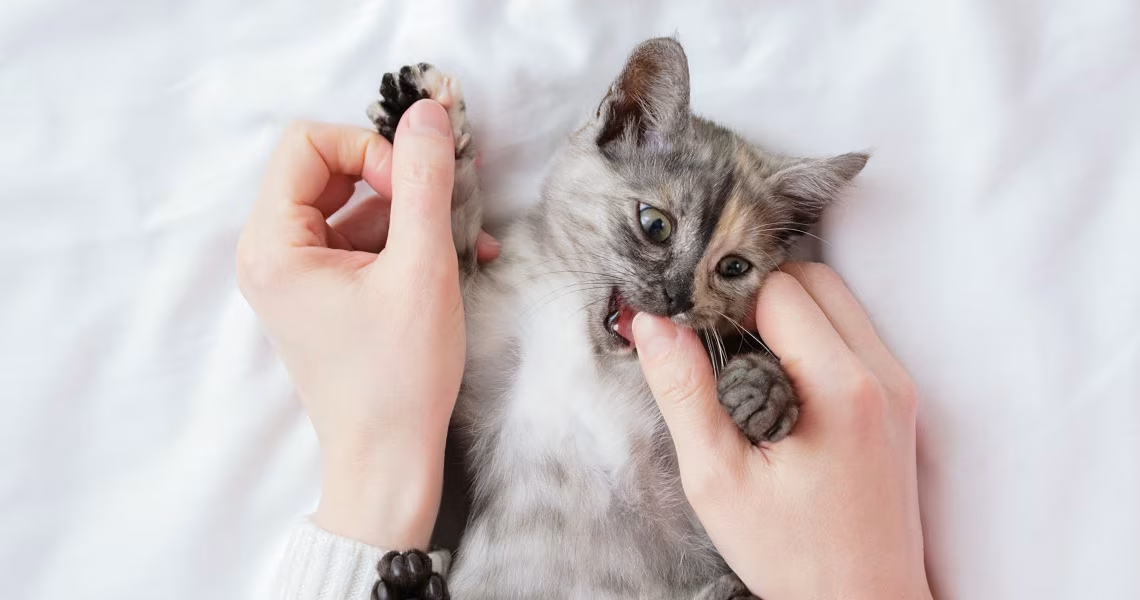
Why is my cat biting me? This is one of the most common questions cat owners ask, and the answer is rarely as simple as “my cat is aggressive.
” Cats bite for a wide range of reasons — from playfulness and overstimulation to fear, pain, and even affection. Understanding why your cat bites is the first step toward stopping it.
Why Is My Cat Biting Me? The 10 Main Reasons
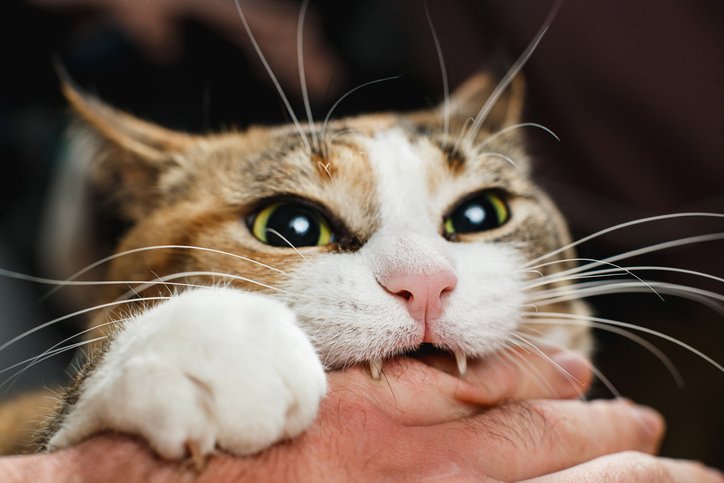
Cats rarely bite without a reason. Every bite communicates something — you just need to learn the language.
1. Play Aggression
Play biting is the most common reason cats bite their owners. Cats are natural-born hunters, and biting, pouncing, stalking, and scratching are all hardwired into their DNA.
When your cat does not have enough appropriate toys or outlets for their hunting instinct, they redirect that energy onto you. Your hands, feet, and ankles become the prey.
This type of biting is usually not aggressive. It is playful and instinctive. However, it can still break the skin and cause injury if not corrected early.
2. Overstimulation (Petting-Induced Aggression)
You are sitting comfortably, stroking your cat who is purring away — and then, out of nowhere, they bite your hand and run off. This is called petting-induced aggression, and it is extremely common.
When a cat is petted repeatedly in the same spot or for too long, the sensation shifts from pleasant to irritating. Your cat is not being mean — they are simply saying “I have had enough.”
Watch for warning signs like tail flicking, ear rotation, skin twitching, or sudden tension in the body. These are your cat’s way of asking you to stop before they bite.
3. Fear and Stress
A scared or stressed cat will bite as a last resort when they feel trapped or threatened. Cats prefer to hide or run away from danger. But when they cannot escape, they use their teeth to protect themselves.
Common fear triggers include loud noises, strangers visiting the home, new pets, or being picked up and held against their will. A frightened cat will usually give warning signs such as hissing, flattened ears, wide eyes, puffed-up fur, and an arched back.
If you see these signs, give your cat space immediately. Never approach or corner a fearful cat.
4. Redirected Aggression
Redirected aggression happens when your cat is upset by something they cannot reach — like an outdoor cat seen through the window — and takes out their frustration on the nearest target, which is often you.
Your cat may suddenly bite or attack you even though you did nothing to provoke them. This can be alarming because it appears completely random. However, the real trigger was something in the environment, not your behavior.
The best way to manage this is to identify and remove the trigger, such as using window film to block the view of outdoor cats.
5. Love Bites
Not all cat bites are aggressive. Some are affectionate. Love bites are gentle nips or nibbles that your cat gives while they are relaxed, purring, or being petted.
These bites do not usually break the skin. They can be your cat’s way of bonding with you, similar to how cats groom each other in a group. Love bites are most common during moments of closeness and trust.
However, it is important to note that even a love bite is often a signal that your cat is reaching their interaction limit and would like you to slow down or stop petting.
6. Pain or Medical Issues
If your cat suddenly starts biting when they never did before, pain or a health issue could be the cause. Cats are known to hide their pain, so biting when touched in a sensitive area may be the only sign you get.
Conditions like arthritis, dental pain, ear infections, dermatitis, or internal injuries can make even gentle handling feel unbearable. If a cat bites when you touch a specific part of their body, that area may be sore or inflamed.
Any sudden change in biting behavior should prompt a visit to the veterinarian to rule out medical causes.
7. Territorial Aggression
Cats are territorial animals. If your cat feels their space is being invaded — by a new pet, a new person, or rearranged furniture — they may bite to defend their territory.
This type of aggression can be directed at family members or strangers who enter the cat’s perceived territory. The cat may stalk, chase, or bite with little warning.
Adding more vertical space like cat trees, scratching posts, and hiding spots can help a territorial cat feel more secure without resorting to biting.
8. Kitten Biting and Teething
Kittens bite a lot, and most of the time it is completely normal. Biting is part of how kittens learn to play, explore, and communicate. They learn bite inhibition from their mother and littermates — how hard is too hard.
Kittens also go through a teething phase where sore gums make them want to chew on everything. Providing appropriate teething toys gives them a healthy outlet for this need.
The problem starts when humans play with kittens using their bare hands and fingers. When the kitten grows into a full-sized cat, that same behavior is no longer cute or painless.
9. Attention-Seeking Biting
Some cats learn that biting gets a reaction. If your cat bites you and you immediately give them attention — even negative attention like saying “ouch” loudly — they may learn that biting is an effective way to get what they want.
This type of biting is usually mild. It might be a quick nip on the ankle as you walk past, or a gentle bite to the hand while you are busy on your phone.
The best response is to completely ignore the behavior and walk away. Do not react. Over time, your cat will learn that biting does not earn them attention.
10. Poor Socialization
Cats that were not properly socialized as kittens may be more prone to biting. If a kitten was taken away from its mother and littermates too early, it may not have learned appropriate bite inhibition or how to interact gently with humans.
These cats may bite harder than they intend to because they simply never learned how much pressure is acceptable. Working with a certified cat behavior consultant can help address deep-rooted socialization issues over time.
Types of Cat Bites: How to Tell the Difference
Understanding the type of bite your cat is giving is key to responding correctly.
| Type of Bite | Description | Body Language | What to Do |
|---|---|---|---|
| Love Bite / Nip | Gentle, does not break skin | Relaxed, purring, soft eyes | Slow down petting or stop |
| Play Bite | Moderate, excitable, may scratch | Playful, pouncing, dilated pupils | Redirect to a toy immediately |
| Overstimulation Bite | Sudden bite after petting | Tail flicking, skin twitching, ears back | Stop petting, give space |
| Fear Bite | Hard, may break skin | Hissing, arched back, wide eyes | Back away, give the cat an exit |
| Pain-Induced Bite | Bite when touched in one spot | Flinching, avoiding contact | Visit the vet |
| Redirected Bite | Sudden, no clear cause | Agitated, fixed stare elsewhere | Remove the trigger, give space |
Warning Signs Your Cat Is About to Bite
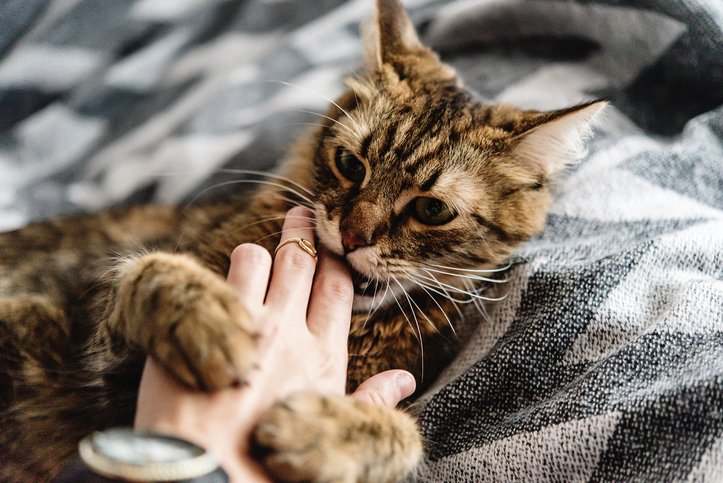
Most cats give warning signals before they bite. Learning these signals can save you from getting hurt.
Tail flicking or lashing is one of the clearest signs your cat is becoming annoyed. A gently swaying tail means relaxation, but a rapidly flicking or thumping tail means frustration.
Ear rotation is another key signal. When your cat’s ears flatten or rotate sideways, they are signaling discomfort. This is often paired with skin rippling or twitching along the back.
Sudden muscle tension is a sign your cat’s mood has shifted. If the body that was relaxed in your lap suddenly stiffens, stop all petting immediately.
Dilated pupils indicate high arousal or fear. Combined with a fixed stare, this is a clear warning that a bite may follow.
Quick head turns toward your hand during petting is your cat telling you they have reached their limit and want the petting to stop.
How to Stop Your Cat from Biting
Use Toys, Not Hands
Never use your bare hands or fingers as toys. This is the single most important rule for preventing cat biting behavior.
Always keep a wand toy, feather teaser, or small stuffed animal nearby during play sessions. Redirect your cat’s biting energy onto appropriate objects every single time.
Keep Petting Sessions Short
Many cats have a low tolerance for prolonged petting. Shorter sessions with breaks give your cat the opportunity to communicate their comfort level without feeling trapped.
Let your cat initiate contact whenever possible. A cat that comes to you for petting is much less likely to bite than a cat you approach while resting.
Read Body Language Consistently
The more you learn your cat’s specific warning signals, the less often you will be surprised by a bite. Every cat is different — some give obvious signs, others are more subtle.
Make it a habit to pause every 30 seconds during petting and check your cat’s tail, ears, and posture before continuing.
Never Punish a Biting Cat
Do not hit, spray, or shout at your cat for biting. Physical punishment creates fear, damages trust, and can actually make biting worse by triggering defensive aggression.
Instead, use calm redirection. Stop the interaction, stand up quietly, turn away, and ignore your cat. Removing attention is far more effective than any punishment.
Provide Mental and Physical Enrichment
Boredom is a major cause of biting. A mentally stimulated cat with plenty of outlets for their hunting instinct is far less likely to redirect that energy onto you.
Provide a variety of toys that mimic prey — feather wands, crinkle balls, puzzle feeders, and robotic mice. Rotate toys regularly to keep things interesting. Aim for at least two dedicated play sessions of 10 to 15 minutes per day.
Try the Freeze Method
If your cat bites during play, go completely still. Do not pull away quickly, as sudden movement triggers the prey-catching instinct and makes biting worse.
Stay still, wait for your cat to release, then calmly withdraw your hand and end the play session. This teaches your cat that biting ends the fun.
Consider a Second Cat
Play aggression is most common in cats that are the only pet in the home, especially those separated from their littermates too early. A feline companion can help your cat learn appropriate bite inhibition through natural play.
Before adopting a second cat, make sure the introduction is done slowly and carefully to avoid adding stress to your home.
Consult a Vet or Cat Behaviorist
If your cat’s biting is frequent, severe, or has started suddenly, do not delay in seeking professional help. A veterinarian can rule out medical causes, and a certified cat behavior consultant can help address behavioral issues that are difficult to manage alone.
Kitten Biting: What to Do Differently
Kitten biting requires a slightly different approach because kittens are still learning.
The most important thing is consistency. Every person in the household must respond the same way to biting. Mixed signals make it much harder for a kitten to learn the rules.
When your kitten bites, make a short, sharp sound like “ouch” and immediately stop playing. Kittens learn from their littermates through similar squeals that a bite was too hard.
Provide plenty of appropriate chew toys and teething toys. A kitten with sore gums needs something to bite, and giving them the right outlet makes redirecting much easier.
Never let your kitten practice biting hands, even gently. The habit formed in kittenhood will persist into adulthood when it becomes much more painful and harder to correct.
When Cat Biting Is a Medical Emergency
While most cat biting is behavioral, there are situations where you need to act fast — both for your cat’s sake and your own.
If your cat’s biting has escalated suddenly and dramatically, especially if paired with other unusual symptoms, see your vet the same day. Sudden behavioral changes can indicate neurological conditions, hyperthyroidism, severe pain, or other serious medical problems.
For yourself: cat bites carry a high risk of infection due to bacteria in the cat’s mouth. If a bite breaks the skin, wash the wound immediately with soap and warm water, apply pressure to stop bleeding, and seek medical attention promptly. Your doctor may prescribe preventative antibiotics even before signs of infection appear.
Signs a cat bite is becoming infected include increasing redness, swelling, warmth, pus, or pain that worsens after the first 24 hours.
Cat Biting by Age Group
Cat biting behavior differs depending on your cat’s age and life stage.
Kittens (0 to 6 months): Biting is almost always play-related and part of normal development. Teething makes it more frequent. The focus should be on teaching bite inhibition and redirecting to toys.
Young Adults (6 months to 2 years): Play aggression peaks during this stage. Cats are full of energy and hunting drive. Structured daily play sessions are essential. This is the stage where bad habits formed in kittenhood become most problematic.
Adult Cats (2 to 8 years): Biting is usually petting-induced, stress-related, or territorial. Understanding your individual cat’s threshold and triggers is the priority. Medical causes are less common but should still be ruled out.
Senior Cats (8 years and older): Any new biting behavior in a senior cat should be treated as potentially medical until proven otherwise. Arthritis, dental pain, cognitive dysfunction, and hyperthyroidism are all common in older cats and can cause increased aggression and sensitivity.
What Not to Do When Your Cat Bites
These common mistakes make biting worse and damage your relationship with your cat.
Do not pull away quickly when bitten. Fast movements trigger the predatory instinct and can intensify the bite.
Do not use physical punishment of any kind. Hitting, flicking the nose, or using a spray bottle creates fear and can lead to more serious aggression.
Do not ignore warning signs. If you repeatedly push past your cat’s signals, they will learn that subtle communication does not work — and will escalate directly to biting.
Do not let children play rough with the cat. Children often move quickly and unpredictably, which can trigger fear or play biting. Always supervise interactions between cats and young children.
Do not reinforce attention-seeking biting by responding to it. Even a scolding counts as a response. Walk away silently every time.
Building a Better Relationship with Your Cat
Reducing biting is ultimately about building trust and understanding your cat as an individual.
Spend time simply being near your cat without initiating petting or play. Let them come to you. This builds confidence and security.
Learn what your cat likes and does not like when it comes to touch. Most cats enjoy being petted on the head, cheeks, and chin. Many dislike the belly and the base of the tail. Respecting these preferences reduces the chance of a bite dramatically.
Create a safe and enriching environment with cat trees, window perches, hiding spots, and consistent routines. A cat that feels secure in its environment is far less likely to feel the need to bite.
Frequently Asked Questions (FAQs)
Why is my cat biting me all of a sudden?
A sudden change in biting behavior often signals pain, illness, or stress. Schedule a vet visit to rule out medical causes before assuming it is behavioral.
Why does my cat bite me when I pet it?
This is called petting-induced aggression or overstimulation. Your cat is telling you they have reached their limit and need you to stop. Watch for warning signals like tail flicking before the bite happens.
Why does my cat lick me then bite me?
This behavior usually means your cat is transitioning from affectionate grooming to communicating that they want the interaction to end. It can also signal overstimulation during petting.
Why does my cat bite me gently?
Gentle biting is usually a love bite — a form of affection or bonding similar to how cats groom each other. It can also mean your cat is reaching their tolerance limit and giving you a polite warning.
Why does my cat bite me unprovoked?
Even bites that seem random usually have a trigger you may have missed. Look for redirected aggression — your cat may be reacting to something in the environment like an outdoor cat or a sudden noise.
Why does my kitten bite me so much?
Kittens bite as part of play, exploration, and teething. This is normal development. The key is to redirect biting to toys consistently and never allow biting of hands or feet.
Is it okay to let my cat bite me playfully?
No — allowing any biting of hands or feet, even gentle play biting, teaches your cat that humans are acceptable targets. Always redirect to a toy to prevent this from becoming a painful habit.
How do I stop my cat from biting me when I walk by?
This is usually ankle ambushing — a form of play aggression. Increase daily structured play sessions with wand toys to tire your cat out and reduce the urge to ambush you.
Should I punish my cat for biting?
Never. Punishment increases fear and can make aggression worse. The most effective response is to calmly stop the interaction, stand up, and ignore your cat completely.
When should I see a vet about my cat’s biting?
See a vet if biting starts suddenly, has become more severe, is paired with other behavior changes, or if the bite breaks the skin and shows signs of infection.
Conclusion
Why is my cat biting me is a question every cat owner asks at some point, and the good news is that the answer is almost always something you can understand and address.
Cat biting is a form of communication. Your cat is not being mean — they are trying to tell you something about how they feel. Whether it is a love nip, a plea for space, a response to pain, or simple play behavior that has gotten out of hand, every bite has a meaning.
By learning your cat’s body language, respecting their limits, providing enrichment, and using consistent redirection instead of punishment, you can significantly reduce or completely eliminate biting.
In 2026, the relationship between cats and their owners is built on understanding — and understanding why your cat bites is the foundation of that bond.


