


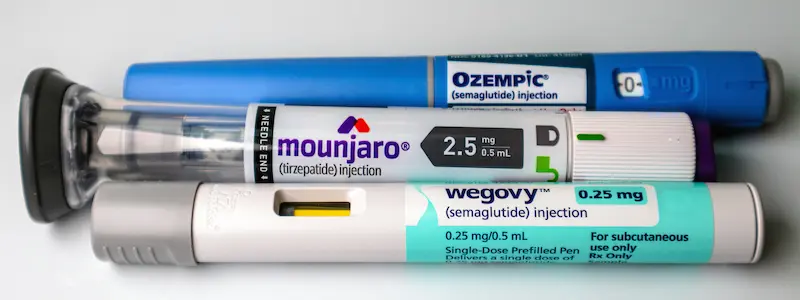
Why is Mounjaro better than Ozempic for fat loss? This is one of the most searched questions in 2026 — and the answer is backed by real clinical data.
Mounjaro (tirzepatide) uses a dual-hormone mechanism that Ozempic (semaglutide) simply cannot match.
Both are weekly injectable medications originally approved for type 2 diabetes, but their weight loss results are very different.
Mounjaro patients lose up to 22.5% of body weight on average, while Ozempic users lose around 15%. If fat loss is your primary goal, the numbers are hard to ignore.
What Is Mounjaro and How Does It Work?
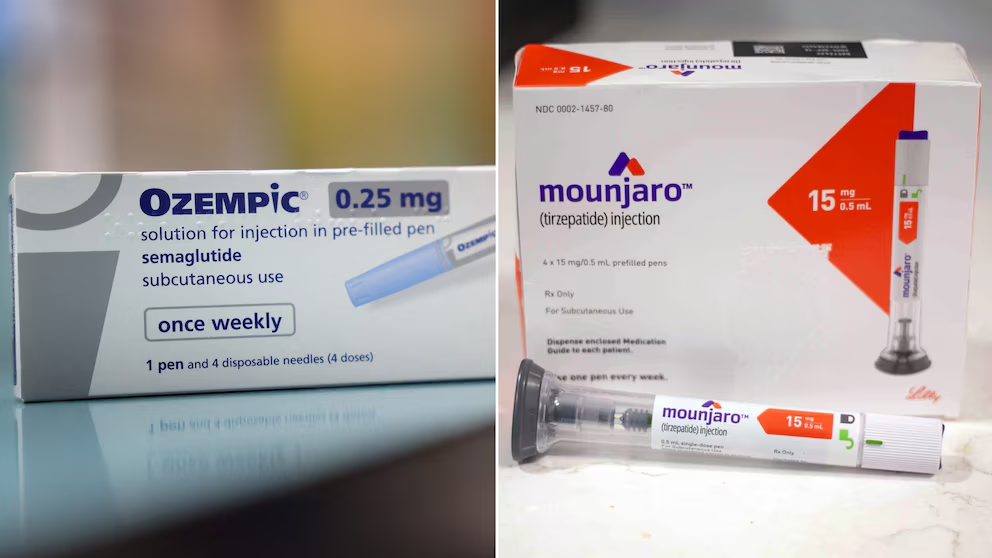
Mounjaro is the brand name for tirzepatide, manufactured by Eli Lilly. It was FDA-approved for type 2 diabetes in 2022, and its weight-loss version is sold under the brand Zepbound.
Mounjaro is a dual GIP and GLP-1 receptor agonist. This means it activates two separate hormone pathways at the same time — glucagon-like peptide-1 (GLP-1) and glucose-dependent insulinotropic polypeptide (GIP).
This dual action improves insulin sensitivity, reduces appetite more aggressively, and enhances fat metabolism. It is the first drug in its class.
What Is Ozempic and How Does It Work?
Ozempic is the brand name for semaglutide, made by Novo Nordisk. It was originally approved by the FDA in 2017 for type 2 diabetes management.
Ozempic works as a GLP-1 receptor agonist only. It signals the brain to feel full, slows gastric emptying, and helps regulate blood sugar levels.
It is effective, but it only activates one hormone pathway. This single-receptor approach is why its fat loss ceiling is lower than Mounjaro’s.
The Core Difference: Single vs Dual Hormone Action
This is the most important thing to understand when comparing these two drugs.
| Feature | Mounjaro (Tirzepatide) | Ozempic (Semaglutide) |
|---|---|---|
| Drug Class | Dual GIP + GLP-1 Agonist | GLP-1 Agonist Only |
| Hormone Receptors Targeted | 2 (GIP + GLP-1) | 1 (GLP-1) |
| Avg. Weight Loss (Clinical Trials) | Up to 22.5% body weight | Up to 15% body weight |
| Max Weekly Dose | 15 mg | 2 mg |
| Starting Dose | 2.5 mg/week | 0.25 mg/week |
| FDA Approval for Weight Loss | Yes (as Zepbound) | No (Wegovy is the approved form) |
| Manufacturer | Eli Lilly | Novo Nordisk |
Mounjaro’s dual-action mechanism is not a minor upgrade — it is a completely different level of biological intervention compared to Ozempic’s single-pathway approach.
Why Is Mounjaro Better Than Ozempic for Fat Loss?
GIP Receptor Activation Is the Secret Weapon
The GIP receptor does something unique: it amplifies the brain’s satiety signals while also directly influencing fat cell metabolism. When GIP and GLP-1 work together, the result is faster appetite suppression and more efficient fat breakdown.
Ozempic only hits the GLP-1 side. Mounjaro fires both, making its fat-burning effect more powerful across multiple biological systems.
Mounjaro Patients Lose More Fat Faster
According to real-world data from Truveta Research — which analyzed over 40,000 patients — people on Mounjaro were significantly more likely to lose weight than those on Ozempic. Here is what the data showed:
- Mounjaro users were 6 times more likely to lose 10% of body weight
- Mounjaro users were 3 times more likely to lose 15% of body weight
- Mounjaro users were 1.8 times more likely to lose 5% of body weight
These are not small differences. They reflect the consistent clinical superiority of tirzepatide over semaglutide for fat reduction.
Visible Results Come Sooner With Mounjaro
Many patients using Mounjaro report noticeable fat reduction by the second month of treatment. With Ozempic, visible changes typically appear after 3 months of consistent use.
Early visible results are important because they help patients stay motivated and consistent with lifestyle changes. Faster feedback from the drug means better adherence in the long term.
Mounjaro Hits a Higher Weight Loss Ceiling
In the SURPASS-2 clinical trial, participants on the highest dose of Mounjaro (15 mg) lost up to 22.5% of their starting body weight. In similar Ozempic studies, users lost an average of around 15%.
For a person weighing 220 lbs (100 kg):
- 15% loss = ~33 lbs with Ozempic
- 22.5% loss = ~49.5 lbs with Mounjaro
That is a difference of about 16 lbs from the same duration of treatment. For many patients, that gap is transformative.
SURPASS-5 Trial: Head-to-Head Data You Should Know
The SURMOUNT-5 trial, published in the New England Journal of Medicine in May 2025, is the most direct head-to-head comparison between tirzepatide and semaglutide.
The 72-week study found:
- Tirzepatide produced superior total body weight loss
- Tirzepatide led to greater waist circumference reduction
- A higher percentage of tirzepatide users achieved 20% or more weight loss
- Serious side effects were not significantly different between the two groups
This trial is considered the gold standard for comparing these two medications, and Mounjaro won decisively.
Clinical Trial Results at a Glance
| Outcome Measure | Mounjaro (Tirzepatide) | Ozempic (Semaglutide) |
|---|---|---|
| Average Body Weight Loss | 22.5% | ~15% |
| Patients Losing 5% Weight | 96.3% (at 15 mg) | 83.5% (at 2.4 mg Wegovy dose) |
| Patients Losing 20% Weight | 62.9% (at 15 mg) | 30.2% (at 2.4 mg Wegovy dose) |
| A1C Reduction | 2.01–2.30% | 1.86% |
| Trial Duration | 72 weeks | 68 weeks |
How Do the Dosages Compare?
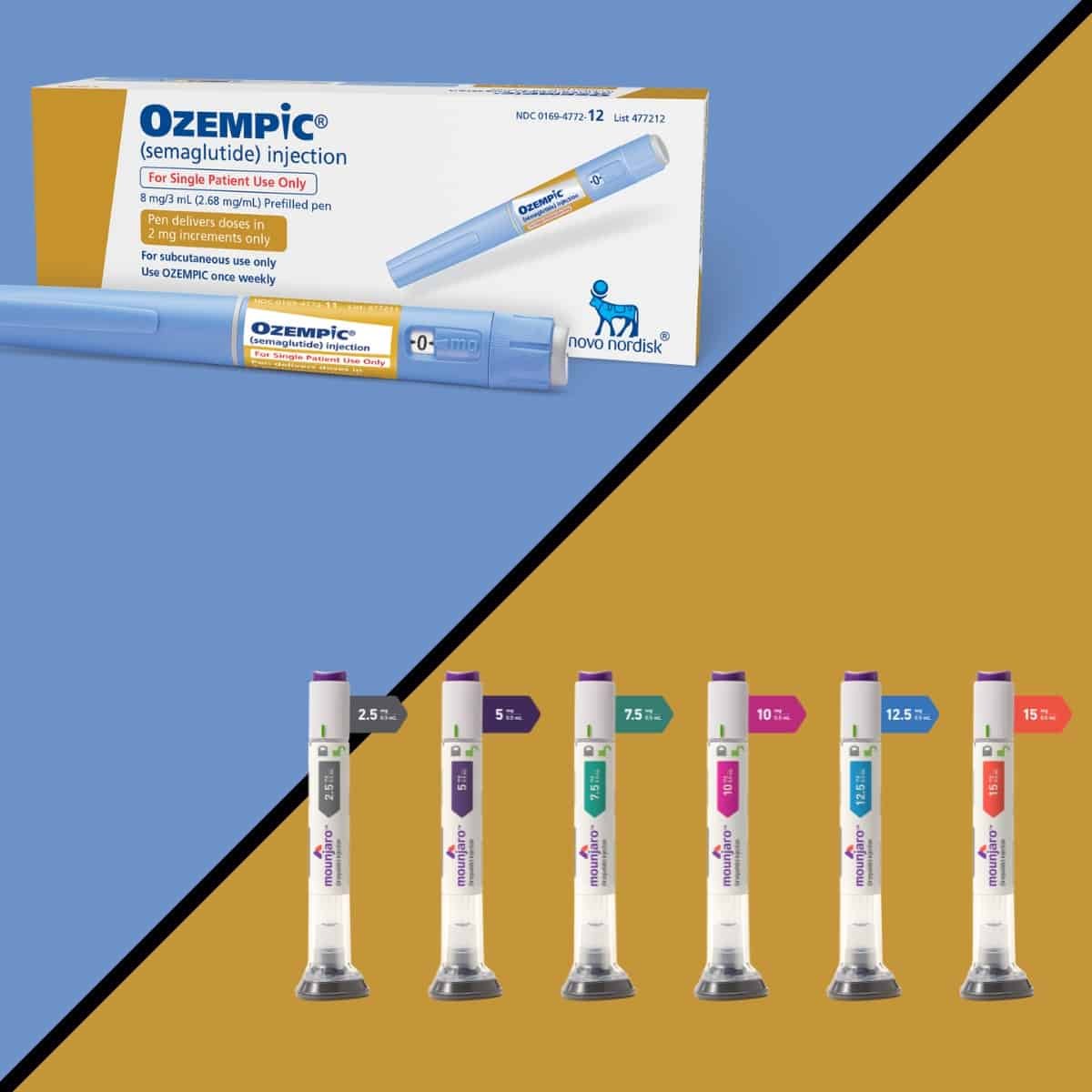
Mounjaro Dosage Schedule
Mounjaro starts at 2.5 mg per week injected subcutaneously. After 4 weeks, the dose increases to 5 mg weekly.
From there, the dose can gradually increase in 2.5 mg increments up to the maximum of 15 mg per week, depending on the patient’s response and tolerance.
Ozempic Dosage Schedule
Ozempic starts at 0.25 mg per week and increases to 0.5 mg after 4 weeks. The maximum dose for Ozempic is 2 mg per week.
The starting doses of both are intended for treatment initiation and are not effective for blood sugar control or significant fat loss on their own.
Side Effects: What to Expect From Both
Both Mounjaro and Ozempic belong to the same class of incretin-based medications, so their side effect profiles are similar in nature.
Common Side Effects (Both Drugs)
- Nausea
- Diarrhea
- Vomiting
- Constipation
- Stomach pain or discomfort
- Decreased appetite
Differences in Side Effects
- Mounjaro tends to cause more diarrhea and decreased appetite in the early weeks
- Ozempic is associated with slightly higher nausea rates compared to Mounjaro
- Both drugs carry risks of more serious but rare side effects including pancreatitis and gallbladder disease
Both medications should be started at low doses and titrated slowly to minimize gastrointestinal discomfort. Most mild side effects resolve within a few days to a couple of weeks as the body adjusts.
What About Muscle Loss?
One important nuance is that because Mounjaro causes more aggressive weight loss, it may also lead to a slightly higher rate of muscle mass reduction. A 2025 study found that around 10% of tirzepatide users experienced a 5% reduction in lean body mass alongside significant weight loss, compared to 7% on semaglutide.
This is not a reason to avoid Mounjaro, but it does underline the importance of strength training during treatment to protect muscle while losing fat.
Cost Comparison: Mounjaro vs Ozempic
Cost is a real consideration for patients evaluating these two drugs.
| Drug | Average Monthly Retail Price (US) | With Discount Card |
|---|---|---|
| Mounjaro (Tirzepatide) | ~$1,493 | As low as ~$872 |
| Ozempic (Semaglutide) | ~$1,384 | Varies by pharmacy |
Mounjaro is slightly more expensive than Ozempic on retail pricing. However, many providers offer compounded versions of both active ingredients at a significantly lower cost — in some cases starting at $99–$125 per month for semaglutide and tirzepatide respectively.
Insurance coverage depends on whether the drug is prescribed for diabetes (covered more often) or weight loss (covered less consistently). Always verify with your insurer before starting either treatment.
Who Is Mounjaro Best For?
Mounjaro is likely the better choice if:
You want the highest possible fat loss outcome from a GLP-1-class medication. You have not had satisfactory results with Ozempic or another semaglutide product. You are managing both type 2 diabetes and obesity at the same time. You are willing to pay slightly more for a more potent clinical result. Your doctor has assessed that your cardiovascular risk does not require Ozempic’s specific heart-disease indication.
Who Might Be Better Off With Ozempic?
Ozempic may be a more appropriate choice if:
You have established cardiovascular disease and require the FDA-approved cardiovascular risk reduction that Ozempic offers but Mounjaro does not yet have. You have chronic kidney disease and benefit from Ozempic’s kidney-protection indication. You are price-sensitive and the lower cost is a priority. You experienced intolerable side effects on tirzepatide and tolerate semaglutide better.
Cardiovascular and Kidney Benefits: Where Ozempic Still Wins
One area where Ozempic has a clear clinical advantage is cardiovascular and kidney protection.
Ozempic is FDA-approved to reduce the risk of major cardiovascular events — including heart attack and stroke — in people with type 2 diabetes and established heart disease. It was also approved in 2025 to reduce the risk of worsening kidney problems in patients with type 2 diabetes and chronic kidney disease.
Mounjaro does not yet have these specific approvals, though studies are ongoing. If you have a history of heart disease or kidney issues, this distinction matters significantly when choosing between the two.
What Happens When You Stop Taking These Drugs?
This is a concern many patients raise before starting either medication. Earlier clinical trials suggested rapid weight regain after stopping GLP-1 drugs, but newer real-world data offer a more balanced picture.
A 2026 analysis from Cleveland Clinic involving nearly 8,000 patients found that most people who discontinued these drugs — either Mounjaro or Ozempic — did not experience catastrophic weight regain when they adopted lifestyle changes, switched medications, or restarted treatment.
Weight maintenance after stopping either drug is possible, but requires a plan. Neither medication is designed to be taken briefly and then abandoned. They work best as part of a long-term obesity management strategy.
Mounjaro vs Ozempic: Summary Comparison Table
| Category | Mounjaro Wins | Ozempic Wins |
|---|---|---|
| Overall Fat Loss | ✓ | |
| Dual Hormone Mechanism | ✓ | |
| Speed of Visible Results | ✓ | |
| Higher Weight Loss Ceiling | ✓ | |
| Cardiovascular Risk Reduction | ✓ | |
| Kidney Disease Indication | ✓ | |
| Lower Monthly Cost | ✓ (marginally) | |
| Longer Market History | ✓ | |
| Muscle Mass Preservation | ✓ (marginal) |
Tips to Maximize Fat Loss on Mounjaro
Start Low and Go Slow
Always begin at the 2.5 mg starting dose and increase gradually. Rushing dose escalation increases gastrointestinal side effects and may reduce adherence.
Combine With Strength Training
Because any significant weight loss carries some risk of muscle loss, resistance training two to three times per week is strongly recommended. This preserves lean mass and supports metabolic rate.
Track Progress in More Than Just Pounds
Body fat percentage, waist circumference, energy levels, and A1C values all tell a more complete story than the scale alone. Mounjaro’s effects on metabolism and insulin sensitivity may show up in blood markers before dramatic weight changes occur visually.
Protein Intake Matters More on Mounjaro
Since appetite is suppressed significantly, ensuring adequate protein intake (around 1.2–1.6g per kg of body weight) supports muscle preservation during aggressive fat loss.
Work With a Healthcare Provider
Mounjaro is a prescription medication. Dose escalation, monitoring for side effects, and adjusting treatment should always be done under medical supervision.
Frequently Asked Questions (FAQs)
Is Mounjaro FDA-approved for weight loss?
Mounjaro is approved for type 2 diabetes. Its weight-loss form is called Zepbound, which is FDA-approved specifically for obesity and weight management.
How much more weight do you lose on Mounjaro vs Ozempic?
Clinical trials show Mounjaro averages 22.5% body weight loss versus about 15% for Ozempic — roughly 7.5 percentage points more on average.
Can you switch from Ozempic to Mounjaro?
Yes, but always consult your doctor first. Switching may involve temporary side effects during the adjustment period, especially if starting on a different dose.
Is Mounjaro more expensive than Ozempic?
Mounjaro costs about $1,493 per month retail versus $1,384 for Ozempic. With discount cards or compounded versions, both can be significantly cheaper.
Do both drugs require weekly injections?
Yes. Both Mounjaro and Ozempic are once-weekly subcutaneous injections administered in the abdomen, thigh, or upper arm.
Does Mounjaro cause more side effects than Ozempic?
Side effects are similar in nature. Mounjaro tends to cause more diarrhea and decreased appetite early on, while Ozempic is associated with slightly higher nausea rates.
Will I regain weight if I stop Mounjaro?
Real-world 2026 data suggests that many patients avoid significant regain if they adopt lifestyle changes or restart treatment. Rapid regain is possible without a follow-up plan.
Which drug is better for people with heart disease?
Ozempic has the FDA-approved cardiovascular risk reduction indication, making it the preferred choice for patients with established heart disease or prior cardiovascular events.
Can Mounjaro and Ozempic be taken together?
No. Taking two GLP-1 medications simultaneously is not recommended due to increased risk of side effects. Your doctor will help you choose one or the other.
How long does it take to see fat loss results on Mounjaro?
Many patients report noticeable fat reduction by the second month. With Ozempic, visible changes typically begin around month three of consistent use.
Conclusion
Mounjaro is better than Ozempic for fat loss because its dual GIP and GLP-1 mechanism delivers results that no single-receptor drug can match.
Clinical trials consistently show that tirzepatide produces up to 22.5% body weight loss compared to Ozempic’s 15%, and patients on Mounjaro are up to six times more likely to achieve meaningful weight reduction milestones.
The SURMOUNT-5 trial confirmed this superiority head-to-head. That said, Ozempic is not a weak drug.
It remains the better choice for patients with cardiovascular disease or chronic kidney disease due to its unique approved indications.
The right medication depends on your personal health profile, weight loss goals, and risk factors.
Always work with a licensed healthcare provider to determine which GLP-1 treatment is best suited for your body and long-term health plan in 2026.


