


Why ESR is high in female is one of the most common questions women ask after getting a blood test report — and the answer is rarely simple.
ESR, or erythrocyte sedimentation rate, is a non-specific marker of inflammation in the body.
Women naturally have higher ESR values than men due to hormonal differences, and this gap widens further with age, pregnancy, and certain health conditions.
A mildly elevated ESR in a woman can be completely harmless — or it can point to an infection, autoimmune disease, anemia, or something more serious.
What Is ESR and How Does the Test Work?
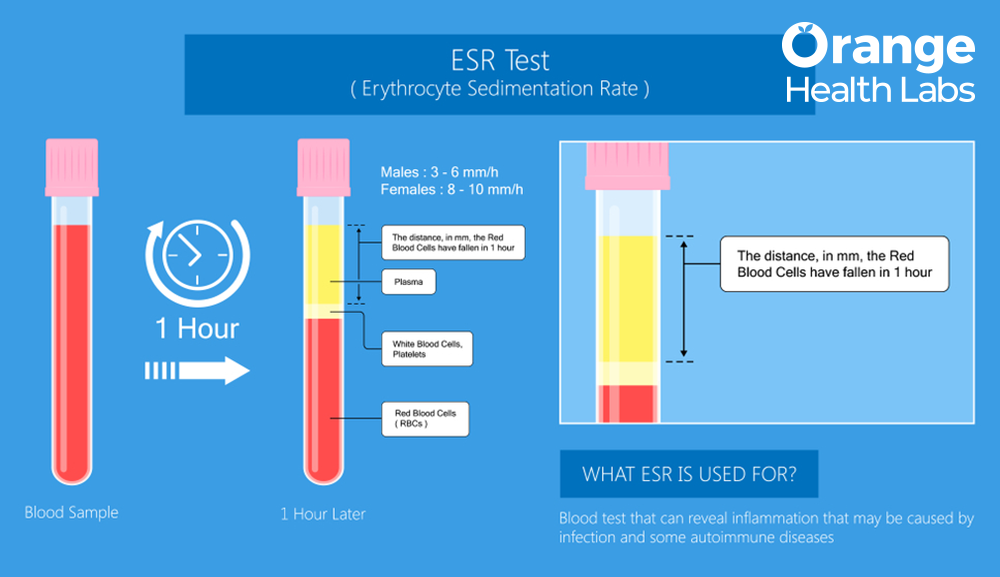
ESR stands for erythrocyte sedimentation rate. It measures how fast red blood cells (erythrocytes) sink to the bottom of a specially designed tube — called a Westergren tube — in one hour.
The result is recorded in millimeters per hour (mm/hr). The faster the cells settle, the higher the ESR number.
When inflammation is present in the body, certain proteins — particularly fibrinogen and immunoglobulins — cause red blood cells to clump together into stacks (called rouleaux). These stacks are heavier and sink faster, producing a higher ESR reading.
Why Do Women Naturally Have Higher ESR Than Men?
Even in perfectly healthy women, ESR runs higher than in men. This is not a disease — it is physiology.
Several biological factors make women’s baseline ESR inherently higher. Female hormones, particularly estrogen and progesterone, influence plasma protein levels. Menstruation causes periodic shifts in blood composition. Pregnancy — especially in the third trimester — significantly raises ESR.
The standard formula used by laboratories to calculate the upper limit of normal for ESR reflects this: for females it is (age + 10) ÷ 2, while for males it is simply age ÷ 2. This means a 40-year-old woman has a higher acceptable ESR ceiling than a 40-year-old man.
ESR Normal Range for Females by Age
Understanding the normal range is essential before interpreting a high result. Labs primarily use the Westergren method.
| Age Group | Normal ESR for Females (Westergren) | Normal ESR for Males (Westergren) |
|---|---|---|
| Under 20 years | 0–10 mm/hr | 0–10 mm/hr |
| 20–50 years | 0–20 mm/hr | 0–15 mm/hr |
| Over 50 years | 0–30 mm/hr | 0–20 mm/hr |
| Pregnancy (3rd trimester) | Up to 70–80 mm/hr | N/A |
These ranges vary slightly between laboratories. Always interpret your ESR result alongside your doctor’s clinical assessment, not in isolation.
What Counts as a High ESR in Females?
Knowing the threshold helps frame the risk.
| ESR Level (Females) | Classification | What It May Indicate |
|---|---|---|
| 0–20 mm/hr (under 50) | Normal | No significant inflammation |
| 0–30 mm/hr (over 50) | Normal for age | Age-related baseline increase |
| 20–40 mm/hr | Mild elevation | Minor infection, anemia, early disease, hormonal causes |
| 40–70 mm/hr | Moderate elevation | Active infection, autoimmune disease, chronic illness |
| Above 100 mm/hr | Severe elevation | Serious infection, autoimmune disease, malignancy — urgent investigation |
An ESR above 100 mm/hr carries roughly a 90% probability that a significant underlying condition will be found on investigation, according to published clinical data.
The 14 Key Reasons Why ESR Is High in Female
Menstruation and Hormonal Fluctuations
The menstrual cycle directly affects blood composition. During menstruation, estrogen and progesterone levels shift significantly, altering plasma protein concentrations and causing a temporary rise in ESR.
This is one of the most common physiological causes of mildly elevated ESR in women of reproductive age. It is not a sign of disease.
If ESR is drawn during or immediately after a period, the result may reflect this hormonal shift rather than any pathological process.
Pregnancy
Pregnancy is one of the strongest physiological drivers of elevated ESR. As pregnancy progresses — particularly in the second and third trimesters — fibrinogen levels rise substantially as part of normal preparation for delivery.
ESR can reach 70–80 mm/hr in healthy pregnancies and is therefore not reliably diagnostic of inflammation during pregnancy.
Doctors typically rely more on C-reactive protein (CRP) than ESR during pregnancy because CRP rises and falls more rapidly and is less affected by pregnancy-related protein changes.
Anemia
Iron deficiency anemia is extremely common in women — due to menstrual blood loss, inadequate dietary iron, or pregnancy demands. It is a significant and frequently overlooked cause of elevated ESR.
When a woman is anemic, there are fewer red blood cells in the blood and the plasma composition changes. This reduced red cell concentration allows remaining cells to settle faster, producing a higher ESR reading.
Treating the underlying anemia — through iron supplementation and dietary changes — typically normalizes ESR over time.
Autoimmune Diseases
Autoimmune diseases are disproportionately common in women — affecting women at a ratio of roughly 4:1 compared to men for conditions like systemic lupus erythematosus (SLE) and rheumatoid arthritis (RA).
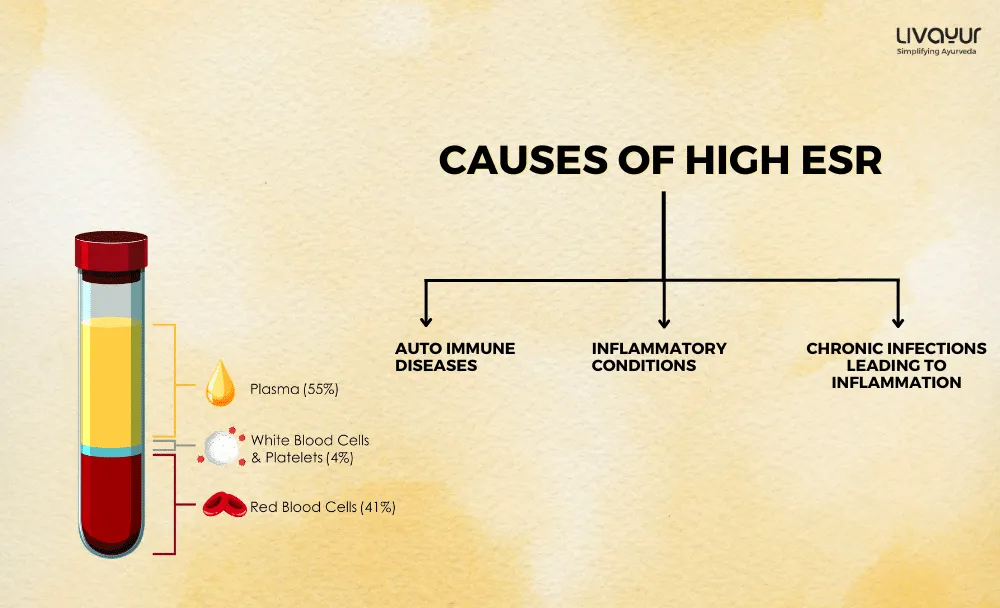
In autoimmune conditions, the immune system mistakenly attacks the body’s own tissue, generating chronic inflammation. This inflammation raises fibrinogen and other acute-phase proteins, directly driving ESR upward.
ESR is routinely used both to help diagnose these conditions and to monitor their activity over time — a falling ESR with treatment suggests the condition is responding.
Rheumatoid Arthritis
Rheumatoid arthritis (RA) is one of the most common causes of a persistently elevated ESR in women. It causes chronic inflammation of the joints, particularly the small joints of the hands, wrists, and feet.
ESR in active RA is often significantly elevated — sometimes above 60 or 70 mm/hr. It correlates broadly with disease activity, making it a useful monitoring tool alongside CRP.
Morning stiffness lasting more than an hour, symmetrical joint swelling, and fatigue alongside a high ESR should prompt evaluation for RA.
Systemic Lupus Erythematosus (SLE)
Lupus (SLE) is an autoimmune disease that causes widespread inflammation affecting the skin, joints, kidneys, brain, and other organs. It predominantly affects women of childbearing age.
During a lupus flare, ESR rises markedly. Between flares, it may remain mildly to moderately elevated.
An important clinical note: in lupus, ESR and CRP often diverge — ESR remains high while CRP is relatively lower. A sudden spike in CRP alongside high ESR in a lupus patient may suggest a concurrent infection rather than a lupus flare.
Infections
Any significant infection — bacterial, viral, or fungal — triggers an acute inflammatory response that raises ESR. Common infections in women that cause ESR elevation include urinary tract infections (UTIs), pelvic inflammatory disease (PID), tuberculosis (TB), and pneumonia.
ESR rises more slowly than CRP in response to infection (taking 24–48 hours to peak) and also falls more slowly after the infection resolves.
A very high ESR alongside fever and systemic symptoms strongly suggests active infection requiring investigation and treatment.
Thyroid Disorders
Both hypothyroidism and hyperthyroidism can cause elevated ESR in women. Thyroid conditions are significantly more common in women — particularly Hashimoto’s thyroiditis (autoimmune hypothyroidism) and Graves’ disease (autoimmune hyperthyroidism).
Thyroid-related inflammation contributes to raised acute-phase proteins. Additionally, the fatigue, joint pain, and body aches associated with thyroid dysfunction can mimic other causes of high ESR.
Checking thyroid function (TSH, T3, T4) alongside ESR helps differentiate thyroid-related elevation from other causes.
Menopause and Perimenopause
The decline in estrogen during perimenopause and menopause is linked to increased low-grade systemic inflammation. This can produce a persistently slightly elevated ESR even in the absence of specific disease.
This background inflammatory state is also why postmenopausal women face higher cardiovascular risk and bone loss — the same inflammatory pathways are involved.
ESR levels tend to rise gradually with age in women, making the age-adjusted reference formula essential for correct interpretation.
Kidney Disease
Chronic kidney disease (CKD) impairs the kidneys’ ability to filter waste and regulate blood composition. The resulting accumulation of inflammatory proteins raises ESR.
Women with diabetes, hypertension, or autoimmune conditions are at elevated risk of kidney disease. High ESR alongside raised creatinine or abnormal urine tests warrants nephrology evaluation.
Polymyalgia Rheumatica
Polymyalgia rheumatica (PMR) is an inflammatory condition predominantly affecting women over 50. It causes aching and stiffness in the shoulders, neck, upper arms, and hips — typically worse in the morning.
ESR in PMR is often dramatically elevated — frequently above 50 mm/hr and sometimes exceeding 100 mm/hr. PMR is one of the classic causes of a very high ESR in older women.
Treatment with corticosteroids (prednisolone) is typically highly effective and produces rapid improvement in both symptoms and ESR.
Malignancy (Cancer)
In a small percentage of cases, a very high or persistently elevated ESR signals an underlying malignancy. Cancers associated with markedly raised ESR include multiple myeloma, lymphoma (especially Hodgkin’s lymphoma), and some solid tumors.
Multiple myeloma produces abnormal immunoglobulins in large quantities, dramatically increasing rouleaux formation and ESR.
An ESR consistently above 100 mm/hr without an obvious benign explanation requires thorough investigation including blood protein studies, imaging, and specialist review.
Medications
Certain medications directly raise ESR as a pharmacological effect. These include oral contraceptive pills, hormone replacement therapy (HRT), minocycline, methyldopa, theophylline, vitamin A supplements, and dextran.
Conversely, aspirin, corticosteroids, and quinine can lower ESR.
If ESR elevation is noted after starting a new medication, this should be discussed with the prescribing doctor. Stopping or changing the medication may normalize ESR.
Obesity and Chronic Lifestyle Inflammation
Excess body fat — particularly visceral fat — is metabolically active and generates a chronic low-grade inflammatory state. This background inflammation consistently elevates ESR even without any specific disease.
Sedentary lifestyle, poor diet high in processed foods, chronic psychological stress, and poor sleep quality all contribute to systemic inflammation and therefore to elevated ESR.
Addressing these lifestyle factors is an important part of managing persistently mild ESR elevation.
Symptoms That Often Accompany High ESR in Women
ESR itself does not produce symptoms — it reflects inflammation driven by an underlying condition. The symptoms you experience depend on what is causing the elevation.
Common symptoms associated with high ESR in women include:
- Persistent fatigue or unusual weakness
- Joint pain, stiffness, or swelling (especially morning stiffness)
- Unexplained weight loss
- Low-grade fever that persists
- Headaches and general malaise
- Pelvic pain or abnormal menstrual bleeding (suggesting PID or endometriosis)
- Frequent or painful urination (suggesting UTI)
- Muscle aching and stiffness in the shoulders or hips (suggesting PMR)
- Skin rashes (suggesting lupus or other autoimmune conditions)
- Swollen lymph nodes
The pattern of symptoms combined with the degree of ESR elevation guides the doctor toward the likely cause.
ESR vs. CRP: What Is the Difference and Which Matters More?
ESR and CRP (C-reactive protein) are both markers of inflammation but work differently and carry different clinical meaning.
| Feature | ESR | CRP |
|---|---|---|
| What it measures | Rate of RBC settling | Concentration of a specific protein |
| Speed of response | Rises slowly (24–48 hours) | Rises rapidly (within hours) |
| Speed of normalizing | Falls slowly over days–weeks | Falls rapidly within 24–48 hours |
| Affected by pregnancy | Significantly | Less so |
| Affected by anemia | Yes | No |
| Affected by age/gender | Yes, significantly | Less so |
| Best use | Chronic conditions, monitoring | Acute infections, rapid changes |
| Used together | Frequently | Frequently |
Doctors routinely order both ESR and CRP together because they complement each other. A high ESR with a normal CRP may suggest a non-inflammatory cause (like anemia or medication). Both elevated together strongly suggests active inflammation. A high CRP with a relatively low ESR may indicate an acute early infection.
How Is High ESR Diagnosed and Investigated?
ESR elevation is a starting point, not a diagnosis. When ESR comes back high, doctors typically follow a structured investigation.
First-line tests usually ordered alongside ESR:
- Complete blood count (CBC) — checks for anemia, infection, blood cell abnormalities
- CRP — compares the two inflammation markers
- Liver and kidney function tests — assesses organ health
- Thyroid function tests (TSH, T3, T4) — rules out thyroid disorders
- Urine analysis — screens for kidney disease and UTI
- Blood glucose — assesses diabetes
Second-line tests depending on findings:
- Rheumatoid factor (RF) and anti-CCP antibodies — for rheumatoid arthritis
- ANA (antinuclear antibody) panel — for lupus and other autoimmune diseases
- Serum protein electrophoresis (SPEP) — for multiple myeloma
- X-rays or ultrasound — for joint, organ, or tissue evaluation
- Blood cultures — for suspected serious infection
The degree of ESR elevation guides urgency. A mildly elevated ESR in an otherwise well woman may simply be monitored. An ESR above 100 mm/hr demands prompt and thorough investigation.
What Is a Dangerously High ESR in Females?
Not all high ESR readings carry the same risk. Understanding the thresholds helps decide urgency.
A mild elevation of 20–40 mm/hr in a woman with no symptoms is often explained by physiological causes — recent illness, menstruation, mild anemia, or medication. Monitoring and repeating the test in 4–6 weeks is usually appropriate.
A moderate elevation of 40–70 mm/hr warrants active investigation for autoimmune disease, significant infection, or chronic illness, particularly if accompanied by symptoms.
A severe elevation above 100 mm/hr is clinically significant in almost all cases. It is associated with a 90% probability of finding a significant underlying condition — most commonly serious infection, advanced autoimmune disease, or malignancy. This level requires urgent medical evaluation.
Treatment: How Is High ESR in Females Managed?
ESR itself is not treated — the underlying cause is. Once the cause is identified and treated, ESR normalizes.
For infections: antibiotics (for bacterial infections like UTI, pneumonia, TB), antivirals, or antifungals. ESR falls as the infection clears — though more slowly than CRP.
For autoimmune diseases: disease-modifying antirheumatic drugs (DMARDs) like methotrexate for RA, hydroxychloroquine for lupus, and corticosteroids for PMR. ESR monitoring tracks whether treatment is working.
For anemia: iron supplementation, dietary iron-rich foods (red meat, leafy greens, legumes), and treating the underlying cause of blood loss.
Thyroid disorders: thyroid hormone replacement for hypothyroidism (levothyroxine), or anti-thyroid medications and sometimes radioiodine for hyperthyroidism.
For malignancy: oncology referral and treatment appropriate to the type and stage of cancer.
For lifestyle-related elevation: anti-inflammatory diet, regular moderate exercise, stress reduction, adequate sleep, and weight management.
How to Lower ESR Naturally Through Lifestyle
While medical causes must be addressed medically, lifestyle changes genuinely help reduce chronic low-grade inflammation in women with mildly elevated ESR.
Anti-inflammatory diet. A diet rich in vegetables, fruits, whole grains, legumes, oily fish (omega-3 fatty acids), and olive oil reduces systemic inflammation markers including ESR. Limiting processed food, refined sugar, and trans fats is equally important.
Regular moderate exercise. Physical activity — particularly aerobic exercise like walking, swimming, or cycling — has documented anti-inflammatory effects. Aim for 150 minutes of moderate activity per week. Excessive high-intensity exercise can temporarily raise ESR, so moderation matters.
Weight management. Reducing visceral fat directly lowers the chronic inflammatory state. Even a 5–10% reduction in body weight can produce measurable drops in inflammatory markers.
Adequate sleep. Chronic sleep deprivation raises inflammatory cytokines and CRP. Seven to nine hours of quality sleep per night supports immune regulation and reduced background inflammation.
Stress reduction. Chronic psychological stress elevates cortisol and promotes low-grade systemic inflammation. Practices like mindfulness, yoga, and regular outdoor activity help reduce stress-driven inflammation.
Quit smoking. Smoking increases fibrinogen levels — one of the main proteins that elevates ESR — and promotes systemic inflammation. Quitting reduces ESR over time.
Stay well hydrated. Proper hydration supports blood viscosity and overall immune function. Dehydration can concentrate blood proteins and slightly inflate ESR readings.
When Should Women See a Doctor About High ESR?
Many women wonder whether their ESR result requires urgent action. Here is a practical guide.
See a doctor promptly if:
- ESR is above 50 mm/hr without an obvious explanation
- ESR is above 100 mm/hr at any age
- ESR has been elevated across two or more blood tests over weeks or months
- High ESR is accompanied by unexplained weight loss, persistent fever, or night sweats
- You have joint pain and stiffness lasting more than one hour in the morning
- You have symptoms of UTI, pelvic pain, or suspected infection
- You have fatigue that does not improve with rest
A routine appointment is fine if:
- ESR is mildly elevated (20–40 mm/hr) in an otherwise well woman
- You are pregnant — mild-to-moderate elevation is expected
- ESR mildly elevated after a recent viral illness — repeat in 4–6 weeks
- You recently had a menstrual period and no other symptoms are present
Does a High ESR Mean Cancer?
This is one of the most common concerns women have when they see a high ESR result. The honest answer is: rarely, but it must be ruled out when the level is very high.
A mildly elevated ESR of 25–40 mm/hr in a healthy woman almost never indicates cancer. The vast majority of causes are inflammatory, infectious, hormonal, or related to anemia.
An ESR consistently above 100 mm/hr without an identified benign cause raises genuine concern for conditions like multiple myeloma, lymphoma, or solid tumors. In these situations, serum protein electrophoresis, imaging, and specialist review are essential.
Finding cancer early through investigation of a very high ESR is, in many cases, an opportunity — treatment outcomes are significantly better at earlier stages.
ESR in Women with PCOS and Endometriosis
Two common female conditions deserve specific mention in the context of elevated ESR.
Polycystic ovary syndrome (PCOS) is associated with chronic low-grade inflammation. Women with PCOS often show mildly elevated inflammatory markers including ESR, particularly those who are overweight or insulin resistant.
Endometriosis — where uterine tissue grows outside the uterus — causes significant pelvic inflammation. ESR can be elevated during active endometriosis, and chronic pelvic pain alongside a raised ESR in a woman of reproductive age is a reason to investigate further.
Frequently Asked Questions (FAQs)
Why is ESR high in female compared to male?
Women naturally have higher ESR due to hormonal factors including estrogen and progesterone levels, menstruation, and pregnancy. The accepted upper normal limit for women is calculated differently — using the formula (age + 10) ÷ 2 mm/hr — reflecting this biological difference.
What is a normal ESR level for a female?
For women under 50, ESR up to 20 mm/hr is normal. For women over 50, up to 30 mm/hr is acceptable. During pregnancy, ESR can reach 70–80 mm/hr and still be physiologically normal. Values vary slightly between labs.
What level of ESR is considered dangerously high in females?
An ESR above 100 mm/hr is clinically significant and associated with a 90% chance of finding a serious underlying condition. Values above 50 mm/hr should prompt active investigation even in the absence of clear symptoms.
Can high ESR in females be due to anemia?
Yes. Iron deficiency anemia is very common in women and directly raises ESR by altering blood composition and reducing red cell concentration. Treating anemia typically normalizes the ESR reading over time.
Can stress cause high ESR in females?
Yes. Chronic psychological stress raises cortisol and promotes systemic low-grade inflammation, which can elevate ESR. Sleep deprivation amplifies this effect. ESR usually improves as stress is managed, though persistent elevation warrants medical investigation.
Does pregnancy cause high ESR in females?
Yes, pregnancy — especially the third trimester — causes ESR to rise significantly due to increases in fibrinogen and other plasma proteins. An ESR of 50–80 mm/hr can be normal in pregnancy. CRP is a more reliable inflammation marker during pregnancy.
Can autoimmune disease cause high ESR in females?
Yes, and this is one of the most important causes. Rheumatoid arthritis, lupus, polymyalgia rheumatica, and thyroiditis all cause chronic inflammation that significantly elevates ESR. Women are far more susceptible to autoimmune diseases than men.
Is high ESR in females always serious?
No. A mildly elevated ESR is very common in women and often reflects physiological causes — menstruation, recent viral infection, mild anemia, or medication effects. However, persistently high or very high ESR values require medical evaluation to rule out serious conditions.
What tests should be done alongside ESR?
Doctors typically order CRP, a complete blood count (CBC), kidney and liver function tests, thyroid panel, urine analysis, and blood glucose alongside ESR. Additional autoimmune or malignancy panels are added based on the clinical picture and degree of elevation.
How can females naturally lower their ESR?
Treating the underlying cause is the primary approach. Lifestyle changes that help include an anti-inflammatory diet rich in vegetables and omega-3s, regular moderate exercise, weight loss if overweight, quitting smoking, adequate sleep, and stress reduction. These reduce chronic background inflammation that elevates ESR.
Conclusion
Why ESR is high in female has no single answer — it spans a spectrum from entirely normal physiology to conditions that need urgent medical attention.
Women naturally have higher ESR than men due to hormonal biology, and this baseline rises further with age, menstruation, pregnancy, and menopause.
At the mild end, causes like anemia, recent infections, contraceptive pills, and temporary hormonal shifts account for most elevated readings.
At the more serious end, autoimmune diseases like rheumatoid arthritis and lupus, chronic infections, kidney disease, thyroid disorders, polymyalgia rheumatica, and in rare cases malignancy are responsible for persistently or severely elevated ESR.
The number itself is not a diagnosis — it is a signal pointing toward something that deserves attention.
Use the ranges in this guide to understand where your result falls, discuss it with your doctor in the context of your symptoms and full blood panel, and remember that an elevated ESR is often the body’s way of flagging inflammation that can be found, treated, and resolved.


