



Why does my throat hurt at night when it feels perfectly fine during the day? This is one of the most common health questions people search for — and the answer is rarely just one thing.
Nighttime throat pain can stem from dry air, acid reflux, postnasal drip, mouth breathing, snoring, sleep apnea, allergies, infections, or even vocal strain from the day.
The position of your body during sleep, the humidity in your room, and what you ate for dinner all play a role.
Why Throat Pain Is Often Worse at Night
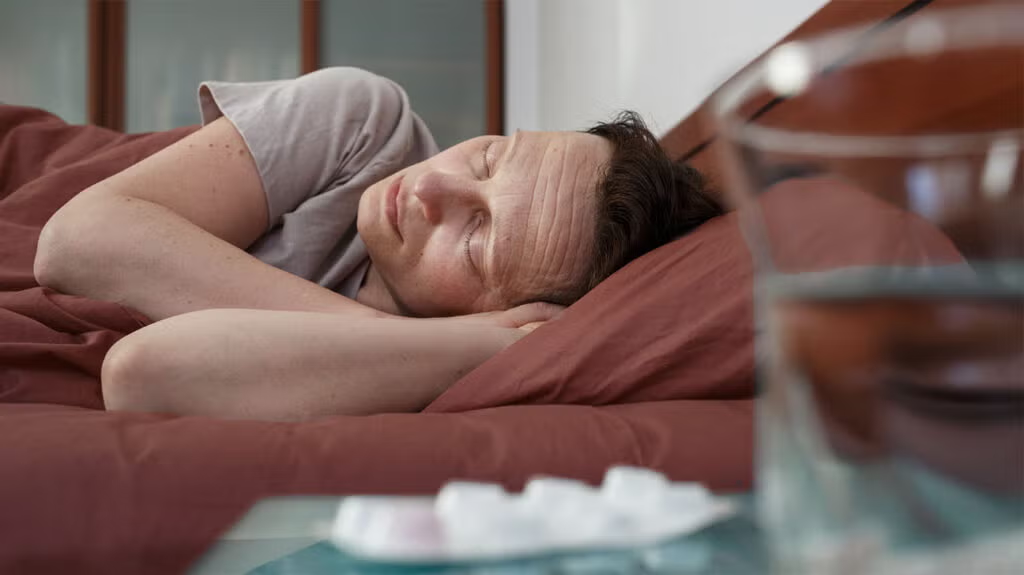
Before getting into specific causes, it helps to understand why nighttime makes throat pain feel so much more intense.
During the day, you are upright, swallowing frequently, and drinking fluids regularly. Saliva production is higher. Gravity keeps stomach acid down. Nasal mucus drains forward rather than pooling in your throat.
At night, all of that changes. You lie flat, saliva decreases, swallowing slows to almost nothing, and gravity works against you. Mucus drains backward into the throat. Stomach acid has a clear path upward. Dry indoor air goes to work on unprotected throat tissues for hours at a time.
This is why a throat that feels manageable during daylight hours can feel raw and painful by bedtime or when you wake up.
Why Does My Throat Hurt at Night? 13 Causes Explained
1. Dry Indoor Air
Dry air is one of the most common and most underestimated causes of nighttime throat pain.
Heaters in winter and air conditioners in summer strip moisture from the air in your bedroom. As you breathe through the night, your throat loses its natural layer of protective moisture. By morning — or even mid-sleep — tissues are dry, irritated, and inflamed.
The American Academy of Otolaryngology recommends maintaining bedroom humidity between 30 and 50 percent for optimal respiratory comfort. Below that, the mucous membranes lining your throat and nasal passages become vulnerable.
2. Mouth Breathing During Sleep
When your nasal passages are blocked or partially obstructed, your body automatically switches to breathing through the mouth.
Mouth breathing bypasses the nose’s natural humidifying and filtering system. Air enters your throat warm but dry, with none of the moisture protection your nose normally provides. After several hours of this, the throat becomes dry, raw, and sore.
Many people do not realize they are mouth breathers during sleep. A dry mouth upon waking is one of the clearest signs that this is happening.
3. Postnasal Drip
Postnasal drip occurs when excess mucus produced in the nasal passages drains down the back of the throat.
During the day, you swallow this mucus continuously without really noticing it. But at night when you lie down, mucus pools at the back of your throat rather than draining forward. It sits there, irritating the tissues, triggering the urge to cough or clear your throat, and causing a raw, scratchy feeling.
Postnasal drip is associated with allergies, sinus infections, colds, the flu, deviated septum, spicy foods, and changes in weather. It is one of the most common reasons a sore throat gets significantly worse at night.
4. Acid Reflux and GERD
Acid reflux — clinically known as gastroesophageal reflux disease (GERD) — is one of the most overlooked causes of nighttime throat pain, particularly in people who do not experience classic heartburn symptoms.
When you lie flat, gravity no longer helps keep stomach acid in the stomach. It flows upward through the esophagus and into the throat, where it burns and irritates the delicate mucosal lining. This is called laryngopharyngeal reflux (LPR), sometimes called silent reflux, because it often occurs without the burning chest sensation most people associate with acid reflux.
Research has found that patients with nighttime GERD symptoms are significantly more likely to report throat irritation than those with only daytime reflux. Eating a large or spicy meal close to bedtime dramatically increases the risk.
5. Allergies
Indoor allergens are active year-round and can be particularly concentrated in your bedroom.
Dust mites live in mattresses, pillows, and bedding. Pet dander accumulates on surfaces. Mold spores circulate through poorly ventilated rooms. When you spend seven to nine hours sleeping in a space loaded with allergens, your immune system reacts by producing histamine, triggering mucus overproduction, postnasal drip, and throat inflammation.
Outdoor allergens like pollen can also cause throat pain that peaks at night, as allergen particles that accumulated in your nasal passages during the day continue to trigger reactions after you go to bed.
6. Snoring
Snoring is not just a noise problem — it is a physical process that damages throat tissues night after night.
When you snore, the soft tissues at the back of your throat — the soft palate, uvula, and pharyngeal walls — vibrate repeatedly at high intensity. This ongoing micro-trauma irritates and inflames the lining of the throat. Combined with the dry, open-mouth breathing that almost always accompanies snoring, the result is a raw, sore throat that is worst in the morning.
Habitual snoring affects roughly 40 percent of adult men and 24 percent of adult women, making it one of the most common causes of morning throat discomfort in the adult population.
7. Obstructive Sleep Apnea (OSA)

Sleep apnea is a more serious condition in which the airway collapses repeatedly during sleep, causing brief pauses in breathing that the body corrects by partially waking up and gasping for air.
Each time this happens, the throat tissues are strained. The repeated open-mouth gasping dries out the throat severely. People with untreated obstructive sleep apnea almost universally report waking up with a dry, painful throat — often alongside fatigue, morning headaches, and difficulty concentrating during the day.
If you snore loudly, wake up gasping, or feel unrefreshed no matter how much sleep you get, sleep apnea is worth investigating. A sleep study provides a definitive diagnosis.
8. Viral Infections
The common cold, influenza, COVID-19, and mononucleosis (mono) are all viral infections that cause sore throats.
These sore throats typically hurt throughout the day, but the pain often intensifies at night. Two reasons drive this: postnasal drip increases when lying down, bathing the already-irritated throat in more mucus, and any pain medication taken during the day may wear off by bedtime, removing that layer of symptom management.
Viral throat infections usually resolve within five to seven days. Antibiotics do not work against viruses and should not be used unless a bacterial infection is confirmed.
9. Strep Throat
Strep throat is a bacterial infection caused by group A Streptococcus. Unlike most sore throats, which build gradually, strep throat pain often comes on suddenly and severely.
It is characterized by intense pain, difficulty swallowing, red and swollen tonsils — sometimes with white patches or streaks of pus — a high fever, swollen lymph nodes in the neck, and no cough (the absence of cough is actually a distinguishing feature of strep).
Strep throat requires antibiotic treatment. Left untreated, it can lead to complications including rheumatic fever and kidney inflammation. A throat swab performed by a healthcare provider confirms the diagnosis quickly.
10. Tonsillitis and Tonsil Stones
Tonsillitis is an inflammation of the tonsils — the soft tissue pads at the back of the throat — usually caused by viral or bacterial infection. Symptoms include a very sore throat, difficulty swallowing, swollen and red tonsils, fever, and swollen neck glands.
Tonsil stones (tonsilloliths) are a different but related issue. They form when food debris, bacteria, and mucus collect in the small crevices of the tonsils and calcify into small, hard formations. They can cause a chronic low-grade sore throat, the sensation of something stuck in the throat, bad breath, and throat discomfort — all of which tend to feel worse at night.
Postnasal drip feeds directly into tonsil stone formation by providing a constant stream of mucus and bacteria to the tonsil tissue.
11. Dehydration

Going several hours without drinking water during sleep means your body — including your throat — gradually loses moisture.
Dehydration thickens mucus, reduces saliva production, and leaves throat tissues dry and vulnerable. Alcohol in the evening significantly worsens this effect, as does caffeine consumed later in the day. A salty meal at night also draws water from your tissues and increases the likelihood of waking up with a dry, scratchy throat.
Mild dehydration can produce enough throat discomfort to wake you from sleep or leave you reaching for water as soon as your eyes open in the morning.
12. Vocal Strain
If you have talked a great deal during the day — giving presentations, teaching, speaking loudly over noise, or even singing — your vocal cords and surrounding throat tissues can become inflamed and fatigued.
This inflammation does not always make itself known immediately. It often peaks a few hours after the vocal strain occurred, meaning the soreness appears or worsens by evening or at bedtime. Teachers, coaches, call center workers, and performers are particularly susceptible.
Vocal strain-related throat pain typically improves with rest and hydration and does not come with fever or other infection symptoms.
13. Medications and Thyroid Issues
Certain medications have throat dryness as a side effect. Antihistamines — commonly taken for allergies before bed — reduce mucus production and can significantly dry out throat tissues. Some blood pressure medications and antidepressants also reduce saliva flow.
Less commonly, thyroid disorders can cause throat discomfort and swallowing difficulties. An enlarged thyroid gland (goiter) can press against the throat, causing a persistent sensation of tightness or soreness that is not tied to infection or environmental factors.
If you cannot identify an obvious cause for your throat pain and it persists for more than two weeks, thyroid function testing is worth discussing with your doctor.
Causes at a Glance: Quick Reference Table
| Cause | Why It Worsens at Night | Key Symptom |
|---|---|---|
| Dry air | Hours of exposure with no humidification | Scratchy, dry throat on waking |
| Mouth breathing | Bypasses nasal humidification | Dry mouth, parched throat |
| Postnasal drip | Mucus pools when lying flat | Need to cough or clear throat |
| Acid reflux / GERD | Gravity no longer contains acid | Burning sensation in throat |
| Allergies | Allergen accumulation in bedroom | Itchy eyes, sneezing, runny nose |
| Snoring | Tissue vibration and open-mouth drying | Rawness, worse in morning |
| Sleep apnea | Repeated airway collapse + gasping | Fatigue, headache, dry throat |
| Viral infection | Pain meds wear off, postnasal drip increases | Fever, body aches, runny nose |
| Strep throat | Same as viral but more severe | Sudden intense pain, no cough |
| Tonsillitis / stones | Ongoing inflammation or foreign body sensation | Difficulty swallowing |
| Dehydration | Hours without fluids + saliva drops | Dry mouth, sticky feeling |
| Vocal strain | Inflammation peaks hours after use | Hoarseness, worsens by evening |
| Medication side effects | Antihistamines reduce moisture overnight | Dry mouth and throat |
How to Know Which Cause Is Yours

Not every sore throat at night has the same origin. The pattern of your symptoms is the most useful diagnostic tool you have.
If Your Throat Is Only Sore in the Morning
This points strongly toward environmental causes — dry air, mouth breathing, or snoring. The throat is fine during the day because you are upright, hydrated, and the ambient air conditions are different. The bedroom environment is doing damage while you sleep.
If Your Throat Hurts More After Eating
This is a classic sign of acid reflux. If throat pain increases after meals, especially dinner, or if you notice a faint burning sensation or sour taste, GERD or LPR is the likely culprit.
If You Also Have a Stuffy Nose and Urge to Clear Your Throat
Postnasal drip from allergies or a sinus condition is almost certainly involved. The throat irritation is secondary to what is happening in your nasal passages.
If Throat Pain Comes With Fever, Body Aches, or Swollen Glands
This points to an infection — either viral (cold, flu, mono) or bacterial (strep). These require different treatment approaches and a medical evaluation is advisable, especially if symptoms are severe or last more than a week.
If You Snore and Wake Feeling Exhausted
Sleep apnea is a serious possibility. This combination of symptoms — chronic snoring, persistent throat pain, morning exhaustion, and difficulty staying alert during the day — warrants a sleep study.
How to Relieve Throat Pain at Night: Proven Strategies
Use a Humidifier in Your Bedroom
Adding moisture back to the air is the single most effective environmental intervention for dry-air-related throat pain.
A cool-mist humidifier set to maintain 40 to 50 percent humidity protects the mucous membranes of your throat and nasal passages throughout the night. Keep the unit clean — a dirty humidifier can circulate mold and bacteria.
Gargle With Salt Water Before Bed
Salt water has been shown to reduce throat inflammation and flush irritants from throat tissues. Dissolve half a teaspoon of salt in eight ounces of warm water and gargle for 30 to 60 seconds before spitting.
This works best for throat pain caused by infection, postnasal drip, or general irritation. It does not treat the underlying cause but provides meaningful symptom relief.
Elevate Your Head While Sleeping
Raising the head of your bed by four to six inches — or using a wedge pillow — uses gravity to keep stomach acid in the stomach and reduce postnasal drip pooling in the throat.
This single adjustment significantly helps both GERD-related and postnasal drip-related nighttime throat pain. It is one of the most recommended interventions by ENT physicians and gastroenterologists alike.
Sleep on Your Side
Sleeping on your back promotes mouth breathing, snoring, postnasal drip pooling, and acid reflux — all at once.
Side sleeping reduces all of these risks simultaneously. It keeps the airway more open, reduces snoring vibration, helps mucus drain forward rather than pooling at the back of the throat, and reduces the likelihood of acid reaching the esophagus. A body pillow can help you maintain this position through the night.
Stay Hydrated Throughout the Day
The best time to prepare your throat for a comfortable night is during daylight hours, not just before bed.
Drinking adequate water throughout the day keeps throat tissues hydrated, thins mucus, and maintains saliva production. Aim for at least eight glasses of water daily. Avoid alcohol and caffeine in the evening, as both contribute to nighttime dehydration and drying of the throat.
Drink Warm Liquids Before Bed
Warm herbal tea with honey — particularly chamomile, ginger, or throat coat blends — soothes throat tissues, reduces inflammation, and helps clear mucus before you sleep.
Honey has mild antibacterial and anti-inflammatory properties and has been shown in research to help soothe throat irritation. Avoid teas with caffeine, which will dehydrate you and interfere with sleep.
Use Saline Nasal Spray or Rinse
A saline nasal spray or neti pot rinse before bed clears allergens, thins mucus, and reduces postnasal drip during the night.
This is particularly effective if your throat pain is driven by allergies or sinus congestion. It is safe to use daily and does not carry the rebound congestion risk associated with decongestant nasal sprays.
Adjust What and When You Eat
Eating a large meal within two to three hours of bedtime significantly increases the risk of acid reflux reaching the throat during sleep.
Avoid spicy foods, citrus, tomato-based sauces, alcohol, fried foods, and chocolate in the evening — these are the foods most strongly associated with triggering reflux. If acid reflux is persistent, an over-the-counter proton pump inhibitor or H2 blocker may provide significant relief, though a doctor should guide medication use.
Address Allergens in Your Bedroom
Wash bedding in hot water weekly to kill dust mites. Keep pets out of the bedroom. Use allergen-proof pillow and mattress covers. Vacuum the room regularly and consider an air purifier with a HEPA filter.
Reducing the allergen load in the space where you spend seven to nine hours every night makes a substantial difference in allergy-triggered throat inflammation.
Try Throat Lozenges at Night
Sugar-free lozenges containing zinc, menthol, or numbing agents like benzocaine can provide local relief from throat discomfort at bedtime.
They stimulate saliva production, which adds moisture to the throat, and can reduce the sensation of rawness and irritation enough to help you fall asleep more comfortably.
Home Remedies vs Professional Treatments
| Approach | Best For | How Quickly It Helps |
|---|---|---|
| Humidifier | Dry air, mouth breathing | 1 to 2 nights |
| Salt water gargle | Infection, irritation | Same night |
| Head elevation | GERD, postnasal drip | 1 to 3 nights |
| Side sleeping | Snoring, reflux, postnasal drip | Same night |
| Saline nasal rinse | Allergies, postnasal drip | Same to next night |
| Honey and warm tea | General soreness, mild infection | Same night |
| Antihistamines | Allergies | 1 to 2 days |
| Over-the-counter antacids | GERD, LPR | Same night to 1 day |
| Prescription PPIs / H2 blockers | Chronic GERD | 1 to 2 weeks |
| Antibiotics | Strep throat, bacterial infection | 24 to 48 hours |
| CPAP therapy | Sleep apnea | 1 to 2 weeks |
| Allergy immunotherapy | Chronic allergic rhinitis | Weeks to months |
When to See a Doctor
Most nighttime sore throats are benign and resolve with the home strategies listed above. However, some situations require professional evaluation.
See a doctor promptly if your sore throat is severe and comes on very suddenly, you have a fever above 101°F (38.3°C), you have difficulty swallowing or breathing, you notice swollen lymph nodes in your neck, your throat pain has lasted more than seven to ten days without improvement, you see white patches or pus on your tonsils, you are waking up gasping for breath or your partner reports you stop breathing during sleep, or your throat pain keeps returning every few weeks.
These symptoms can indicate strep throat, severe tonsillitis, sleep apnea, peritonsillar abscess, or less commonly, more serious conditions of the throat or thyroid that need a medical diagnosis.
Throat Pain at Night in Children vs Adults
Nighttime throat pain affects both age groups but often for different reasons.
| Factor | Children | Adults |
|---|---|---|
| Most common cause | Viral infection, tonsillitis | Dry air, GERD, snoring |
| Strep frequency | Higher | Lower |
| Sleep apnea | Often from enlarged tonsils | Often from obesity, anatomy |
| Allergen triggers | School environment + home | Home environment, pets |
| GERD contribution | Less common | Very common |
| When to see a doctor | Sooner — complications more likely | If symptoms persist beyond 1 week |
Children with recurring tonsillitis or suspected sleep apnea from enlarged tonsils should be evaluated by a pediatric ENT, as tonsillectomy is a common and effective solution in this age group.
Lifestyle Factors That Make Nighttime Throat Pain More Likely
Several everyday habits and choices increase the risk of waking up with a sore throat. Knowing these patterns helps you make targeted changes.
Smoking or Secondhand Smoke Exposure
Tobacco smoke is a direct irritant to throat tissues. Smokers are consistently more prone to sore throats, more susceptible to respiratory infections, and heal more slowly when throat irritation occurs.
Even secondhand smoke exposure in a shared living space can contribute to chronic throat irritation that peaks at night when the body is no longer actively filtering out environmental pollutants.
Alcohol Before Bed
Alcohol relaxes the muscles of the throat and airway, dramatically increasing the likelihood of snoring and airway collapse. It also dehydrates the body and reduces the production of protective saliva.
Even one or two drinks in the evening can meaningfully worsen nighttime throat pain, particularly in people already prone to snoring or acid reflux.
Talking Excessively Without Rest
Professional voice users — teachers, salespeople, public speakers, coaches, singers — are at high risk for vocal fatigue-related throat pain.
The remedy is simple in theory but hard to enforce in practice: rest your voice, stay hydrated throughout the day, avoid whispering (which strains the cords more than speaking normally), and use a microphone when possible rather than projecting over noise.
Sleeping in Rooms With Poor Ventilation
Poor air circulation allows allergens, dust, mold spores, and pollutants to concentrate in your bedroom over time. Running a fan to circulate air, opening a window when weather allows, and using an air purifier all reduce the concentration of irritants you breathe through the night.
Preventing Nighttime Throat Pain: A Simple Evening Routine
Building a consistent pre-bed routine significantly reduces the frequency and severity of nighttime throat pain.
Finish eating at least two to three hours before bed. Drink a final glass of water or warm herbal tea. Rinse your nasal passages with saline spray. Run your humidifier and check that it is clean. Take any prescribed allergy or reflux medication as directed. Sleep on your side with your head slightly elevated. Keep the bedroom door closed to reduce allergen entry and maintain stable humidity.
These steps address the most common causes simultaneously — GERD, postnasal drip, dry air, and allergen exposure — and take no more than ten minutes to complete.
Frequently Asked Questions (FAQs)
Why does my throat hurt at night but not during the day ?
During the day, you are upright, swallowing frequently, and breathing through your nose. At night, lying flat causes mucus pooling, acid reflux, mouth breathing, and dry air to affect your throat without interruption.
Can dry air alone cause throat pain at night?
Yes. Spending hours breathing dry air strips protective moisture from your throat lining, leaving it raw, scratchy, and inflamed. A bedroom humidifier set to 40 to 50 percent humidity usually resolves this within one to two nights.
Is nighttime throat pain a sign of acid reflux?
It can be. Acid reflux and silent reflux (LPR) often cause throat burning and rawness that is worse after meals and when lying down, even without classic heartburn in the chest.
How do I know if my sore throat is from allergies or an infection?
Allergies typically cause itchy eyes, sneezing, and a runny nose alongside the throat irritation, with no fever. Infections usually include fever, body aches, and worsening pain with swallowing.
Can snoring cause a sore throat?
Yes. The constant vibration of soft tissue in the throat during snoring irritates and inflames the lining. Snoring-related throat pain is typically worst first thing in the morning and often comes with a dry mouth.
Should I be worried about throat pain only at night?
In most cases, nighttime-only throat pain is caused by dry air, mouth breathing, or postnasal drip and is not serious. However, if it lasts more than a week, includes fever or difficulty swallowing, or is accompanied by fatigue and gasping during sleep, see a doctor.
What is the fastest remedy for a sore throat at night?
Salt water gargling, drinking warm honey tea, and using throat lozenges provide the fastest same-night relief. Running a humidifier and sleeping on your side with your head elevated also reduce symptoms by morning.
Can sleep apnea cause throat pain at night?
Yes. Sleep apnea causes repeated airway collapse and open-mouth gasping throughout the night, severely drying the throat tissues. A persistently sore, dry throat combined with fatigue and loud snoring is a classic sign of untreated sleep apnea.
What foods make throat pain at night worse?
Spicy foods, citrus, tomato-based sauces, alcohol, fried foods, and chocolate all trigger or worsen acid reflux, which inflames the throat during sleep. Eating any large meal within two to three hours of bed also increases the risk.
When is a sore throat at night an emergency?
Seek emergency care if throat pain makes it difficult to breathe or swallow completely, if you are drooling because swallowing is impossible, or if you develop a rapidly swelling sensation in the throat. These can indicate a severe infection or abscess requiring immediate medical treatment.
Conclusion
Why does my throat hurt at night? Because sleep creates a unique set of conditions — lying flat, reduced saliva, dry air, hours without water, and slowed swallowing — that make your throat more vulnerable to irritation than at almost any other time of day.
The causes range from completely harmless and easy to fix, like dry bedroom air, to conditions that genuinely need medical attention, like sleep apnea or strep throat.
The good news is that most nighttime throat pain responds quickly to targeted changes: a humidifier, side sleeping, head elevation, saline rinse, and adjusting when and what you eat.
Start with the simplest fixes, track your patterns, and if pain persists beyond a week or comes with worrying symptoms, get a proper evaluation.
Your throat — and your sleep — deserve it.


