

Why does my jaw click when I chew? If you have been asking yourself this question, you are not alone. Millions of people hear a pop, snap, or click every time they bite into food.
While it can feel alarming, it is usually a sign that your temporomandibular joint (TMJ) is under some stress.
What Is the Temporomandibular Joint (TMJ)?
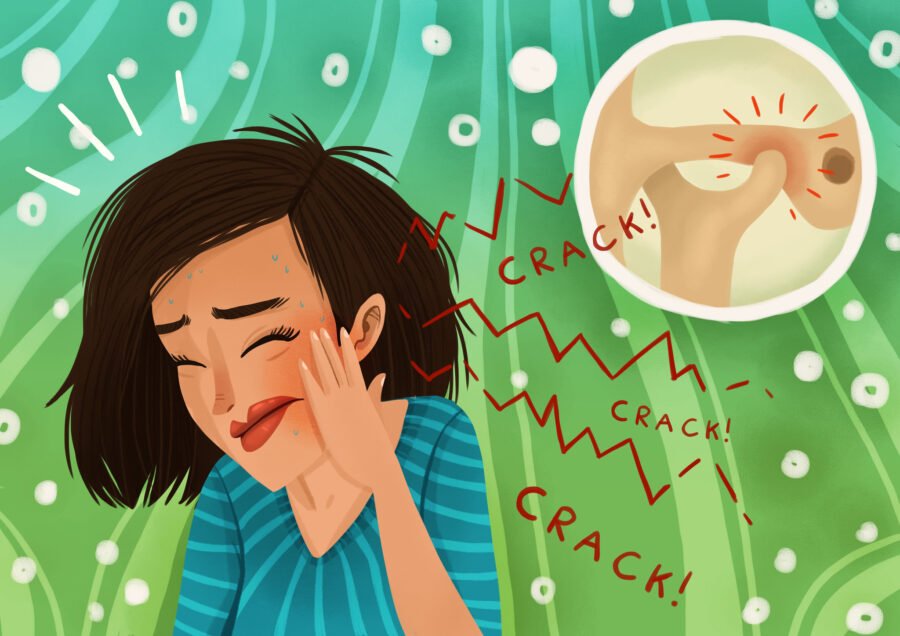

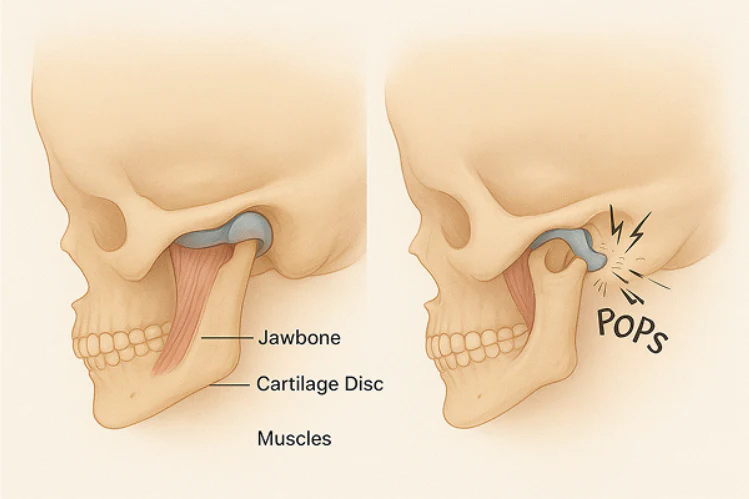
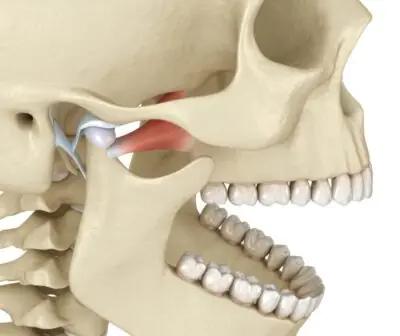
Your jaw does not move in a straight line. It works on a hinge-and-glide system powered by the temporomandibular joint, one on each side of your face just in front of your ears.
The TMJ connects your lower jawbone (mandible) to your skull. A small disc of cartilage sits inside the joint to cushion movement and keep everything running smoothly.
When this disc, the surrounding muscles, or the joint itself gets irritated or moves out of position, you start to hear that familiar click or pop every time you chew.
What Does “Jaw Clicking” Actually Mean?
Jaw clicking is the sound produced when the joint or the cartilage disc inside it does not move in a perfectly smooth path. Think of it like a door hinge that needs oiling.
There are two main types of jaw clicking. The first happens when you open your mouth very wide, like during a yawn. This is usually harmless. The second happens repeatedly when you chew, speak, or open and close your mouth. This second type is the one that signals a potential TMJ disorder (also called TMD).
Not every click is painful, but every click worth paying attention to.
The 7 Most Common Causes of Jaw Clicking When You Chew
Understanding the root cause is the first step toward relief. Here are the most frequently seen reasons.
1. TMJ Disc Displacement
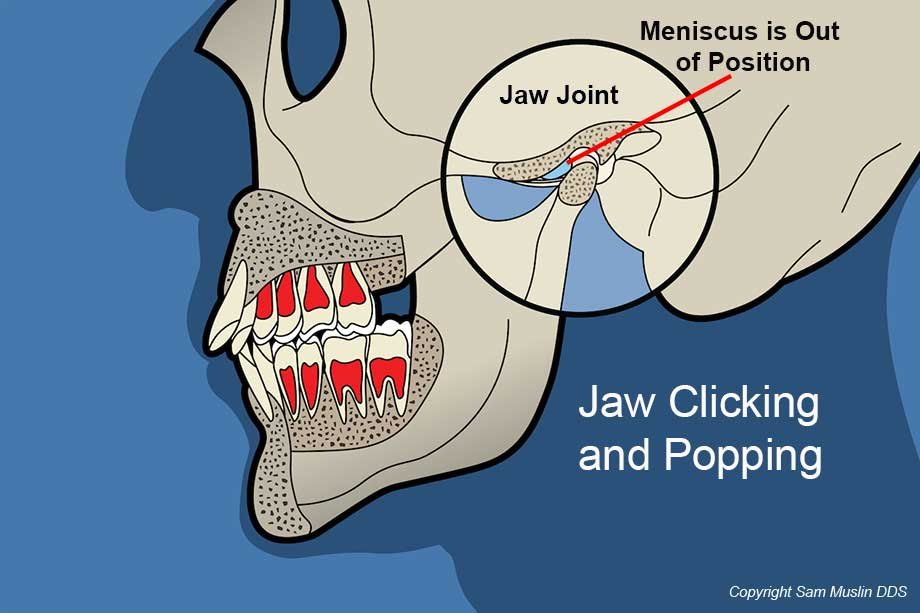
The small cartilage disc inside your joint can slip slightly out of its normal position. When your jaw moves during chewing, the bone has to ride over this displaced disc, creating the classic clicking sound.
This is the single most common structural reason for jaw clicking. It can happen gradually over time or suddenly after an injury.
2. Bruxism (Teeth Grinding and Clenching)
Bruxism means grinding or clenching your teeth, often during sleep or periods of stress. Most people do not even realize they are doing it.
This constant pressure wears down cartilage, inflames muscles, and slowly pulls your jaw joint out of alignment. Over time, bruxism is one of the leading causes of both TMD and jaw clicking.
3. Jaw Misalignment (Malocclusion)
When your upper and lower teeth do not come together correctly, the jaw compensates by shifting its movement path. This uneven bite pattern puts abnormal stress on the joint.
Missing teeth, crooked teeth, or an uneven bite can all create malocclusion. The longer it goes uncorrected, the more wear accumulates on the TMJ.
4. Stress and Muscle Tension
Stress does more to your jaw than most people realize. When you are anxious, you tighten the muscles around your jaw and neck without being aware of it.
This chronic muscle tension restricts smooth joint movement and causes the surrounding tissues to become inflamed. The result is clicking, stiffness, and sometimes dull aching pain that comes and goes throughout the day.
5. Arthritis in the Jaw Joint
Osteoarthritis and rheumatoid arthritis can both affect the TMJ. As cartilage breaks down, the surfaces of the joint become rough and uneven.
Movement across these rough surfaces produces grinding, crackling, or clicking noises. Arthritis-related jaw clicking tends to worsen gradually and is often accompanied by stiffness in the morning.
6. Jaw Injuries and Trauma
A hit to the face, a car accident, or even biting down hard on something unexpectedly can damage the joint structures. Trauma can displace the disc or cause small fractures in the joint area.
Even injuries from years ago can resurface as jaw clicking because the joint may never have fully healed or realigned properly.
7. Joint Hypermobility
Some people naturally have joints that move beyond the normal range. This condition, sometimes linked to Ehlers-Danlos syndrome or generalized hypermobility, affects roughly 10 in every 5,000 people.
When the jaw joint is hypermobile, the disc and surrounding tissues struggle to stay in their correct positions during normal chewing motion, leading to frequent clicking or popping.
Symptoms That Often Come With Jaw Clicking
Jaw clicking rarely travels alone. It usually brings a few companions.
| Symptom | How Common |
|---|---|
| Jaw pain or soreness when chewing | Very common |
| Headaches or temple pain | Common |
| Earache or ringing in the ears | Common |
| Facial pain or pressure | Moderate |
| Neck and shoulder stiffness | Moderate |
| Difficulty opening mouth fully | Less common |
| Jaw locking open or closed | Less common |
If you are experiencing three or more of these symptoms alongside jaw clicking, it is worth consulting a dentist or TMJ specialist.
When Is Jaw Clicking Normal vs. a Problem?

Not every click is a crisis. Here is a simple way to think about it.
Likely harmless: A single click when you yawn very wide, no pain, no other symptoms, and it happens only occasionally.
Worth monitoring: Clicking that happens every single time you chew, even without pain. The habit of ignoring painless clicking is one reason many people end up needing treatment later.
See a professional: Clicking combined with jaw pain, headaches, ear pain, difficulty chewing, or a jaw that feels like it locks or gets stuck. These are signs that the joint is under real stress and the problem is likely getting worse, not better.
How Is Jaw Clicking Diagnosed?
A dentist or oral and maxillofacial specialist will typically begin with a physical exam. They will ask you to open and close your mouth while they feel the joint area for movement patterns.
Imaging can include dental X-rays to assess bone structure, an MRI to look at the disc and soft tissue, or a CT scan for detailed bone analysis.
Early diagnosis matters because mild TMD is far easier and less expensive to treat than advanced joint damage.
9 Easy Home Remedies to Relieve Jaw Clicking
Many people find significant relief through consistent home care before needing any professional treatment.
Eat Soft Foods
Switch to foods that require minimal chewing force for one to two weeks. Yogurt, mashed potatoes, scrambled eggs, soup, and soft fish are ideal.
Hard, crunchy, or chewy foods like raw carrots, bagels, tough meats, and chewing gum keep the joint under constant strain. Giving your jaw a rest is often the fastest first step toward relief.
Apply Warm and Cold Compresses
Apply a warm, moist compress to the jaw area for 10 minutes to relax tight muscles. Then switch to a cold pack for 5 minutes to reduce any inflammation.
Alternating warm and cold compresses two to three times a day can reduce swelling, ease muscle tension, and improve joint mobility over days to weeks.
Gentle Jaw Exercises
Simple exercises help restore smooth movement and reduce tension. Try slowly opening your mouth while pressing your tongue gently to the roof of your mouth, then close slowly.
Another effective exercise is the side-to-side jaw slide. Move your lower jaw slowly from left to right in a controlled, gentle motion five times each direction. Do this twice daily.
Jaw Massage
Use two fingers to gently massage the area just in front of your ear in slow circular motions. Do this with your mouth slightly open and then repeat with your mouth closed.
A few minutes of massage two to three times a day can reduce muscle tightness, improve circulation to the joint, and noticeably reduce clicking frequency over one to two weeks.
Correct Your Posture
Poor posture, especially forward head posture from looking at screens, pulls the entire jaw out of alignment. Your neck and jaw are directly connected through a chain of muscles.
Keep your screen at eye level, sit with your back straight, and check that you are not unconsciously jutting your chin forward while working or reading.
Stop Chewing Gum
Chewing gum keeps the jaw in constant repetitive motion. For someone with an already irritated TMJ, gum chewing is like running on an injured ankle.
Cut out gum entirely until your symptoms improve. You will likely notice a reduction in clicking and jaw fatigue within just a few days.
Reduce Stress
Since stress is a major driver of jaw clenching and muscle tension, managing stress directly targets one root cause of jaw clicking. Deep breathing exercises, progressive muscle relaxation, and short daily meditation sessions all help.
Even a 10-minute walk outside can lower cortisol levels and reduce the automatic jaw-tightening response that many people experience when stressed.
Take OTC Anti-Inflammatories Short Term

Ibuprofen can reduce inflammation around the jaw joint and ease soreness. It should be used short term only, typically one to two weeks maximum, and only as a bridge while you address the underlying cause.
Always follow dosage instructions and consult a pharmacist or doctor if you have any medical conditions or take other medications.
Sleep Position Adjustment
Sleeping on your side puts uneven pressure on one jaw joint night after night. Over months and years, this positional pressure can contribute to joint dysfunction.
Try sleeping on your back with a supportive pillow that keeps your neck in a neutral position. Back sleeping removes the constant one-sided compression that side sleeping creates.
Professional Treatments for Jaw Clicking
When home remedies are not enough, professional options are effective and often non-surgical.
Custom Night Guards (Occlusal Splints)
A dentist creates a custom-fitted mouthguard you wear while sleeping. It prevents teeth grinding, reduces clenching force, and holds the jaw in a more neutral position.
Night guards are one of the most widely recommended first-line treatments for bruxism-related jaw clicking. They are non-invasive and highly effective for many patients.
Physical Therapy
A physical therapist trained in jaw disorders will work on posture correction, muscle stretching, joint mobilization, and strengthening exercises specific to your jaw mechanics.
Physical therapy is particularly effective when muscle tension and posture problems are driving the joint dysfunction alongside disc issues.
Orthodontic Treatment
When malocclusion is the core problem, correcting the bite through braces or clear aligners removes the uneven stress causing joint strain. This is a longer-term solution but often a permanent one.
Medications
Beyond OTC options, a doctor may prescribe muscle relaxants for severe tension, low-dose antidepressants for chronic pain management, or corticosteroid injections directly into the joint to reduce severe inflammation.
Botox Injections
Botox injected into the masseter muscles (the large chewing muscles) reduces their ability to clench forcefully. This is increasingly used for bruxism-related TMD and jaw clicking.
Effects last three to six months and can significantly reduce joint stress when grinding is the primary cause.
Arthrocentesis and Surgery
For severe, unresponsive cases, arthrocentesis (joint lavage using sterile fluid) can clear debris and reduce inflammation. Open joint surgery is rare but available for cases involving structural joint damage.
Surgery is always a last resort after conservative treatments have been tried thoroughly.
Foods to Avoid and Foods That Help
Your diet plays a direct role in how much daily stress your jaw absorbs.
Foods to avoid:
- Bagels, crusty bread, hard rolls
- Raw carrots, celery, apples
- Tough steaks, jerky, chewy candies
- Chewing gum (any kind)
- Ice chewing
- Hard nuts and seeds
Foods that support jaw healing:
- Leafy greens and cooked vegetables
- Fatty fish rich in omega-3s (salmon, sardines)
- Turmeric and ginger for natural anti-inflammatory support
- Soft fruits like bananas, berries, and melon
- Eggs, yogurt, and smooth nut butters
- Magnesium-rich foods like avocado and dark chocolate (in moderation)
Jaw Clicking in Children and Teenagers
Jaw clicking is not exclusive to adults. Research shows that one in ten young people also experience TMJ-related noises. In children and teens, the causes often include rapidly changing jaw structure, stress-related grinding during school periods, sports injuries, and thumb-sucking habits that alter bite development.
Parents should not dismiss jaw clicking in children as growing pains. An early evaluation can prevent small alignment issues from becoming significant joint problems in adulthood.
How Jaw Clicking Progresses Without Treatment
Many people live with jaw clicking for years without acting on it. Understanding how the condition progresses helps explain why early care matters.
Stage one is intermittent clicking with no pain. The disc is slightly displaced but still partially functional. Most home remedies work very well at this stage.
Stage two is frequent clicking with occasional soreness or tightness. The disc displacement is more consistent. Home care can still help but professional guidance speeds recovery.
Stage three is clicking with regular pain, headaches, or ear symptoms. The joint is under chronic stress. Professional treatment is typically needed at this point.
Stage four is reduced clicking but severe stiffness or locking. This can actually mean the disc has shifted so far it is no longer making contact during movement. This stage often requires more advanced intervention.
The Role of Posture in Jaw Health
Most people do not connect their desk posture to their jaw problems. However, the jaw, neck, and shoulder muscles are all part of the same myofascial chain.
Forward head posture, where your ears are in front of your shoulders instead of aligned with them, shifts the entire resting position of your jaw backward. This subtle backward shift adds compression to the TMJ every single hour you are awake.
Correcting screen height, using a lumbar support cushion, and building awareness of head position are low-cost changes that can dramatically reduce the daily stress load on your jaw joint.
Can Jaw Clicking Go Away On Its Own?
For some people, yes. If the clicking is mild, occasional, and caused by a short-term stressor like a difficult week at work or a brief period of poor sleep, it may resolve on its own once those factors are removed.
However, clicking that has persisted for more than two to four weeks, or that is accompanied by any other symptoms, is unlikely to resolve without some form of intervention. The cartilage disc does not move back into position spontaneously in most cases once it has displaced.
Early care almost always leads to better outcomes than waiting.
A Quick Self-Check: Is Your Jaw Clicking Serious?

Answer these four questions honestly.
- Does your jaw click every single time you chew, not just occasionally?
- Do you wake up with jaw soreness or headaches?
- Does your jaw ever feel stiff, stuck, or limited in how far it opens?
- Do you have ear pain, facial pain, or neck tension alongside the clicking?
If you answered yes to two or more, it is time to see a dental professional. These are signs that your TMJ is under chronic stress, and the issue is more than occasional joint noise.
Summary Table: Jaw Clicking at a Glance
| Factor | Details |
|---|---|
| Medical name | Temporomandibular Disorder (TMD) |
| Primary joint involved | Temporomandibular Joint (TMJ) |
| How common | 1 in 3 adults experience TMJ-related symptoms |
| Main causes | Disc displacement, bruxism, stress, malocclusion, arthritis, injury |
| First home steps | Soft diet, warm compress, jaw rest, massage |
| Professional options | Night guard, physical therapy, orthodontics, Botox, injections |
| When to see a doctor | Pain, limited mouth opening, locking, persistent clicking over 2-4 weeks |
| Is it curable? | Often yes with early diagnosis and proper treatment |
Frequently Asked Questions (FAQs)
Why does my jaw click when I chew but not hurt?
Painless clicking usually means the disc is slightly displaced but still functional. It is common early-stage TMD. It should not be ignored just because it is painless, since it tends to worsen over time.
Is jaw clicking when chewing dangerous?
It is not immediately dangerous, but it signals a mechanical problem in your joint. Without addressing the cause, it can progress to pain, stiffness, or limited jaw movement.
Can stress really cause my jaw to click?
Yes. Stress causes muscle clenching that displaces the jaw disc and inflames surrounding tissue. Reducing stress is one of the most effective ways to reduce clicking frequency.
Will a mouthguard stop my jaw from clicking?
A custom night guard reduces grinding and clenching forces, which is a major driver of jaw clicking. It does not fix the disc but it relieves the stress that makes clicking worse.
How long does it take for jaw clicking to go away?
With consistent home care, mild cases often improve within two to four weeks. More established joint issues may take several months of combined home care and professional treatment.
Can I exercise if my jaw is clicking?
Yes, but avoid high-impact activities that cause jaw clenching, like heavy weightlifting. Stay hydrated, maintain good neck posture, and avoid grinding your teeth during exertion.
Is jaw clicking linked to ear problems?
Yes. The TMJ sits directly in front of the ear. Disc dysfunction and inflammation in this joint can cause ear fullness, earaches, and even tinnitus (ringing in the ears).
Does jaw clicking mean I need surgery?
Rarely. The vast majority of TMD cases are managed successfully with conservative, non-surgical approaches including diet changes, night guards, physical therapy, and stress management.
Can jaw clicking come back after treatment?
It can recur if the underlying habits like grinding or poor posture are not permanently corrected. Maintenance habits, such as continuing jaw exercises and wearing a night guard, significantly reduce the risk of recurrence.
What kind of doctor should I see for jaw clicking?
Start with a dentist who has experience in TMJ disorders. They may refer you to an oral and maxillofacial surgeon, a physical therapist, or a specialist in craniofacial pain depending on your case.
Conclusion
Why does my jaw click when I chew? The answer almost always points to the temporomandibular joint and the many factors that can disrupt its smooth function, from disc displacement and bruxism to stress and poor posture.
The good news is that jaw clicking is highly manageable. Most people experience real improvement through a combination of soft diet, gentle jaw exercises, warm compresses, stress reduction, and simple habit changes.
When home care is not enough, professional options like custom night guards, physical therapy, and bite correction are effective and rarely require surgery. The most important step is not to ignore the clicking.
Catching and addressing TMJ dysfunction early protects your joint, your bite, and your long-term comfort.
If your jaw has been clicking for more than a few weeks, schedule a dental evaluation today and start your path to relief.