

Why does my dog lick the carpet, over and over, even when there’s nothing obviously interesting down there? If you’ve caught your pup doing this, you’re definitely not alone.
Carpet licking is one of the more puzzling dog behaviors, and it can range from a completely harmless habit to a sign of a real medical or behavioral problem.
Some dogs lick the carpet simply because they smelled leftover food. Others do it out of boredom, anxiety, or nutritional cravings.
In more serious cases, it’s linked to a condition called excessive licking of surfaces, which vets connect to gastrointestinal issues.
What Counts as Carpet Licking Behavior?
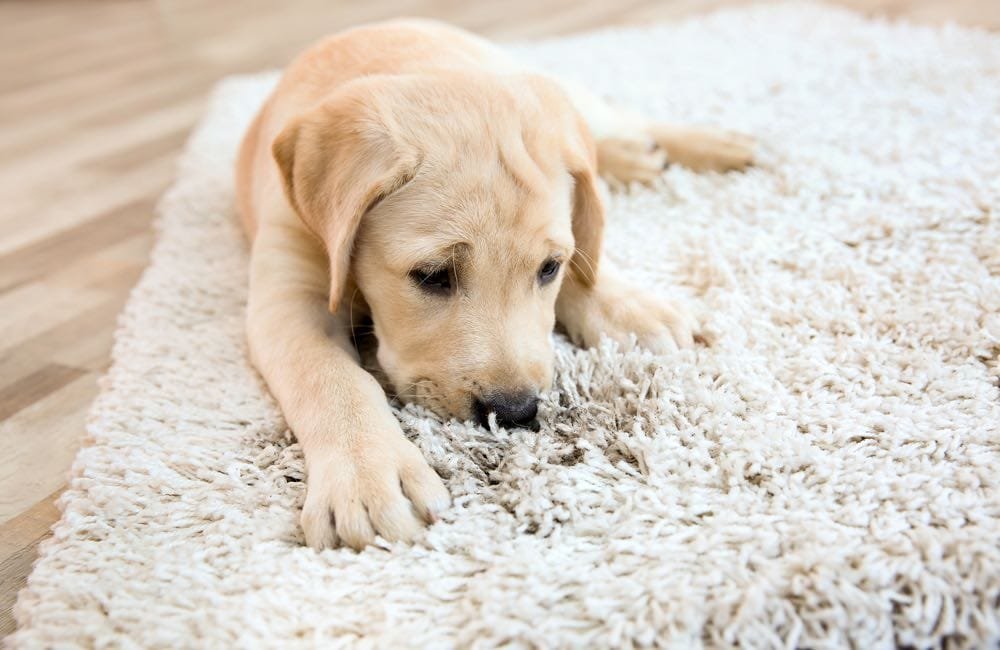

Carpet licking is exactly what it sounds like: a dog repeatedly running its tongue over carpet fibers, sometimes for seconds, sometimes for minutes at a time.
It can happen occasionally after a spilled snack, or it can become a repetitive, almost trance-like habit.
Vets separate this into two categories: normal, occasional licking, and excessive licking of surfaces, known as ELS.
ELS is considered a red flag because research has linked it to underlying medical issues in a large number of cases.
Why Does My Dog Lick the Carpet? The Main Reasons
There isn’t a single explanation for this behavior. It can stem from instinct, emotion, diet, or an underlying health condition.
Below are the most common and well-documented reasons dogs lick carpets, based on veterinary research and behavior experts.
Leftover Food or Scent Residue
The most obvious reason is also the most common. Spilled food, crumbs, or grease stains leave behind smells that are irresistible to a dog’s nose.
Even a tiny trace invisible to humans can be strong enough to trigger repeated licking as your dog tries to get every last bit of flavor.
Instinctual Exploration
Licking is one of the primary ways dogs explore their environment, similar to how humans might touch or smell something new.
In the wild, canines lick surfaces to investigate scents, identify food sources, or gather information about their territory.
Boredom and Lack of Stimulation
Dogs that don’t get enough physical exercise or mental engagement often turn to repetitive behaviors like carpet licking to fill the time.
High-energy breeds are especially prone to this when left without enough toys, walks, or interactive play throughout the day.
Stress and Anxiety
Just like humans might bite their nails, dogs often lick as a self-soothing behavior when they feel anxious or stressed.
This licking can become fixated on a specific object or area, like a particular patch of carpet, and turn into a repetitive coping mechanism.
Attention-Seeking Behavior
If licking the carpet consistently gets a reaction from you, even a negative one, your dog may repeat the behavior simply to get your attention.
Dogs quickly learn which actions reliably produce a response, and any attention, positive or negative, can reinforce the habit over time.
Nutritional Deficiencies
Some dogs lick surfaces because they’re craving specific tastes or nutrients missing from their regular diet.
This is more likely if the licking is paired with other unusual eating behaviors, like chewing on non-food objects.
Gastrointestinal Problems
Veterinary research has found a strong link between excessive licking of surfaces and digestive issues like irritable bowel syndrome, parasites, or pancreatitis.
In one veterinary study, the majority of dogs with excessive licking behavior were found to have an underlying gastrointestinal condition.
Nausea or Upset Stomach
Dogs experiencing nausea sometimes lick surfaces, including carpet, as a way of coping with the uncomfortable sensation in their stomach.
This type of licking often appears suddenly and may be accompanied by drooling, lip-smacking, or reduced appetite.
Sore Throat or Respiratory Irritation
A scratchy or irritated throat, sometimes linked to coughing or allergies, can prompt a dog to lick surfaces more than usual.
If carpet licking starts alongside coughing or gagging, it’s worth mentioning to your vet as a possible connected symptom.
Compulsive Behavior (OCD-Like Patterns)
In some dogs, carpet licking becomes a true compulsive behavior, similar to obsessive-compulsive patterns seen in humans.
This type of licking is repetitive, hard to interrupt, and often continues even when there’s no food or scent present.
Quick Reference: Reasons Dogs Lick Carpets
| Reason | Typical Trigger | Concern Level |
|---|---|---|
| Food residue | Spills, crumbs, grease stains | Low |
| Instinctual exploration | Curiosity, new scents | Low |
| Boredom | Lack of exercise or stimulation | Low to moderate |
| Anxiety or stress | Separation, loud noises, changes | Moderate |
| Attention-seeking | Reinforced by owner reaction | Low to moderate |
| Nutritional deficiency | Diet imbalance | Moderate |
| Gastrointestinal issues | IBS, parasites, pancreatitis | High |
| Nausea | Upset stomach, motion sickness | Moderate to high |
| Sore throat | Coughing, allergies, irritation | Moderate |
| Compulsive behavior | OCD-like repetitive pattern | High |
Is Carpet Licking Dangerous?
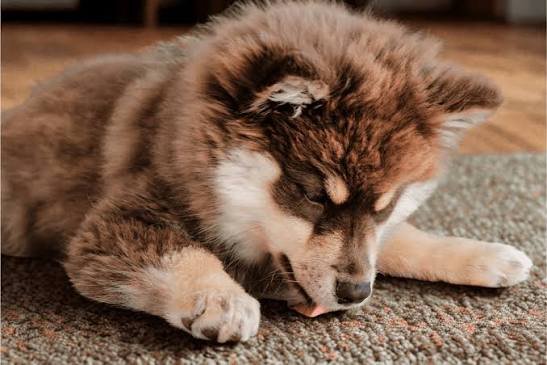

Occasional carpet licking after a spill is almost always harmless and doesn’t need any special attention.
The concern arises when licking becomes excessive, frequent, or is paired with other symptoms like vomiting, weight loss, or lethargy.
There’s also a physical risk: dogs that lick carpet fibers excessively can accidentally ingest them, which may lead to an intestinal obstruction.
Obstructions are a medical emergency and can require surgery, so persistent fiber-eating behavior should never be ignored.
What the Research Says
A veterinary study from the University of Montreal examined dogs with excessive licking of surfaces compared to healthy dogs.
Out of 19 dogs with ELS, the majority were found to have a gastrointestinal problem, ranging from irritable bowel syndrome to parasites and pancreatitis.
After receiving treatment for their stomach issues, most of these dogs showed a significant reduction in licking behavior within 90 days.
This research strongly suggests that persistent carpet licking often has a physical root cause rather than being purely behavioral.
Signs Your Dog’s Carpet Licking Needs a Vet Visit
Not every case of carpet licking requires medical attention, but certain patterns are worth taking seriously.
Watch for licking that happens daily, lasts several minutes at a time, or seems impossible for your dog to stop on their own.
Additional red flags include vomiting, diarrhea, drooling, weight loss, or a noticeable change in appetite alongside the licking.
If your dog also seems anxious, restless, or is licking other surfaces like walls and furniture, a vet visit is strongly recommended.
Symptom Severity Overview
| Symptom Level | Examples | Recommended Response |
|---|---|---|
| Mild | Occasional licking after spills | Monitor, no action needed |
| Moderate | Daily licking, boredom or mild anxiety | Increase exercise, enrichment, training |
| Severe | Licking with vomiting, weight loss, lethargy | Veterinary evaluation required |
How Vets Diagnose the Cause of Carpet Licking
A vet visit for excessive licking usually starts with a full physical exam and a detailed history of your dog’s habits and diet.
Blood tests and fecal exams can help rule out parasites, infections, or organ issues that might be driving the behavior.
In some cases, vets may recommend an ultrasound or endoscopy to check for gastrointestinal inflammation or other internal problems.
If no medical cause is found, a referral to a veterinary behaviorist can help address anxiety or compulsive licking patterns.
How to Stop a Dog From Licking the Carpet
Once medical causes are ruled out or treated, several strategies can help reduce or eliminate the licking habit.
Start by thoroughly cleaning the carpet to remove any lingering food smells or stains that might be attracting your dog.
Increase daily physical exercise and mental stimulation through walks, puzzle toys, and interactive play sessions.
Redirect the behavior by offering a frozen treat-filled toy whenever your dog starts licking the carpet, giving them a healthier outlet.
Avoid reacting strongly, even negatively, since any attention can accidentally reinforce the behavior and make it more frequent.
Quick Solutions Table
| Solution | Best For | How It Helps |
|---|---|---|
| Deep clean carpets | Food residue licking | Removes scent triggers |
| More exercise and play | Boredom-driven licking | Reduces excess energy and restlessness |
| Puzzle toys and treats | Attention-seeking, compulsive licking | Redirects focus to a healthy activity |
| Ignore the behavior calmly | Attention-seeking licking | Removes the reward of your reaction |
| Vet checkup | Gastrointestinal or nausea-related licking | Identifies and treats the root cause |
| Anxiety management training | Stress-related licking | Builds coping skills and confidence |
Preventing Carpet Licking Before It Starts
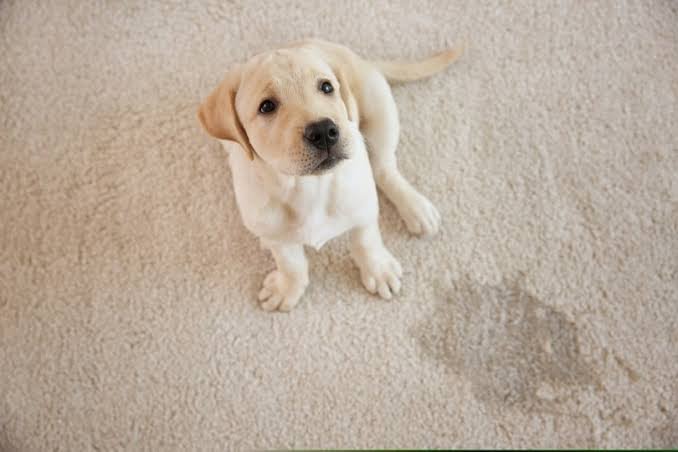

Regular cleaning routines that remove food debris quickly can prevent your dog from developing a licking habit in the first place.
Establishing a consistent exercise and feeding schedule helps reduce boredom and anxiety-driven behaviors overall.
Providing a variety of chew toys and enrichment activities gives your dog appropriate outlets for their natural licking and chewing instincts.
Routine vet checkups can catch early signs of digestive issues before they escalate into more serious, licking-related symptoms.
Carpet Licking vs Other Related Behaviors
| Behavior | Description | Common Cause |
|---|---|---|
| Carpet licking | Repeated tongue movement on carpet fibers | Scent, boredom, GI issues |
| Acral lick dermatitis | Compulsive licking of own paws or legs | Anxiety, allergies, boredom |
| Carpet chewing | Biting or gnawing on carpet material | Teething, anxiety, boredom |
| Excessive licking of surfaces (ELS) | Licking floors, walls, furniture repeatedly | Often linked to GI problems |
| Pica | Eating non-food objects | Nutritional deficiency, compulsive disorder |
Puppies vs Adult Dogs: Does Age Matter?
Puppies often lick and chew surfaces, including carpet, as part of normal teething and exploratory behavior during their first year.
This tends to fade naturally as puppies mature and their adult teeth fully come in, usually by six to eight months of age.
In adult dogs, new or sudden carpet licking is more likely to signal an underlying medical or behavioral issue rather than normal development.
If an older dog suddenly starts licking carpet frequently, it’s a stronger signal to schedule a vet visit sooner rather than later.
When to See a Vet Immediately
Seek prompt veterinary care if your dog is licking the carpet along with vomiting, diarrhea, or visible signs of pain.
Also seek care right away if you suspect your dog has swallowed carpet fibers, since this can cause a dangerous intestinal blockage.
Sudden onset of licking combined with lethargy, loss of appetite, or behavioral changes should never be dismissed as “just a quirk.”
When in doubt, a quick call to your vet can help you decide whether the behavior needs immediate attention or can be monitored at home.
Expert Perspective: What Veterinarians Say
Many veterinarians agree that carpet licking should never be immediately dismissed as “just a weird habit,” especially if it’s frequent or intense.
Behaviorists often point out that the stomach is one of the first places to investigate when a dog develops obsessive licking patterns.
Experts also caution against over-alarm for occasional licking, noting that dogs are naturally curious and scent-driven creatures by design.
The consensus is to watch for patterns and frequency rather than reacting to a single licking episode.
Breed and Personality Differences in Licking Behavior
Some breeds are more prone to repetitive behaviors, including carpet licking, due to their temperament and energy levels.
High-drive working breeds, such as Border Collies or German Shepherds, may be more likely to develop compulsive habits if under-stimulated.
Anxious or sensitive breeds can also show licking behaviors more readily in response to changes in routine or environment.
Understanding your dog’s individual personality and breed tendencies can help you tailor the right prevention and training approach.
The Role of Diet in Reducing Carpet Licking
A well-balanced, high-quality diet can reduce the likelihood of nutrient-seeking behaviors like carpet or surface licking.
Sudden diet changes, food sensitivities, or low-quality kibble can sometimes contribute to digestive discomfort that triggers licking.
Talking to your vet about a diet trial or supplement plan may help if nutritional deficiency is suspected as an underlying cause.
Consistent feeding times and portions also help stabilize digestion, which can reduce nausea-related licking episodes.
Environmental Enrichment Ideas to Reduce Licking


Rotating toys regularly keeps things interesting and helps prevent the boredom that often leads to repetitive licking behavior.
Snuffle mats and treat-dispensing puzzles engage your dog’s brain and nose, mimicking natural foraging instincts in a healthy way.
Scheduled outdoor time, even short walks multiple times a day, can significantly reduce restlessness and anxiety-driven habits.
Training sessions that build new skills also provide mental stimulation, which can indirectly reduce compulsive licking behavior over time.
Common Mistakes Owners Make
Punishing a dog for licking the carpet often backfires, increasing anxiety and potentially worsening the behavior over time.
Ignoring persistent licking for too long, assuming it will resolve on its own, can delay diagnosis of an underlying medical issue.
Using strong-smelling cleaning products on carpets can sometimes attract dogs further rather than deterring them, so pet-safe products are recommended.
Failing to track when and how often the licking happens makes it harder to identify patterns and share useful information with your vet.
Tracking Your Dog’s Licking Behavior
Keeping a simple log can help you and your vet spot patterns faster and identify the true underlying cause.
Note the time of day, duration, and location of each licking episode, along with anything unusual your dog ate beforehand.
Record any additional symptoms like vomiting, lip-smacking, or restlessness that occur around the same time as the licking.
Bringing this log to a vet appointment often speeds up diagnosis significantly compared to relying on memory alone.
Sample Tracking Log
| Date | Time | Duration | Other Symptoms Noticed |
|---|---|---|---|
| Day 1 | Morning | 2 minutes | None |
| Day 2 | Evening | 5 minutes | Lip-smacking |
| Day 3 | After meal | 3 minutes | Mild drooling |
| Day 4 | Night | 8 minutes | Restlessness |
A pattern like this, especially if licking clusters around mealtimes, can be a strong clue pointing toward a digestive cause.
Key Takeaways Before You Worry
Carpet licking is common, and most cases are tied to simple triggers like food smells, boredom, or mild anxiety.
If the behavior is occasional and your dog seems otherwise happy and healthy, there’s usually no cause for alarm.
Persistent, daily, or intense licking deserves closer attention, especially when paired with digestive symptoms or behavioral changes.
Tracking the pattern and consulting your vet early gives your dog the best chance at a fast, accurate diagnosis and relief.
Frequently Asked Questions (FAQs)
1. Why does my dog lick the carpet all of a sudden?
Sudden carpet licking is often linked to nausea, an upset stomach, or a new smell like spilled food nearby. If it continues for more than a day or two, a vet visit is a good idea.
2. Is it normal for dogs to lick the carpet?
Occasional licking after a spill is completely normal. Frequent or excessive licking, especially daily and prolonged, may point to boredom, anxiety, or a deeper health issue.
3. Can licking the carpet make my dog sick?
Yes, dogs that lick fibers excessively can accidentally swallow strands, which may lead to a dangerous intestinal blockage requiring emergency veterinary treatment.
4. Why does my dog lick the carpet and then throw up?
This combination often points to gastrointestinal upset or nausea. The licking may be a coping response your dog uses either before or after vomiting occurs.
5. How do I stop my dog from licking the carpet?
Clean up food residue thoroughly, increase daily exercise and mental stimulation, and redirect licking with puzzle toys. A vet visit helps rule out medical causes if the behavior persists.
6. Is carpet licking a sign of anxiety in dogs?
It can be. Many dogs lick repetitively as a self-soothing behavior during periods of stress, similar to how humans might bite their nails when nervous.
7. Can boredom cause my dog to lick the carpet?
Yes, dogs lacking enough physical exercise or mental stimulation often develop repetitive habits like carpet licking simply to occupy their time and excess energy.
8. When should I take my dog to the vet for licking?
See a vet if the licking is daily, excessive in duration, or paired with vomiting, weight loss, or noticeable appetite changes, since these suggest an underlying medical cause.
9. Do puppies lick carpet more than adult dogs?
Yes, puppies often lick and chew surfaces during teething and natural exploration of their environment. This behavior usually decreases naturally as they mature into adulthood.
10. Can diet affect why my dog licks the carpet?
Yes, nutritional deficiencies can drive dogs to lick surfaces while seeking missing nutrients. A vet or canine nutritionist can help evaluate whether your dog’s diet needs adjustment.
Conclusion
So why does your dog lick the carpet? In many cases, it’s simply curiosity, leftover food smells, or a bit of boredom that’s easy to manage with cleaning and extra playtime.
But carpet licking can also be your dog’s way of telling you something more serious is going on, whether it’s anxiety, a nutritional gap, or a gastrointestinal problem like irritable bowel syndrome.
Veterinary research shows that persistent, excessive licking is frequently connected to real medical issues, not just quirky behavior.
Paying attention to how often the licking happens, and whether it comes with other symptoms like vomiting or appetite changes, will help you decide whether home solutions are enough or whether it’s time to see a vet. Addressing the root cause early keeps your dog healthier and your carpet a lot cleaner too.