

Why does my cat sleep at my feet is one of the most common questions cat owners ask, and the answer is far more meaningful than you might think.
If you share a bed or a couch with a cat, you have probably felt that familiar weight settle at the end — not on your lap, not near your face, but right at your feet.
This behavior is not random. It is rooted in feline instinct, emotional bonding, temperature needs, and territorial behavior.
What Science Says About Cat Sleeping Habits
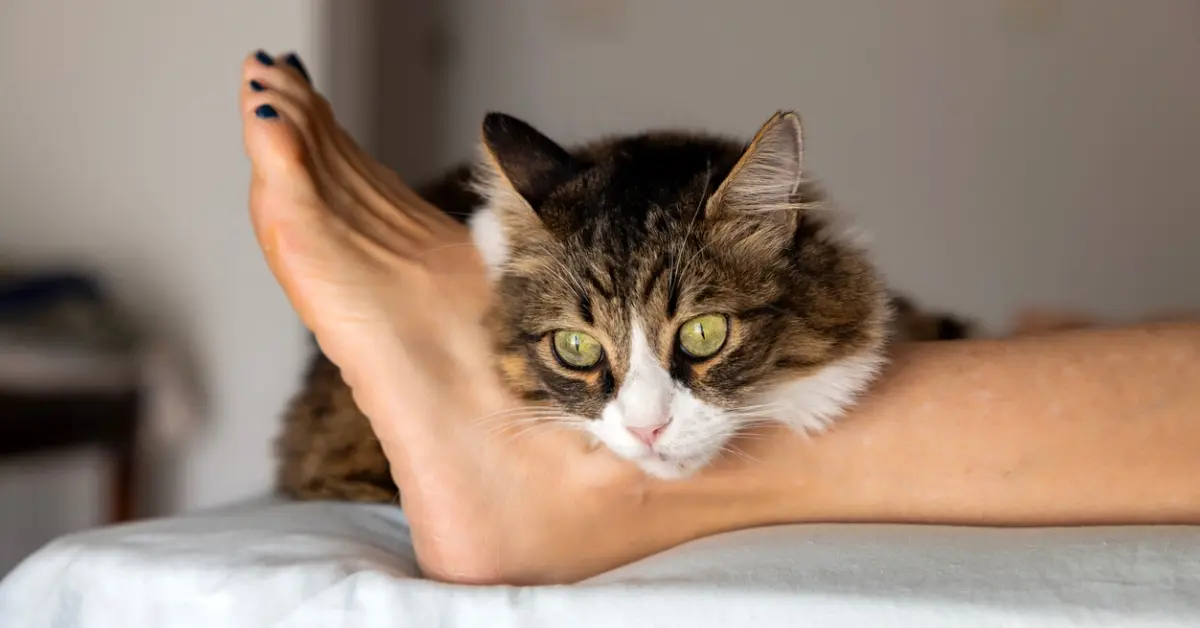

Cats are not just lazy sleepers. They are strategic about where and how they rest.
Domestic cats sleep between 12 and 16 hours a day. Kittens and senior cats can sleep up to 20 hours. This high amount of sleep stems from their natural predator instincts — short bursts of intense hunting energy need long periods of recovery.
Even during sleep, cats remain semi-alert. Their wild ancestors had to balance rest with survival, and those instincts carry over into your bedroom every single night.
Why Does My Cat Sleep at My Feet? — 9 Real Reasons
There is never just one reason behind this behavior. It is almost always a combination of instinct, comfort, and the bond your cat has built with you.
Reason 1 — Your Feet Feel Safe to Them
The number one reason cats sleep at your feet is security.
Sleeping is when any animal is most vulnerable. Cats are hardwired to choose resting spots that minimize that vulnerability. Your feet sit at the edge of the bed, giving your cat a clear view of the room and a quick escape route if anything startles them during the night.
Animal behavior consultant Erin Askeland has explained that the foot of the bed also provides a semi-centered position in the room, giving cats both a raised vantage point and the ability to move in any direction quickly if needed. That kind of strategic awareness is pure feline instinct.
Reason 2 — It Is a Sign of Trust and Affection
When your cat chooses to sleep near you at all, it is a clear sign of trust.
Cats do not show affection the same way dogs do. They rarely run to the door wagging their tails. Instead, they express love quietly — through proximity, through choosing to be near you when they are at their most vulnerable.
Studies have shown that cats bonded with their owners actively seek them out for comfort and security. Sleeping at your feet is one of the clearest ways your cat communicates that it feels safe with you.
Research by Bernstein (2007) found that cats sleeping in close physical proximity to their owners display behaviors associated with strong social bonding. Even the feet, at a slight distance from your body, count as a meaningful closeness in feline terms.
Reason 3 — Warmth and Temperature Regulation
Cats have a naturally higher body temperature than humans.
A healthy cat’s body temperature ranges between 100.5°F and 102.5°F (38°C to 39.2°C). Their ideal ambient temperature is between 77°F and 86°F (25°C to 30°C). Your feet radiate warmth — even under blankets, the area around your feet creates a cozy microclimate that appeals to heat-seeking cats.
In colder months, your feet become an efficient heat source that helps your cat conserve energy without overheating. In warmer months, the foot of the bed tends to have better airflow than the middle or the head area, so cats may prefer it precisely because it is slightly cooler.
This temperature-regulating behavior is one reason cats may shift sleeping positions across different seasons.
Reason 4 — Your Feet Are a Stable Anchor Point
Your head shifts on the pillow, your arms move, and your torso rolls side to side during the night.
Your feet, by comparison, stay relatively still. For a cat trying to sleep in a comfortable and undisturbed position, the foot of the bed is simply the most stable spot on a moving human body.
This stability means your cat is less likely to be accidentally jolted awake, making your feet the most practical choice for uninterrupted rest.
Reason 5 — Scent Marking and Territory
Cats are territorial animals. They use scent glands located on their face, paws, and body to mark familiar spaces and the people they claim as their own.
When your cat sleeps at your feet, they are depositing their scent on your bedding and on you. They are quietly communicating to any other animals in the household — and to themselves — that you belong to their social group.
According to The Behavior of the Domestic Cat by Bradshaw (2012), felines use scent to feel safe and mark territory. Your feet carry strong, familiar smells from your daily activity. That combination of your scent and their deposited pheromones creates a powerful sense of security and ownership for your cat.
This is not possessiveness in a negative sense. It is inclusion. Your cat is incorporating you into its inner circle.
Reason 6 — Independence Without Isolation
Not every cat wants to curl up on your chest or face.
Some cats crave closeness but on their own terms. The feet offer the perfect compromise — near enough to feel connected to you, far enough to maintain a sense of personal space and autonomy.
Cats sleeping at your feet tend to be more independent personalities. They value the bond but prefer not to be smothered. This is not rejection. It is a very cat-like form of affection — present, deliberate, but measured.
Reason 7 — Protection Instinct
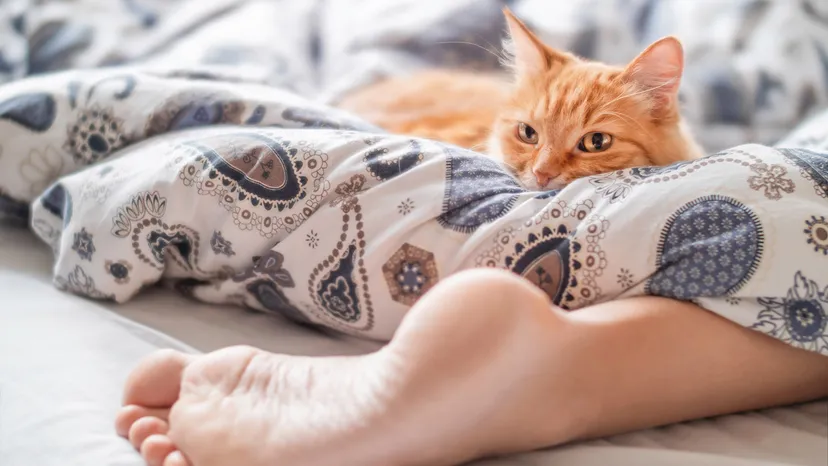

Cats at your feet are not just protecting themselves — they may also be watching over you.
From the foot of the bed, your cat has a full view of the bedroom door, the windows, and the room in general. They can detect any movement, sound, or change in the environment before it reaches you.
This behavior echoes how cats behave in the wild, where members of a feline group take turns staying alert while others sleep. Your cat, in its own way, has appointed itself your nighttime guardian.
Veterinarian Nicole Savageau has noted that this act of protection is mutual — your cat wants to be close enough to protect you while also seeking your protection from unexpected threats.
Reason 8 — Habit and Routine
Once a cat finds a sleeping spot it likes, it keeps going back.
Cats are creatures of habit and routine. If your cat slept at your feet once and found it warm, safe, and comfortable, it will return to that same spot night after night. Over time, this becomes a nightly ritual tied to their sense of predictability and emotional security.
Research by Heidenberger (1997) found that in 52% of cases, a cat’s favorite sleeping spot was the owner’s bed. Once that preference is established, it becomes self-reinforcing through positive experience.
Reason 9 — Responding to Your Scent
Cats rely heavily on scent to navigate their world.
Your feet carry a concentrated mix of your personal scent from moving around all day. To a cat, that scent is deeply familiar and associated with safety. Sleeping near your feet allows your cat to absorb that reassuring scent throughout the night.
This is the same reason cats sometimes sleep on your shoes, your dirty laundry, or any item that smells strongly of you. The scent itself is the comfort.
What Does It Mean When My Cat Sleeps at My Feet vs. Other Spots?
The position your cat chooses reveals different things about their mood, personality, and relationship with you.
| Sleeping Position | What It Usually Means |
|---|---|
| At your feet | Trust, independence, warmth, escape access |
| Near your head | Deep bonding, scent marking, strong attachment |
| On your chest | Deep comfort, attachment to heartbeat and breathing |
| Between your legs | Nesting, warmth, seeking enclosed security |
| Beside your body | Companionship without full contact |
| On your pillow | Scent proximity, strong social bond |
| At the very edge of the bed | Light trust, mild independence, monitoring the room |
Feet-sleeping cats tend to be more self-reliant during the day, engaging in independent play and returning to you for periodic closeness. Head-sleeping cats usually display more attention-seeking behavior and often follow their owners from room to room.
Neither is better than the other. Both reflect a positive, trusting bond.
Does It Mean My Cat Loves Me?
Yes — in feline language, it absolutely does.
Cats do not choose their sleeping spots carelessly. Every animal is at its most vulnerable when asleep. The fact that your cat chooses to spend those vulnerable hours near you communicates something unmistakably clear: they feel safe with you, they trust you, and they want to be in your presence.
Feline affection is quieter than canine affection, but it is no less real. Choosing your feet over any other spot in the house — a warmer radiator, a cozier corner, a dedicated cat bed — is a deliberate act.
Your cat picked you.
Is It Normal for Cats to Sleep at Their Owner’s Feet Every Night?
Yes, this is completely normal and very common.
Research by Chomel and Sun (2011) found that 62% of cats sleep with their adult owners. Of those cats, many choose the feet specifically because of the combination of warmth, stability, and escape access the position provides.
If your cat has always done this, it simply reflects their personality and comfort level. If your cat has recently started doing this after not doing it before, it may signal an increased need for closeness — sometimes linked to a change in routine, a new pet or person in the home, or seasonal temperature shifts.
When Should You Be Concerned About Changes in Sleeping Spots?
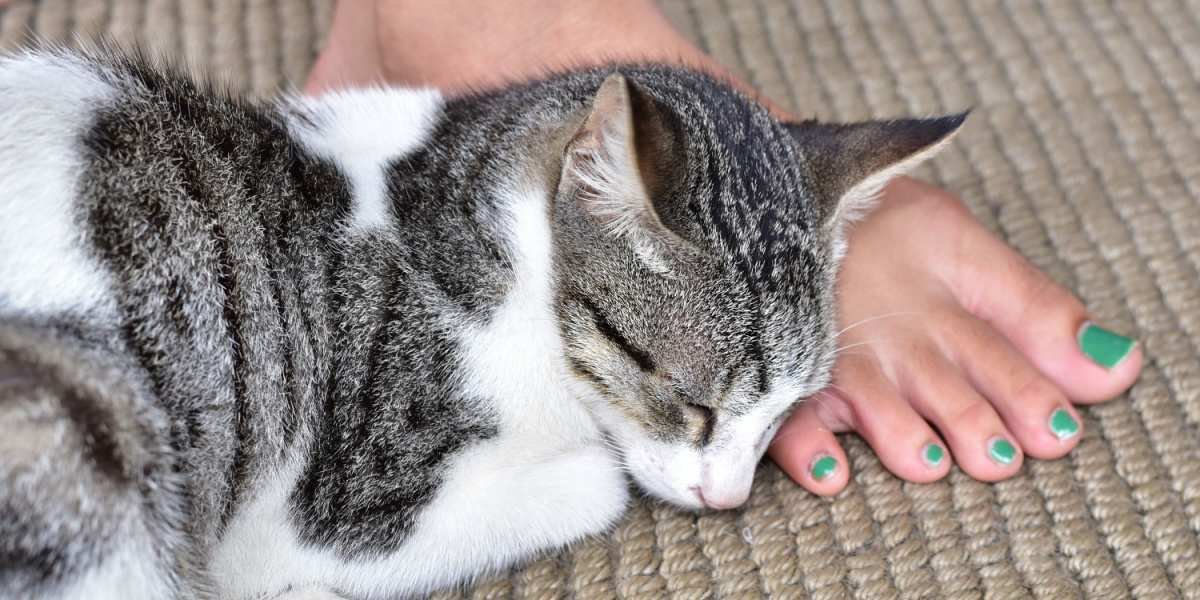

A cat suddenly sleeping somewhere new is usually nothing to worry about.
Cats adjust their sleeping positions based on temperature, comfort, stress levels, and physical changes. A cat that moves from sleeping at your head to sleeping at your feet in summer is likely just looking for a cooler spot.
However, if your cat stops sleeping near you altogether, starts sleeping in unusual hiding places, or pairs the change with other symptoms like reduced appetite, limping, or excessive grooming, it may be worth consulting a vet.
Changes in sleeping habits can sometimes indicate:
Stress or anxiety — caused by a new pet, a moved piece of furniture, construction noise, or a disrupted routine.
Physical discomfort — a cat with mild arthritis may move to the foot of the bed to avoid climbing over your body, or may avoid the bed entirely.
Illness — cats that are unwell sometimes isolate themselves or seek unusual warmth in new spots.
If you notice sudden, unexplained changes alongside other behavioral shifts, schedule a vet visit within a few days.
Can Cats Sense When You Are Unwell?
There is strong anecdotal and some scientific evidence that cats can detect illness in their owners.
Cats are sensitive to changes in body heat, scent chemistry, and behavior patterns. When you are sick, your body temperature and scent may shift noticeably. Some cat owners report their cat sleeping closer to them or staying near their feet more persistently when they are ill or emotionally distressed.
This behavior is consistent with the comfort-seeking and guardian instincts described above. Your cat may be responding to your changed state by staying physically closer than usual.
Cat Body Temperature and Sleeping Behavior — Key Facts
| Fact | Detail |
|---|---|
| Normal cat body temperature | 100.5°F to 102.5°F (38°C to 39.2°C) |
| Preferred ambient temperature for cats | 77°F to 86°F (25°C to 30°C) |
| Average daily sleep for adult cats | 12 to 16 hours |
| Average daily sleep for kittens | Up to 20 hours |
| Percentage of cats that sleep with owners | 62% (Chomel & Sun, 2011) |
| Most common owner sleeping spot for cats | The bed, specifically owner’s feet or head |
How Different Cat Personalities Relate to Foot Sleeping
Not every cat that sleeps at your feet does it for the same reason.
Independent cats choose the feet because it satisfies their need for proximity without full commitment. They want to be close but not confined.
Anxious or rescued cats may choose feet as a gradual trust-building step. They want to be near you but are not yet comfortable enough for full-contact sleeping. This is especially common in cats that came from shelters or difficult environments.
Routine-driven cats may sleep at your feet simply because they did it once, it worked, and now it is part of their nightly structure.
Protective cats — often described as more dog-like in personality — deliberately position themselves at your feet to monitor the room while you sleep.
Tips to Make Your Cat’s Foot-Sleeping Habit More Comfortable
If your cat sleeping at your feet disrupts your own sleep, you do not have to push them away entirely. There are ways to make the arrangement work for both of you.
Place a soft blanket at the foot of the bed. Your cat will have their own warm, familiar surface and may stay on it rather than directly on your feet.
Establish a consistent bedtime routine. Cats follow predictable patterns. If you go to bed at the same time each night, your cat will settle into the routine more smoothly.
Try a heated cat bed nearby. A cat bed with a low-heat pad placed near the foot of the bed gives your cat the warmth and security they seek without taking up your personal space.
Use a piece of worn clothing. Placing an item with your scent in their dedicated sleeping area can transfer the comfort they find in your feet to their own space.
Do not force them away harshly. Sudden rejection can confuse or stress a cat that has chosen this spot as part of its emotional security. If you want to redirect them, do it gently and consistently over time.
Should You Let Your Cat Sleep at Your Feet?
For most people and most cats, co-sleeping is perfectly fine.
It strengthens the bond between you and your cat. It provides your cat with warmth and emotional security. Many owners report that having a cat at their feet actually improves their own sleep quality through the calming presence and gentle warmth.
The main reasons some people choose not to co-sleep with their cats include allergy concerns, disrupted sleep from movement, or hygiene preferences. These are all valid considerations and a personal choice.
If you enjoy having your cat nearby and sleep well, there is no reason to change the arrangement. It means your cat trusts you deeply, and that is something worth valuing.
All the Reasons Summarized
| Reason | What It Reflects |
|---|---|
| Safety and escape access | Survival instinct |
| Trust and affection | Emotional bond |
| Warmth seeking | Temperature regulation |
| Stable anchor point | Practical comfort |
| Scent marking | Territorial behavior |
| Independence preference | Personality type |
| Protection instinct | Guardian behavior |
| Habit and routine | Comfort through predictability |
| Scent familiarity | Sensory comfort |
Cat Sleeping Positions and Their Meanings — Quick Reference
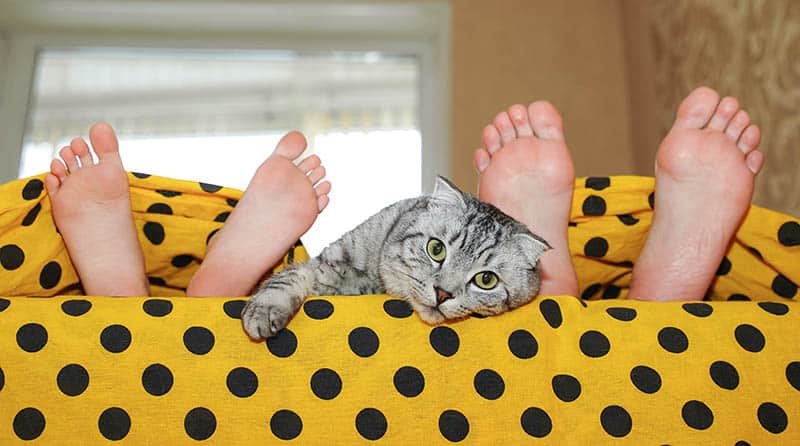

Beyond the feet, cats sleep in many positions that reveal their emotional state.
Curled up tight (cinnamon roll position): Conserving heat, protecting vital organs. The cat may be cold or seeking solitude.
Belly fully exposed: Deep relaxation and trust. The cat feels completely safe in its environment.
Loaf position (paws tucked under, head upright): Resting but alert. The cat is comfortable but not fully relaxed.
On your chest: Deep attachment. The cat is drawn to your warmth, heartbeat, and the rhythm of your breathing — similar to how kittens felt near their mother.
Pressed against you along your side: Strong companionship without the vulnerability of a belly-up position.
At your feet: Affection combined with independence. Stability, warmth, and a clear exit route.
Frequently Asked Questions (FAQs)
Why does my cat sleep at my feet every night?
Your cat sleeps at your feet every night because it is warm, safe, and stable. Routine and scent familiarity reinforce the habit until it becomes a fixed part of their nightly comfort.
Is it a sign of love when a cat sleeps at your feet?
Yes. Choosing to sleep near you when they are most vulnerable is one of the clearest signs of trust and affection a cat can show. It means they see you as their safe place.
Why does my cat sleep at my feet instead of next to me?
Cats that prefer feet over full-body contact tend to be more independent personalities. The feet offer closeness and warmth while still allowing personal space and a quick escape route if needed.
What does it mean when your cat starts sleeping at your feet after not doing it before?
A change like this usually signals the cat is seeking more closeness — possibly due to a change in routine, a new pet, seasonal temperature shifts, or an emotional need for reassurance.
Does my cat sleep at my feet to protect me?
Partly yes. From the foot of the bed, a cat has a clear view of the room and the door. This positioning allows them to monitor the environment and respond to any disturbance before it reaches you.
Why does my cat sleep at my feet but not on my lap?
Some cats show affection with proximity rather than direct contact. Feet-sleeping is a way to stay near you on their own terms — present but not confined.
Should I be worried if my cat suddenly stops sleeping at my feet?
Not immediately. Monitor for 48 to 72 hours. If the change comes with reduced appetite, hiding, limping, or other symptoms, consult a vet. If nothing else changes, it is likely a temperature or comfort preference shift.
Do cats sleep at your feet to stay warm?
Yes, warmth is one of the primary reasons. Your body radiates heat, and the foot area of the bed creates a cozy microclimate under blankets that cats find very comfortable and energy-efficient.
Can my cat sense when I am sick or upset?
Cats are sensitive to changes in your body temperature, scent, and behavior. Many cat owners report their cat staying closer or sleeping nearer during illness or emotional distress, which aligns with their protective and comfort-seeking instincts.
Is it healthy to let my cat sleep at my feet?
For most people, yes. Co-sleeping strengthens the bond and is soothing for both owner and cat. If you have allergies or your sleep is significantly disrupted, a comfortable cat bed nearby is a good alternative.
Conclusion
Why does my cat sleep at my feet comes down to a rich combination of instinct, trust, temperature, territory, and habit.
Your feet offer a cat the perfect balance — close enough to feel connected to you, stable enough for undisturbed rest, warm enough to be comfortable, and positioned for a clear view of the room and a fast exit if needed.
Every time your cat settles at the foot of your bed, they are communicating something quiet but powerful: you are their safe place.
This is not just a quirky cat habit. It is feline affection expressed in the most honest way cats know how. Understanding it deepens the bond you share and helps you read your cat’s emotional state more accurately.
Whether your cat has done this for years or just started, recognize it for what it is — a sign of trust built over time.
The next time you feel that familiar weight settle at your feet, know that your cat chose you, deliberately and instinctively, as their anchor in the world.