

Why does coffee give me diarrhea? If you are rushing to the bathroom minutes after your morning cup, you are far from alone. Research suggests that coffee triggers urgent bowel movements in roughly 30 to 50 percent of people.
The effect is not random and it is not a sign that something is seriously wrong with your body. Coffee contains a powerful combination of compounds including caffeine, chlorogenic acids, and gut hormones that can accelerate your digestive system faster than it was designed to handle.
Is It Normal for Coffee to Cause Diarrhea?
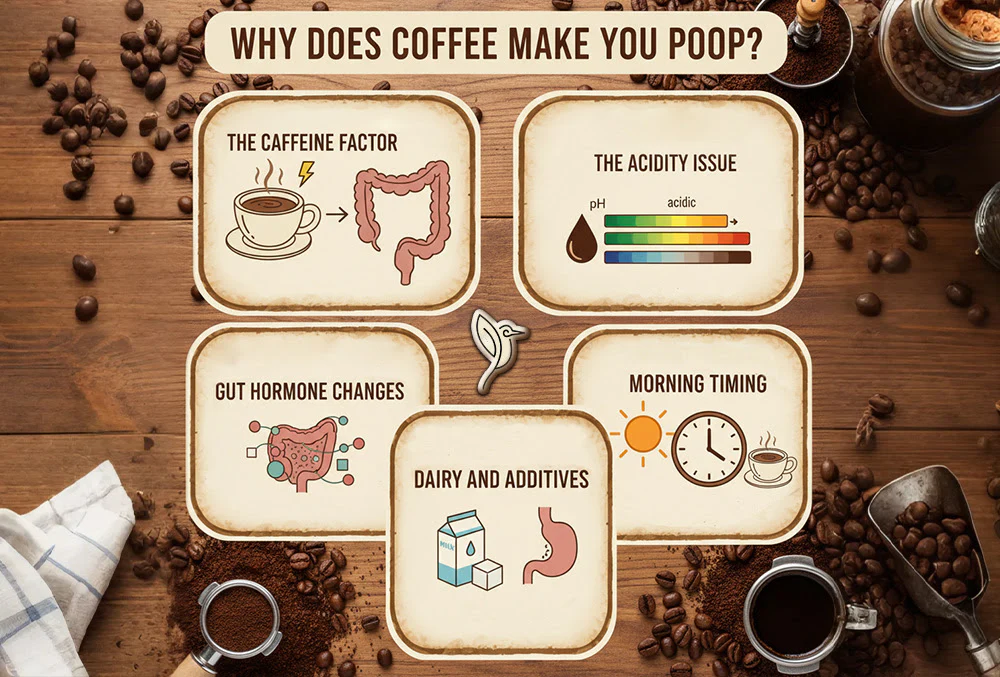

Yes, it is entirely normal. Coffee is one of the most biologically active beverages you can drink on an empty stomach in the morning.
An estimated 30 to 50 percent of regular coffee drinkers experience some form of increased bowel urgency after drinking coffee. For most people, a single bathroom trip after their morning cup is a predictable physiological response, not a sign of illness.
The key distinction is between the normal urge to have a bowel movement after coffee and actual diarrhea, which is loose, watery, or urgent stool that disrupts your day. If coffee is consistently causing the latter, the underlying reasons are worth understanding and addressing.
The Main Reasons Coffee Causes Diarrhea
Coffee does not cause diarrhea through one mechanism. It triggers multiple overlapping responses in the digestive system simultaneously.
| Cause | Mechanism | Effect |
|---|---|---|
| Caffeine | Stimulates colon muscle contractions | Faster transit, loose stool |
| Gastrocolic reflex | Drinking activates colon contractions | Urgency within minutes |
| Chlorogenic acids | Increase gastric acid and gut motility | Faster emptying, liquid stool |
| Acidity (pH 4.5–6.0) | Irritates stomach lining | Cramping, loose stool |
| Motilin and gastrin release | Gut hormones signal colon to move | Stronger contractions |
| Lactose in dairy | Undigested sugar causes osmotic diarrhea | Gas, bloating, loose stool |
| Artificial sweeteners | Ferment in colon, pull water into bowel | Osmotic diarrhea |
| Empty stomach | No food buffer amplifies all effects | More intense response |
Understanding each of these mechanisms is what makes it possible to fix the problem without giving up coffee entirely.
Reason 1: Caffeine Accelerates Your Gut
Caffeine is the most well-known active compound in coffee and it has a direct effect on the muscles of your digestive system. It stimulates peristalsis, which is the wave-like muscle contractions that move food and waste through your intestines.
When these contractions speed up, stool moves through your colon faster than normal. That faster transit time means your large intestine has less time to absorb water from the stool before it reaches the rectum.
The result is stool that is looser and more liquid than usual. More than two to three cups of caffeinated coffee per day is commonly associated with diarrhea in sensitive individuals, according to the International Foundation for Gastrointestinal Disorders.
Reason 2: The Gastrocolic Reflex Is Amplified by Coffee
The gastrocolic reflex is a completely normal physiological response where eating or drinking anything causes the colon to contract and push its contents toward the rectum. It is your body’s built-in signal to make room for incoming food.
This reflex is naturally strongest in the morning. When you drink coffee immediately after waking up, the gastrocolic reflex is already primed by your circadian rhythm. Coffee amplifies it dramatically.
Research has shown that bowel urgency can begin as soon as four minutes after drinking coffee, with most people experiencing the urge within 20 minutes. Gastroenterologists at UCI Health specifically advise against drinking coffee on an empty stomach for this reason, noting it can cause reflux, bloating, or diarrhea.
Reason 3: Chlorogenic Acids Irritate the Gut
Coffee contains high concentrations of chlorogenic acids, a family of polyphenols that have specific and significant gastrointestinal effects. These compounds stimulate the production of gastric acid and speed up gastric emptying.
When your stomach empties faster, partially digested food reaches the small intestine more quickly. The large intestine then has less time to absorb water properly, resulting in looser, more liquid stool.
Interestingly, lighter roasts contain more chlorogenic acids than dark roasts. This is why many people with sensitive stomachs tolerate dark roast coffee better. The roasting process breaks down some of these acids, reducing their irritating effects on the gut.
Reason 4: Coffee Is Naturally Acidic
Coffee measures between pH 4.5 and 6.0, making it significantly more acidic than water. This acidity can directly irritate the lining of the stomach and intestinal tract, particularly in people who already have conditions like gastritis, acid reflux, or irritable bowel syndrome.
When the stomach lining is irritated by acid, it can trigger cramping, increased motility, and loose stools as the body attempts to rapidly clear the irritant.
People with pre-existing gut sensitivity are significantly more likely to experience coffee-induced diarrhea because their gut lining reacts more strongly to this acidic stimulus.
Reason 5: Coffee Releases Gut Hormones
Coffee stimulates the release of two important gut hormones: gastrin and cholecystokinin (CCK). Both of these signal the colon to increase its activity and motility.
Gastrin promotes acid secretion and gut contraction. CCK is involved in triggering the gastrocolic reflex and signaling the digestive system to move. Together, these hormones create a coordinated push that accelerates the entire digestive process.
Interestingly, research has found that caffeinated coffee produces approximately 23 percent more colonic activity than decaf coffee. However, because chlorogenic acids and motilin stimulation remain active even in decaf, even caffeine-free coffee can still cause bowel urgency.
Reason 6: Dairy Additives Cause Their Own Problems
Many cases of what people describe as coffee-induced diarrhea are not caused by coffee itself. They are caused by what has been added to the coffee.
An estimated 65 percent of adults worldwide have some degree of lactose intolerance, many without being fully aware of it. When lactose-intolerant individuals add milk, cream, or dairy-based creamers to their coffee, the undigested lactose moves into the large intestine where bacteria ferment it.
This fermentation produces gas and causes an osmotic effect that pulls water into the colon, resulting in bloating, cramping, and diarrhea within 30 minutes of consumption. If coffee consistently causes problems for you but black coffee does not, dairy intolerance is likely the primary culprit.
Reason 7: Artificial Sweeteners Compound the Effect


Sugar-free creamers, diet syrups, and zero-sugar flavor additives in coffee often contain artificial sweeteners such as sorbitol, erythritol, and mannitol. These sugar alcohols are not fully absorbed by the small intestine.
When they reach the large intestine, gut bacteria ferment them, producing gas. They also draw water into the bowel through osmosis, which directly causes loose, watery stools in sensitive people.
The diarrhea-inducing effect of sugar alcohols is well documented. Even small amounts consumed alongside coffee can significantly worsen the gut response the coffee itself is already triggering.
Reason 8: Drinking Coffee on an Empty Stomach
Drinking coffee on an empty stomach removes every buffer your digestive system normally has against its more aggressive effects. With no food in your stomach to absorb acid, buffer the pH, or slow gastric emptying, coffee’s full acidic and stimulatory impact hits your gut lining directly.
The gastrocolic reflex is far stronger on an empty stomach. The chlorogenic acids have more direct contact with your stomach lining. The caffeine stimulates colonic contractions without anything to slow them down.
This is why many gastroenterologists, including specialists at UCI Health’s Digestive Health Institute, specifically recommend drinking coffee with or immediately after a meal rather than first thing in the morning on an empty stomach.
Reason 9: Coffee and IBS
For people with irritable bowel syndrome, particularly diarrhea-predominant IBS (IBS-D), coffee is a significant and well-recognized trigger. The combination of caffeine, chlorogenic acids, and gut hormone stimulation overstimulates an already hypersensitive gut-brain axis.
People with IBS-D experience more intense, more rapid, and more painful bowel responses to the same amount of coffee that a non-IBS person might tolerate comfortably. The colon in IBS is already more reactive, and coffee effectively amplifies that reactivity.
Many gastroenterologists recommend that IBS-D patients significantly limit or completely eliminate coffee. Herbal teas and low-acid alternatives are typically suggested as safer morning beverages for this population.
Reason 10: How Much You Drink Matters
The dose is a critical factor. A single cup of coffee may be easily tolerated by someone who experiences problems with three or four cups. The stimulatory effects on the gut are cumulative with each serving.
Drinking coffee quickly in large amounts overstimulates the gut in ways that sipping the same volume slowly over a longer period does not. Speed of consumption is an underappreciated factor in coffee-related bowel urgency.
The IFFGD notes that more than two to three cups of coffee per day often causes diarrhea in people who are sensitive, even if they have no problem with one or two cups.
Does Decaf Coffee Also Cause Diarrhea?
Yes. This surprises many people who assume removing caffeine solves the problem. The truth is that decaf coffee still stimulates the gastrocolic reflex, still contains chlorogenic acids, and still triggers the release of motilin and other gut-stimulating hormones.
| Factor | Regular Coffee | Decaf Coffee |
|---|---|---|
| Caffeine effect on colon | Strong stimulation | None |
| Chlorogenic acids | Present and active | Present and active |
| Gastrocolic reflex activation | Strong | Moderate |
| Gastrin and motilin release | Present | Present |
| Diarrhea risk | Higher | Lower but still present |
| Impact with dairy | Same | Same |
| Impact with sweeteners | Same | Same |
Switching to decaf will reduce the severity of coffee-induced diarrhea for most people, but it will not eliminate it entirely. The non-caffeine compounds in coffee remain biologically active regardless of decaffeination.
Why Is Coffee Diarrhea Worse in the Morning?
The morning timing is not a coincidence. Several factors converge specifically in the early hours of the day to make coffee’s gut effects most powerful.
Your gastrocolic reflex reaches its daily peak in the morning as your body shifts from the circadian rest state of sleep to the active daytime digestive state. Your colon is primed to clear its contents.
Cortisol levels are also at their highest in the morning, which naturally increases gut sensitivity. Drinking coffee on an empty stomach removes any food buffer. And if you add dairy or sweeteners, those compounds hit an already activated digestive system.
The combination of these morning-specific factors means the same cup of coffee consumed in the afternoon would produce a significantly weaker gut response for most people.
Who Is Most at Risk for Coffee-Induced Diarrhea?


Certain people are significantly more susceptible to diarrhea from coffee than others.
| Risk Factor | Why It Increases Coffee-Diarrhea Risk |
|---|---|
| Irritable bowel syndrome (IBS) | Hypersensitive gut-brain axis amplifies all stimuli |
| Lactose intolerance | Dairy added to coffee triggers osmotic diarrhea |
| Acid reflux or gastritis | Acidic coffee irritates already inflamed stomach lining |
| High caffeine sensitivity | Even small amounts cause strong gut motor response |
| History of gut surgery | Altered digestive anatomy can exaggerate motility effects |
| Anxiety or high stress | Gut-brain axis means stress compounds coffee’s gut impact |
| Crohn’s disease or colitis | Inflamed bowel reacts more strongly to stimulants |
| Drinking on an empty stomach | No food buffer dramatically amplifies all effects |
If you fall into one or more of these categories, your coffee-induced diarrhea is likely more severe and more frequent than average and requires more targeted modification.
How to Stop Coffee from Giving You Diarrhea
The goal is not necessarily to stop drinking coffee. For most people, identifying and addressing the specific trigger or combination of triggers allows them to continue enjoying coffee without the unpleasant bathroom consequences.
Always Eat Before or With Your Coffee
This is the single most effective change most people can make. Eating before or alongside your coffee creates a physical buffer in the stomach that absorbs acid, slows gastric emptying, and significantly dampens the gastrocolic reflex.
Even a small snack, such as a piece of toast, a handful of nuts, or yogurt, is enough to meaningfully reduce coffee’s gut impact. Gastroenterologists consistently recommend this as the first intervention for people experiencing coffee-related digestive problems.
Switch to Cold Brew Coffee
Cold brew is steeped in cold water for 12 to 24 hours, which extracts significantly fewer chlorogenic acids compared to traditional hot-water drip methods. Cold brew is typically 60 to 70 percent less acidic than standard drip coffee.
This lower acidity makes cold brew substantially gentler on the stomach lining and reduces the intensity of the gastrocolic reflex. Dark roast cold brew is generally the best option for people with sensitive stomachs as it combines reduced acid from roasting with the low-acid extraction of cold brewing.
Choose Dark Roast Over Light Roast
Dark roast coffee contains fewer chlorogenic acids than light roast because the roasting process breaks these compounds down. If you have been drinking light or medium roast and experiencing digestive problems, switching to dark roast is a simple change that may provide meaningful relief.
Low-acid coffee blends grown at lower altitudes are also worth considering. Coffees from Brazil and Sumatra are typically among the lower-acid options commercially available.
Remove or Replace Dairy
If you add milk, cream, or dairy-based creamers to your coffee, try removing them completely for one week and drinking black coffee with food instead. If your symptoms improve significantly, lactose intolerance is likely a major contributor.
Plant-based alternatives like oat milk, almond milk, or coconut milk are good replacements that do not contain lactose. Avoid plant-based creamers that contain sugar alcohols like sorbitol or erythritol, as these can independently cause diarrhea.
Eliminate Artificial Sweeteners
Remove any sugar alcohols from your coffee routine. This includes sorbitol, erythritol, mannitol, and xylitol found in sugar-free syrups, zero-calorie sweeteners, and many flavored creamers.
Try regular cane sugar or honey if you prefer a sweet coffee. These digest normally and do not have the osmotic diarrhea effect of sugar alcohols.
Reduce Your Daily Intake
If you are drinking three or more cups per day, try reducing to one or two and monitoring your symptoms over a week. The laxative effects of coffee are dose-dependent, and many people who experience problems with multiple cups have no issue with a smaller amount.
Reducing intake gradually rather than stopping abruptly is important for regular coffee drinkers. Sudden caffeine withdrawal causes headaches, fatigue, and irritability in many people. Taper down by half a cup per day over a week.
Sip Slowly Rather Than Drinking Quickly
Drinking coffee rapidly in large amounts delivers a concentrated gut stimulus all at once. Sipping it slowly over 20 to 30 minutes gives your digestive system time to respond gradually rather than experiencing a sudden overwhelming signal.
This is a simple behavioral change that many people overlook. The same amount of coffee consumed more slowly often produces far less gut urgency.
Consider Digestive Enzyme Supplements
For people whose coffee problems are partly related to lactose intolerance, taking a lactase enzyme supplement immediately before consuming dairy-containing coffee can help. These supplements provide the enzyme needed to digest lactose that the gut is not producing in sufficient quantities.
Digestive enzyme products are available without prescription at most pharmacies. They are most effective when taken right before the problematic meal or drink rather than afterward.
When to See a Doctor
Most coffee-induced diarrhea is manageable with the dietary changes described above. However, see a gastroenterologist if diarrhea from coffee is severe, persistent, or accompanied by blood in the stool, significant abdominal pain, unexplained weight loss, fever, or if symptoms do not improve after several weeks of dietary modification.
These signs can indicate an underlying condition like IBS, Crohn’s disease, colitis, or celiac disease that requires proper diagnosis and treatment rather than dietary management alone.

Frequently Asked Questions (FAQs)
Why does coffee give me diarrhea every morning?
Morning is when your gastrocolic reflex naturally peaks and coffee amplifies it. Drinking coffee on an empty stomach after waking removes any food buffer, making the stimulatory effect of caffeine and chlorogenic acids significantly stronger.
Does decaf coffee still cause diarrhea?
Yes, but less severely. Decaf still contains chlorogenic acids, activates the gastrocolic reflex, and stimulates motilin release. Removing caffeine reduces but does not eliminate coffee’s laxative effect on the gut.
How quickly does coffee cause diarrhea?
Bowel urgency can begin as quickly as four minutes after drinking coffee. Most people experience the urge within 20 minutes of their first cup, though the full effect can take up to three hours in some individuals.
Can the coffee I add milk or creamer to be making it worse?
Yes. An estimated 65 percent of adults have some degree of lactose intolerance. If you add dairy to your coffee, the lactose can independently trigger gas, bloating, and diarrhea within 30 minutes, separate from what the coffee itself is causing.
Is cold brew coffee better for people who get diarrhea from coffee?
Yes. Cold brew is 60 to 70 percent less acidic than drip coffee and extracts fewer chlorogenic acids during its long cold-water steeping process. It is consistently gentler on the gut and causes less bowel urgency for most sensitive individuals.
Does drinking coffee on an empty stomach make diarrhea worse?
Yes. An empty stomach removes the food buffer that normally slows gastric emptying, absorbs acid, and dampens the gastrocolic reflex. The full stimulatory force of coffee hits the gut lining directly, producing a much stronger and faster response.
Is diarrhea from coffee a sign of IBS?
Not necessarily, but if coffee consistently triggers painful cramps, urgent diarrhea, and significant bowel disruption rather than just one normal bowel movement, it is worth discussing with a gastroenterologist to rule out IBS or other functional gut disorders.
Does switching to dark roast help with coffee diarrhea?
Yes. Dark roasts contain fewer chlorogenic acids than light roasts because roasting breaks these compounds down. Many people with coffee-sensitive stomachs report significantly better tolerance with dark roast compared to light or medium roasts.
How many cups of coffee per day can cause diarrhea?
More than two to three cups per day commonly causes diarrhea in sensitive individuals, according to the IFFGD. Some people experience problems with just one cup, particularly on an empty stomach or if they have IBS or high caffeine sensitivity.
Should I stop drinking coffee completely if it gives me diarrhea?
Not necessarily. Most people can manage coffee-induced diarrhea through targeted changes including eating before drinking, switching to cold brew or dark roast, removing dairy, eliminating artificial sweeteners, and reducing daily intake. Complete elimination is rarely necessary unless an underlying condition like severe IBS requires it.
Conclusion
Why does coffee give me diarrhea? The answer involves a cascade of biological events: caffeine stimulating colonic contractions, chlorogenic acids speeding up gastric emptying, the gastrocolic reflex amplified by morning cortisol, gut hormones like gastrin and motilin driving urgency, and dairy or artificial sweeteners adding osmotic diarrhea on top.
The good news is that most of these triggers are modifiable without giving up coffee entirely. Start by eating before your first cup, switch to cold brew or dark roast, remove dairy and artificial sweeteners, and sip slowly rather than drinking quickly. Reduce your daily intake if needed.
For the majority of people, these targeted changes dramatically reduce or completely eliminate coffee-related diarrhea in 2026. If symptoms persist despite these adjustments, a gastroenterologist can rule out underlying conditions like IBS, lactose intolerance, or gastritis that may need specific treatment.