

Watching your cats groom each other can be one of the sweetest things you see all day. Then, out of nowhere, that gentle licking turns into a hiss or a swat, and you’re left confused.
If you’ve been asking why do my cats lick each other, you’re witnessing a behavior called allogrooming. It’s rooted deep in feline biology and social structure.
Why Do My Cats Lick Each Other?
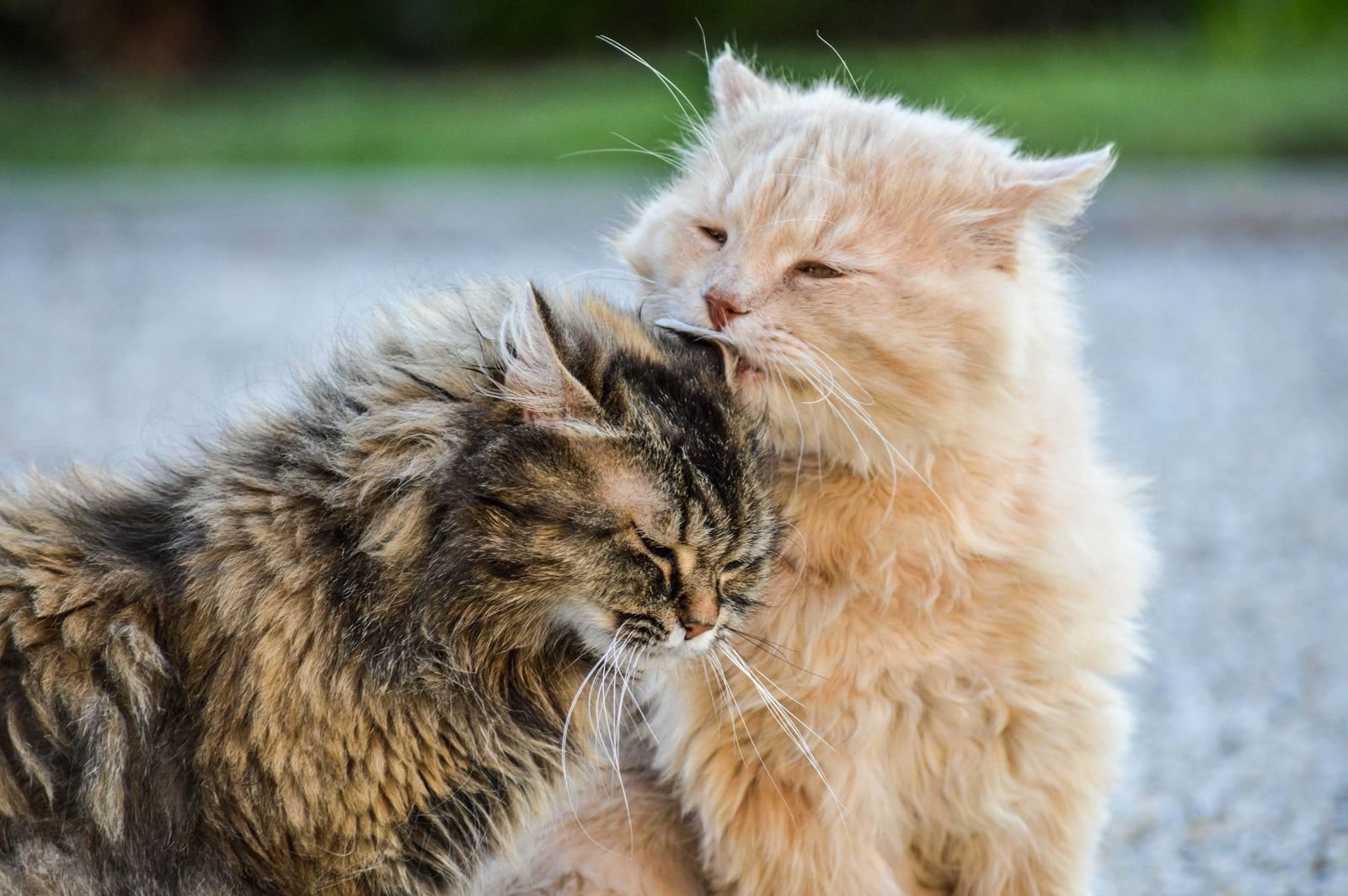

Cats lick each other mainly to bond, communicate through scent, and groom hard-to-reach spots like the head and ears. It can also signal dominance or help ease tension between cats living in the same home.
What Is Allogrooming
Allogrooming is the technical term for when one cat grooms another. It’s different from self-grooming, which is when a cat cleans itself.
This behavior starts in kittenhood, when mother cats lick their newborns to clean them and stimulate basic bodily functions. As kittens grow, they often carry this behavior into adulthood with cats they trust.
Main Reasons Cats Lick Each Other
Social Bonding
Mutual grooming is one of the clearest signs that two cats are bonded. It reinforces trust and closeness between cats who live together.
This behavior is common between littermates, long-term companions, or cats who have simply grown fond of one another over time.
Scent Sharing
Cats rely heavily on scent to recognize friend from foe. When cats groom each other, they create a shared group scent that helps them identify each other as part of the same social unit.
This is a survival instinct passed down from their wild ancestors, where scent recognition mattered for group safety.
Reaching Hard-to-Access Spots
Cats can’t easily groom their own head, ears, and neck. Allogrooming lets them help each other clean areas they simply can’t reach alone.
This practical benefit often overlaps with bonding, since the cats being groomed are usually ones they trust.
Releasing Endorphins
Licking is believed to trigger the release of endorphins, the same chemicals linked to feelings of pleasure in humans. This may explain why grooming sessions often look so calm and content.
Both the groomer and the cat being groomed can benefit from this relaxing effect.
Communication and Pheromones
Facial areas like the cheeks and chin contain scent glands that release pheromones. Licking these spots is a way cats exchange chemical information with one another.
This communication plays a role in how cats read social dynamics within the household.
Reducing Tension or Redirecting Aggression
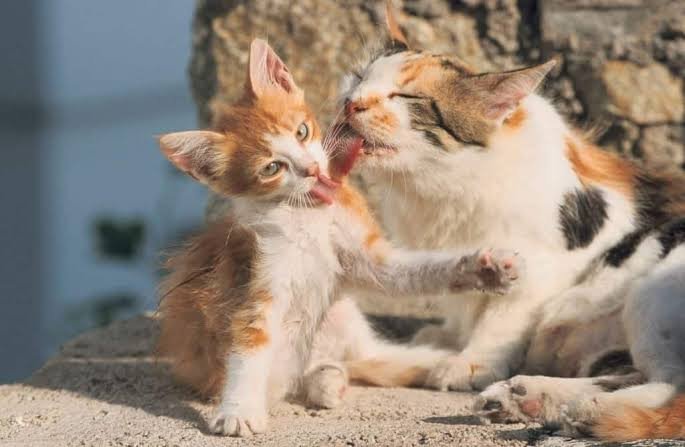

Not all grooming is purely affectionate. Sometimes cats groom each other to defuse tension or avoid a potential conflict.
Research has shown that allogrooming isn’t always a simple friendship signal. In some cases, it reflects a more complex social dynamic between the cats involved.
Establishing Dominance
In certain pairs, the more confident or higher-ranking cat initiates grooming more often. The other cat may simply tolerate it rather than actively enjoy it.
If grooming sessions consistently end with a swat or a chase, dominance dynamics may be at play.
Bonding Licking vs. Tension Licking
| Signal | Bonding Behavior | Tension Behavior |
|---|---|---|
| Body language | Relaxed, purring, eyes half-closed | Stiff posture, flattened ears |
| Duration | Calm and mutual, often reciprocated | One-sided, may escalate quickly |
| Aftermath | Cats stay close and relaxed | Hissing, swatting, or separation |
| Frequency | Regular and consistent | Sudden or triggered by specific moments |
| Location | Head, ears, neck | Can include less typical spots |
When Licking Turns Into a Fight
It’s common for a grooming session to suddenly shift into biting or a quick scuffle. This isn’t always a sign of aggression.
Cats can get overstimulated during grooming, much like they do during petting. A short scuffle followed by both cats walking away calmly is usually harmless.
Signs Your Cats Are Truly Bonded
- They groom each other regularly without resistance
- They sleep touching or near one another
- Grooming sessions are calm, not tense
- Neither cat consistently avoids the other afterward
- They share space, food areas, and resting spots comfortably
When to Pay Closer Attention
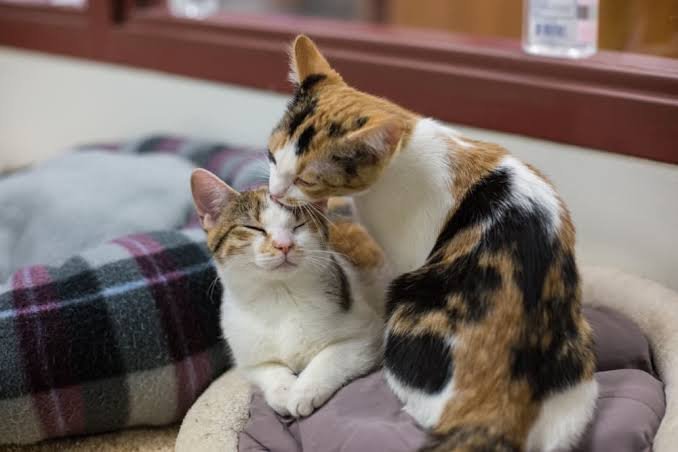

Most allogrooming is completely normal and healthy. But certain patterns are worth monitoring.
- One cat is groomed excessively while it tries to move away
- Grooming sessions frequently end in real fights, not just play
- A cat starts avoiding the other outside of grooming time
- Excessive licking leads to bald patches or skin irritation
- Sudden changes in grooming behavior after a new pet or move
If any of these patterns show up consistently, a vet or feline behaviorist can help assess the relationship.
Tips for Supporting Healthy Cat Bonds
Give Each Cat Their Own Resources
Separate food bowls, litter boxes, and resting spots reduce competition. This lowers the chances of tension-driven grooming.
Watch Body Language, Not Just the Licking
Relaxed posture and soft eyes indicate comfort. Stiff bodies or flattened ears during grooming are signs to observe more closely.
Avoid Punishing Play Fights
Short scuffles after grooming are often normal feline behavior. Separating cats calmly, rather than scolding them, works better long term.
Introduce New Cats Slowly
Cats that are properly introduced tend to develop more genuine bonding behaviors like allogrooming. Rushed introductions can create lasting tension instead.
Key Takeaways
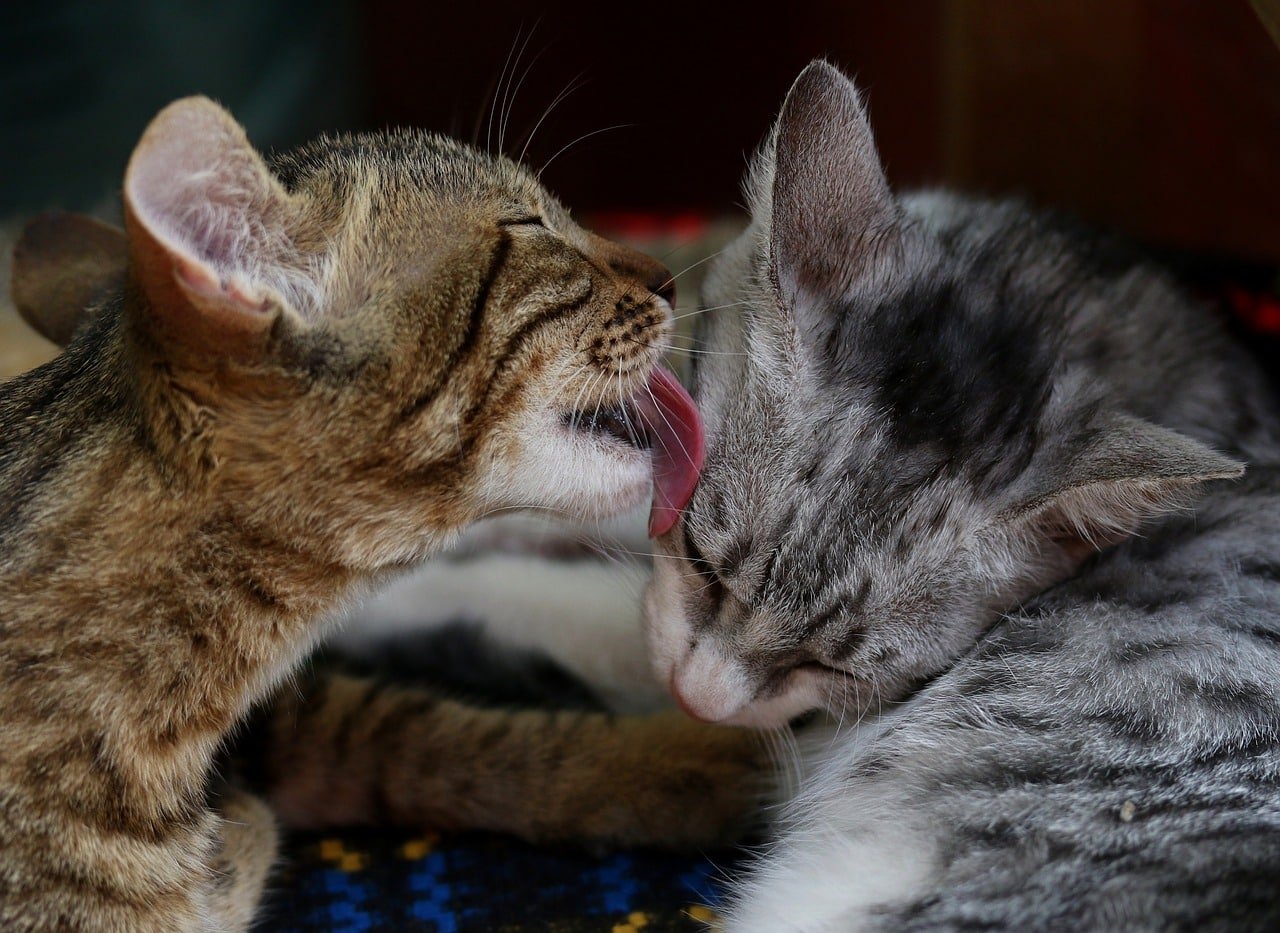

- Allogrooming is a normal, common behavior among cats who live together.
- It serves bonding, hygiene, communication, and sometimes dominance purposes.
- Relaxed body language usually means the grooming is affectionate.
- Grooming that turns into repeated real fights may signal unresolved tension.
- Watching the full context, not just the licking itself, tells you the most.
Also Read:
- From Hair Care Idea To Business: How Bo International Supports Startup Brands
- Portable Space Heaters vs Fan Heaters: Pros and Cons
- How Care Patterns Help During Steps to Report Suspected Nursing Home Abuse
- How Insurance Responses Can Affect a Houston, TX Auto Accident Claim
- Download Gayatri Mantra Best Ringtone Mp3/M4R
- Grand Theft Auto: San Andreas – Theme Song Download
- Download Mission Impossible – Original Theme Song
- Randy Orton – Voices WWE Theme Song Download
- 430+ Trendy Roblox Username Ideas for Boys & Girls
- 1000+ Trendy Instagram Usernames Ideas for Girls
- Letflix Review – Features, How It Works and Safe to Use?
- The Investigation Steps a Premises Liability Lawyer May Take After an Injury
- Does Being a Loan Guarantor Affect Your CIBIL Score
- Do You Need Legal Help After a Truck Accident? Here’s What to Know
- Employee Rights and Legal Remedies in Whistleblower Retaliation Cases
- Lorde – Liability (Instrumental)
- The LOX – Ignorant (Instrumental)
- Dae Dae – Spend It (Instrumental)
- Mac Miller – Diablo (Instrumental)
- How Peptides Are Changing the Science of Bodybuilding Research
- How Cashless Health Insurance Is Transforming Patient Experience
- Why Is My Tongue Itchy? Common Causes & Treatments
- Why Are MRIs So Expensive? The Real Cost Explained
- Why Does My Gum Hurt When I Touch It? Causes & Relief
- Why Do My Feet Burn at Night? 9 Possible Causes
Frequently Asked Questions (FAQs)
Why do my cats lick each other’s heads specifically?
The head, ears, and face are hard for cats to groom on their own. These areas also contain scent glands, making them a natural focus for allogrooming.
Does licking mean my cats are friends?
Usually, yes, but not always. Research shows allogrooming can also reflect tension or dominance rather than pure friendship.
Why does grooming sometimes turn into a fight?
Cats can become overstimulated during grooming, similar to overstimulation from petting. A brief scuffle followed by calm behavior is usually harmless.
Is it normal for one cat to groom the other more often?
Yes, this is common and can reflect personality differences or a dominance dynamic. It doesn’t necessarily mean the relationship is unhealthy.
Do kittens learn grooming from their mother?
Yes, mother cats groom kittens from birth to clean them and stimulate elimination. This early experience shapes how kittens groom others later in life.
Can cats groom each other too much?
Yes, excessive grooming can lead to bald patches or skin irritation on the receiving cat. If you notice this, a vet visit is a good idea.
Why do my cats lick each other and then hiss?
This shift often happens when one cat becomes overstimulated mid-grooming. It’s usually a quick reaction rather than a sign of a serious conflict.
Do unrelated cats groom each other?
Yes, cats don’t need to be related to bond through allogrooming. Trust and comfort matter more than biological relation.
What does it mean if my cats stopped grooming each other?
A sudden stop can signal stress, a household change, or growing tension between the cats. It’s worth observing their overall relationship for other changes.
Can grooming be a sign of dominance instead of affection?
Yes, the more confident cat often initiates grooming more frequently. The other cat may tolerate it rather than actively seek it out.
Why do my cats lick each other but also fight sometimes?
Cat relationships can include both bonding and occasional tension. Mixed behavior is common and doesn’t always indicate a serious problem.
Is allogrooming only seen in domestic cats?
No, allogrooming also occurs in feral cat colonies, especially among related females and their kittens. It’s a natural social behavior across cat populations.
Should I intervene when my cats groom each other?
Generally, no, since grooming is a normal social behavior. Only step in if it turns into a real fight or causes visible harm.
Why does my cat groom the new cat we just adopted?
This can be an early bonding attempt or an effort to establish social scent recognition. It’s often a positive sign during introductions.
Can stress cause more allogrooming between cats?
Yes, some cats groom each other more during stressful periods as a calming behavior. This can help both cats feel more secure.
Do all cats groom each other?
No, not every cat pair develops this behavior. Some cats simply coexist without engaging in mutual grooming.
Why does my older cat groom my kitten so much?
Older cats often groom kittens as a nurturing or bonding behavior, similar to maternal grooming. This is usually a good sign of acceptance.
Can allogrooming reduce stress in multi-cat households?
Yes, mutual grooming is linked to lower stress and stronger social bonds. It’s often seen more in harmonious multi-cat homes.
Is it bad if my cats never groom each other?
Not necessarily, since not all bonded cats show affection this way. Some cats express closeness through proximity rather than grooming.
When should I worry about cats grooming each other?
Worry if grooming causes visible skin damage, consistently ends in real aggression, or one cat is actively trying to escape. These patterns are worth discussing with a vet.
Conclusion
When your cats lick each other, they’re usually strengthening a bond, sharing scent, or simply keeping each other clean. Occasional scuffles afterward are normal and rarely a cause for concern.
Pay attention to body language and the overall pattern rather than the licking alone. If tension seems to outweigh affection, a vet or feline behaviorist can help you understand what’s really going on between your cats.