


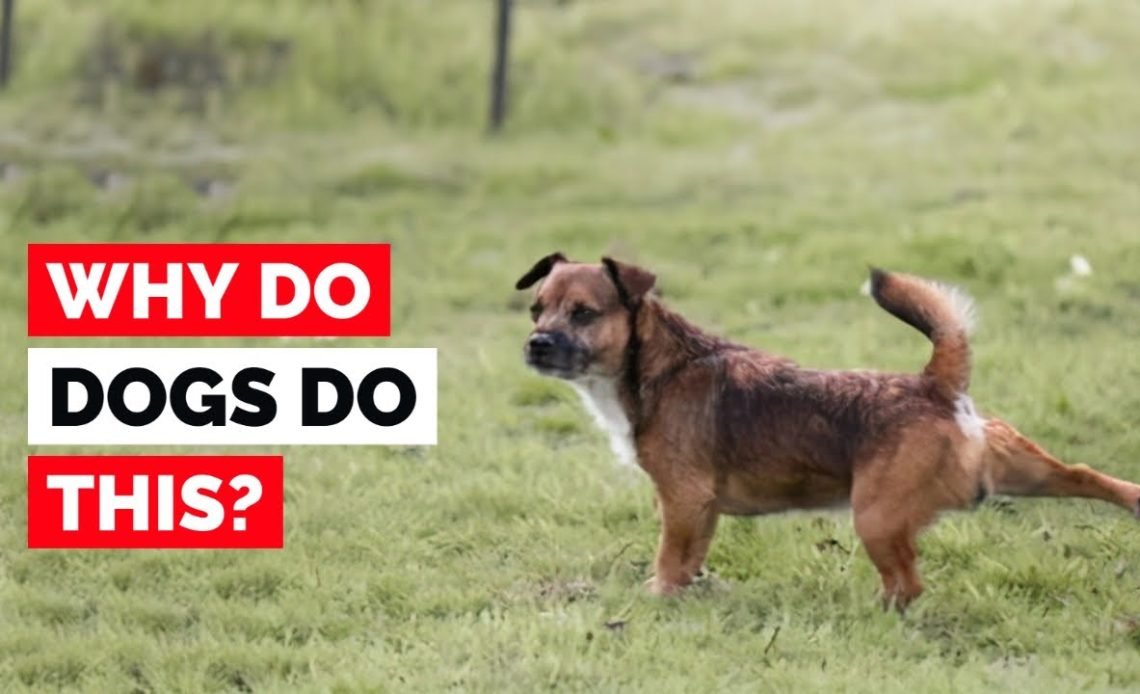
Why do dogs kick after pooping is one of the most searched dog behavior questions online, and the answer is far more fascinating than most pet owners expect.
If you have ever watched your dog finish their business and then frantically scrape their back legs across the ground, you are witnessing one of the most ancient and instinct-driven behaviors in the canine world. It looks random, maybe even a little dramatic, but every kick serves a real biological and communicative purpose.
What Is Ground Scratching in Dogs?
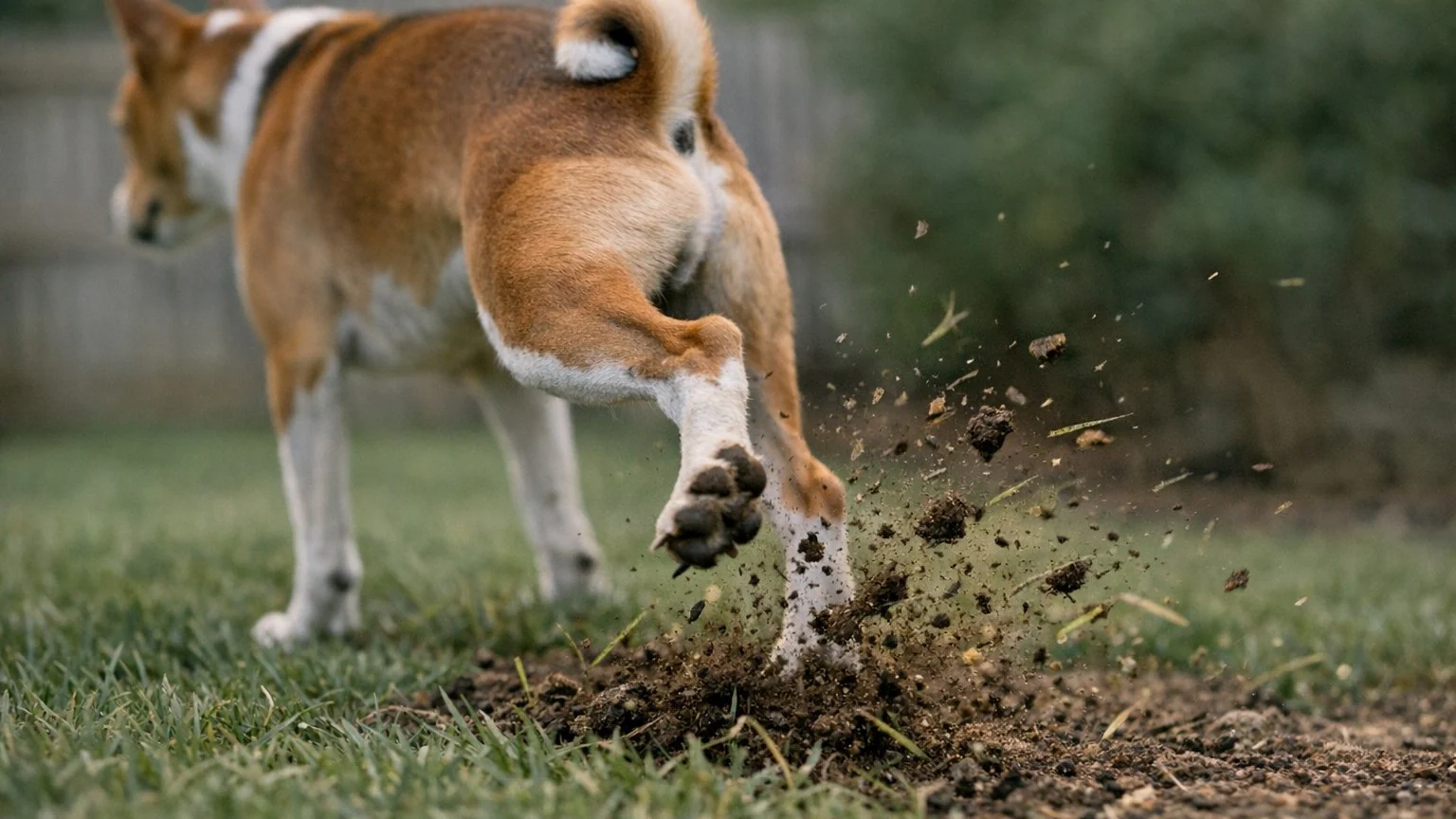
The behavior of kicking the hind legs after pooping is officially called ground scratching or scrape behavior. It is a recognized term in animal behavior science and has been studied in both domestic dogs and wild canids like wolves and coyotes.
It is not just a quirky domestic pet habit. Researchers have documented this behavior across species, confirming it is deeply embedded in canine biology and social communication systems.
Most episodes of ground scratching last only a few seconds to a minute. Some dogs are enthusiastic kickers while others rarely do it at all, and both ends of that spectrum are completely normal.
Is It Normal for Dogs to Kick After Pooping?
Yes, it is completely normal. Veterinarians and animal behaviorists consistently classify ground scratching as a healthy, instinctual behavior that requires no intervention in most cases.
Both male and female dogs of all breeds, sizes, and ages can exhibit this behavior. Studies suggest roughly 10% of dogs do it regularly, though the actual number may be higher depending on environmental triggers.
You should only be concerned if the kicking is so intense that your dog is injuring their paw pads or nails, or if excessive scratching seems linked to anxiety or a physical condition.
Why Do Dogs Kick After Pooping? The Main Reasons
There is not one single reason why dogs kick after pooping. Scientists and vets point to several overlapping instincts all happening at the same time. Here is a full breakdown of every known reason.
Reason 1: Territory Marking Through Scent Glands in the Paws
The most well-supported scientific reason dogs kick after pooping is territory marking. Dogs have scent glands located in and between the pads of their paws. When they kick and scratch the ground, these glands release pheromones into the disturbed soil or grass.
This is not the same as the poop itself serving as a marker. The pheromones from the paw glands are more potent and longer-lasting than the odor of feces alone. Kicking essentially amplifies the scent signal left behind.
To other dogs passing through the area later, this pheromone message is rich in information. It communicates that another dog has been in that exact spot and has claimed it as their territory.
Reason 2: Spreading Pheromones Over a Larger Area
When a dog poops, the anal glands near the anus also express a unique scent onto the feces. The kicking behavior that follows helps scatter and spread both that anal gland scent and the paw gland pheromones over a wider radius.
Think of it as amplifying a signal. The poop marks one spot. The kicking motion spreads the message outward in multiple directions, creating a larger scent zone that is harder for other animals to ignore.
This dual-layer scent marking is what researchers call a composite signal, combining both a chemical message and a physical visual cue in the disturbed ground.
Reason 3: Communicating Identity to Other Dogs
Pheromones carry detailed personal information. When another dog encounters the kicked area, the scent can convey the kicking dog’s age, sex, health status, stress level, and even reproductive availability.
Researchers describe this as the canine equivalent of a social media update. The kicking dog essentially broadcasts: “I was here, I am healthy, I am confident, and this is my territory.”
This information exchange is critical in multi-dog environments like parks, neighborhoods, and shared outdoor spaces where dogs need to navigate social hierarchies without direct confrontation.
Reason 4: Wild Ancestor Instinct from Wolves and Coyotes
Domestic dogs share a common ancestor with wolves, and wolves engage in exactly the same ground-scratching behavior after eliminating. The behavior has been observed in coyotes, foxes, and other wild canids as well.
In the wild, claiming territory is a matter of survival. A pack marks its boundaries to keep rival packs away from food sources, shelter, and breeding areas. Kicking after elimination is one of the oldest tools in that territorial communication system.
Even though your pet dog has no rival pack to worry about in the suburbs, the instinct is still hard-wired into their DNA. It persists across thousands of years of domestication because it costs very little energy and causes no harm.
Reason 5: Visual Communication for Other Dogs Nearby
Ground scratching is not purely about scent. The physical marks left in the soil or grass serve as a visual cue to other dogs in the area.
A disturbed patch of ground, with claw marks, overturned soil, or scattered grass, immediately signals to any approaching dog that another has recently been there. This visual display reinforces the scent message and gives the area a clear “claimed” appearance.
Research by Bekoff (1979) found that ground scratching was significantly more likely to occur when other dogs were physically present. Dogs were essentially putting on a live performance of dominance and presence for an audience.
Reason 6: Asserting Confidence and Social Dominance
In canine social dynamics, ground scratching after elimination is often associated with more dominant or confident dogs. The behavior communicates health, energy, and strength to any observer.
A dog that kicks vigorously after pooping is essentially saying: “I am strong, I am healthy, and I am not hiding.” By contrast, a submissive dog may avoid drawing attention to itself and is less likely to kick.
It is important not to confuse canine dominance with aggression. In this context, dominance simply refers to social confidence and communication, not a threat or challenge.
Reason 7: Covering Their Presence from Predators
This is a debated but plausible theory. In the wild, the scent of feces can attract predators. Some researchers believe ground scratching evolved partly as a way to disguise or minimize the smell of waste.
By kicking dirt and debris over the area, a wild canine could reduce the odor signature left behind for predators who might track them by smell. This is sometimes compared to the way cats bury their waste in litter.
However, scientists note this is the opposite of what domestic dog kicking actually accomplishes, since kicking spreads the scent rather than concealing it. Most researchers believe the predator-avoidance theory applies mainly to wild ancestors and is less relevant to modern pets.
Reason 8: Cleaning Their Paws After Elimination
A simpler, more practical explanation that vets also acknowledge is that some dogs kick after pooping partly to clean their paws. The scratching motion can help dislodge debris, fecal matter, or moisture from the paw pads.
This is less about communication and more about basic hygiene and physical comfort. Some dogs, particularly fastidious ones, may be more motivated by paw cleanliness than territorial communication when they kick.
Observing your individual dog’s behavior in context can help you understand which motivations are driving their specific post-poop kicking routine.
Reason 9: Releasing Post-Elimination Tension or Excitement
Some animal behavior experts note that pooping puts dogs in a physically vulnerable position. After finishing, many dogs feel a burst of relief and energy that expresses itself as physical movement, including kicking.
This is similar to the well-known zoomies phenomenon, where dogs sprint around wildly after a bath or a play session. The kicking may be a form of physical release, shaking off the discomfort or vulnerability of the elimination posture.
Dogs that kick with obvious enthusiasm and a happy demeanor immediately after pooping are likely experiencing this post-relief energy burst, which is harmless and often amusing to watch.
Reason 10: Breed-Specific Tendencies
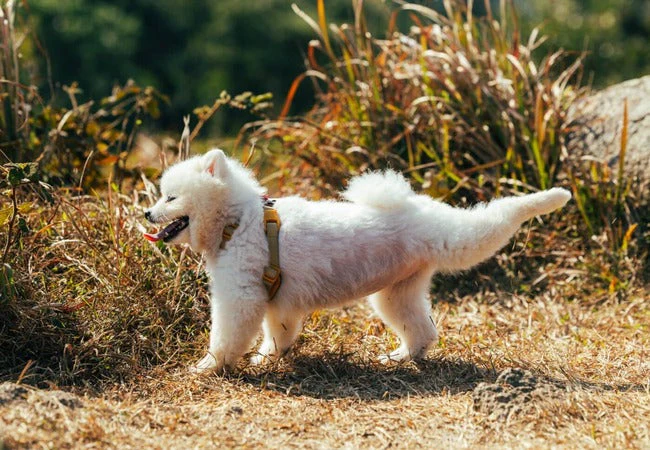
Not all dogs kick with equal frequency or intensity. Certain breeds are noticeably more prone to ground scratching due to their instinctual profiles and territorial drives.
| Breed Type | Kicking Tendency | Reason |
|---|---|---|
| Terriers | High | Strong territorial and hunting instincts |
| German Shepherds | High | Dominant, protective nature |
| Working and Herding Breeds | Moderate to High | Reactive instincts, boundary awareness |
| Hounds | Moderate | Scent-driven behavior reinforced by hunting heritage |
| Toy and Small Breeds | Variable | Personality-driven, less consistent |
| Mixed Breeds | Variable | Depends on dominant traits |
Dogs from herding and working backgrounds tend to behave more reactively to their environment, which naturally translates into more frequent and energetic post-poop kicking.
The Role of Anal Glands in Post-Poop Kicking
Many dog owners are familiar with anal glands in the context of scooting or fishy odors, but these glands also play a direct role in why dogs kick after pooping.
Anal sacs, or anal glands, sit on either side of a dog’s anus and produce a unique, pungent secretion. Every time a dog defecates, these glands are naturally expressed, releasing their scent onto the feces.
That anal gland secretion is packed with chemical information unique to that individual dog. The kicking that follows spreads this information further and layers it with additional pheromones from the paw glands, creating a richer and more widespread communication signal.
Does Gender Affect Post-Poop Kicking?
One common misconception is that only male dogs kick after pooping. In reality, both male and female dogs engage in ground scratching with comparable frequency.
Research consistently shows no significant behavioral difference between sexes when it comes to post-poop kicking. Female dogs are equally equipped with paw scent glands and anal glands, and they use them just as actively for territorial communication.
The main variable is personality and confidence level, not sex. A confident, dominant female will kick just as enthusiastically as a confident male dog in the same situation.
Does Neutering Affect This Behavior?
Neutering or spaying a dog can reduce some hormone-driven marking behaviors, particularly urine-marking in intact males. However, its effect on post-poop kicking is less clear and often minimal.
Ground scratching is deeply instinctual and not exclusively tied to reproductive hormones. Many neutered and spayed dogs continue to kick after pooping throughout their lives without any change in frequency or intensity.
If you were hoping neutering would stop the lawn destruction, it may or may not make a difference depending on your individual dog.
Scientific Research Behind This Behavior
The study of canine ground scratching has a documented research history. The most frequently cited work is by Dr. Marc Bekoff (1979), published in the Journal of Mammalogy, which classified post-elimination ground scratching as a composite signal involving both chemical and visual components of communication.
More recent research by Cafazzo, Natoli, and Valsecchi (2012) in the journal Ethology studied scent-marking behavior in free-ranging domestic dogs and found that ground scratching occurred more frequently along territorial boundaries and in areas with higher dog traffic.
McGuire (2016) further explored scent marking in shelter dogs, providing additional evidence that this behavior is widespread, consistent, and biologically meaningful across diverse dog populations.
Quick Reference: Why Dogs Kick After Pooping
| Reason | What It Does | Is It Instinctual? |
|---|---|---|
| Territory Marking | Claims the area as theirs | Yes |
| Paw Gland Pheromones | Releases long-lasting scent signal | Yes |
| Anal Gland Scent Spread | Amplifies the fecal scent message | Yes |
| Visual Communication | Disturbed ground signals presence | Yes |
| Social Dominance Display | Shows confidence and strength | Yes |
| Wild Ancestor Instinct | Inherited from wolves and wild canids | Yes |
| Post-Elimination Tension Release | Physical energy release after relief | Partly |
| Predator Avoidance (historical) | Hide presence from threats | Ancestral |
| Paw Cleaning | Remove debris from paw pads | Partly |
| Breed Drive | Amplified by territorial breeds | Breed-specific |
When Should You Be Concerned About This Behavior?
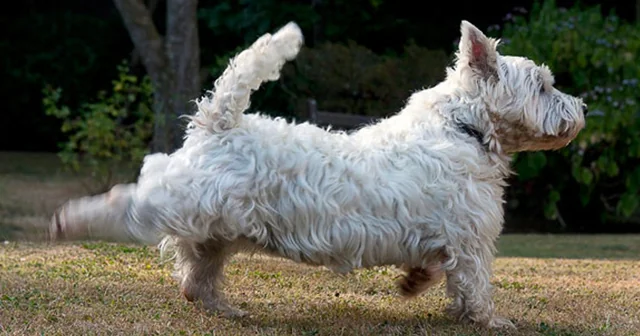
In the vast majority of cases, post-poop kicking requires no concern at all. It is normal, healthy, and biologically appropriate behavior for a domestic dog.
However, there are specific situations where the behavior warrants a closer look. If your dog is kicking so aggressively on hard surfaces like concrete or gravel that their paw pads are becoming cut, scraped, or bruised, it is worth addressing.
Signs that kicking may signal a problem include excessive frequency beyond what is normal for that individual dog, obsessive repetition that looks compulsive, signs of pain or limping after kicking sessions, or sudden behavioral changes that accompany it.
If any of these red flags appear, a visit to your vet to rule out neurological issues, joint problems, anal gland dysfunction, or anxiety disorders is a sensible next step.
How to Manage or Reduce Post-Poop Kicking
If your dog’s kicking is destroying your lawn, annoying your neighbors, or leaving muddy paw prints all over your floors, there are practical steps you can take to manage the behavior without suppressing it entirely.
Designate a bathroom zone. Train your dog to use one specific area of your yard for elimination. If that area is a surface that does not reward vigorous kicking, like packed earth or a gravel patch, the behavior naturally becomes less satisfying and may decrease.
Use positive redirection. The key is timing. Watch for your dog’s pre-kicking cues, which include sniffing, circling, and the characteristic post-poop stance. Immediately after they finish, call them to you, offer a high-value treat, or initiate a favorite game. Redirect before the kicking starts.
Use a leash after elimination. On walks, gently lead your dog away immediately after they finish their business. This simple action limits their opportunity to kick and reduces any lawn damage in public areas.
Train basic commands. Teaching a reliable “come” or “leave it” command gives you a verbal tool to interrupt the kicking behavior and redirect your dog’s focus cleanly and calmly.
Canine Good Citizen training. The AKC’s Canine Good Citizen program teaches dogs practical coping skills and response commands that can be used to manage and redirect instinctual behaviors like ground scratching in public settings.
What Dog Kicking Does NOT Mean
Several popular myths about post-poop kicking are worth clearing up because they lead pet owners to misinterpret their dog’s behavior.
It is not the same as covering waste. Dogs do not kick after pooping to hide or bury their feces the way cats bury waste in litter. In fact, kicking spreads and amplifies the scent rather than concealing it. The instinct is the opposite of concealment.
It is not a sign of aggression. A dog that kicks vigorously is displaying confidence and social communication, not threatening anyone. Dominance in this context is a social concept, not a sign that your dog is dangerous or out of control.
It is not caused by dirty paws alone. While paw cleaning is a minor contributing factor, the primary driver is always scent communication and territorial instinct. Assuming it is only about hygiene misses the far richer behavioral picture.
It is not a problem that requires punishment. Punishing your dog for kicking after pooping is both ineffective and counterproductive. The behavior is instinctual, and suppressing it through punishment creates anxiety without addressing the underlying drive.
Poop Kicking vs. Grass Rolling: Are They Related?
Some dog owners notice their pet rolling in grass or dirt around the same time as or shortly after pooping. While both behaviors involve scent, they serve somewhat different purposes.
Rolling in grass or on a carcass-smelling surface is often about masking the dog’s own scent, an ancestral hunting strategy. Post-poop kicking is about broadcasting the dog’s scent. One is about concealment, the other is about advertising presence.
The two behaviors sometimes cluster together in the same outdoor session, which can make it look like a connected ritual. But behaviorally, they are driven by different instincts and should be understood separately.
Post-Poop Kicking in Puppies vs. Adult Dogs
Puppies may begin exhibiting ground scratching behavior at a fairly young age as their instincts develop. However, the behavior tends to become more pronounced and deliberate as dogs mature and develop stronger territorial awareness.
Young puppies kicking after pooping is just as normal as adult dogs doing it. It is not a sign of behavioral problems and does not need to be discouraged in puppies any more than it does in older dogs.
Some dogs develop the behavior more intensely after socializing in high-traffic dog environments like dog parks, where the presence of many other dogs’ scent messages stimulates more active territorial communication.
Paw Health Checks After Kicking Sessions
One practical benefit of understanding post-poop kicking is knowing to check your dog’s paws afterward, especially if they kick on rough or gravelly surfaces. Active kicking can lodge small rocks, burrs, foxtails, or debris between the toes.
After your dog finishes their post-elimination kicking, do a quick paw inspection. Run your fingers gently between the pads, check for cuts, scrapes, or embedded material, and rinse the paws if they have been in contact with mud or contaminated ground.
Regular paw care is especially important for high-frequency kickers whose pads take more repeated impact from the scratching motion.
Environmental Factors That Increase Kicking Frequency
Several environmental conditions have been shown to increase how often and how intensely dogs kick after pooping. Understanding these triggers helps you predict when the behavior is most likely to occur.
Presence of other dogs nearby: Research consistently shows dogs kick more when other dogs are physically present or when the area carries strong scent signals from other animals. High-traffic dog parks are peak kicking zones.
Territorial boundaries: Free-ranging dog studies found ground scratching happens most frequently near the edges of familiar territory, like the front of the house, the boundary of the yard, or a regularly visited park entrance.
New or unfamiliar environments: When dogs encounter spaces they have not marked before, they are more likely to kick after eliminating to establish their presence in the new area.
Recent conflicts with other dogs: Bekoff’s research noted that free-ranging dogs scratched the ground more frequently after encounters or conflicts with dogs outside their social group.
Dog Kicking After Peeing: Is It the Same?
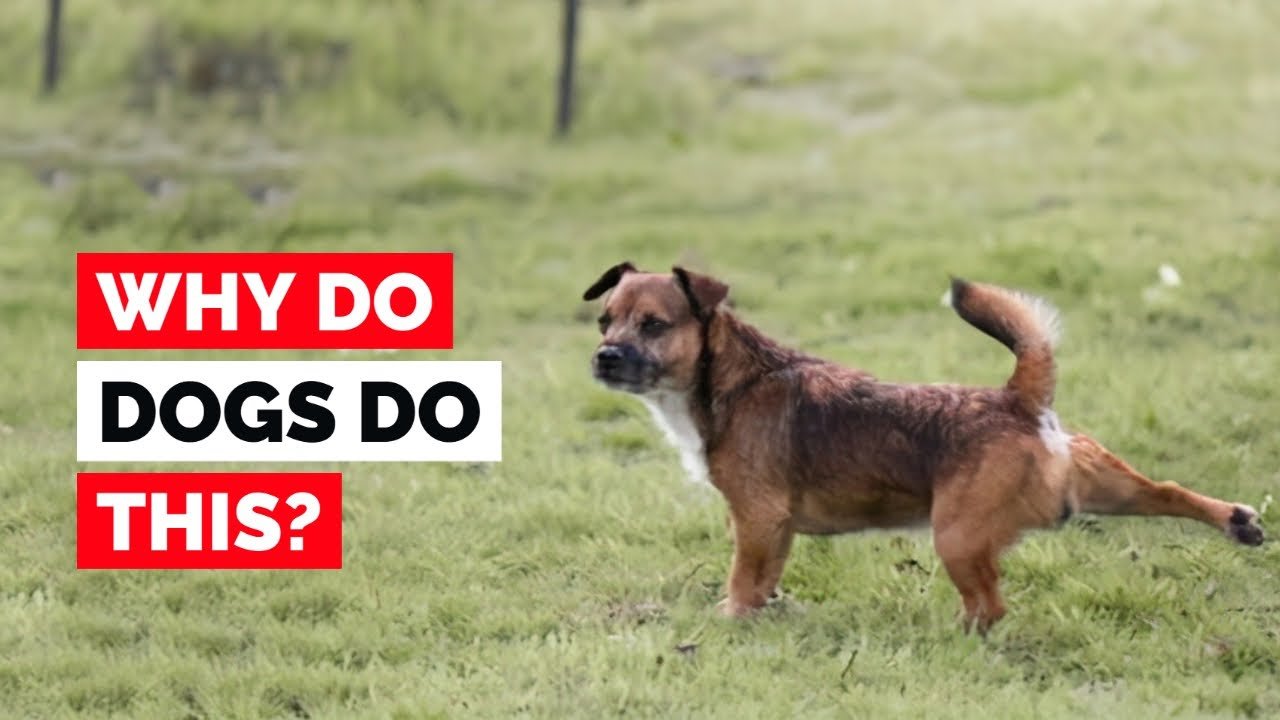
Dogs can and sometimes do kick after urinating as well, though it is less common than post-poop kicking. The mechanism and motivation are the same: spreading paw gland pheromones to amplify the urine scent mark.
Urine marks tend to be shorter-lasting in terms of odor. Kicking after urination helps compensate for this by leaving a longer-lasting physical and visual mark in the ground alongside the scent message.
In some dogs, particularly those with strong territorial instincts, kicking after peeing is just as consistent as post-poop kicking and serves an equally important role in their daily scent communication routine.
Frequently Asked Questions (FAQs)
Why do dogs kick after pooping?
Dogs kick after pooping to mark their territory using pheromones released from scent glands in their paws. It is a natural instinctual behavior rooted in canine communication and inherited from wild ancestors like wolves.
Is it normal for dogs to kick the ground after they poop?
Yes, it is completely normal and healthy behavior. Vets classify it as a natural instinct that requires no intervention unless it is causing physical injury to the dog’s paw pads.
Do all dogs kick after pooping?
Not all dogs do it, but it is common. Estimates suggest around 10% of dogs exhibit this regularly, with frequency influenced by personality, breed, environment, and the presence of other dogs nearby.
Are male dogs more likely to kick after pooping than females?
No, both male and female dogs kick after pooping with similar frequency. The main variable is confidence and personality, not sex. Female dogs have the same paw scent glands as males.
Is my dog trying to cover its poop like a cat?
No, dogs are not trying to cover their poop. Unlike cats, dogs are spreading and amplifying their scent. Kicking increases the odor signal rather than hiding it, which is the opposite of what cats do in a litter box.
Can I train my dog to stop kicking after pooping?
You can reduce or redirect the behavior using positive reinforcement and timing. Redirect your dog immediately after elimination with a treat or command before kicking begins. You cannot fully eliminate an instinctual behavior, but you can manage it effectively.
Does neutering stop dogs from kicking after pooping?
Neutering has minimal effect on post-poop kicking in most dogs. The behavior is deeply instinctual and not primarily driven by reproductive hormones, so spaying or neutering rarely eliminates it.
What do the pheromones from paw glands communicate?
The pheromones released from a dog’s paw glands can communicate the dog’s age, sex, health status, stress level, and territorial claim to other dogs that encounter the marked area afterward.
When should I be concerned about my dog kicking after pooping?
Be concerned if the kicking causes paw pad injuries, appears obsessive or compulsive, or is accompanied by signs of pain, limping, or sudden behavioral changes. A vet check is recommended in those specific situations.
Does this behavior happen more in certain environments?
Yes, dogs kick more frequently near territorial boundaries, in high-traffic dog areas like parks, in unfamiliar environments, and when other dogs are physically present. The behavior is more active when social communication pressure is higher.
Conclusion
Why do dogs kick after pooping is a question with a genuinely fascinating answer rooted in millions of years of canine evolution. What looks like a simple post-bathroom quirk is actually a sophisticated, multi-layered communication system involving paw gland pheromones, anal gland secretions, visual ground marking, territorial instinct, and social dominance signaling all happening at once.
Dogs inherited this behavior from wolves and wild canids, and it remains just as biologically meaningful for your pet today as it was for their ancestors in the wild.
In 2026, the science on this behavior is clear: it is completely normal, deeply instinctual, and a healthy expression of your dog being a dog. Appreciate it, manage it if it causes practical problems, and never punish it. Your dog is simply leaving their mark on the world, one kick at a time.


