


Why did my cat pee on me? It’s a question every startled cat owner asks the moment they feel that warm, unwelcome surprise. One second your cat is curled up on your lap, the next you’re peeling off soaked clothes and wondering what you did wrong.
The truth is, you probably didn’t do anything wrong at all. Cats pee on their owners for a mix of medical, behavioral, and environmental reasons, and most of them are fixable once you know what to look for.
Quick Answer: Top Reasons Cats Pee on Their Owners
Before diving deep, here’s a fast overview. Most cases fall into one of three buckets: health issues, emotional stress, or litter box problems.
| Category | Common Cause | Needs a Vet? |
|---|---|---|
| Medical | UTI, FLUTD, kidney disease, diabetes | Yes |
| Medical | Arthritis or mobility pain | Yes |
| Behavioral | Stress, anxiety, big life changes | Sometimes |
| Behavioral | Territory marking or attention-seeking | Sometimes |
| Environmental | Dirty or inaccessible litter box | No |
| Environmental | Wrong litter type or box location | No |
If your cat has never done this before, treat it as a warning sign rather than bad behavior, since a sudden change is far more meaningful than a long-standing habit.
Medical Reasons Your Cat May Be Peeing on You
Cats are experts at hiding pain. Peeing on you is sometimes the only obvious clue that something is physically wrong.
Urinary Tract Infection (UTI)
A UTI creates urgency and discomfort. Your cat may not make it to the litter box in time, especially if you’re the nearest soft, warm surface.
Look for frequent trips to the litter box, straining, or crying while urinating. These signs usually mean it’s time for a vet visit.
Feline Lower Urinary Tract Disease (FLUTD)
FLUTD is an umbrella term for several bladder and urethra problems, including inflammation and crystals. It causes pain that can make cats avoid the litter box entirely.
Male cats are especially at risk because their urethra is narrower, which raises the chance of a dangerous blockage.
Kidney Disease
Kidney disease increases thirst and urine output. Your cat may simply produce more urine than they can control or reach the box in time for.
Older cats are more prone to this, so any senior cat suddenly peeing on you deserves a checkup.
Diabetes Mellitus
Like kidney disease, diabetes causes excessive thirst and urination. Weight loss, increased appetite, and lethargy often appear alongside it.
A blood and urine test at the vet can confirm or rule this out quickly.
Arthritis and Mobility Issues
Older or overweight cats may struggle to climb into a high-sided litter box. Rather than deal with the pain, they may pee on the nearest accessible spot, which might be you.
Switching to a low-entry litter box often solves this on its own.
Urinary Incontinence
True incontinence means your cat has little to no control over urination. It can stem from nerve damage, birth defects, spinal injury, or old age.
Unlike marking or stress peeing, incontinence usually looks accidental and happens without any obvious posture or warning.
Behavioral and Emotional Reasons Cats Pee on Owners
Once a vet rules out illness, behavior and emotion are the next place to look. Cats communicate a lot through urine.
Stress and Anxiety
A new pet, new baby, moving house, or even rearranged furniture can unsettle a cat. Urinating on you may be a stress response or a way to blend their scent with yours for comfort.
Cats are creatures of habit, and disruption to routine is one of the most common triggers for house soiling.
Territorial Marking
Marking behavior is different from a regular accident. A marking cat usually stands, backs up to a surface, and sprays a small amount rather than squatting to fully empty their bladder.
Peeing directly on a person is less about territory and more about anxiety or a bonding-gone-wrong moment, but intact cats are more prone to spraying in general.
Attention-Seeking Behavior
Some cats learn that urinating gets an instant, dramatic reaction from their owner. If your cat is under-stimulated or craving interaction, this can become a repeated pattern.
Increasing playtime and enrichment often reduces this kind of behavior over a few weeks.
Redirected Aggression or Fear
If your cat was recently startled, chased, or frightened by another animal, they may urinate out of pure fear response, sometimes while still in your arms or lap.
This is involuntary and not a behavioral choice, so punishment will only make the fear worse.
A Negative Association With the Litter Box
If your cat experienced pain while using the litter box in the past, such as from a UTI, they may now associate the box itself with pain and avoid it, even after the medical issue is resolved.
This learned avoidance can persist for weeks after the original problem is treated.
Environmental Triggers That Lead to Accidents
Sometimes the cause has nothing to do with your cat’s body or emotions. It’s about the litter box setup itself.
A Dirty Litter Box
Cats are famously clean animals. A box that hasn’t been scooped in a day or two can be enough to send them looking elsewhere, including your lap.
The general rule is one litter box per cat, plus one extra, scooped at least once daily.
Wrong Litter Box Location
A box placed somewhere noisy, high-traffic, or hard to reach (like a distant basement) discourages regular use. Cats want privacy and easy access.
Try moving the box to a quiet, low-traffic area and see if accidents decrease within a week.
Litter Type or Box Style
Some cats dislike scented litter, certain textures, or covered boxes that trap odor. A sudden litter brand change can also cause temporary avoidance.
If you recently switched products, consider going back to the old litter and transitioning more gradually.
Multi-Cat Household Competition
In homes with several cats, one cat may guard or “ambush” another near the litter box, making it feel unsafe to use.
Spreading litter boxes across different rooms, rather than lining them up together, reduces this kind of resource guarding.
Why Does My Cat Pee on Me While I’m Sleeping?
This scenario deserves its own section because it’s one of the most searched variations of this topic.
At night, your body is warm, still, and comforting, which can make cats more likely to settle on you for long periods. Combined with stress, a full bladder, or a health issue, this stillness increases the chance of an accident happening on you specifically.
If it only happens overnight, check that your cat has late-evening litter box access and hasn’t been shut out of a room where their box is kept.
Why Does My Cat Pee on Me After a Vet Visit?
Many owners notice this pattern specifically after a car ride or vet appointment, and it’s common enough to be its own category.
The stress of travel, unfamiliar smells, and handling by strangers can overwhelm a cat’s system. Urinating on you afterward is often a stress release rather than anything medical.
Giving your cat a quiet decompression period after appointments, away from loud noise, can reduce this reaction over time.
Medical vs. Behavioral: How to Tell the Difference
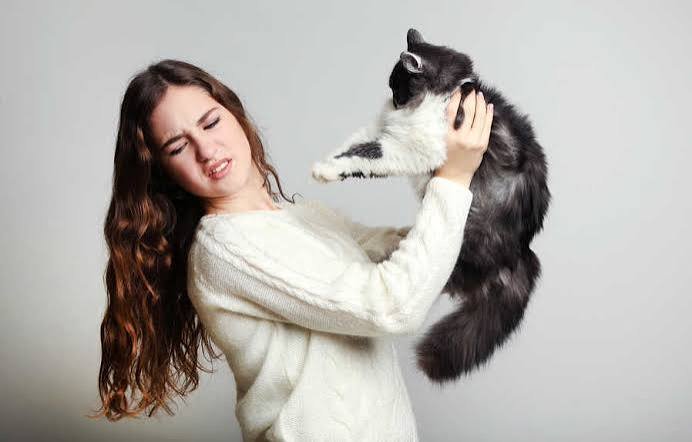
Because the fix is different for each cause, figuring out which category you’re dealing with matters.
| Sign | Points to Medical | Points to Behavioral |
|---|---|---|
| Straining or crying while peeing | Yes | No |
| Blood in urine | Yes | No |
| Happens only during specific events (moves, guests) | No | Yes |
| Cat backs up and sprays a wall | No | Yes |
| Increased thirst or appetite change | Yes | No |
| Sudden onset with no environment change | Yes | Maybe |
When in doubt, always start with a veterinary visit. Ruling out illness first prevents wasted time on behavior fixes that won’t work for a medical problem.
How to Stop Your Cat From Peeing on You
Once you understand the likely cause, these steps address both medical and behavioral triggers.
Step 1: Schedule a Vet Visit
A urinalysis and physical exam is the fastest way to confirm or rule out infections, kidney issues, diabetes, or arthritis.
Bring notes on frequency, timing, and any other symptoms you’ve noticed to help your vet narrow things down.
Step 2: Audit Your Litter Box Setup
Make sure you have enough boxes, placed in quiet, accessible spots, and scooped daily.
Test different litter textures if your cat has been avoiding the box altogether.
Step 3: Reduce Environmental Stress
Keep routines predictable, introduce new pets or family members slowly, and give your cat safe hiding spots.
Pheromone diffusers designed for cats can also help ease anxiety during transitions.
Step 4: Never Punish the Behavior
Yelling, spraying water, or scolding your cat increases fear and stress, which usually makes house soiling worse, not better.
Instead, calmly clean the area and focus on identifying the root cause.
Step 5: Clean Thoroughly With an Enzymatic Cleaner
Regular soap won’t fully remove the scent markers in cat urine, and lingering smell can encourage repeat accidents in the same spot.
Enzymatic cleaners break down the odor-causing compounds so your cat isn’t drawn back to that exact location.
Step 6: Track Patterns
Keep a simple log of when and where accidents happen. Patterns around specific people, sounds, or times of day often reveal the real trigger.
This log is also useful information to share with your vet or a feline behaviorist.
When to See a Vet Immediately
Some symptoms should never wait for a scheduled appointment.
Seek emergency care if your cat is straining to urinate with little or no output, especially male cats, since this can signal a life-threatening urinary blockage.
Also seek prompt care for visible blood in urine, sudden lethargy, vomiting, or a complete stop in eating, as these combined with urination changes point to a more serious underlying condition.
Cleaning Tips: Getting Cat Urine Out of Clothes and Bedding
Since accidents on you often mean accidents on your clothes or sheets too, quick cleanup matters.
Rinse the fabric in cold water first; hot water can set the odor and stain deeper into fibers.
Use an enzymatic laundry additive or a cat-specific urine remover, then wash as usual. Avoid ammonia-based cleaners, since their smell can actually resemble urine to a cat’s nose and encourage remarking.
Air dry when possible and use a black light in a dark room to check for any residue you may have missed.
For mattresses, sofas, or carpets, blot up as much liquid as possible before applying an enzymatic spray, then let it sit for the full time listed on the product label rather than wiping it away early.
Keeping a small bottle of enzymatic cleaner on hand makes cleanup faster and reduces the chance that lingering odor draws your cat back to the same spot.
Does Age or Breed Affect This Behavior?
Age plays a bigger role than breed. Kittens may have accidents simply because litter training isn’t fully complete yet, and patience matters more than correction at this stage.
Senior cats face the opposite problem: declining kidney function, arthritis, and cognitive changes all become more common with age, making a vet visit even more important for cats over ten years old.
Breed-specific research is limited, but some studies suggest certain pedigree breeds have a slightly higher rate of urinary issues due to genetics. This doesn’t mean breed alone causes the behavior, only that it’s one more factor worth mentioning to your vet.
Common Myths About Cats Peeing on Owners
Misinformation spreads quickly online, and some popular explanations do more harm than good.
| Myth | Reality |
|---|---|
| Cats pee on you out of spite | Cats don’t have the cognitive framework for revenge; it’s stress, illness, or habitat mismatch |
| Rubbing a cat’s nose in it teaches a lesson | This increases fear and can worsen house soiling |
| Only untrained cats do this | Even well-trained cats regress under stress or illness |
| It’s always about marking territory | True spraying looks different from squatting and peeing on a person |
| Changing litter box location never helps | Location is one of the most fixable causes and often solves the issue fast |
Believing these myths often delays the real fix, whether that’s a vet visit or a simple litter box adjustment.
Multi-Cat Households: Extra Considerations
Homes with more than one cat face a unique challenge because it isn’t always obvious which cat is responsible for peeing on you.
Set up a camera or briefly separate cats to identify the source, since treatment and management differ depending on whether one cat or multiple cats are involved.
Resource competition is common in multi-cat homes. Make sure food, water, resting spots, and litter boxes are spread out so no single cat feels the need to guard or avoid shared spaces.
Prevention Checklist for the Future
Once the current issue is resolved, a few ongoing habits help prevent repeat incidents.
| Habit | Why It Helps |
|---|---|
| Scoop litter boxes daily | Keeps the box appealing and reduces avoidance |
| Schedule annual vet checkups | Catches kidney, urinary, or diabetes issues early |
| Keep one litter box per cat plus one extra | Reduces competition and access problems |
| Maintain a consistent routine | Lowers baseline stress levels |
| Use enzymatic cleaner on any accident right away | Prevents repeat marking on the same spot |
| Provide enrichment and playtime daily | Reduces attention-seeking and stress behaviors |
Consistency matters more than any single fix. Cats respond well to predictable environments, so small daily habits go a long way toward preventing future accidents.
Frequently Asked Questions (FAQs)
Why does my cat pee on me specifically and not other family members?
Cats often target the person they’re most bonded to or most stressed around. It can reflect comfort-seeking or anxiety tied to your scent and presence.
Is peeing on me a sign my cat loves me?
Not usually. It’s more often linked to stress, illness, or litter box problems than affection, even though the timing can feel personal.
Can stress alone cause a cat to pee on me?
Yes, stress is one of the most common non-medical triggers, especially after changes like moving, new pets, or loud events.
Should I punish my cat for peeing on me?
No. Punishment increases fear and stress, which typically makes the behavior worse and can damage your bond.
How do I know if it’s a UTI versus behavioral issue?
Straining, crying, or blood in urine points to a UTI. Sudden onset tied to a specific event usually points to behavior.
Does neutering or spaying help stop this behavior?
Yes, especially for territorial marking, spaying or neutering significantly reduces hormone-driven urine marking in most cats.
Can a dirty litter box really cause this?
Absolutely. Cats are highly sensitive to litter box cleanliness and may avoid a dirty box entirely, choosing you instead.
Why does my cat only pee on me while I’m sleeping?
Long, still periods at night make you an easy, warm target, especially if your cat has an untreated medical issue or restricted nighttime litter access.
How long does it take to fix this behavior?
With a confirmed cause, most cats improve within one to three weeks of consistent litter box and stress management changes.
When is cat urine on me a medical emergency?
If your male cat strains to urinate with little output, treat it as an emergency and seek veterinary care immediately, since it may signal a blockage.
What to Expect at the Vet
Knowing what happens during the appointment can make the process feel less stressful for both you and your cat.
Your vet will likely start with a physical exam, checking for pain, weight changes, and abdominal sensitivity around the bladder area.
A urinalysis is the core diagnostic tool. It checks for infection, crystals, blood, and concentration levels, all of which point toward different causes.
For older cats or those with recurring issues, bloodwork may be added to screen for kidney disease or diabetes, and an ultrasound or X-ray may follow if bladder stones are suspected.
| Test | What It Detects |
|---|---|
| Urinalysis | Infection, crystals, blood, pH imbalance |
| Bloodwork | Kidney function, diabetes, thyroid issues |
| Ultrasound or X-ray | Bladder stones, tumors, structural issues |
| Blood pressure check | Hypertension linked to kidney disease |
Most appointments for this issue are resolved within one or two visits, especially when you bring detailed notes on your cat’s symptoms and timing.
Conclusion
So, why did your cat pee on you? In most cases, it comes down to one of three things: an underlying medical issue, stress or emotional discomfort, or a litter box that isn’t meeting your cat’s standards.
The behavior is rarely about spite or dislike, even though it can feel that way in the moment. Start with a veterinary check to rule out infections, kidney disease, diabetes, or arthritis, since these are common and treatable causes.
From there, review your litter box setup, reduce sources of stress, and avoid punishing your cat, since fear only makes accidents more likely. With a little patience, careful observation, and the right combination of medical care and environmental changes, most cats stop this behavior completely, restoring peace to your home and your laundry pile.


