


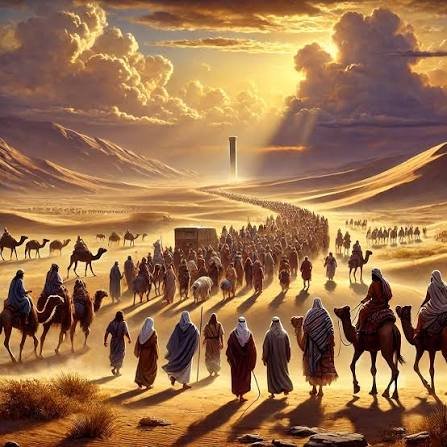
The question why did an 11-day journey took 40 years bible verse points to one of the most striking timelines in Scripture. A trip that should have taken less than two weeks stretched into four decades of wilderness wandering.
Why Did An 11-Day Journey Took 40 Years Bible Verse

The trip from Mount Horeb (Sinai) to Kadesh-barnea was only an 11-day walk, as stated in Deuteronomy 1:2. It became 40 years because the Israelites refused to enter Canaan after hearing the spies’ fearful report in Numbers 13-14.
God responded to their unbelief by declaring that the current generation would wander one year for each of the 40 days the spies had scouted the land, per Numbers 14:34.
What the Key Verse Says
Deuteronomy 1:2 states the distance plainly: “It is eleven days’ journey from Horeb by the way of Mount Seir unto Kadeshbarnea” (KJV).
This single verse is the reason the question exists at all. It shows the geography was never the problem — the delay was a direct consequence of a choice the people made.
The Israelites’ 11-Day Journey Took 40 Years — Full Timeline
Step 1: The Exodus From Egypt
God freed the Israelites from slavery in Egypt through ten plagues, then led them out under Moses (Exodus 12:37-42). This mass departure is known as the Exodus.
From there, the people traveled to Mount Sinai (Horeb), where they received the Law and built the tabernacle. This stop is where the 11-day countdown to Canaan technically begins.
Step 2: The Short Route to Canaan
From Sinai, Kadesh-barnea — the doorway to the Promised Land — was only 11 days away by the Mount Seir road (Deuteronomy 1:2). Under normal conditions, Israel could have entered Canaan within weeks of leaving Sinai.
There was no logistical reason for a multi-year delay. The distance itself was short and walkable.
Step 3: The Twelve Spies
At Kadesh-barnea, God told Moses to send twelve men — one from each tribe — to scout Canaan (Numbers 13:1-2). They explored the land for 40 days.
The spies confirmed the land was fertile, “flowing with milk and honey.” But ten of them also reported giants and fortified cities, and urged the people not to attempt an invasion (Numbers 13:27-33).
Step 4: Israel’s Refusal and Rebellion
The people believed the fearful report over God’s promise. They wept, accused Moses of bringing them out to die, and even talked about choosing a new leader to return to Egypt (Numbers 14:1-4).
Only Joshua and Caleb urged the people to trust God and move forward (Numbers 14:6-9). The majority ignored them.
Step 5: God’s Judgment — 40 Years for 40 Days
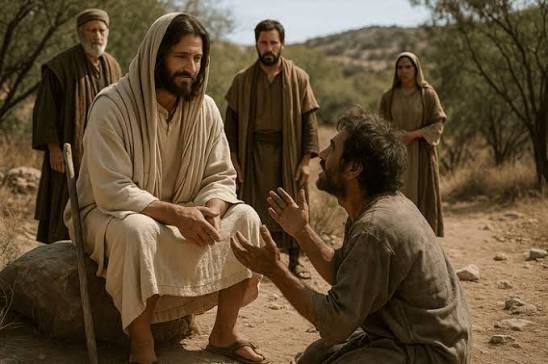
Because of this rebellion, God declared that the current generation, aged 20 and older, would not enter the Promised Land. Instead, they would wander for 40 years — one year for each day the spies had spent in Canaan (Numbers 14:29-34).
This is the direct biblical explanation for why an 11-day trip stretched into four decades. It was consequence, not coincidence.
Step 6: A New Generation Enters Canaan
The wilderness years were not wasted time. Deuteronomy 8:2-5 explains that God used the wandering to humble the people, test their hearts, and teach them dependence on Him.
By the time the 40 years ended, a new generation — shaped by that testing — was ready to enter and possess the land under Joshua’s leadership.
Bible Verses That Explain the 11-Day Journey and 40-Year Delay
| Verse | What It Shows |
|---|---|
| Deuteronomy 1:2 | Confirms the trip from Horeb to Kadesh-barnea was only 11 days |
| Numbers 13:1-2 | God commands the spies to scout Canaan |
| Numbers 13:31-33 | The ten spies give a fearful, discouraging report |
| Numbers 14:1-4 | The people rebel and want to return to Egypt |
| Numbers 14:29-34 | God sets the 40-year sentence, one year per scouting day |
| Deuteronomy 8:2 | Explains the wilderness years were meant to humble and test Israel |
| Deuteronomy 1:3 | Marks the fortieth year, showing how long the delay actually lasted |
| Habakkuk 2:4 | “The just shall live by faith” — the broader lesson applied |
Why Did God Allow the Delay Instead of Just Forgiving Israel?
It Was Consequence, Not Cruelty
God did forgive the people’s rebellion in the sense that He did not destroy the nation, as Moses interceded for them (Numbers 14:19-20). But forgiveness did not cancel the natural consequence of their choice.
The 40 years reflected the seriousness of unbelief, not a lack of mercy. A whole generation still received provision, protection, and guidance throughout the wandering.
The Wilderness Was Also Refinement
Deuteronomy 8:2-5 describes the wilderness as a training ground. God provided manna, kept their clothes from wearing out, and disciplined them “as a man disciplines his son.”
The delay reshaped the nation’s character before it inherited the land. Growth, not just punishment, was part of God’s purpose.
Key Takeaways
- The 11-day distance is confirmed directly in Deuteronomy 1:2.
- The 40-year delay came from Numbers 14:34, tied to the 40 days the spies scouted Canaan.
- Fear and unbelief, not geography, caused the extended wandering.
- God used the wilderness years to test and prepare a new generation.
- The story is repeated in the New Testament as a warning against unbelief (Hebrews 3:16-19).
Lessons From the 11-Day Journey That Took 40 Years
Unbelief Has Real Consequences
The Israelites saw the same evidence Joshua and Caleb saw, yet reached the opposite conclusion. Fear distorted their perception of what God had already promised.
This is a recurring biblical warning: doubting God’s word can delay the very blessing that was already within reach.
Delay Is Not Always Punishment
Not every difficult season is judgment. Sometimes delay is preparation, building character and trust before a promise is fully realized.
Believers today are encouraged to see waiting periods as potential growth, not just setbacks.
Faith Requires Action, Not Just Belief
Joshua and Caleb believed the same promise as everyone else, but they were also willing to act on it. Belief without willingness to move forward changed nothing for the ten fearful spies.
God’s Timing Is Not Wasted Time
The 40 years still included provision, guidance by cloud and fire, and the giving of the Law. Even a “delay” under God’s authority carried purpose and structure.
Comparison: The Planned Journey vs. What Actually Happened
| Element | Planned Journey | Actual Outcome |
|---|---|---|
| Distance | 11 days (Deuteronomy 1:2) | 40 years (Numbers 14:34) |
| Route | Horeb to Kadesh-barnea via Mount Seir | Extended wilderness wandering |
| Cause | Normal travel time | Unbelief and rebellion at Kadesh-barnea |
| Generation Affected | Those who left Egypt | Adults 20 and older barred from entry |
| Purpose of Delay | None needed | Testing, discipline, and preparation |
| Who Entered Canaan | Original generation (intended) | Joshua, Caleb, and the next generation |
Frequently Asked Questions (FAQs)
Why did an 11-day journey take 40 years according to the Bible?
Because the Israelites refused to enter Canaan after hearing a fearful report from the spies. God then declared 40 years of wandering, one year for each of the 40 days the land had been scouted (Numbers 14:34).
What Bible verse says the journey was only 11 days?
Deuteronomy 1:2 states it was “eleven days’ journey from Horeb by the way of Mount Seir unto Kadeshbarnea.”
Where in the Bible is the 40-year wilderness wandering recorded?
The full account appears in Numbers 13-14, with the sentence given in Numbers 14:29-34, and it’s referenced again in Deuteronomy 1-2.
Who were the twelve spies sent into Canaan?
Twelve men, one from each tribe of Israel, were sent by Moses at God’s command (Numbers 13:1-16). Joshua and Caleb were among them.
Why did ten of the twelve spies give a bad report?
They focused on the size of the inhabitants and the fortified cities rather than on God’s promise, saying, “We were like grasshoppers in our own sight” (Numbers 13:33).
What did Joshua and Caleb say differently?
They urged the people to trust God, saying the land could be taken because “the Lord is with us” (Numbers 14:8-9).
Did the entire generation die in the wilderness?
Yes, all adults 20 and older who had rebelled died during the 40 years, except Joshua and Caleb (Numbers 14:29-30, 38).
Why one year for each day instead of a fixed number?
God directly tied the punishment to the spies’ scouting period, stating, “each day for a year” (Numbers 14:34), making the 40 years symbolically connected to the 40 days of doubt.
Was Moses allowed to enter the Promised Land?
No, Moses was also barred from entering Canaan, though for a separate incident of disobedience at the waters of Meribah (Numbers 20:12).
What is the spiritual lesson behind this story?
It illustrates that unbelief can delay God’s promises, even when the promise itself never changes. Fear, not distance, was the real obstacle.
Is this story referenced elsewhere in the Bible?
Yes, Hebrews 3:16-19 and Psalm 95:8-11 both reference Israel’s wilderness rebellion as a warning against hardening one’s heart.
How long is 40 years symbolically in the Bible?
The number 40 often represents testing or transition periods in Scripture, such as 40 days of rain in the flood and Jesus’ 40 days in the wilderness.
What happened to the Israelites’ clothes and shoes during 40 years?
Deuteronomy 8:4 states their clothing did not wear out and their feet did not swell during the entire wandering period.
Did God abandon Israel during the 40 years?
No, God continued to provide manna, guide them with a cloud by day and fire by night, and gave them His Law during this time (Exodus 16; Numbers 9:15-23).
What does Deuteronomy 8:2 teach about the delay?
It explains God led them through the wilderness “to humble you and test you, to know what was in your heart, whether you would keep his commandments.”
Where is Kadesh-barnea located?
Kadesh-barnea sat at the southern border of Canaan, in the wilderness region near the Negev, and served as the staging point before entering the Promised Land.
How does this story apply to believers today?
It’s often used to encourage trust during delays, reminding readers that doubting God’s promise can prolong hardship that faith and obedience could have shortened.
Did any of the original generation eventually enter Canaan?
Yes, Joshua and Caleb, the two spies who trusted God’s promise, both lived to enter the Promised Land (Numbers 14:30).
What does “eleven days’ journey” mean in Deuteronomy 1:2?
It describes typical travel time by foot along a known route, showing the trip was short and geographically simple under normal circumstances.
Why is this story still searched and discussed today?
It offers a clear, relatable example of how fear and doubt can turn a short path into a long delay, a theme many readers connect with personally.


