


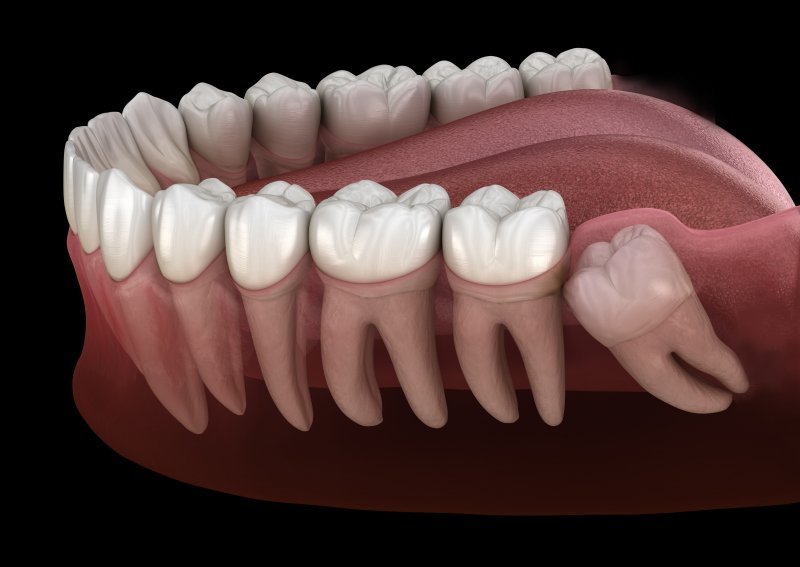
Why are they called wisdom teeth is one of the most Googled dental questions of all time, and the answer is far more interesting than most people expect.
These late-blooming molars at the very back of your mouth earned their famous nickname not because they make you smarter, but because of when they appear.
They typically erupt between the ages of 17 and 25, a life stage that ancient civilizations across Greece, Rome, and beyond universally associated with growing maturity and wisdom.
What Are Wisdom Teeth Exactly
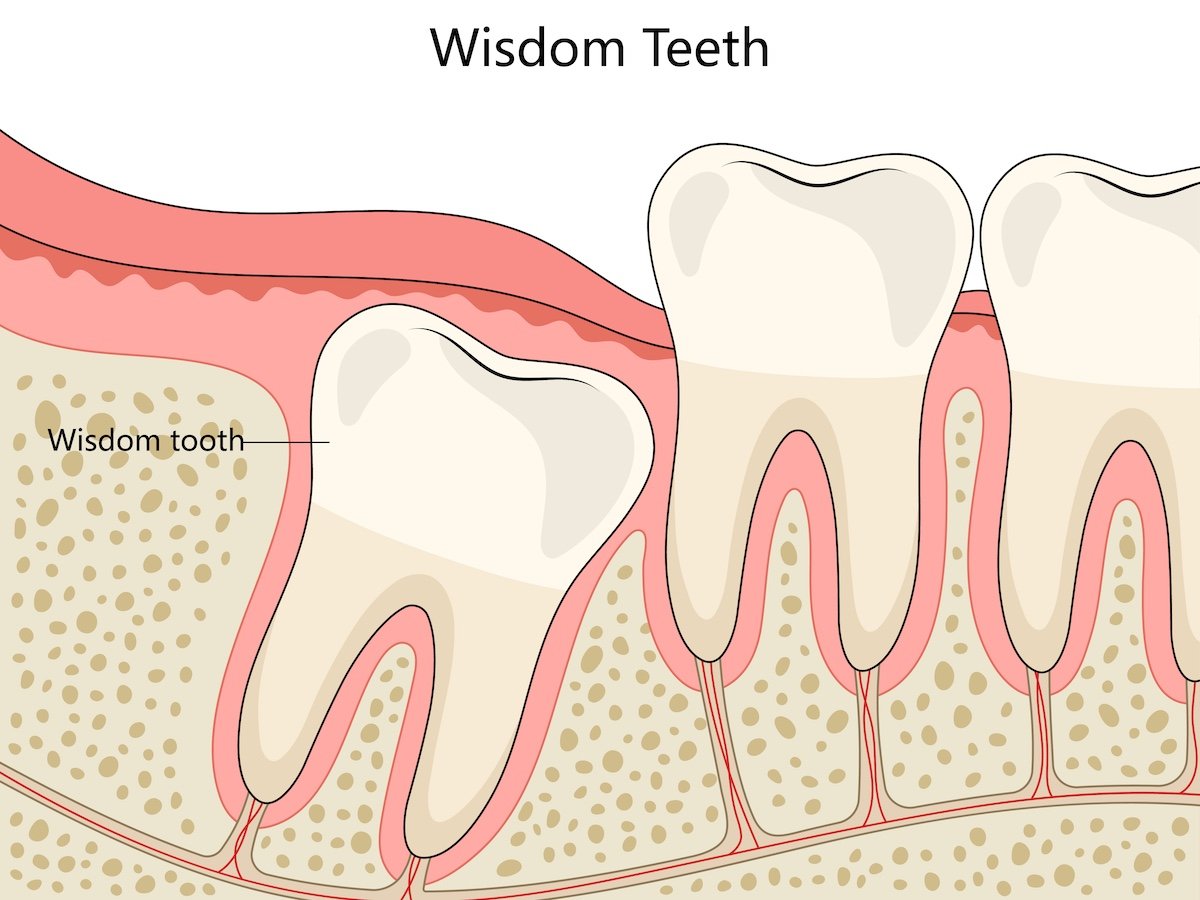
Wisdom teeth are the third and final set of molars that develop in the human mouth. They sit at the very back of the upper and lower jaws, one in each corner, giving most adults a total of four.
Unlike every other permanent tooth, which erupts during childhood, wisdom teeth hold off until late adolescence or early adulthood. That delayed timing is the entire reason behind their famous name.
Where Are Wisdom Teeth Located
They are positioned at the far end of the dental arch, directly behind the second molars. Dentists refer to them clinically as third molars and label them teeth number 1, 16, 17, and 32 on the standard dental numbering chart.
You can sometimes feel them as a slow ridge of pressure deep at the back of your gums, even weeks or months before they fully break through the surface.
Why Are They Called Wisdom Teeth
Why are they called wisdom teeth comes down to one simple reason: timing. These molars erupt between ages 17 and 25, a period that ancient cultures universally called the age of wisdom or the age of maturity.
The name is not a comment on intelligence. Nobody gets wiser teeth or smarter molars. It is purely a reflection of the age at which these teeth decide to finally show up, long after every other tooth has already settled in.
The Age of Wisdom Explained
In ancient Greece, Rome, and across many early civilizations, the transition from adolescence into adulthood was deeply significant. Reaching 17 to 25 years of age meant a person was expected to take on adult responsibilities, make serious decisions, and demonstrate judgment.
The arrival of these late molars right at this same life stage made an impression on scholars, physicians, and ordinary people alike. The connection between the teeth and the concept of acquired wisdom felt obvious and poetic, and the name stuck.
The Latin Origin of the Name
The Latin term for wisdom teeth is dens sapientiae, which translates directly to tooth of wisdom. This phrase was used throughout the Roman Empire and appeared in traditional medical writings of the era.
The word sapientiae is also the root of the English word sapient, meaning wise or having great judgment. So every time someone says wisdom teeth, they are unknowingly speaking a fragment of classical Latin.
The Ancient Greek Connection
Even before the Romans, the ancient Greeks had a name for these teeth. The philosopher and physician Hippocrates, often called the father of medicine, referenced them in his writings and described them as the last teeth to erupt in adulthood.
The Greek physician Aristotle also wrote about them specifically in his work The History of Animals, noting that wisdom teeth come in around the age of twenty and can cause great pain even in older individuals. The Greek term used was sophronisteres, meaning prudent or sensible teeth.
Aristotle’s Exact Words on Wisdom Teeth
Aristotle described wisdom teeth with striking clarity for his time, writing that they emerge in the case of both sexes and that cases had even been recorded of women in their eighties experiencing the eruption of wisdom teeth causing significant pain.
This early documentation confirms that the link between these molars and adulthood was being observed and recorded as far back as the 4th century BC, more than two thousand years ago.
When Did the English Term Appear
The specific English phrase wisdom teeth has roots going back to the 1660s, when the molars were commonly called teeth of wisdom in English-language medical texts. The more compact modern form, wisdom teeth, became standard usage during the 19th century.
So the name has been evolving and traveling across languages and centuries for well over 2,000 years, from ancient Greek into Latin and eventually into the English we use today.
How the Name Traveled Across Languages
One of the most remarkable things about wisdom teeth is that nearly every language on earth developed its own version of the same concept entirely independently. This cross-cultural agreement is powerful evidence of how universally humans noticed and connected these late-erupting teeth with the transition into adulthood.
The pattern is consistent from Europe to Asia to the Middle East, and the specific words chosen in each language reveal something unique about how each culture interpreted that connection.
Wisdom Teeth Names Around the World
| Language | Term Used | Translation |
|---|---|---|
| English | Wisdom teeth | Teeth of wisdom |
| Latin | Dens sapientiae | Tooth of wisdom |
| Greek (ancient) | Sophronisteres | Prudent or sensible teeth |
| Spanish | Muelas del juicio | Teeth of judgment |
| French | Dents de sagesse | Teeth of wisdom |
| German | Weisheitszähne | Wisdom teeth |
| Italian | Denti del giudizio | Teeth of judgment |
| Arabic | Ders-al-a’qel | Teeth of the mind |
| Korean | Sa-rang-nee | Love teeth |
| Japanese | Oyashirazu | Unknown to parents |
| Turkish | 20 yaş dişi | Twentieth year tooth |
| Dutch | Verstandskies | Far-standing molar / wisdom molar |
The Spanish and Italian Approach: Teeth of Judgment
Spanish speakers call them muelas del juicio, which means teeth of judgment rather than wisdom. Italian uses denti del giudizio with the same meaning.
This framing connects these molars not just to accumulated knowledge but to moral reasoning and the adult capacity to make sound decisions. It adds a slightly different philosophical dimension to the same fundamental idea.
The Korean Interpretation: Love Teeth
Korean takes the most poetic approach of all. In Korean, wisdom teeth are called sa-rang-nee, which means love teeth. The reasoning is charming: these teeth erupt during the late teenage years, the same time most young people experience their first romantic feelings.
Rather than linking the teeth to wisdom or judgment, Koreans linked them to the emotional awakening of young adulthood. It is a completely different cultural lens on the exact same biological event.
The Japanese Version: Unknown to Parents
Japanese calls wisdom teeth oyashirazu, which loosely translates to unknown to parents. The reasoning here is delightful and very practical.
By the time wisdom teeth erupt, many young Japanese adults have already left the family home. Parents are therefore unaware of this dental milestone because they are no longer living with their child. The name captures a social reality rather than a philosophical idea.
The Turkish Approach: The Twentieth Year Tooth
Turkish takes the most literal and precise approach. The Turkish name is 20 yaş dişi, meaning the twentieth year tooth. There is no poetic interpretation, no cultural metaphor, just a factual acknowledgment of when these teeth typically arrive.
This directness reflects a different kind of cultural logic, one that prioritizes observable timing over symbolic meaning.
The Dutch Folk Etymology
Dutch has an interesting linguistic footnote in the wisdom teeth story. The Dutch word is verstandskies, which technically means far-standing molar. The word verstand translates to wisdom or understanding, which is close enough to the English meaning.
However, there is also a folk etymology suggesting the term was originally about physical position, the tooth that stands far back in the mouth. Some linguists believe this Dutch interpretation influenced or overlapped with translations into other European languages.
Do Wisdom Teeth Actually Make You Wiser
No. Wisdom teeth do not grant intelligence, improve judgment, or signal intellectual development. The name is purely about timing, not about any cognitive function these teeth perform.
There is no biological connection whatsoever between the eruption of third molars and mental development or wisdom in any measurable sense. The name is poetic, historical, and cultural, nothing more.
The Brain Development Coincidence
Here is an interesting parallel that scientists have noted. The human brain continues developing well into the mid-twenties, with the prefrontal cortex, the region most associated with judgment and decision-making, not fully maturing until around age 25.
This means wisdom teeth erupt during roughly the same window as the brain’s final maturation phase. While this is a coincidence and not a causal relationship, it does add an accidental layer of scientific truth to the ancient poetic name. The age of wisdom really is when both the teeth and the brain are finishing their development.
What Were Wisdom Teeth Originally For
Wisdom teeth served a very clear purpose for our ancient human ancestors. Early humans ate a rough, unprocessed diet of raw meat, hard nuts, tough plant roots, fibrous vegetables, and coarse seeds. All of that required significant grinding power.
The third molars were a practical tool, providing extra chewing surface area and replacing molars that wore down or fell out from the abrasive ancient diet. They were genuinely useful teeth for most of human history.
Why Ancient Humans Did Not Have Impaction Problems
Ancient human skulls show much wider and longer jawbones than modern humans possess. Anthropologists have found that prehistoric jaws had enough room to comfortably accommodate all 32 teeth, including the four wisdom teeth, without crowding or impaction.
The problem is not wisdom teeth themselves but the modern jaw that has shrunk over thousands of years while the genetic blueprint for growing wisdom teeth has largely remained the same.
How the Modern Jaw Changed
As human diets shifted with cooking, agriculture, and food processing, jaws began to change. Softer foods required less chewing force, which meant the jaw muscles and bones were under less mechanical stress during development.
Over generations, jaws became smaller. The jaw has also been influenced by breastfeeding patterns, with some research suggesting bottle-fed infants develop slightly narrower jaws than those who breastfed. The result across the population is a modern jaw that frequently has no space for wisdom teeth.
The Evolutionary Mismatch Problem
This mismatch between jaw size and tooth blueprint is the core reason why wisdom teeth cause so many modern problems. The teeth are still following ancient genetic instructions to grow, but the jaw they are growing into has changed significantly.
Anthropologists describe wisdom teeth as a vestigial structure, a feature that once had clear function but has become largely unnecessary or even problematic in modern humans due to evolutionary changes in our anatomy and diet.
What Is an Impacted Wisdom Tooth
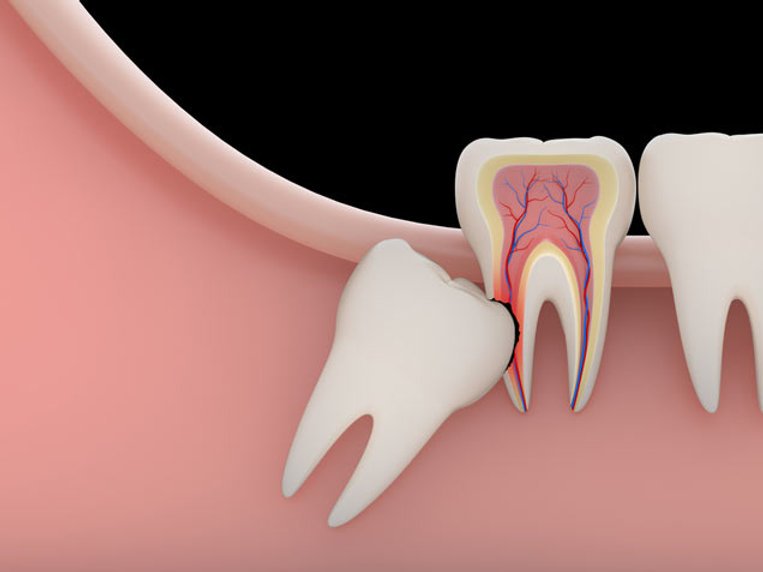
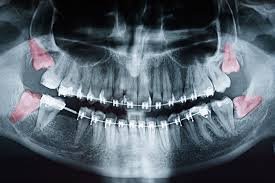
An impacted wisdom tooth is one that cannot fully erupt through the gum line because there is not enough space in the jaw to accommodate it. The tooth may become stuck at an angle, pressing against the neighboring molar, or remain partially or fully trapped beneath the gum.
Impacted wisdom teeth are classified by the direction and depth of the impaction, including horizontal, vertical, mesioangular, and distoangular positions, each describing how the tooth is oriented as it tries and fails to emerge properly.
How Common Is Impaction
Impaction is extremely common. Research indicates that around 72 to 85 percent of people have at least one wisdom tooth that fails to erupt properly. About 5 million wisdom tooth removals are performed in the United States every year.
A 2024 survey found that 53 percent of Americans had undergone wisdom teeth removal at some point in their lives. The procedure is one of the most commonly performed oral surgeries in the world.
Problems Caused by Wisdom Teeth
When wisdom teeth become impacted or only partially erupt, they can trigger a cascade of dental health problems. Understanding these issues helps explain why so many dentists recommend removal even before symptoms fully develop.
The problems are wide-ranging and can affect not just the wisdom tooth itself but also the neighboring second molar and the surrounding gum and bone tissue.
Common Wisdom Tooth Problems Table
| Problem | Description |
|---|---|
| Impaction | Tooth stuck in jaw, cannot erupt fully |
| Pericoronitis | Gum infection around a partially erupted tooth |
| Crowding | Pressure on neighboring teeth causing misalignment |
| Tooth decay | Hard-to-reach location makes cleaning difficult |
| Cyst formation | Fluid-filled sac develops around the tooth |
| Root damage | Pressure damages roots of adjacent second molar |
| Jaw pain | Chronic discomfort from impaction pressure |
| Bad breath | Trapped food and bacteria in the gum pocket |
Not Everyone Gets Wisdom Teeth
A significant portion of the population simply never develops one or more wisdom teeth at all. Estimates from dental research suggest that between 20 and 37 percent of people are missing at least one wisdom tooth.
This variation is largely genetic. The PAX9 gene has been identified as one of the key factors influencing whether wisdom teeth develop. Different human populations show striking variation, with some groups having very high rates and others having very low rates.
Population Differences in Wisdom Teeth Development
The variation across human populations is remarkable. Studies have found that among Bantu speakers in Africa, the rate of wisdom tooth development is as high as 99.8 percent. Among some Indigenous Mexican populations, the rate drops to nearly zero percent.
This enormous range confirms that wisdom teeth development is not a universal constant but a genetic trait that has been evolving differently across populations, possibly in response to thousands of years of differing dietary pressures and jaw anatomy.
Wisdom Teeth and Stem Cells
One genuinely fascinating and lesser-known fact about wisdom teeth is that they contain viable stem cells in their dental pulp. Researchers have been exploring these stem cells for potential medical applications beyond dentistry.
Studies have investigated the possibility of using wisdom tooth stem cells in regenerative medicine, including potential applications for treating certain neurological conditions, repairing bone tissue, and even contributing to research on other regenerative therapies. The field is still developing but adds an unexpected scientific dimension to these often-discarded teeth.
The Oldest Documented Impacted Wisdom Tooth
Archaeological evidence of wisdom tooth impaction dates back thousands of years. The oldest documented case of an impacted wisdom tooth was found in a human skeleton estimated to be approximately 13,000 years old, discovered in what is now Western Europe.
This confirms that while ancient humans had larger jaws on average, impaction was not entirely unknown even then. Individual variation in jaw size and tooth positioning has always existed in the human population.
When Wisdom Teeth Erupt
Most people experience wisdom tooth eruption between the ages of 17 and 25, but the timing varies considerably from person to person. Some people see their wisdom teeth begin to emerge as early as 15, while others experience eruption in their late twenties or even early thirties.
In rare documented cases, wisdom teeth have been observed emerging in individuals in their fifties and even eighties, just as Aristotle described in his ancient writings. The eruption timeline is influenced by genetics, jaw anatomy, and overall dental development patterns.
Wisdom Teeth Eruption Timeline
| Stage | Age Range | What Happens |
|---|---|---|
| Root formation begins | Around age 7–10 | Tooth bud develops deep in the jaw |
| Crown forms | Ages 12–16 | The visible tooth structure develops |
| Early eruption signs | Ages 15–17 | Pressure felt at back of jaw |
| Active eruption | Ages 17–25 | Tooth breaks through or becomes impacted |
| Full eruption if space allows | Ages 18–26 | Complete emergence with no issues |
| Late eruption (rare) | Ages 27+ | Occurs in a small percentage of people |
Signs Your Wisdom Teeth Are Coming In
The most common sign is a persistent aching pressure at the very back of the jaw on one or both sides. Some people also experience tenderness in the gum tissue at the far back of the mouth.
Other signs include mild swelling in the jaw, slight difficulty fully opening the mouth, and occasional headaches. In cases where the tooth becomes impacted, the symptoms can escalate to sharp pain, visible gum swelling, bad breath, and signs of infection.
When Should You See a Dentist
Any persistent jaw pain at the back of the mouth warrants a dental visit. Dentists use X-rays to assess the position of developing wisdom teeth well before they fully erupt, which allows early intervention if problems are anticipated.
Most dental professionals recommend a wisdom tooth evaluation in the late teenage years. Early removal, typically before age 25, results in faster recovery, smaller root structures to remove, and fewer complications than removal later in adulthood.
Do Wisdom Teeth Always Need to Be Removed
No. When wisdom teeth erupt fully, align properly with the bite, and can be cleaned effectively with a toothbrush and floss, there is no medical reason to remove them. A significant minority of people experience no problems at all with their wisdom teeth.
Dentists generally recommend removal when there is active impaction, infection, decay, crowding of neighboring teeth, cyst formation, or difficulty maintaining adequate oral hygiene around the tooth. The decision is made on a case by case basis using clinical evaluation and X-ray imaging.
Wisdom Teeth Removal Statistics
About 5 million Americans undergo wisdom tooth removal each year, making it one of the most performed outpatient surgical procedures in the country. The procedure is typically done under local anesthesia, with sedation available for anxious patients.
Recovery from straightforward wisdom tooth removal generally takes three to five days for basic healing and one to two weeks for full tissue recovery. More complex removals involving deeply impacted teeth can involve longer recovery periods and more significant post-operative care.
The Role of Genetics in Wisdom Teeth
Whether you develop wisdom teeth, how many you develop, whether they become impacted, and how much space you have in your jaw are all significantly influenced by your genetic makeup. If your parents had easy experiences with wisdom teeth or never developed them at all, you are more likely to share that pattern.
The PAX9 gene and several other genetic markers have been associated with the development and positioning of third molars. Researchers believe that as human populations continue to evolve, the prevalence of wisdom teeth may gradually decrease over generations.
Are Humans Evolving Away From Wisdom Teeth
There is growing scientific discussion about whether humans are in the process of evolving away from wisdom teeth entirely. The increasing percentage of people born without one or more third molars is cited as evidence of an ongoing micro-evolutionary shift.
Some researchers point to dietary and developmental changes over the past several thousand years that have selected for smaller jaws and fewer wisdom teeth. If this trend continues, future generations may routinely be born with no wisdom teeth at all, making the name entirely a historical curiosity.
Cultural Significance of Wisdom Teeth Through History
Across cultures and throughout history, the arrival of wisdom teeth was treated as a meaningful life event. In traditional Chinese medicine, wisdom tooth eruption marked a critical life transition and signaled the full assumption of adult responsibility.
In various Indigenous American traditions, the arrival of wisdom teeth was linked to personal growth, spiritual development, and readiness for adult roles in the community. The biological event carried cultural weight in ways that dentistry alone does not capture.
Wisdom Teeth in Modern Popular Culture
Today wisdom teeth are more commonly associated with awkward social media videos of post-surgery patients, swollen cheeks, and ice packs than with philosophy or maturity. The removal experience has become something of a shared cultural rite of passage in many Western countries.
The surgery, the recovery, the funny swollen face, and the instructions to eat soft foods for a week have created an entire genre of relatable content. In this sense, wisdom teeth continue to mark a coming-of-age moment, just a different kind than ancient civilizations imagined.
Fun Facts About Wisdom Teeth You Probably Did Not Know
These are some of the most surprising, entertaining, and genuinely fascinating facts about wisdom teeth that rarely make it into mainstream dental conversations.
Each one adds another layer to the already rich story behind why are they called wisdom teeth and what these teeth actually mean in human history and biology.
Fun Facts Table
| Fact | Detail |
|---|---|
| Aristotle wrote about them | Described in The History of Animals around 350 BC |
| Oldest impacted tooth found | Skeleton approximately 13,000 years old in Western Europe |
| Stem cells in wisdom teeth | Dental pulp contains viable stem cells used in research |
| Korean name means love teeth | Because they appear during the age of first love |
| Japanese name means unknown to parents | Because young adults have left home by the time they erupt |
| 5 million removed annually in the US | One of the most common outpatient surgeries |
| Some people have 0 wisdom teeth | 20–37% of people are missing at least one |
| Some people have more than 4 | Extra wisdom teeth are called supernumerary teeth |
| Bantu speakers: 99.8% develop them | Among the highest rates of any population |
| Some Mexican Indigenous groups: nearly 0% | Among the lowest rates of any population |
| Brain finishes developing at 25 | Same age range as wisdom teeth eruption, a coincidence |
| Ancient jaws were larger | Prehistoric humans had room for all 32 teeth comfortably |
| The 1660s first English use | Term teeth of wisdom used in English medical texts |
| Turkish just calls them age-20 teeth | The most literal name of any language |
Why the Name Wisdom Teeth Is Surprisingly Accurate
While wisdom teeth do not grant intelligence, the name holds a certain accidental accuracy that becomes clearer the more you examine it. They arrive at the exact same developmental window as the brain’s final maturation phase.
They mark the end of the body’s major developmental milestones in the mouth, just as the late twenties mark a meaningful threshold in human cognitive and emotional development. The ancient physicians who named them may not have had neuroscience to back them up, but they were observing something real about the human life cycle.
What Makes Wisdom Teeth Unique Among All Human Teeth
Every other permanent tooth in the human mouth follows a predictable and well-documented developmental schedule from childhood onward. Wisdom teeth alone defy that schedule dramatically, waiting a full decade or more after the other permanent teeth before making their appearance.
This extreme delay is what has made them notable, nameable, and memorable across virtually every human culture that has ever existed. They are the teeth that kept every civilization on earth waiting, and then arrived with problems. No other tooth in the human body has that kind of story.
The Relationship Between Diet, Jaw Size, and Wisdom Teeth Problems
Modern dental research has confirmed what anthropologists suspected: the rise in wisdom tooth problems correlates with the shift to softer, more processed diets over the past several thousand years. Studies of populations that still eat largely unprocessed foods show lower rates of impaction and dental crowding.
The jaw needs mechanical stimulation during development to reach its full potential size. When children grow up eating primarily soft, cooked, and processed foods, the jaw may not develop as fully as it would on a tougher diet. This contributes to less space for all teeth, including wisdom teeth.Frequently Asked Questions (FAQs)
Why are they called wisdom teeth?
They are called wisdom teeth because they erupt between ages 17 and 25, a period historically called the age of wisdom. The name is about timing, not intelligence.
What is the origin of the term wisdom teeth?
The term traces back to the Latin dens sapientiae meaning tooth of wisdom and the Greek sophronisteres meaning prudent teeth. The English phrase was recorded as early as the 1660s.
Do wisdom teeth make you smarter?
No. Wisdom teeth have no effect on intelligence, judgment, or cognitive ability. The name is entirely based on the age at which they appear, not on any biological function they perform.
At what age do wisdom teeth come in?
Wisdom teeth typically erupt between ages 17 and 25. Some people experience eruption as early as 15 or as late as their early thirties, and rare cases of late eruption in older adults have been documented.
Why do wisdom teeth cause so many problems?
Modern human jaws have become smaller over thousands of years due to dietary and developmental changes, but the genetic instruction to grow wisdom teeth remains. The mismatch causes impaction, crowding, infection, and pain.
Does everyone get wisdom teeth?
No. Between 20 and 37 percent of people are missing at least one wisdom tooth. Some people never develop any. Whether you get them is largely determined by genetics, including the PAX9 gene.
What do other languages call wisdom teeth?
Spanish calls them teeth of judgment, Korean calls them love teeth, Japanese calls them unknown to parents, Turkish calls them twentieth year teeth, and Arabic calls them teeth of the mind.
What did ancient people think about wisdom teeth?
Ancient Greeks and Romans saw them as a marker of adulthood and maturity. Hippocrates and Aristotle both wrote about them. Many ancient cultures viewed their appearance as a significant life transition.
Can wisdom teeth contain stem cells?
Yes. The dental pulp of wisdom teeth contains viable stem cells that researchers have explored for use in regenerative medicine, though the field is still in early stages of development.
Are humans evolving to lose wisdom teeth?
Evidence suggests a gradual evolutionary shift may be underway. More people are being born without wisdom teeth, and scientists believe this trend may continue over future generations as the modern jaw continues to adapt to softer diets.
Conclusion
Why are they called wisdom teeth is a question with a 2,000-year-old answer rooted in ancient Greek medicine, Roman Latin, and the universal human experience of growing up.
These late-erupting third molars earned their name because they arrive during the age of wisdom, the transitional years between adolescence and full adulthood, a life stage every ancient civilization recognized as meaningful.
From the Greek sophronisteres to the Korean love teeth to the Japanese teeth unknown to parents, every culture that ever paid attention to these molars found something worth naming in the timing of their arrival.
Whether they cause you trouble or not, wisdom teeth carry one of the most poetic and historically rich names in all of human anatomy, a tiny linguistic bridge connecting modern dentistry to Aristotle, ancient Rome, and the long story of what it means to grow up.


