


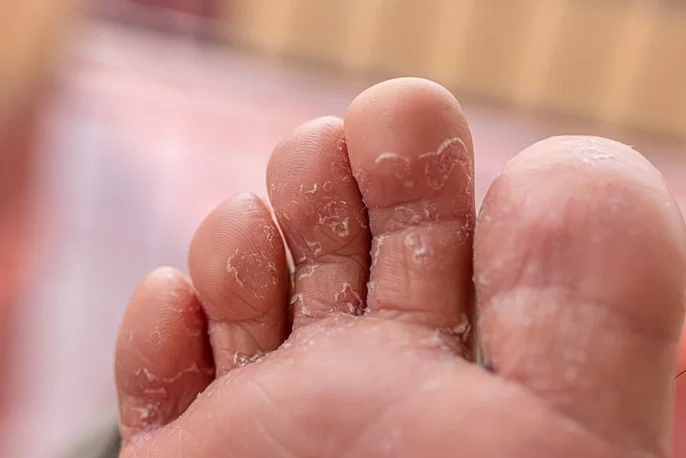
Why are my feet peeling? This is one of the most common skin questions people search for, and the honest answer is that it usually isn’t serious.
Peeling feet can come from something as simple as dry winter air or as specific as a fungal infection.
In most cases, the skin on your feet flakes because the outer barrier has been weakened by moisture loss, friction, sweat, or irritation.
The good news is that peeling feet almost always respond to simple home care.
Below, we break down the seven most common reasons your feet may be peeling in 2026, along with practical, doctor-backed remedies you can start today.
Quick Overview: Common Causes of Peeling Feet
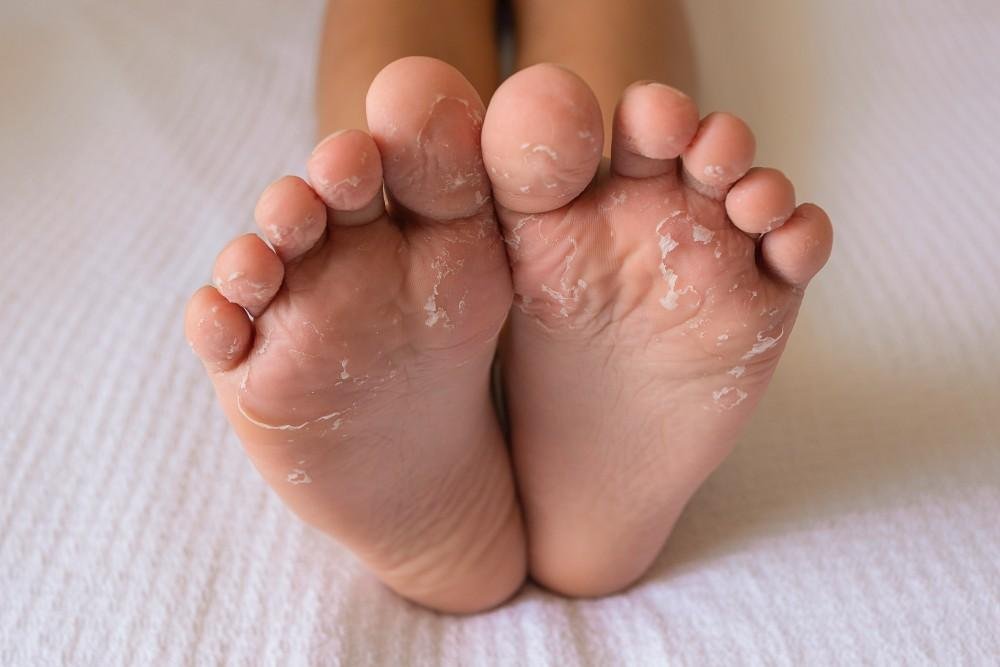
Before diving into detail, here’s a fast snapshot of the most frequent causes, their typical symptoms, and the fastest fix for each one.
| Cause | Common Symptoms | Fastest Remedy |
|---|---|---|
| Dry skin (xerosis) | Flaking, rough patches, tightness | Fragrance-free moisturizer |
| Athlete’s foot | Itching between toes, redness | OTC antifungal cream |
| Eczema | Red, itchy, inflamed patches | Fragrance-free emollients |
| Psoriasis | Thick scaly patches, silvery flakes | Topical corticosteroids |
| Sunburn | Redness, peeling days later | Aloe vera, cool compress |
| Hyperhidrosis | Excess sweating, soggy skin | Antifungal powder, breathable shoes |
| Corns & calluses | Hard, thick, cracking skin | Gentle exfoliation, padding |
1. Dry Skin (Xerosis)
Dry skin is the single most common reason feet peel. It happens when the outer skin layer loses water and natural oils faster than it can replace them.
Hot showers, harsh soaps, low humidity, and cold weather all strip moisture from the skin. Feet are especially vulnerable because they’re covered in socks and shoes most of the day.
Dehydration, stress, and smoking can also make dry skin worse. When the skin barrier weakens, the top layer sheds in small flakes or larger sheets.
How to treat dry, peeling feet:
- Wash feet with a mild, fragrance-free cleanser instead of harsh soap
- Apply a thick, dye-free moisturizer right after washing
- Choose an ointment or cream over a lotion, since they lock in more moisture
- Wear cotton socks after moisturizing to help the product absorb
- Drink enough water throughout the day to support skin hydration from the inside
Most cases of dry, peeling feet improve within one to two weeks of consistent moisturizing.
2. Athlete’s Foot (Fungal Infection)
Athlete’s foot, also called tinea pedis, is a contagious fungal infection that thrives in warm, damp environments. It’s one of the top causes of peeling that’s mistaken for simple dryness.
The infection usually starts between the fourth and fifth toes. It spreads to the soles and sides of the feet if left untreated.
Common signs include itching, burning, redness, cracked skin, and peeling that doesn’t improve with moisturizer alone.
Table: Athlete’s Foot vs. Dry Skin
| Feature | Athlete’s Foot | Dry Skin |
|---|---|---|
| Itching | Intense, persistent | Mild or absent |
| Location | Between toes first | Soles and heels |
| Redness | Common | Rare |
| Response to lotion | Little to none | Improves quickly |
| Contagious | Yes | No |
How to treat it:
- Apply an over-the-counter antifungal cream, spray, or powder daily
- Keep feet clean and completely dry, especially between the toes
- Change socks daily, or more often if your feet sweat
- Wear sandals in locker rooms, showers, and pool areas
- See a podiatrist if symptoms don’t improve within two to four weeks
Stopping treatment too early is one of the main reasons athlete’s foot keeps coming back.
3. Eczema
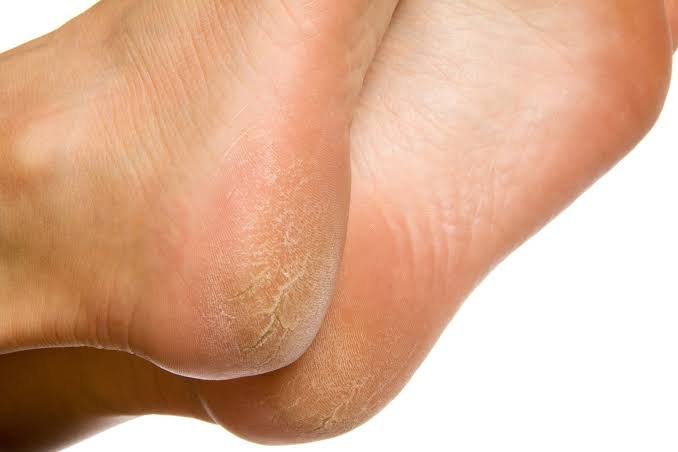
Eczema is an inflammatory skin condition that can affect the feet just as easily as the hands or elbows. It causes the immune system to overreact, damaging the skin’s moisture barrier.
On the feet, eczema often looks like dry, itchy, red patches that flake or peel. Some people also develop small blisters, especially during flare-ups.
Stress, allergens, heat, and certain fabrics can trigger eczema flare-ups on the feet.
How to manage eczema-related peeling:
- Use fragrance-free moisturizers and gentle, dye-free detergents
- Avoid long, hot showers that strip natural oils
- Apply moisturizer within minutes of washing to lock in hydration
- Ask a dermatologist about prescription-strength creams for stubborn flare-ups
- Identify and avoid personal triggers like certain socks or shoe materials
Eczema is a chronic condition, so consistent care matters more than a one-time fix.
4. Psoriasis
Psoriasis is an autoimmune disorder that speeds up skin cell turnover. Instead of shedding gradually, skin cells build up and peel off in thick, scaly patches.
On the feet, psoriasis often appears on the soles as thickened, silvery, or flaky skin. It can also affect the toenails.
Unlike simple dry skin, psoriasis is a lifelong condition that tends to flare and calm down in cycles.
Treatment options include:
- Topical corticosteroids to reduce inflammation
- Salicylic acid products to soften and remove scale
- Regular moisturizing to reduce cracking and discomfort
- Phototherapy for moderate to severe cases
- Prescription immunosuppressants for widespread or resistant psoriasis
If you notice thick, scaly peeling that keeps returning, a dermatologist can confirm whether psoriasis is the cause.
5. Sunburn
Sunburned feet are more common than most people realize, especially in sandal season. Because feet are often overlooked when applying sunscreen, they can burn without anyone noticing until peeling starts.
Peeling from sunburn typically appears three to seven days after sun exposure, once the damaged outer skin layer begins to shed.
How to treat sunburned, peeling feet:
- Apply aloe vera gel or a soothing after-sun lotion
- Keep the area moisturized to support healing
- Avoid picking at peeling skin, which can lead to infection
- Stay out of direct sun until the skin has fully healed
- Watch for pus, swelling, or spreading redness, which may signal infection
Prevention tip: Apply SPF 30 or higher to the tops and sides of your feet whenever you wear sandals or go barefoot outdoors. A spray sunscreen is often easier to apply evenly between the toes.
6. Hyperhidrosis (Excessive Sweating)
Hyperhidrosis is a condition that causes excessive sweating, often without any obvious trigger like heat or exercise. The feet are one of the most commonly affected areas.
Constantly damp skin softens the outer layer, making it more likely to peel, especially on the soles.
Excess moisture also creates the perfect environment for fungal infections to develop alongside the peeling.
Ways to manage sweaty, peeling feet:
- Wear moisture-wicking, breathable socks and rotate shoes daily
- Use an antifungal or talc-based foot powder
- Ask a doctor about prescription-strength antiperspirant treatments
- Consider medical treatments like iontophoresis for severe cases
- Rule out underlying conditions such as diabetes with your doctor
Because hyperhidrosis can sometimes be linked to other health conditions, persistent excessive sweating is worth mentioning at a checkup.
7. Corns, Calluses & Friction
Corns and calluses form when the skin builds up extra layers to protect itself from repeated friction or pressure. Over time, this thickened skin can crack, dry out, and peel.
Calluses usually form on the bottom of the foot and aren’t painful, while corns tend to appear on the toes and can be tender.
Poorly fitting shoes are the most common cause of friction-related peeling and cracking.
How to care for corns and calluses:
- Soak feet in warm water to soften thickened skin
- Gently exfoliate with a pumice stone or foot file
- Apply a rich moisturizer to prevent further cracking
- Use protective padding or better-fitting shoes to reduce friction
- Avoid cutting corns or calluses yourself, since this raises infection risk
A podiatrist can safely trim stubborn calluses if home care isn’t enough.
Other Possible Causes Worth Knowing
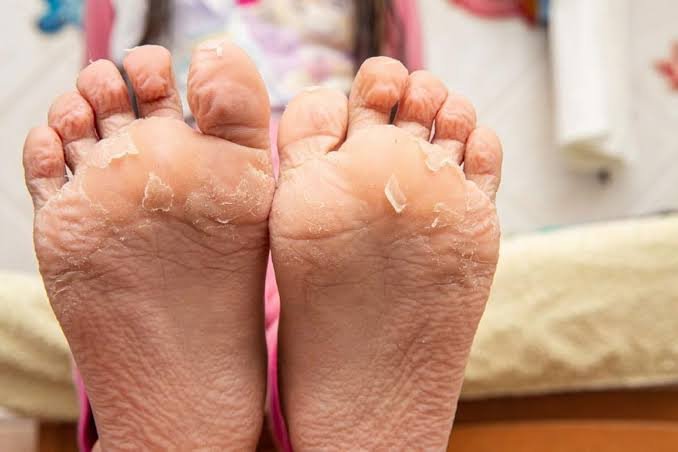
A few additional factors can contribute to peeling feet, even though they’re less common than the causes above.
Contact dermatitis happens when your skin reacts to a specific product, like a new detergent, lotion, or shoe material. The peeling usually appears exactly where the irritant touched the skin.
Dehydration can inhibit the skin barrier in ways that lead to flaky, peeling skin, even on the feet. Drinking enough water throughout the day supports overall skin health.
Diabetes and poor circulation can reduce blood flow to the feet, making the skin more prone to cracking, peeling, and slow healing. Anyone with diabetes and persistent foot skin changes should check in with a doctor regularly.
When to See a Doctor for Peeling Feet
Most peeling feet clear up with simple home care within one to two weeks. However, certain symptoms mean it’s time to get a professional opinion.
See a doctor or podiatrist if you notice:
- Peeling that doesn’t improve after two to four weeks of home treatment
- Spreading redness, swelling, or warmth around the peeling area
- Pus, drainage, or an open sore
- Fever alongside foot skin changes
- A history of diabetes or a weakened immune system
Catching an infection or chronic skin condition early makes treatment faster and more effective.
How to Prevent Peeling Feet in the Future
Prevention is often simpler than treatment once you know your triggers. A few daily habits can keep your feet smooth and flake-free long term.
| Habit | Why It Helps |
|---|---|
| Moisturize daily | Rebuilds and protects the skin barrier |
| Wear breathable socks | Reduces sweat buildup and fungal risk |
| Rotate your shoes | Lets footwear fully dry between wears |
| Apply sunscreen | Prevents sunburn-related peeling |
| Stay hydrated | Supports skin from the inside out |
| Avoid harsh soaps | Preserves natural oils on the skin |
Small, consistent habits do more for long-term foot health than occasional intense treatments.
Frequently Asked Questions (FAQs)
1. Why are my feet peeling but not itchy?
Non-itchy peeling is usually caused by dry skin, sunburn, or friction rather than infection. If it’s persistent, moisturizing daily should resolve it within two weeks.
2. Why is the skin peeling off the bottom of my feet?
This is often due to calluses, dry skin, or fungal infection on the soles. Moisturizing and gentle exfoliation help most mild cases.
3. Can dehydration cause peeling feet?
Yes, dehydration weakens the skin barrier and can lead to dry, flaky skin. Drinking more water and moisturizing regularly can help.
4. Is peeling skin on feet a sign of diabetes?
Peeling alone isn’t a diagnosis, but diabetes can reduce circulation and cause dry, cracking skin. Anyone with diabetes and foot changes should see a doctor.
5. How long does athlete’s foot peeling take to heal?
Mild cases usually clear up within two weeks with consistent antifungal cream use. Severe or recurring cases may need a prescription treatment.
6. What deficiency causes peeling feet?
Low levels of certain vitamins, like biotin or zinc, can contribute to skin dryness and peeling. A balanced diet usually supports healthy skin.
7. Should I peel off the flaking skin myself?
No, picking at peeling skin can cause pain, bleeding, or infection. Let it shed naturally while moisturizing the area.
8. Can stress cause my feet to peel?
Yes, stress can worsen dry skin and trigger eczema flare-ups. Managing stress alongside skincare can reduce flare frequency.
9. Why do my feet peel every summer?
Sunburn and increased sweating in warmer months are common seasonal triggers. Sunscreen and breathable shoes can help prevent it.
10. When should I worry about peeling feet?
Worry if peeling comes with pus, spreading redness, fever, or doesn’t improve after a few weeks. These signs call for a doctor’s evaluation.
Conclusion
Peeling feet are usually caused by dry skin, athlete’s foot, eczema, psoriasis, sunburn, hyperhidrosis, or friction from corns and calluses.
Most of these causes respond well to simple, consistent home care like daily moisturizing, proper hygiene, and breathable footwear.
Identifying the exact cause makes a real difference, since a fungal infection needs antifungal treatment while dry skin simply needs hydration.
Pay attention to how your feet look and feel, and don’t ignore signs like spreading redness, pus, or peeling that won’t go away after a few weeks.
With the right routine, most peeling feet clear up within one to two weeks.
If home remedies don’t help, or you have diabetes or another health condition, a podiatrist or dermatologist can pinpoint the cause and get your feet back to feeling healthy again.


