


Instagram accounts rarely grow in a perfectly straight line.
A Reel takes off and hundreds of new people arrive in a weekend. A collaboration sends a noticeable wave of followers from another creator’s audience. A quiet week is followed by an unexpected drop. Sometimes nothing obvious happens at all, yet the follower number still moves.
The instinct is usually to look at the number first.
How many followers came in? How many disappeared? Was the post successful?
Those questions are useful, but they only describe the movement. They do not explain what changed around the account.
When an Instagram audience shifts suddenly, the more interesting work begins after the notification.
Start With What Happened Before the Change
A follower spike rarely appears in isolation.
Look back at the few days before it.
Was there a Reel that reached far beyond the account’s usual audience? Did another creator mention the profile? Was a giveaway running? Did a brand partnership go live? Was a post shared widely in Stories or picked up by a larger account?
The source of the change matters because different events attract different kinds of followers.
A tutorial that spreads through a professional community may bring in people who are closely aligned with the account’s usual topic. A giveaway may produce a much faster jump, but those followers may have arrived mainly for the incentive.
The number can look equally impressive in both cases.
The audience behind it may be completely different.
That is why the first useful question after a spike is not “How much did we grow?”
It is “What caused people to arrive?”
A Drop Can Be Useful Information Too
Follower losses tend to feel more alarming than follower gains, but they are not always bad news.
An account that changes direction may lose people who were never interested in the new topic. A creator who narrows a broad lifestyle account into a specific niche may see follower numbers fall while engagement becomes more focused.
Instagram itself may also remove inactive or suspicious accounts over time.
The point is that a falling number needs context before it becomes a problem.
If a creator publishes something controversial and immediately loses a noticeable group of followers, that tells one story.
If an account gradually loses a small number of followers while attracting more relevant people in return, that tells another.
Looking only at the total can make those two situations appear identical.
Look at Who Arrived, Not Just How Many
This is where follower tracking becomes more useful.
Suppose a fitness creator posts a detailed video about marathon training and gains 600 followers.
If many of the new followers are runners, coaches, local clubs, race organizers and other fitness-focused accounts, the post may have reached exactly the community the creator hoped to attract.
If most of the new accounts have no clear connection to fitness, the spike may still be valuable, but it probably needs a different explanation.
For smaller changes, checking a handful of profiles manually may be enough.
Once the account is dealing with hundreds or thousands of followers, that becomes tedious very quickly. An ig follower export tool can make supported public follower information easier to organize outside Instagram, especially when the goal is to review patterns rather than open profiles one at a time.
The useful part is not the export itself.
It is what becomes easier to notice afterward.
Patterns Usually Matter More Than Individual Profiles
One unusual follower tells you almost nothing.
Twenty or thirty similar accounts may tell you something.
Perhaps a post begins attracting designers after a creator experiments with more visual content. Maybe a business account suddenly gains followers from one specific industry after being mentioned in a newsletter. A musician could notice more local venues and event pages appearing after a live performance clip gains traction.
These are not definitive conclusions.
They are clues.
The mistake is trying to assign meaning to every person who follows an account. Social audiences are messy. People follow accounts for reasons that are not visible publicly, and many profiles reveal very little.
It is usually more useful to look for repeated patterns than to investigate individual followers in depth.
That keeps the analysis practical and prevents it from turning into guesswork.
Compare Changes Across Different Moments
A single snapshot only tells part of the story.
Imagine an account gains 1,500 followers after three different events:
- a creator collaboration;
- a viral Reel;
- a product giveaway.
The total growth might look similar each time, but the audiences may not be.
The collaboration could attract people from a closely related niche.
The Reel might introduce the account to a much broader group.
The giveaway may bring in followers quickly and lose some of them again once it ends.
Taking periodic snapshots makes these differences easier to see.
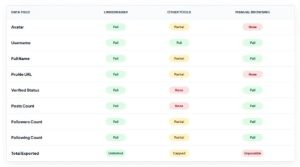
Teams managing larger accounts sometimes use an ig follower export tool at selected points in a campaign or content cycle so they can compare public follower information over time instead of relying only on the total shown on the profile.
This does not require daily monitoring.
In fact, checking too frequently often creates more noise than insight.
The useful moments are usually tied to something meaningful: a campaign launch, collaboration, viral post, repositioning or major content experiment.
Not Every Follower Change Needs an Explanation
It is easy to over-analyze Instagram.
A small daily increase or decrease is normal. People change interests. Accounts become inactive. Users clean up who they follow. Some people discover a profile months after a post was originally published.
Trying to explain every movement can lead creators to react to noise.
The better approach is to investigate when the change is large enough to matter or when it happens alongside a clear event.
A useful rule is simple:
If the audience changed enough that you would make a content or business decision because of it, then it is worth understanding the change.
Otherwise, keep watching.
What to Do With What You Learn
Audience changes become valuable when they influence the next decision.
A creator who notices a growing group of photographers may decide to publish more behind-the-scenes shooting content.
A business attracting more local accounts after a city-specific post may experiment with additional local content.
A creator who gains a large but loosely related audience from a giveaway may decide not to repeat the same tactic simply because the follower number looked good.
None of these decisions requires perfect data.
They require enough context to understand whether growth is moving the account in a useful direction.
That is a much better use of follower information than treating every increase as a win and every decline as a problem.
Growth Is a Change in People, Not Just a Change in Numbers
Instagram makes follower movement easy to notice because the number is always visible.
What it does not show as clearly is how the community around an account is changing.
Sometimes the most important result of a successful post is not that 800 people followed.
It is that a different kind of person started paying attention.
Once creators begin looking at growth that way, follower tracking becomes less about watching a counter move and more about understanding what their content is attracting.

