


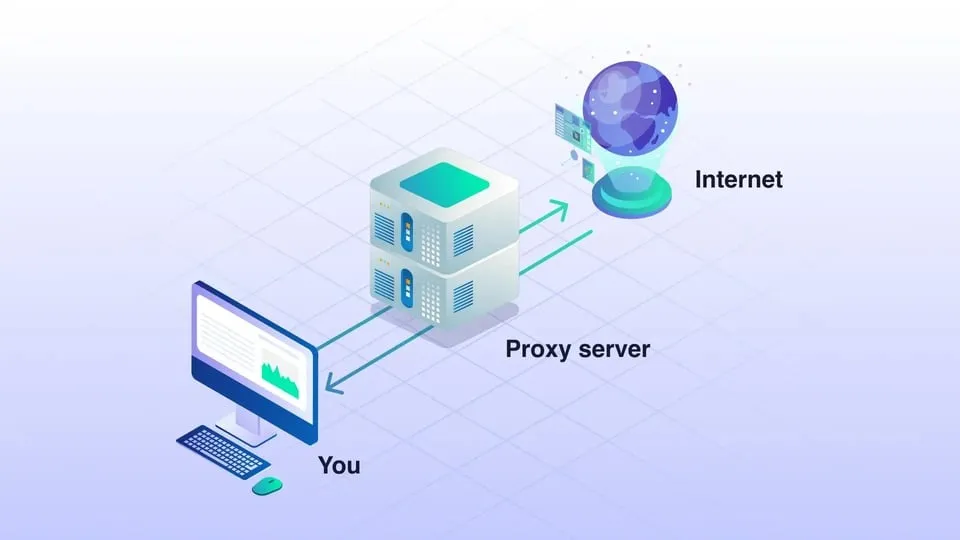
In 2025, global internet traffic continues to surge, with businesses and organizations handling millions of requests every minute. Behind the scenes, private residential proxies quietly manage and secure this flow of data. Acting as intermediaries between client devices—such as terminals, browsers, or applications—and external servers, proxies help companies control access, prevent cyberattacks, and maintain high-performance networks. Recent studies indicate that up to 30% of corporate network traffic is routed through proxy servers, underlining their critical role in modern IT infrastructure.
How Proxy Servers Work
A proxy server receives and forwards requests from clients to target servers. Users may not even realize that their interactions are being routed through a proxy. When a request is received, the proxy can:
- Forward the request directly to the destination server.
- Serve the requested content from its cache.
- Deny access to the requested resource.
This versatility allows proxies, including private residential proxies, to enhance security, protect privacy, and optimize traffic flow.
Core Functions and Use Cases
- Secure Access and Anonymity
Proxy servers enable controlled access to online resources. They allow employees to reach approved content while blocking access to non-compliant sites. Additionally, by masking client IP addresses, proxies make it significantly harder to trace user activity, enhancing both privacy and security. - Traffic Filtering and Threat Mitigation
Proxies can block malicious traffic and restrict access to specific websites, reducing the risk of breaches or misuse. Logging all network connections allows IT teams to monitor activity, detect anomalies, and respond proactively to potential threats. Organizations that implement centralized proxy monitoring report a 30–50% reduction in security incidentsrelated to user behavior. - Load Balancing and Performance Optimization
High-traffic websites and corporate resources often face performance challenges when demand spikes. Proxies distribute requests across multiple servers to prevent bottlenecks. Techniques such as caching, traffic compression, and ad removal optimize bandwidth and accelerate content delivery. For distributed systems, proxies provide unified access points and balance loads between servers, ensuring consistent performance for users worldwide.
Types of Proxy Servers
Forward Proxy – Acts as an intermediary between clients and destination servers. Devices must be configured to use a forward proxy. Forward proxies are commonly used in organizations to enforce access policies and filter unwanted content.
Reverse Proxy – Appears to clients as a standard web server and requires no special configuration. It manages incoming requests and distributes them to one or more internal servers. Reverse proxies enhance security by hiding the internal network, provide caching for faster responses, and balance traffic loads to prevent server overload.
Enhancing Corporate Security
Many organizations expose digital assets—such as websites or e-commerce platforms—to the public internet, making them prime targets for cyberattacks. Proxy servers act as a “buffer” layer, intercepting external requests before they reach core servers. This reduces the risk of unauthorized access and protects sensitive data.
Monitoring and Compliance
Routing internet access through proxies allows administrators to enforce policies and track user activity. Logging features enable auditing, detect policy violations, and identify potential threats in real time. This level of oversight supports regulatory compliance and strengthens corporate security protocols.
Optimizing Network Efficiency
Beyond security, proxies improve network efficiency. Caching frequently accessed files reduces load times and bandwidth usage. Traffic compression and content filtering enhance speed, while load balancing ensures that distributed systems serve all users consistently. These features are particularly valuable for enterprises handling large-scale, global traffic. Advanced solutions such as private residential proxies further optimize access speed and reliability for distributed user bases.
Conclusion
Proxy servers, particularly solutions like private residential proxies, are a foundational element of modern network architecture. By combining security, traffic optimization, access control, and monitoring, they ensure that digital resources remain fast, reliable, and secure. For organizations navigating increasingly complex digital environments, understanding and leveraging proxy technology is no longer optional—it is essential.

