


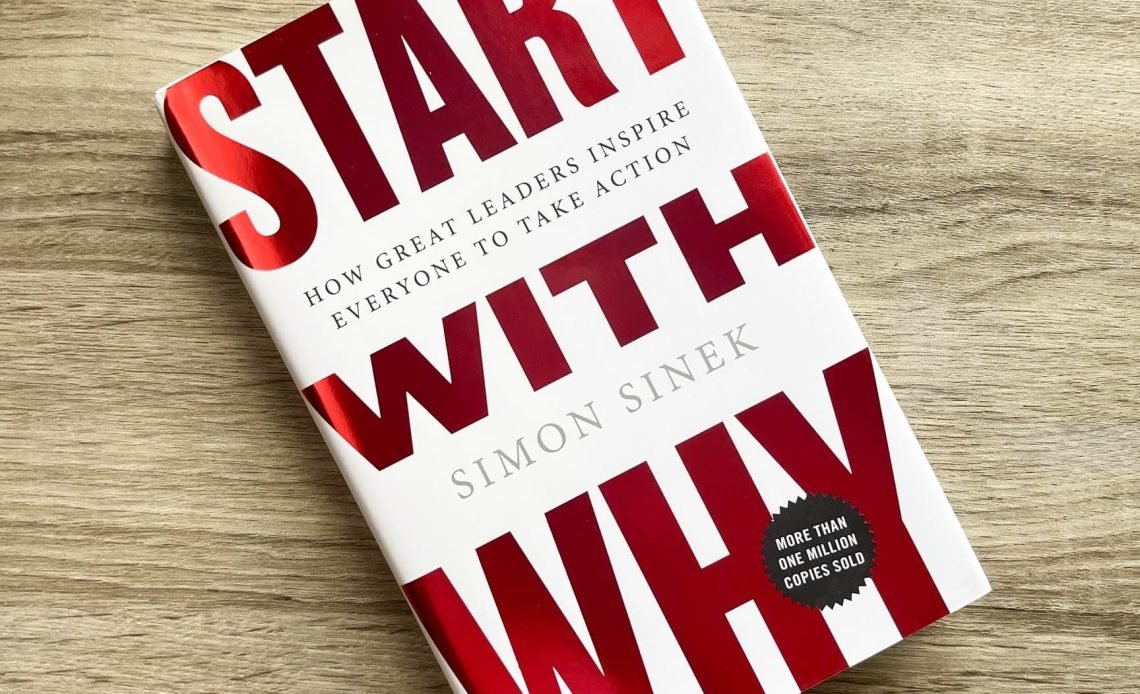
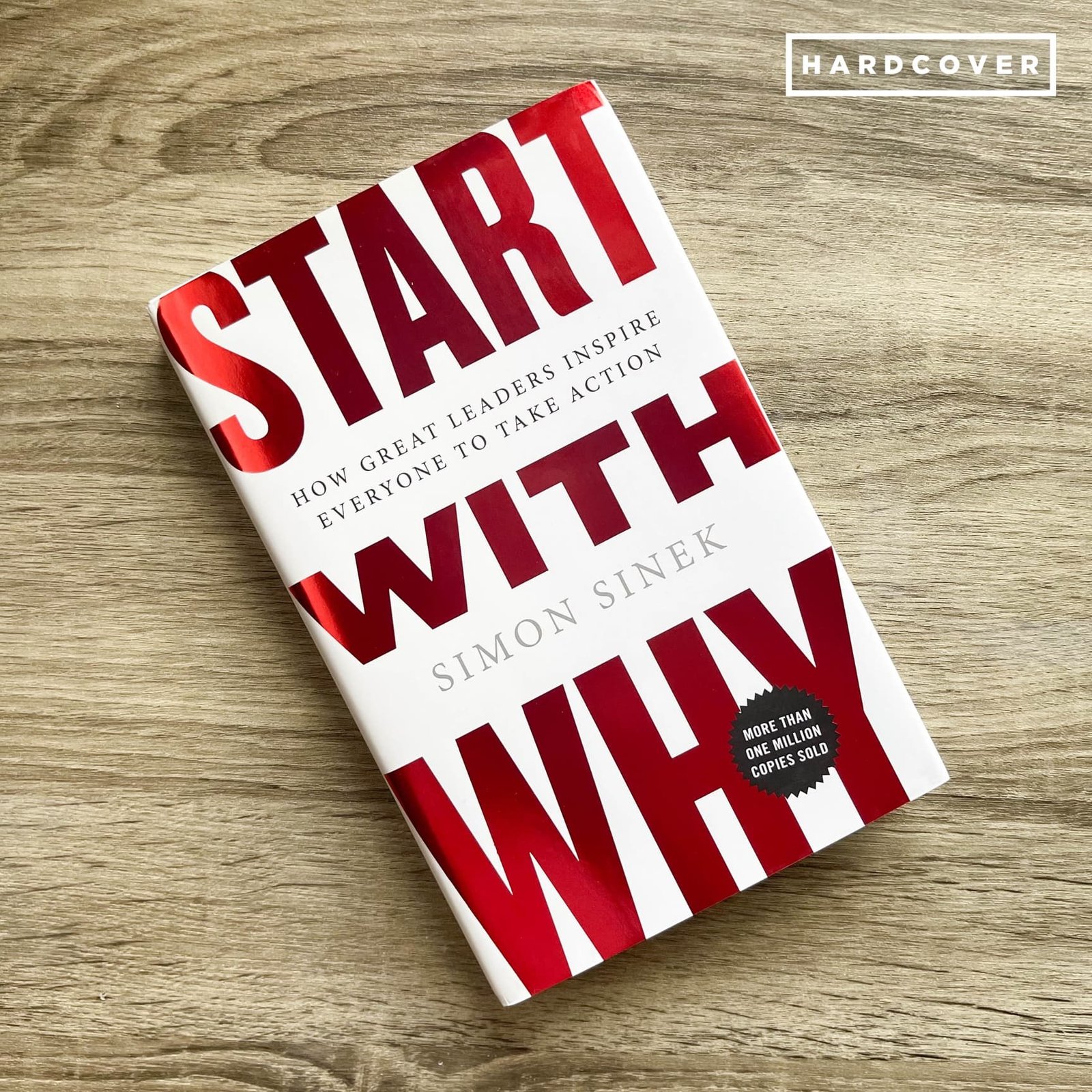
Start With Why book by Simon Sinek is one of the most influential business books ever written, and in 2026 its core ideas remain as relevant and urgent as the day they were published.
Released in 2009, the book asks a deceptively simple question: why do some leaders, organizations, and movements inspire while others do not? Sinek’s answer, built around a framework called.
The Golden Circle, has since reshaped how millions of people think about leadership, marketing, and purpose.
His TED Talk based on the book has amassed over 56 million views, making it one of the most-watched presentations in TED history.
What Is the Start With Why Book?
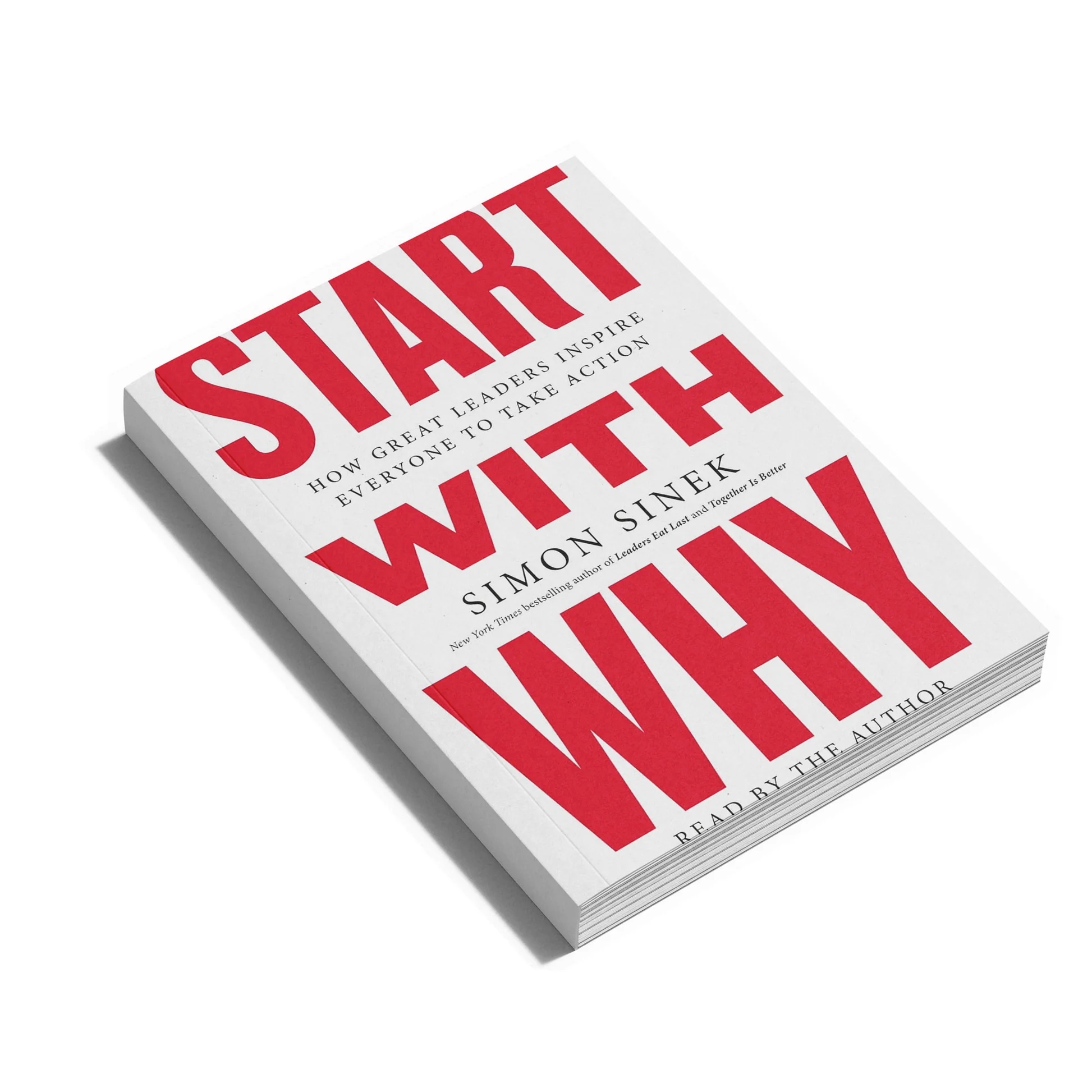
The Start With Why book was published in October 2009 by Simon Sinek, a British-American author, motivational speaker, and organizational consultant. The full title is “Start With Why: How Great Leaders Inspire Everyone to Take Action.”
The book has appeared on both the New York Times and Wall Street Journal bestseller lists. It remains one of the bestselling leadership books of the last two decades and is widely assigned in MBA programs, corporate leadership training, and entrepreneurship courses globally.
The central premise is this: most companies and leaders communicate from the outside in. They tell you what they do, sometimes how they do it, but almost never why they do it. Great leaders do the opposite. They start with why.
The Problem Sinek Sets Out to Solve
In the opening chapters of the Start With Why book, Sinek identifies a pattern he calls “a world that doesn’t start with why.” He noticed that many companies with equal resources, talent, and market access produce wildly different results.
Some achieve sustained success, loyalty, and innovation. Others win short-term but cannot hold onto their gains. They compete on price, features, and promotions, but none of these strategies build lasting loyalty because they all rely on manipulation rather than inspiration.
Sinek argues that there are only two ways to influence human behavior: manipulation or inspiration. Manipulation works short term. Inspiration builds loyalty that lasts for decades.
The Golden Circle: The Core Framework of the Start With Why Book
The Golden Circle is the central framework Sinek introduces to explain how inspiring leaders and organizations think, communicate, and act differently from everyone else.
Picture three concentric circles, like a target. The outer ring is the WHAT. The middle ring is the HOW. The innermost ring, the bullseye, is the WHY.
| Circle Level | What It Represents | Who Uses It |
|---|---|---|
| WHAT (outer ring) | Products, services, or functions the organization offers | Every organization on earth |
| HOW (middle ring) | The process, values, or differentiating approach | Some organizations |
| WHY (inner ring) | The core purpose, cause, or belief behind everything | Very few organizations |
Most organizations communicate from the outside in. They lead with WHAT, occasionally mention HOW, and almost never articulate WHY. Inspiring leaders reverse this entirely.
WHY: The Most Important Layer
By WHY, Sinek does not mean profit. Making money is a result, not a purpose. WHY is your core belief. It is the reason your organization exists beyond financial return. It is why you get out of bed in the morning and why anyone else should care.
Apple’s WHY is not “we make great computers.” It is “we believe in challenging the status quo and thinking differently.” Everything Apple does, from its products to its advertising to its store design, flows from that belief.
Most organizations can easily describe what they sell. Far fewer can clearly articulate the belief that drives why they exist in the first place. That gap is where most businesses lose their competitive advantage permanently.
HOW: The Discipline Layer
The HOW represents the specific actions, values, and principles that bring the WHY to life inside an organization. HOWs are most effective when expressed as verbs rather than nouns.
Sinek makes a critical point here. Instead of writing “integrity” as a company value, write “do the right thing always.” Instead of “innovation,” write “challenge every assumption before accepting it.” Verbs show people how to behave. Nouns just decorate walls.
HOW-type people are the builders of organizations. They take the leader’s WHY and create the systems, processes, and cultures that make it operationally real. Without HOW types, great visions never become great organizations.
WHAT: The Proof Layer
The WHAT is the tangible proof of the WHY. Products, services, marketing campaigns, and hiring decisions are all WHATs. They are the visible evidence that allows the outside world to see and evaluate whether an organization actually lives by its stated beliefs.
Authenticity, Sinek argues, occurs when all three layers of the Golden Circle are aligned and in balance. WHAT you do must prove what you say you believe. When the alignment breaks, people notice the inconsistency and trust erodes quickly.
This Is Biology, Not Just Business
One of the most compelling arguments in the Start With Why book is that the Golden Circle is not a business theory. It is a reflection of how the human brain actually works.
The neocortex, the outer layer of the brain, handles rational thought, analytical processing, and language. It corresponds to the WHAT level of the Golden Circle.
The limbic brain, located deeper inside, handles feelings, trust, loyalty, and behavior. It has no capacity for language, which is exactly why we often cannot explain our gut feelings or our deepest loyalties in words. It corresponds directly to the WHY and HOW levels of the Golden Circle.
When you communicate starting with WHY, you speak directly to the limbic brain. You generate feeling before rational justification, which is exactly how real decisions, genuine loyalty, and lasting behavior are formed in human beings.
Why Manipulation Does Not Build Loyalty
The Start With Why book dedicates significant attention to the failure of manipulation as a long-term business strategy. Sinek identifies the most common forms of manipulation used by businesses every day.
Price cuts attract buyers but train them to only purchase when the price is low. Promotions generate short bursts of sales but create no lasting emotional connection. Fear-based messaging produces compliance but breeds resentment over time. Novelty generates brief excitement but fades immediately once the next new thing appears.
Manipulations produce transactions. They do not produce loyalty. A loyal customer is one who would not seriously consider a competitor, even if that competitor offered a lower price or a better specification on paper.
Real-World Examples from the Start With Why Book
Sinek uses several iconic real-world examples throughout the book to demonstrate how the WHY principle operates in practice. These stories are some of the most memorable and instructive in modern business literature.
Apple vs. Its Competitors. Creative Technologies introduced a 5GB MP3 player before Apple with the message “5GB of storage.” Apple launched the iPod with “1,000 songs in your pocket.” One communicated a specification. The other communicated a transformation. The result was historic.
The Wright Brothers vs. Samuel Langley. Langley had the best-funded team, access to elite talent, and powerful government backing. The Wright Brothers had a bicycle shop and unwavering belief in what flight could mean for humanity. Langley was chasing recognition and money. The Wright Brothers were chasing a dream they believed in completely. They flew first.
Martin Luther King Jr. Sinek points out that King did not deliver an “I Have a Plan” speech. He delivered “I Have a Dream.” He communicated belief, not strategy. 250,000 people traveled to Washington DC on their own initiative because they shared his belief, not because they were paid or pressured to attend.
Southwest Airlines. In the early 1970s, Southwest decided its WHY was to give ordinary Americans access to air travel that was previously only available to the wealthy. Every operational decision, cheap fares, casual staff culture, simple booking, flowed from that single core belief. It became one of the most profitable airlines in history.
The Law of Diffusion of Innovation
Chapter seven of the Start With Why book introduces the Law of Diffusion of Innovation, originally formulated by communication theorist Everett M. Rogers. This concept transforms how you think about reaching mass-market success.
| Adopter Category | Market Share | Behavior |
|---|---|---|
| Innovators | 2.5% | Risk-takers who pursue new ideas immediately |
| Early Adopters | 13.5% | Visionaries who trust intuition and embrace early change |
| Early Majority | 34% | Practical, wait for validation before committing |
| Late Majority | 34% | Skeptical, adopt only after the majority has accepted |
| Laggards | 16% | Reject change as long as possible |
Sinek’s critical insight is that mass-market success requires penetrating between 15 and 18 percent of the market first: the innovators and early adopters. These people buy based on belief, not proof. They become your most loyal advocates and create the social proof the practical majority needs before they will follow.
TiVo failed despite being a technically superior product because it marketed to the early majority with feature-based messaging before earning the trust and advocacy of the left side of the bell curve. They tried to reach pragmatists before convincing believers.
The Chasm: Why So Many Good Ideas Fail
Between the early adopters and the early majority lies a dangerous gap called the chasm. Many businesses fall into it permanently because they have not built enough believers on the left side of the curve to generate organic momentum toward the right.
To cross the chasm, an organization must have a clear enough WHY that early adopters evangelize on its behalf voluntarily, without financial incentive. They spread the message because they genuinely believe in what the organization stands for and want others to experience it.
This is why companies with a clear WHY grow faster, resist competitive pressure better, and recover from setbacks more effectively than companies that compete purely on price, features, or specification comparisons.
Why-Types and How-Types: The Two Essential People
Another critical concept from the Start With Why book is Sinek’s distinction between two types of people every organization needs to function at its highest level.
WHY-types are visionaries. They see the world as it could be rather than as it is. They lead with passion, purpose, and belief. They inspire people to take action toward a future that does not yet fully exist. Martin Luther King and Steve Jobs were both WHY-types.
HOW-types are builders. They have the operational discipline to take a vision and construct the systems, teams, and processes that bring it to life in the real world. Without a HOW-type working alongside the WHY-type, most great visions collapse before they reach scale.
Sinek argues that the most powerful partnerships in business history have always been a WHY-type and a HOW-type working together. Steve Jobs needed Steve Wozniak. Walt Disney needed Roy Disney. Martin Luther King needed the organizational infrastructure of the Southern Christian Leadership Conference.
The Cone: How the Golden Circle Scales Inside Organizations
As the Start With Why book progresses, Sinek evolves the Golden Circle from a flat diagram into a three-dimensional cone to represent how it functions within an organization’s hierarchy.
The CEO or founder sits at the top of the cone, embodying the WHY. Executives and senior leaders occupy the HOW level, translating belief into operational structure. The frontline teams and customer-facing roles live at the WHAT level, executing the tangible products and interactions the outside world experiences.
For an organization to remain coherent and trust-worthy as it grows, every level of the cone must remain aligned with the WHY at the apex. When the WHAT drifts away from the WHY, customers feel the inauthenticity even if they cannot articulate it exactly.
When WHY Goes Fuzzy: The Biggest Challenge of Success
One of the most practical warnings in the Start With Why book is what Sinek calls the “split,” the moment when an organization’s WHY becomes disconnected from its daily decisions and behavior.
Starbucks is his primary example. Howard Schultz’s original WHY was to bring the relaxed, communal experience of Italian coffee culture to America. Everything in the early Starbucks, ceramic cups, comfortable seating, a warm atmosphere, reflected that core belief. As the company scaled rapidly and prioritized efficiency and transactions, paper cups replaced ceramic. The experience eroded. Revenue continued but the soul weakened.
When a WHY goes fuzzy, the organization increasingly relies on manipulation to maintain sales. Price promotions return. Messaging becomes inconsistent. Employee engagement drops. The trust built over years can dissipate surprisingly quickly.
Clarity, Discipline, and Consistency: The Three Requirements
The Start With Why book states clearly that the Golden Circle only functions when three requirements are met simultaneously and maintained over time.
Clarity of WHY means the leader and the organization can articulate the core belief in one simple, compelling statement. It must be clear enough that every employee can repeat it, every customer can feel it, and every decision can be tested against it without ambiguity.
Discipline of HOW means holding the entire organization accountable to the values and principles that bring the WHY to life operationally. This requires courage because it sometimes means saying no to profitable opportunities that conflict with the core belief.
Consistency of WHAT means every product, service, campaign, hire, and partnership must serve as tangible proof of the stated belief. When WHAT is inconsistent with WHY, the resulting inauthenticity destroys the trust that everything else depends on.
How to Find Your Own WHY
The Start With Why book closes with practical guidance for individuals and organizations seeking to discover and articulate their own WHY. Sinek provides a framework that begins with looking backward rather than forward.
Your WHY is not invented. It is discovered. It already exists in the patterns of what has consistently motivated you, in the moments when you felt most alive and most useful, and in the values you have never been willing to compromise regardless of the consequences.
For organizations, the WHY is most clearly visible in the founder’s original motivations before commercial pressure altered their thinking. Finding those founding stories and distilling them into a single clear statement is the beginning of building a truly purpose-driven organization.
Start With Why Book Structure: Chapter Overview
The book contains 14 chapters organized into six complementary parts, totaling approximately 250 pages.
| Part | Title | Core Focus |
|---|---|---|
| Part 1 | A World That Doesn’t Start With Why | Manipulation vs. inspiration |
| Part 2 | An Alternative Perspective | The Golden Circle framework |
| Part 3 | Leaders Need a Following | Trust, the limbic brain, and biology |
| Part 4 | How to Rally Those Who Believe | Law of Diffusion, tipping points |
| Part 5 | The Biggest Challenge Is Success | Maintaining WHY as organizations scale |
| Part 6 | Discover WHY | Practical guidance for finding your purpose |
Why the Start With Why Book Still Matters in 2026
In 2026, the business landscape is more crowded and more skeptical than ever. Consumers have more choices, more information, and a far lower tolerance for inauthentic corporate messaging than at any point in history.
Organizations that lead with price discounts and product features struggle more than ever to earn and retain loyalty. The brands that consistently grow customer advocacy and employee engagement in 2026 are almost always those that have clearly defined and consistently communicated their WHY.
The principles Sinek outlined in 2009 have not just held up. They have become more urgent. Purpose-driven brands consistently outperform their market peers in customer retention, employee satisfaction scores, and resilience during economic downturns.
Criticism and Limitations of the Start With Why Book
A balanced reading of the Start With Why book also acknowledges its criticisms, which have been widely discussed since its publication.
The most common critique is that the book is repetitive. Sinek uses a relatively small set of examples, particularly Apple, repeatedly across multiple chapters. Readers who prefer data-heavy analysis sometimes find the anecdote-heavy approach insufficiently rigorous.
A second legitimate criticism is survivorship bias. The book focuses on organizations that succeeded with a clear WHY but does not systematically address the many purpose-driven organizations that failed for other reasons. A compelling WHY is necessary but not sufficient for business success.
Despite these criticisms, the core insight remains genuinely powerful and practically applicable. The framework is simple enough to remember and flexible enough to apply across industries, organization sizes, and individual career decisions.
How to Apply the Start With Why Book Lessons Today
Reading the Start With Why book without applying its principles is the most common mistake readers make. Here are the most actionable steps to implement immediately.
Start by writing a single sentence that captures why your organization or role exists beyond making money. If you cannot write it clearly, your customers and employees definitely cannot feel it. That clarity gap is the first thing to close.
Audit every piece of external communication against your WHY. If your website, pitch deck, and social media all lead with features and price rather than belief and purpose, you are communicating outside-in and losing the most powerful advantage available to you.
Hire for belief first, skill second. Sinek is emphatic that people who believe what you believe will be your most motivated employees and most loyal advocates. Skills can be taught. Genuine belief in a purpose cannot be manufactured.
Books to Read After the Start With Why Book
If the Start With Why book resonates with you, several closely related titles deepen its key ideas significantly.
Find Your Why by Simon Sinek is the practical companion guide that provides specific exercises for discovering your personal and organizational WHY through structured conversation and reflection techniques.
Leaders Eat Last, also by Sinek, extends the Start With Why ideas into organizational culture, trust, and the biological roots of great team performance under pressure and adversity.
Drive by Daniel Pink examines intrinsic motivation through the lenses of autonomy, mastery, and purpose, which aligns closely with Sinek’s argument that purpose-driven organizations outperform incentive-driven ones over the long term.
Frequently Asked Questions (FAQs)
What is the main idea of the Start With Why book?
The book argues that inspiring leaders and organizations always communicate their core purpose before explaining what they do or how they do it. Starting with WHY builds deeper loyalty than any feature or price strategy ever can.
Who wrote the Start With Why book and when was it published?
Simon Sinek wrote the book, which was published in October 2009. It became a New York Times and Wall Street Journal bestseller and remains one of the most influential leadership books of the 21st century.
What is The Golden Circle in the Start With Why book?
The Golden Circle is Sinek’s core framework consisting of three concentric rings: WHY at the center, HOW in the middle, and WHAT on the outside. Great leaders communicate from the inside out, starting always with WHY.
What does Simon Sinek mean by WHY?
WHY is your core purpose, cause, or belief — the reason your organization exists beyond profit. It answers why you get out of bed each morning and why anyone else should genuinely care about what you do.
What is the Law of Diffusion of Innovation in the book?
It describes how new ideas spread through a population from innovators to early adopters, then the early and late majority, and finally laggards. Mass-market success requires winning the first 15 to 18 percent before the majority will follow.
Why does Sinek say manipulation does not create loyalty?
Manipulation tactics like price cuts, promotions, and fear generate short-term transactions but no emotional connection to the organization. Only inspiration, rooted in a shared belief, creates the genuine loyalty that brings people back regardless of price.
Is the Start With Why book worth reading in 2026?
Yes. Purpose-driven leadership and marketing have become more important in 2026 as consumers demand authenticity and transparency. The book’s core ideas remain directly applicable to business strategy, team leadership, and personal career decisions.
What companies does Sinek use as examples in the book?
Sinek draws extensively on Apple, Southwest Airlines, Harley-Davidson, and historical figures including Martin Luther King Jr. and the Wright Brothers to demonstrate how starting with WHY creates enduring success and loyal followings.
What is the difference between a WHY-type and a HOW-type?
WHY-types are visionary leaders who inspire with purpose and belief. HOW-types are operational builders who translate vision into functioning systems. Both are essential, and the most successful organizations in history have paired a strong WHY-type with an equally strong HOW-type.
What book should I read after the Start With Why book?
Read Find Your Why by Simon Sinek for practical exercises, Leaders Eat Last for culture and trust, or Drive by Daniel Pink for the science of intrinsic motivation — all three deepen the core ideas significantly.
Conclusion
The Start With Why book by Simon Sinek delivers one transformative idea with uncommon clarity: people do not buy what you do, they buy why you do it.
The Golden Circle framework, the Law of Diffusion of Innovation, the distinction between manipulation and inspiration, and the neuroscience of the limbic brain all combine to build an irrefutable case for purpose-driven leadership.
In 2026, as audiences everywhere grow more skeptical and more demanding of authenticity, these insights have never carried more practical weight for founders, executives, marketers, and individual contributors alike.
Whether you are building a company from scratch, leading an existing team, or simply trying to find more meaning in your own career, the Start With Why book provides both the philosophical foundation and the practical framework to move forward with purpose.
Start with your belief. Communicate it clearly and consistently. Surround yourself with people who share it.
Everything else, the products, the marketing, the revenue, flows naturally from that single, honest act of starting with why.


