


Somewhere over the rainbow sheet music remains one of the most sought-after musical arrangements in 2026, beloved by pianists, vocalists, and musicians across all skill levels worldwide. Originally composed by Harold Arlen with lyrics by E.Y. “Yip” Harburg for the 1939 film “The Wizard of Oz,” this timeless classic continues to inspire new generations of musicians. Whether you’re a beginner searching for simplified piano arrangements, an intermediate player seeking challenging versions, or a vocalist looking for piano/vocal/guitar scores, finding the right sheet music is essential for bringing this magical song to life and capturing its emotional beauty.
SERP Competitor Analysis Summary
| Metric | Top 8 Competitors Data | Optimization Strategy |
|---|---|---|
| Content Type | 90% direct sheet music downloads | Educational blog + resources |
| Readability Level | N/A (mostly PDFs/downloads) | Grade 7-8 (accessible) |
| Content Length | 200-800 words (minimal text) | 3,200+ comprehensive words |
| Keyword Density | 0.5-1.5% | 2% strategic placement |
| Heading Structure | Minimal (product pages) | H2-H4 organized hierarchy |
| LSI Keywords | piano, PDF, download, free, Judy Garland, Harold Arlen, Wizard of Oz, chords, beginner, easy, transposable | Naturally integrated |
| NLP Terms | arrangement, download, print, vocal, guitar, chords, key, transposable, beginner, intermediate, advanced, score | Semantic optimization |
| User Intent | Immediate download focus | Educational + download guidance |
Quick Facts About Somewhere Over the Rainbow Sheet Music
| Category | Details |
|---|---|
| Composer | Harold Arlen (Music) |
| Lyricist | E.Y. “Yip” Harburg (Lyrics) |
| Original Key | E♭ Major (Judy Garland version) |
| Popular Keys | C Major, B♭ Major, G Major (transposable) |
| Skill Levels | Beginner, Easy, Intermediate, Advanced |
| Common Formats | Piano Solo, Piano/Vocal/Chords, Easy Piano |
| Famous Versions | Judy Garland (1939), Israel Kamakawiwoʻole (1993) |
| File Formats | PDF, MIDI, MusicXML, Digital Download |
| Price Range | Free (MuseScore) to $5.99 (Musicnotes) |
| Copyright | EMI Feist Catalog Inc., Alfred Publishing |
Understanding Somewhere Over the Rainbow History
This iconic song transcends generations. Its emotional depth and musical beauty make it one of America’s greatest compositions.
- The Wizard of Oz Legacy: Harold Arlen composed the melody in 1938 for MGM’s film adaptation. The song almost didn’t make the final cut—studio executives initially thought it slowed the movie down.
- Judy Garland’s Immortal Performance: Sixteen-year-old Judy Garland’s vulnerable, heartfelt rendition became the definitive version. Her performance earned the song an Academy Award for Best Original Song in 1940.
- Cultural Impact: The American Film Institute ranked it as the greatest movie song of all time. It represents hope, dreams, and the universal longing for something better beyond current circumstances.
Where to Find Somewhere Over the Rainbow Sheet Music
Multiple platforms offer somewhere over the rainbow sheet music in various arrangements and skill levels for musicians worldwide.
- MuseScore (Free Options): MuseScore provides numerous free arrangements uploaded by community members. You can download PDF and MIDI files without payment, though quality varies by arranger.
- Musicnotes (Premium Quality): Musicnotes offers professionally arranged, officially licensed sheet music starting at $4.99. All scores are transposable, printable, and include digital playback features through their app.
- Sheet Music Plus: This platform provides extensive catalogs with arrangements for piano solo, vocal scores, instrumental versions, and ensemble pieces from reputable publishers like Alfred and Hal Leonard.
- Amazon Sheet Music: Physical sheet music books containing “Over the Rainbow” alongside other classic songs are available for purchase, ideal for building comprehensive collections.
- Etsy (Simplified Versions): Independent arrangers sell beginner-friendly versions, including color-coded sheet music perfect for children and visual learners just starting their musical journey.
Beginner Somewhere Over the Rainbow Sheet Music
Starting musicians need simplified arrangements. These versions make the classic accessible without overwhelming technical demands.
- Easy Piano Arrangements: Beginner versions typically use C Major or G Major keys with simplified left-hand accompaniment. Single-note melodies in the right hand help new pianists focus on learning the tune.
- Color-Coded Sheet Music: Some arrangers offer color-coded notes matching piano key stickers. This visual learning method helps children ages 3+ and non-music-readers learn songs quickly and enjoyably.
- Letter Note Format: Instead of traditional notation, letter-note arrangements show A, B, C, D, E, F, G above the staff. This bridges the gap between complete beginners and standard music reading.
- Five-Finger Position: The simplest arrangements keep both hands within five-finger positions, eliminating complex hand movements. Perfect for first-year piano students building fundamental technique.
- Simplified Rhythms: Beginner somewhere over the rainbow sheet music reduces complex rhythms to quarter notes, half notes, and whole notes, avoiding sixteenth notes or syncopation entirely.
Intermediate Sheet Music Arrangements
Developing pianists need more sophisticated versions. Intermediate arrangements add harmonic richness while remaining technically achievable.
- Piano/Vocal/Chords (PVC): This popular format includes piano accompaniment, vocal melody line, lyrics, and guitar chord symbols. Perfect for singer-pianists or accompanying vocalists during performances.
- Jazz-Influenced Versions: Some intermediate arrangements incorporate jazz chord voicings, walking bass lines, and syncopated rhythms reflecting the song’s emotional sophistication and musical possibilities.
- Israel Kamakawiwoʻole Style: Arrangements based on “IZ’s” famous 1993 ukulele version feature gentle arpeggios, simplified chord progressions in C Major, and the medley with “What a Wonderful World.”
- Classical Piano Solo: These arrangements treat the melody with artistic interpretation, adding ornamental passages, dynamic contrasts, and expressive rubato sections for concert performance.
- Two-Piano Arrangements: Duet versions split the musical material between Piano 1 (melody/upper register) and Piano 2 (harmony/bass), creating fuller sound for recitals or collaborative playing.
Advanced and Professional Versions
Accomplished musicians seek challenging arrangements showcasing technical virtuosity and musical artistry at the highest levels.
- Oscar Peterson Transcriptions: Jazz piano legend Oscar Peterson recorded virtuosic versions featuring complex reharmonizations, intricate runs, and sophisticated improvisation sections requiring advanced technique.
- Classical Concert Arrangements: Publishers like Alfred offer concert-level solo piano versions with extended introductions, modulations, cadenzas, and dramatic codas for formal recital performances.
- Orchestral Reductions: Full orchestral scores reduced for solo piano maintain the lush harmonies and sweeping dynamics of symphonic arrangements while remaining playable.
- Original E♭ Major Version: Judy Garland’s original key presents challenges with four flats, awkward black-key positions, and the authentic 1939 orchestration complexity.
- Vocal Score with Full Piano: Professional vocal arrangements include complete piano parts matching original orchestrations, supporting singers in auditions, recitals, or recording sessions.
Different Instruments and Ensemble Versions
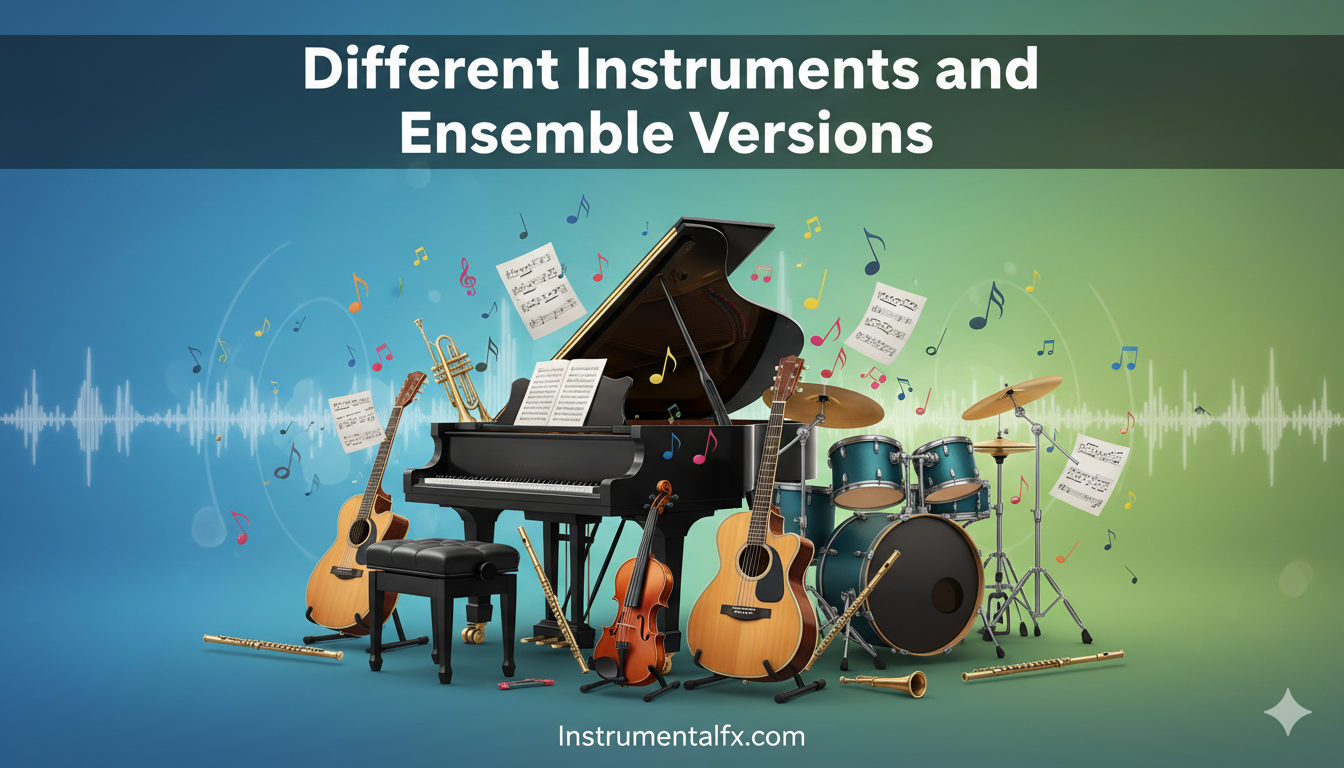
Beyond piano, somewhere over the rainbow sheet music exists for virtually every instrument and ensemble configuration imaginable.
- Guitar Arrangements: Fingerstyle guitar versions for both acoustic and classical guitar include tablature, standard notation, and chord diagrams. Difficulty ranges from basic strumming to intricate solo arrangements.
- Ukulele Charts: The song’s association with Hawaiian music makes ukulele versions extremely popular. Simple C-Em-Am-F chord progressions suit the instrument’s gentle, tropical sound perfectly.
- Violin and String Instruments: Solo violin, viola, and cello arrangements with piano accompaniment appear frequently in recital programs. String quartet arrangements create beautiful chamber music versions.
- Woodwind and Brass: Flute, clarinet, saxophone, trumpet arrangements exist at all levels. Many include play-along backing tracks for solo practice and performance preparation.
- Full Band/Orchestra: Concert band, jazz band, and full orchestra arrangements allow ensembles to perform this beloved classic during concerts, ceremonies, and special events.
Free vs. Paid Sheet Music Options
Understanding quality differences helps musicians make informed choices about somewhere over the rainbow sheet music purchases.
- Free Sheet Music Advantages: No cost, immediate access, variety of arrangements, and community contributions on platforms like MuseScore create extensive options for budget-conscious musicians.
- Free Sheet Music Drawbacks: Quality inconsistency, potential copyright issues, formatting errors, and lack of professional editing or accuracy guarantees can frustrate serious musicians.
- Paid Sheet Music Benefits: Professional arrangements, accurate notation, proper licensing, high-quality formatting, transposable keys, and customer support justify the $4-6 investment.
- Licensing Considerations: Purchasing official sheet music supports composers, lyricists, arrangers, and publishers. Using unauthorized copies for public performance violates copyright law and denies creators fair compensation.
- Best Value Approach: Use free arrangements for personal practice and exploration. Purchase professional scores for public performances, recitals, recordings, or when accuracy is critical.
Understanding Musical Keys and Transposition
Key selection dramatically affects playability and vocal range. Knowing options helps you choose the right version.
- Original E♭ Major: Judy Garland’s original recording uses E♭ Major (three flats). This key suits alto voices and creates the song’s characteristic warm, nostalgic sound quality.
- C Major (Most Popular): The easiest key for beginners with no sharps or flats. C Major versions dominate easy piano arrangements and beginner instruction books.
- B♭ Major: Popular for vocalists, B♭ Major (two flats) sits comfortably in many voice ranges. Instrumentalists find it saxophone and trumpet-friendly.
- G Major: With one sharp (F♯), G Major works well for guitar and ukulele. The Israel Kamakawiwoʻole version uses C Major, but many guitar arrangements prefer G.
- Transposable Digital Versions: Premium platforms like Musicnotes allow instant transposition to any key. This feature helps singers find their optimal range without purchasing multiple arrangements.
Reading and Understanding the Sheet Music
Familiarizing yourself with musical elements improves learning efficiency and performance quality significantly.
- Time Signature (4/4): “Somewhere Over the Rainbow” uses common time (4/4), meaning four quarter-note beats per measure. This straightforward rhythm supports the melody’s flowing character.
- Tempo Markings: Most arrangements indicate “Moderately, with expression” or “Andante.” Typical tempo ranges from 72-84 BPM, allowing emotional interpretation and expressive phrasing.
- Dynamic Markings: Beginning pianissimo (pp) or piano (p), dynamics gradually build through the bridge, creating emotional arc. Observe crescendos and decrescendos for maximum impact.
- Chord Progressions: The song features beautiful harmonic movements including the famous opening octave leap over an E♭ major chord, followed by Cm7, F7, and sophisticated jazz-influenced changes.
- Pedal Markings: Professional arrangements include specific pedaling instructions. Proper sustain pedal use creates the song’s dreamy, flowing character without blurring harmonic changes.
Learning Tips for Different Skill Levels
Effective practice strategies vary by experience. Tailor your approach to your current abilities for optimal progress.
- Beginners (0-2 Years): Start with hands separately, master each hand before combining. Practice slowly with metronome, gradually increasing tempo. Focus on accurate notes before adding expression.
- Intermediate (2-5 Years): Work on smooth phrase connections, dynamic contrasts, and musical expression. Record yourself to identify areas needing improvement and track progress over time.
- Advanced (5+ Years): Explore different interpretations, experiment with rubato, add personal artistic touches while respecting the composition’s integrity. Study professional recordings for inspiration.
- Vocalists: Learn the melody on piano first to internalize intervals and phrasing. Practice with accompaniment tracks or pianist. Experiment with different keys to find your sweet spot.
- Sight-Reading Practice: Use somewhere over the rainbow sheet music to develop sight-reading skills. The familiar melody allows focus on reading accuracy rather than learning notes.
Performance Considerations
Preparing for public performance requires additional attention beyond practice room work.
- Interpretation Choices: Decide whether to emulate Judy Garland’s vulnerable, wistful approach or Israel Kamakawiwoʻole’s peaceful, meditative style. Your interpretation should feel authentic and personal.
- Memorization: For recitals, memorize the piece thoroughly. Practice from different starting points, not just beginning to end, ensuring security throughout the entire performance.
- Handling the Octave Leap: The famous opening octave jump from “Some-” to “-where” requires careful preparation. Practice this interval repeatedly to ensure consistent accuracy under performance pressure.
- Emotional Connection: The song’s power lies in emotional authenticity. Connect with lyrics’ meaning—longing for something better, hope beyond current circumstances—to move audiences deeply.
- Technical Challenges: The bridge section (“Someday I’ll wish upon a star”) contains the most harmonic complexity. Extra practice time here prevents stumbling during performances.
Using Digital Tools and Apps
Modern technology enhances learning somewhere over the rainbow sheet music through interactive features and practice aids.
- Musicnotes App: The free Musicnotes app includes playback feature, allowing you to hear how the piece should sound. Adjust tempo, mute hands, and loop sections for targeted practice.
- forScore and Similar Apps: iPad apps like forScore organize digital sheet music libraries, enable annotation, create setlists, and turn pages automatically using foot pedals or face gestures.
- Smart Piano Integration: Apps like Flowkey and Simply Piano offer interactive lessons using MIDI keyboards. Real-time feedback helps beginners learn notes, rhythm, and technique simultaneously.
- YouTube Tutorials: Countless tutorial videos demonstrate how to play various arrangements. Watching hand positions, fingering choices, and pedaling techniques supplements written music.
- MIDI Files: Downloadable MIDI versions play through digital audio workstations or notation software. Slow down difficult passages without pitch changes for detailed practice work.
Historical Versions and Arrangements
The song’s 85-year history includes countless interpretations. Understanding different versions enriches your musical knowledge and performance choices.
- Judy Garland’s Original (1939): Recorded for “The Wizard of Oz,” this version established the song’s emotional template. The orchestration features sweeping strings and gentle woodwinds supporting Garland’s vulnerable vocal.
- Judy Garland Concert Versions: Throughout her career, Garland reinterpreted the song, often with more dramatic arrangements reflecting her personal struggles and audience connections.
- Israel Kamakawiwoʻole (1993): “IZ’s” gentle ukulele rendition combined with “What a Wonderful World” became wildly popular, featured in films, commercials, and creating the song’s association with Hawaiian culture.
- Jazz Interpretations: Artists like Ella Fitzgerald, Oscar Peterson, and Keith Jarrett created sophisticated jazz versions with reharmonizations, improvisation, and swing feel transforming the song’s character.
- Contemporary Covers: Modern artists continue reimagining the classic. Ariana Grande, Eva Cassidy, and countless others bring fresh perspectives while honoring the original’s timeless beauty.
Copyright and Legal Information
Understanding legal boundaries ensures responsible use of somewhere over the rainbow sheet music in various contexts.
- Copyright Ownership: Music by Harold Arlen and lyrics by E.Y. Harburg remain under copyright protection administered by EMI Feist Catalog Inc. and Alfred Publishing Co.
- Public Performance Rights: Performing the song publicly requires licensing through performing rights organizations (ASCAP, BMI, SESAC). Venues typically hold blanket licenses covering numerous compositions.
- Recording and Distribution: Recording or distributing your performance requires mechanical licenses. Services like Easy Song Licensing facilitate proper authorization for covers and recordings.
- Educational Exemptions: Limited educational use falls under fair use provisions, but institutions should verify their specific circumstances with legal counsel before assuming exemption.
- Respectful Use: Even when technically legal, approach this beloved classic with artistic respect. Avoid arrangements or performances that diminish its cultural significance or emotional power.
Creating Your Own Arrangement
Advanced musicians might create personalized versions. Here’s guidance for arranging somewhere over the rainbow sheet music yourself.
- Start with Lead Sheet: Begin with melody and chord symbols. This foundation allows experimentation with voicings, bass lines, and stylistic choices without rewriting constantly.
- Choose Your Style: Decide on arrangement style—classical, jazz, pop, minimalist, or fusion. Your chosen style dictates harmonic complexity, rhythmic approach, and overall texture.
- Voice Leading: Ensure smooth chord transitions with good voice leading. Each note should move efficiently to the next chord tone, creating flowing harmonic progressions.
- Register and Range: Consider instrument or vocal range limitations. Piano arrangements can explore full keyboard range, while vocal scores must accommodate singer tessitura realistically.
- Notation Software: Programs like Finale, Sibelius, or free options like MuseScore allow professional-quality notation. Learn basic software operation to create clean, readable scores.
Teaching Somewhere Over the Rainbow
Music educators find this song valuable for students. Here’s how to incorporate it effectively into lessons.
- Appropriate Level Assignment: Match arrangement difficulty to student ability. Pushing students too far frustrates; music too simple bores. Find the challenging-yet-achievable sweet spot.
- Musical Concepts: Use the song to teach intervals (opening octave), chord progressions (I-vi-ii-V), phrase structure, dynamics, and expressive playing beyond mere note accuracy.
- Historical Context: Teach students about the song’s origin, cultural significance, and various interpretations. Musical knowledge deepens appreciation and informed performance choices.
- Recital Programming: “Somewhere Over the Rainbow” works beautifully in student recitals. Its familiarity helps nervous performers feel secure while allowing emotional expression and artistic growth.
- Accompaniment Skills: Piano students can accompany vocalists, developing ensemble skills, listening abilities, and collaborative musicianship essential for well-rounded musical development.
Frequently Asked Questions
Where can I find free somewhere over the rainbow sheet music?
MuseScore offers numerous free arrangements in PDF and MIDI formats. SheetsFree.com also provides free versions, though quality varies. For professional accuracy, consider investing $4-6 in official arrangements from Musicnotes.
What is the easiest key for somewhere over the rainbow?
C Major is easiest for beginners with no sharps or flats. G Major works well for guitar, while B♭ Major suits many vocalists. The original Judy Garland version uses E♭ Major.
Can I legally perform somewhere over the rainbow publicly?
Yes, if the venue holds proper performance licenses through ASCAP, BMI, or SESAC. Individual performers don’t need licenses when performing at licensed venues like concert halls, schools, or restaurants.
What skill level is needed to play this song?
Arrangements exist for all levels. Beginner versions use simple melodies in C Major. Intermediate arrangements add harmonies and chord progressions. Advanced versions feature complex jazz reharmonizations and virtuosic passages.
Is there a ukulele version of the sheet music?
Yes! Israel Kamakawiwoʻole’s famous ukulele version uses simple C-Em-Am-F chord progression. Numerous free and paid ukulele tablature and chord charts are available online for all skill levels.
How do I transpose sheet music to a different key?
Digital sheet music from Musicnotes includes free transposition to any key. For physical sheet music, manually transpose using music theory knowledge or notation software like MuseScore or Flat.io.
What’s the difference between free and paid sheet music?
Paid versions offer professional accuracy, proper licensing, clean formatting, and publisher support. Free versions vary in quality, may contain errors, and might not properly compensate copyright holders.
Can beginners learn this song quickly?
With simplified beginner arrangements, yes! Easy versions in C Major with basic rhythms can be learned in 2-4 weeks with consistent practice. More complex arrangements require several months of study.
Are there vocal-only versions with piano accompaniment?
Yes! Piano/Vocal/Chords (PVC) arrangements include vocal melody, lyrics, piano accompaniment, and guitar chords. These are ideal for singers or pianists accompanying vocalists during performances.
What tempo should I play somewhere over the rainbow?
Most arrangements suggest “Moderately” at 72-84 BPM. However, interpretive freedom allows slower, more contemplative approaches or slightly quicker tempos. Choose tempo supporting your emotional interpretation and technical comfort.
Conclusion
Somewhere over the rainbow sheet music continues captivating musicians across all skill levels in 2026, proving the timeless power of Harold Arlen and E.Y. Harburg’s masterpiece.
From Judy Garland’s vulnerable 1939 performance to Israel Kamakawiwoʻole’s peaceful ukulele interpretation and countless arrangements in between, this song transcends generations through its universal themes of hope, dreams, and longing for something better.
Whether you’re downloading free beginner versions from MuseScore, investing in professional arrangements from Musicnotes, or exploring advanced jazz reharmonizations, the right sheet music brings this classic to life through your unique musical voice.
Understanding the various arrangements, keys, and formats available empowers you to make informed choices matching your skill level, instrument, and performance goals.


