


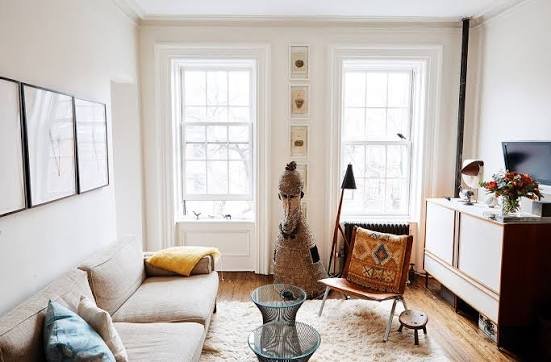
Compact rooms are a reality for many urban homeowners, and the ceiling is often the most underused tool for making them feel more spacious. Because the eye naturally travels upward, what happens overhead strongly influences how large a room appears. With a few considered choices, even a modest bedroom or living area can feel open, airy, and comfortable.
Prioritise Light Colours
White and soft pastel ceilings reflect more light than dark ones, which makes the room feel brighter and higher. Choose a paint with a slightly lighter tone than the walls to create a gentle upward lift. If you prefer colour, keep it subtle, such as a pale sky blue or a whisper of warm grey. Matte finishes are best because they diffuse light and hide small surface imperfections.
Keep the Design Minimal
In small rooms, heavy multi-tier false ceilings can feel oppressive. A flat, seamless panel with a slim peripheral border is usually enough. If your slab height is below nine feet, consider a very shallow drop or even a lighting-only recess rather than lowering the whole ceiling. Every inch counts, and a thick structure can swallow the sense of height that you are trying to preserve. Minimal lines also reduce visual clutter and make the room feel orderly.
Use Lighting to Create Depth
A thin cove line around the perimeter makes the ceiling appear to float, which suggests more height. Slim recessed spotlights, spaced evenly, reduce shadows and make corners feel brighter. Avoid bulky pendant fixtures that hang low and interrupt sightlines. If you love a decorative light, choose a flush mount or a slender design that does not dominate the room. Placing a small light on the wall or behind furniture can also draw the eye outward.
Play With Lines and Reflection
Vertical elements, such as tall curtains hung close to the ceiling, give the impression of extra height. Similarly, mirrors placed on the opposite wall of a window bounce daylight around and visually extend the room. Subtle ceiling details such as a narrow gloss strip or a reflective border can echo this effect, but use them sparingly. Wood-look panels laid along the length of a narrow room can emphasise its proportions, while panels laid across the width can make it appear wider.
Maintain a Visual Flow
Continuing the same ceiling colour into adjoining spaces, such as a passage or dining nook, removes visual breaks and enlarges the perceived area. Consistent flooring and a limited palette help the effect. Consider also how furniture sits below the ceiling. Low-profile sofas and open-legged tables leave more visible floor and keep the room feeling uncluttered.
If you want to see how this looks in practice, browse compact false ceiling designs that work for apartments with limited height. You may also benefit from reviewing broader ceiling ideas to compare how different finishes and colours behave in similar spaces.
Consider the entrance and passage areas too, since these often feel the tightest. A narrow corridor with a continuous light line along its length can seem much longer and brighter, and the same trick draws visitors naturally toward the main living space. Keep fixtures slim, avoid dark borders, and let the ceiling carry the eye forward instead of stopping it abruptly. Small adjustments in these transition zones add up to a home that feels more generous overall.
Making a small room feel larger is rarely about one big change. It is about a series of thoughtful decisions, and the ceiling, so often ignored, is a powerful place to begin.

