


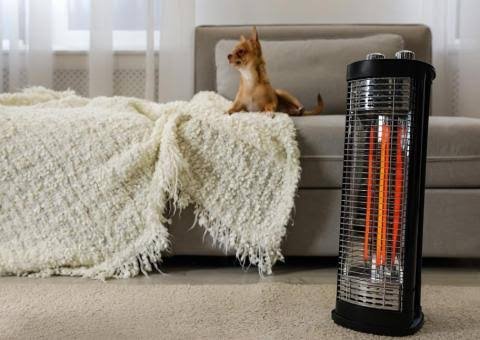
Many households desire instant heat in one room when the cold weather arrives. Central heat can take a while to warm up an entire house. It can also use more energy than you need for one small room. A portable heater is a great solution.
There are two popular options. Portable space heaters and fan heaters. The terms can sound interchangeable. A fan heater is actually just one type of space heater. However, many people use “space heater” to describe oil-filled, ceramic, infrared heat, or heaters without fans.
Both can keep you comfy in one room. Your decision comes down to the room you want to heat, your budget, noise preferences, and how much heat you need. Below, we take a closer look at each option’s pros and cons.
What Is a Portable Space Heater?
A portable space heater warms one area of your home. It’s small and you can easily move it from room to room. Some models are tabletop and others clamp to a desk or mount on the wall.
Space heaters use a variety of methods to heat your home. Ceramic models heat up a ceramic plate. Infrared creates heat in front of the people and objects it touches. Oil-filled radiators heat oil inside sealed metal fins. Panel heaters slowly emit heat from a large flat surface.
Many space heaters do not have a fan. This means they will heat up your room slower but at a more even rate. Oil-filled, infrared, and panel heaters can work great in bedrooms and home offices where you want quiet.
What Is a Fan Heater?
A fan heater has a heating element and a fan. The element heats up, and the fan blows that warm air out into the room.
Most fan heaters are lightweight and small. They also heat up quickly. Some are inexpensive enough that you can keep one on hand as a backup heater. Keep one near your feet, on or under a desk, or in a small room that doesn’t need much heat.
Fan heaters range from small to extra-large. A small heater might be suitable for your bathroom or home office. A larger fan heater might help take the chill off of a bedroom or den. Units often have a low heat setting, high heat setting, and fan-only option.
Pros of Portable Space Heaters
Portable space heaters come with some great benefits.
- They are quieter: Oil-filled, infrared, and panel heaters typically do not make much noise. If you like to sleep with a heater on, work, read, or watch television, quiet heat can be very useful.
- They provide steady heat: Space heaters without fans tend to warm the room at a slower, steadier pace. It may also continue to heat the room after the heater is turned off.
- Not as much circulating air: A heater without a fan won’t blow dust across the room. If you dislike dry, dusty air, this can be beneficial.
- Great for extended periods: If you spend a long time in a room that stays cold for hours, an oil-filled heater may be a great option. It may take a while to heat up, but it can give off steady heat.
- Variety of heat types: Infrared heaters can directly warm you if you need heat in one small area.
You can sometimes lower your energy bills by using a portable heater. For instance, you might set your primary thermostat lower on the cold days. Only turn on the heater in the room you spend most time in. Some people call this zone heating.
Cons of Portable Space Heaters
Of course, there are some downsides to these heaters as well.
- They take time to warm-up: If you need heat right now, you’ll have to wait for oil-filled or panel heaters to turn on. They simply don’t heat up as fast as models with a fan.
- They can be heavy: Oil-filled heaters are rather heavy. While many have wheels, they aren’t the easiest to carry.
- They can take up floor space: A bulky heater can take up space in a small bedroom or office.
- Some heat types don’t heat as widely: Infrared heaters mainly heat people in front of them. They might not warm the entire other side of a room.
- They can get hot on the outside: Certain models become hot to the touch on the outside of the unit. Always read the safety instructions that come with your unit before using it.
Also, any portable heater will run up your electricity bill. All heaters that plug into the wall up to 1,500 watts on high. Some use less on medium and low settings. However, there will still be high energy usage whether the heater has a fan or not. The real cost depends on how long you run the heater and what your local power company charges per kilowatt hour.
Pros of Fan Heaters
Fan heaters are popular because they heat up quickly and are easy to use.
- They heat your room faster: Within minutes, a fan heater will blast warm air into your room. Nobody likes to wait on cold mornings.
- Small and compact: You can stick many models on a desk, next to a chair, or in the corner of your bathroom.
- Inexpensive: Basic fan heaters are usually cheaper than oil-filled or infrared heaters.
- Easier to move: Most fan heaters are light and come with a built-in handle. Moving one from bedroom to office is easy.
- They create better air flow: If you want to heat a small room, a heater with a fan can move the warm air around faster.
- Fan-only setting: Some fan heaters have an option to use the heater without creating heat. This allows you to use it as a small fan during warmer months.
Fan heaters are a great choice if you want heat for only a short time. Use one while you get ready in the morning, sit at your desk, or heat up a small bathroom before bed.
Cons of Fan Heaters
- The biggest downside of fan heaters is the fan itself. Some units create a loud hum, click, or blow on a constant setting. Some people do not notice it. Others cannot fall asleep near one.
- Fan heaters also blow around dust and dry air. If you have allergies or dry skin, this may annoy you. The warm air can also feel powerful if you sit too close to the unit.
- Fan heaters also lose their heat quickly after you turn them off. An oil-filled heater holds heat after it turns off. A fan heater does not. Once you turn off the fan, the air stops blowing.
- Some cheap models do not feel very sturdy. The fan can break with heavy use over time. Look for a heater with a solid safety rating and a clear warranty.
Case Study: Fan Heater vs Other Portable Heaters
A nice real-world example has been provided by 2DHeat, who measured the performance of different electric heating products when used in the same room. In their experiment they used **a 2kW floor-standing fan heater, 2kW convection heater and two 800W infrared panels** on consecutive days.
It’s particularly interesting when comparing the results between the fan heater and the other portable space heaters, because it demonstrates that wattage isn’t the only factor that determines heating performance.
[gallery_bank photos=700,width=215,height=215] While the fan heater blew warm air around the room, the alternative heating solutions all produced heat in different ways. Temperature, humidity and thermal comfort were measured to provide a more accurate picture of how each heater performed over time.
This goes to show that there’s more to choosing a portable heater than watts. **Fan heaters are typically better for when you want heat quickly and directly**, while other portable electric heaters can be better for quiet operation, radiant heat or slower, even heating.
Your specific use case will determine which portable heater is best for you. Quick, localised heating from a portable fan heater can be ideal for home offices, bathrooms, bedrooms and spare rooms. Oil-filled radiators, panel heaters and infrared heaters may be better when you want the heater to run for longer periods of time, or when noise is a concern.
The example demonstrates the importance of looking at your entire heating environment. Room size, insulation levels and external temperatures can all play a factor in comfort levels and heating bills.
https://www.2dheat.com/blog/case-study-3-performance-of-different-heater-types)
Portable Space Heater & Fan Heater FAQs
What is the difference between a space heater and a fan heater?
A space heater refers to any portable appliance which produces heat to warm a single room or area. Fan heaters are space heaters which contain a fan to blow air across a heating element.
Are fan heaters better than oil-filled heaters?
It depends what you need them for. Fan heaters heat up rooms more quickly and tend to be more portable. Oil-filled heaters offer quieter, longer-lasting heat, and will often continue to radiate heat after the element has turned off.
Which type of heater is best for a bedroom?
Fan heaters can be good for bedrooms if you’re unlikely to leave them on for long periods of time, or if you want to warm the room up quickly. Oil-filled radiators and convectors tend to be quieter and can provide more consistent heat, which may be better in bedrooms.
Whichever heater you choose, be sure to read the manufacturer’s safety instructions if you plan to use it in a bedroom
Are fan heaters expensive to run?
Like all electric heaters, the running costs depend on wattage, usage and the cost of electricity. As a guide a 1.5kW heater used on full power for one hour will use approximately 1.5kWh of electricity.
You can reduce running costs by using a thermostat or timer to only heat when required, or by using a lower heat setting where possible.
Do fan heaters heat a room faster?
In most situations, yes. Fan heaters work by blowing heated air out of the unit and into the room. This helps warm air to spread more quickly, making fan heaters ideal for spot heating over shorter periods.
Are oil-filled heaters quieter than fan heaters?
Oil-fill heaters don’t have a fan to circulate warm air, which makes them one of the quietest types of electric heaters. They can be a good choice if you’re worried about heater noise distracting you at work or during calls.
Do fan heaters dry out the air?
Not in the same way an air conditioner or dehumidifier does. But when air is heated, it can hold more moisture which can result in lower humidity levels. Additionally, having a fan blow air directly at you can make your skin, eyes or nose feel dry.
Which heater is best for a home office?
A fan heater is good if you want to heat a specific area, such as your desk. If you’re easily distracted by background noise during calls or video meetings, a convection heater or oil-filled radiator may be better.
Can a fan heater heat a large room?
Provided your heater is rated highly enough it can heat a larger room. But bear in mind most portable fan heaters are designed for smaller rooms and spaces. External temperatures, insulation levels and room height will also have an impact.
Is infrared heating better than a fan heater?
In some cases. Infrared heaters emit radiant heat which is absorbed by objects and people in the room. Fan heaters produce heat which is circulated around the room.
Infrared is better if you just want to heat people or objects in its direct path. But fan heaters can more effectively increase the temperature of the air in an enclosed room.
Can I use a fan heater with another space heater at the same time?
You can, but be careful not to overload electrical circuits or sockets. Most standalone heaters will draw between 1kW and 3kW of electricity, which is significant on a residential electricity tariff.
Check that you’re using a suitable outlet, as well as reading any advice the manufacturer gives about using extension leads or multiple heaters simultaneously.
What should I look for when purchasing a portable heater?
Wattage, room size, method of heating, thermostat controls and timer settings can all be important depending on your situation. You may also want to look at the heater’s noise level when running, how portable it is and any additional safety features.
As always, be sure to read the manufacturer’s instructions and warranty details before you buy.
Which is better for long-term space heating: fan heater or space heater?
Long-term space heating is usually better with a quieter heater like an oil-filled radiator or convection heater. But fan heaters can be ideal if you need to heat a room up quickly, or only for short periods of time.
Whether a heater is better for long-term space heating depends on where you’re planning on using it, and your own personal comfort preferences.
Which Heater Should I Buy?
If you prefer quiet, even heat that lasts for a while, get a portable space heater without a fan. Oil-filled radiators or infrared heaters can be a great option if you want to heat your bedroom or home office. If you want to heat yourself while sitting in one place, try an infrared model.
If you want instant heat in a small room, get a fan heater. These are ideal for short term use, smaller spaces, and lower budgets. Just be aware that they make noise while on.
Whichever you choose, both will help heat a chilly room. Consider how large the room is, how quickly you need heat, and how much noise you care about. Use your heater responsibly and you should stay nice and toasty all winter long.

