

Music City Bowl 2024 featured an unforgettable showdown between the Missouri Tigers and Iowa Hawkeyes on December 30, 2024, at Nissan Stadium in Nashville, Tennessee.
The 26th annual edition saw Missouri triumph 27-24 in a dramatic fourth-quarter comeback that captivated 43,375 fans and 2.8 million television viewers on ESPN.
The TransPerfect Music City Bowl has become a cherished holiday tradition, generating $26.7 million in economic impact for Nashville while showcasing elite college football competition between the SEC and Big Ten conferences.
Music City Bowl 2024 Quick Facts
| Category | Details |
|---|---|
| Game Date | December 30, 2024 |
| Kickoff Time | 1:30 PM CT / 2:30 PM ET |
| Location | Nissan Stadium, Nashville, Tennessee |
| Teams | Missouri Tigers vs Iowa Hawkeyes |
| Final Score | Missouri 27, Iowa 24 |
| TV Network | ESPN |
| Attendance | 43,375 fans |
| Economic Impact | $26.7 million for Nashville |
| TV Viewership | 2.8 million viewers |
| Title Sponsor | TransPerfect |
| Game Temperature | 61°F (16°C), Sunny |
| Bowl Edition | 26th annual |
What Is the Music City Bowl?
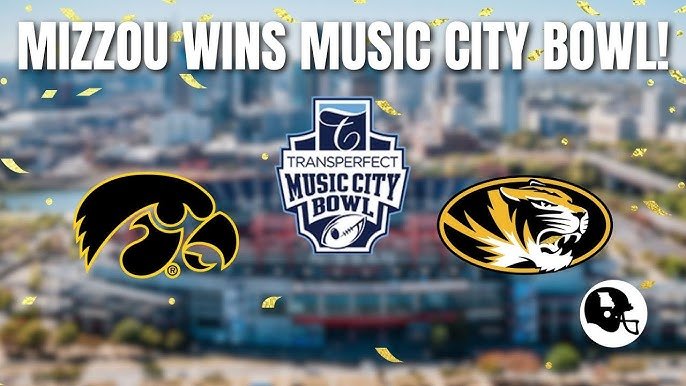

The Music City Bowl is an annual NCAA Division I Football Bowl Subdivision (FBS) postseason college football game held in Nashville, Tennessee. Established in 1998, the bowl was created to showcase Music City’s growing sports infrastructure and musical heritage.
The game takes place at Nissan Stadium, formerly known as LP Field and Adelphia Coliseum. It has been played every year since inception except for the 2020 COVID-19 pandemic cancellation.
The Music City Bowl typically features teams from the Southeastern Conference (SEC) facing opponents from the Big Ten Conference, Atlantic Coast Conference (ACC), or other major conferences. Over 27 years, the bowl has welcomed almost 1.5 million fans to Nashville.
Music City Bowl 2024 Teams
Missouri Tigers (9-3, SEC)
The Missouri Tigers entered the 2024 Music City Bowl with a 9-3 record and a 5-3 SEC conference standing. They finished tied for fourth place in the challenging Southeastern Conference.
Missouri ranked No. 19 in the final College Football Playoff (CFP) rankings. This marked the Tigers’ first appearance in the Music City Bowl, though they were originally selected for the 2020 edition before COVID-19 cancellation.
Head coach Eli Drinkwitz led the Tigers to their 38th bowl appearance in program history. Missouri held a 7-6 all-time series advantage over Iowa heading into the matchup.
Iowa Hawkeyes (8-4, Big Ten)
The Iowa Hawkeyes came into the game with an 8-4 overall record and a 6-3 Big Ten conference record. They finished tied for fifth place in the Big Ten standings.
This was Iowa’s second Music City Bowl appearance. The Hawkeyes previously won the 2022 edition, defeating Kentucky 21-0 in a dominant shutout performance.
Iowa and Missouri had been scheduled to meet in the canceled 2020 Music City Bowl. The teams’ only previous bowl meeting came in the 2010 Insight Bowl, where Iowa won 27-24.
Game Date and Time Details
The 2024 TransPerfect Music City Bowl kicked off on Monday, December 30, 2024. The game began at approximately 1:30 p.m. Central Time (2:30 p.m. Eastern Time).
The timing made it a perfect holiday season matchup for college football fans. The December 30 date positioned it during the traditional bowl season window between Christmas and New Year’s Day.
Weather conditions were ideal for football in Nashville. Game temperature reached 61°F (16°C) with sunny skies and southeast winds at 6 mph, creating comfortable viewing conditions for the 43,375 attendees.
Where to Watch: TV Broadcast and Live Stream
ESPN televised the 2024 Music City Bowl nationally. The broadcast featured Taylor Zarzour as play-by-play announcer, Matt Stinchcomb as analyst, and Alyssa Lang as sideline reporter.
The ESPN broadcast brought the game to 2.8 million viewers across the country. This viewership contributed to the Music City Bowl’s total of 109.5 million viewers since the bowl’s inception.
For Missouri fans, the Tiger Radio Network provided local radio coverage. Multiple streaming options through ESPN’s digital platforms allowed fans to watch on various devices.
Final Score and Game Recap
Missouri defeated Iowa 27-24 in a thrilling finish. The Tigers engineered a dramatic fourth-quarter comeback to secure the victory in their first Music City Bowl appearance.
The game showcased contrasting styles, with Missouri’s explosive offense facing Iowa’s stout defense. Both teams battled intensely throughout all four quarters.
The 27-24 final marked Missouri’s 20th victory over their last 25 games (dating back to August 31, 2023). The win capped a strong season for the Tigers.
First Half Action
The first half featured defensive intensity from both squads. Iowa’s defense, known for its discipline, limited Missouri’s offensive opportunities early in the game.
Missouri’s defense ranked among the nation’s best in several categories. They entered the game third in first downs allowed and fourth in third-down conversion percentage defense.
Both teams felt each other out in the opening quarters. Field position battles dominated as punters from each side controlled the game’s tempo.
Second Half Drama

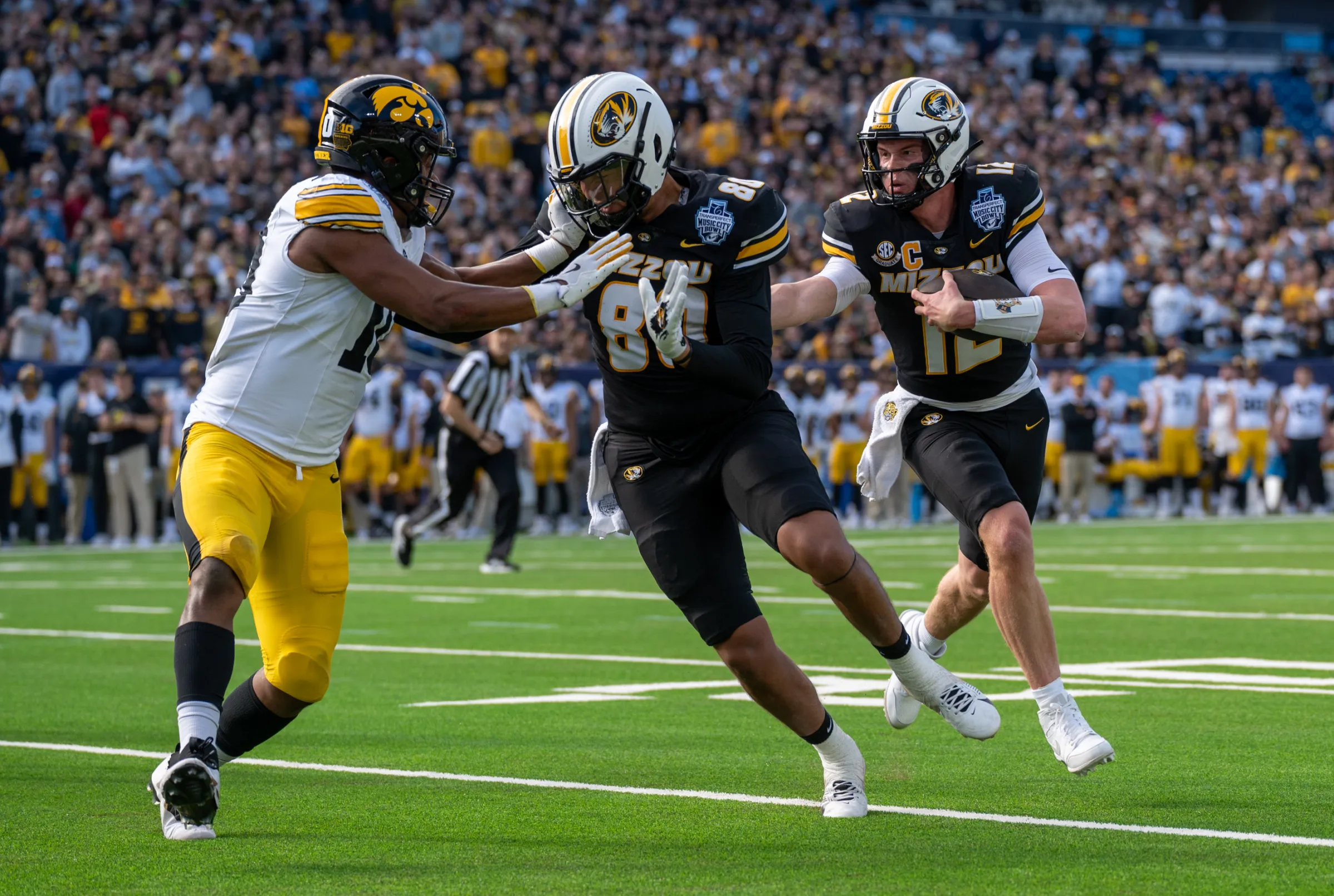
The second half brought increased offensive production. Missouri’s offense, led by quarterback Brady Cook, began finding rhythm against Iowa’s defensive scheme.
Iowa maintained competitiveness throughout the third quarter. The Hawkeyes’ game plan focused on ball control and limiting Missouri’s explosive plays.
The fourth quarter delivered the game’s most exciting moments. Missouri’s comeback rally demonstrated the resilience that defined their 2024 season.
Fourth Quarter Comeback
Missouri’s fourth-quarter performance was spectacular. The Tigers overcame a deficit to take the lead in the game’s final minutes, showcasing their never-say-die attitude.
Of Missouri’s 20 victories over two years, 13 came from behind, including eight where they overcame second-half deficits. This comeback mentality proved crucial in Nashville.
The Tigers’ ability to execute under pressure shined through. Critical plays on both offense and defense sealed the 27-24 victory.
Key Players and Performances
Brady Cook (Missouri QB)
Quarterback Brady Cook delivered when it mattered most for Missouri. His experience in big games, including the previous year’s Cotton Bowl, proved invaluable against Iowa’s defense.
Cook completed crucial passes in the second half. His poise under pressure helped Missouri engineer the game-winning drive in the fourth quarter.
The veteran quarterback showcased why Missouri trusted him in high-stakes situations. His leadership extended beyond statistics to inspire teammates during the comeback.
Johnny Walker Jr. (Missouri DE)
Defensive end Johnny Walker Jr. brought the nation’s longest active sack streak into the Music City Bowl. He had recorded at least 0.5 sacks in six consecutive games.
Walker Jr. was the 2023 Cotton Bowl Defensive MVP against Ohio State. His presence on Missouri’s defensive line constantly disrupted Iowa’s offensive rhythm.
The Tigers’ defensive dominance owed much to Walker Jr.’s relentless pressure. His performance exemplified Missouri’s top-tier defensive unit.
Luther Burden III (Missouri WR)
Wide receiver Luther Burden III was a game-changer for Missouri’s offense. His speed and route-running ability created mismatches against Iowa’s secondary.
Burden III had caught a game-clinching touchdown from Cook in the previous year’s Cotton Bowl. His big-play capability kept Iowa’s defense honest throughout.
The dynamic receiver proved essential to Missouri’s offensive success. His contributions helped the Tigers overcome Iowa’s defensive schemes.
Theo Wease Jr. (Missouri WR)
Theo Wease Jr. made his fourth postseason appearance in the Music City Bowl. His experience in high-pressure games provided stability to Missouri’s receiving corps.
Wease Jr. led the Tigers with four receptions in the previous year’s Cotton Bowl. His reliable hands and precise route-running complemented Missouri’s offensive attack.
The veteran receiver had logged six career catches for 80 yards across three previous bowl games. His postseason expertise was invaluable.
Iowa’s Defensive Leaders
Iowa’s defense featured multiple standout performers despite the loss. The Hawkeyes’ defensive scheme kept them competitive throughout the entire game.
Middle linebacker Chuck Hicks had opted out of the bowl, creating gaps in run defense. Iowa filled these positions with depth players like Gabe Vandenberg.
The defensive unit forced Missouri to work for every yard. Their effort kept Iowa within striking distance until the final whistle.
Nissan Stadium as the Venue
Nissan Stadium in Nashville has hosted the Music City Bowl since 1998. The 69,143-capacity stadium provides an excellent atmosphere for college football’s postseason.
The venue has undergone various name changes over the years. Originally called Adelphia Coliseum, then LP Field, it became Nissan Stadium in 2015.
For the 2024 edition, 43,375 fans filled the stadium. The attendance brought the Music City Bowl’s total to over 1.4 million fans across 27 years.
Nashville: Music City USA
Nashville’s nickname “Music City” perfectly complements the bowl game’s identity. The city’s rich musical heritage blends seamlessly with college football tradition.
The Music City Bowl was originally created to bring tourism during Nashville’s historically slowest time of year. The strategy succeeded beyond expectations.
Over 27 years, the bowl has generated $448.9 million in total economic impact. The 2024 edition contributed $26.7 million to Nashville’s economy.
Economic Impact on Nashville
The 2024 Music City Bowl generated approximately $26.7 million in total economic impact for Nashville. This ranked as the second-highest in the past five years.
According to attendee surveys, 65.2% of fans traveled from out of town. These visitors stayed an average of 2.67 nights in Nashville hotels.
Out-of-town attendees occupied over 25,000 hotel room nights. They spent an average of $271.17 per day, supporting local businesses across the city.
Pre-Game Festivities and Traditions
Pre-game festivities began the evening before the matchup on Broadway. Fans gathered for live entertainment and team spirit events celebrating both programs.
The annual Battle of the Bands took place on December 29 at Ascend Amphitheater. The University of Iowa’s Hawkeye Marching Band competed against the University of Missouri’s Marching Mizzou.
Thousands of spectators attended the high-energy performance competition. The battle showcased both schools’ musical traditions in Nashville’s entertainment district.
Battle of the Bands
The Battle of the Bands has become a signature Music City Bowl tradition. The 2024 edition featured spirited performances from both university marching bands.
Iowa’s Hawkeye Marching Band delivered powerful renditions of their fight songs. Their precision and energy demonstrated why they’re among college football’s premier bands.
Marching Mizzou matched the intensity with dynamic performances. The competition created excitement and built anticipation for the next day’s football game.
Amazon Voice of the Bowl Contest
The Amazon Voice of the Bowl contest showcased emerging local Nashville talent. This initiative selected performers for the national anthem and “God Bless America.”
The contest gave unknown artists a platform to perform before 43,375 fans. The opportunity aligned with Nashville’s reputation as a launching pad for musical careers.
Winners delivered memorable performances that honored both the game and Music City’s heritage. Their renditions added a special touch to the pre-game ceremonies.
Halftime Show Entertainment
Marching Mizzou and the Hawkeye Marching Band combined for a joint halftime show. The performance featured synchronized routines celebrating both schools and Nashville’s musical roots.
The bands performed school fight songs and tributes to country music. The crowd of 43,375 enthusiastically received the collaborative entertainment.
Joint halftime shows demonstrate the Music City Bowl’s commitment to celebration over rivalry. The performances reinforce the bowl as a cultural tradition, not just a football game.
Conference Matchup: SEC vs Big Ten
The 2024 Music City Bowl pitted the SEC’s Missouri Tigers against the Big Ten’s Iowa Hawkeyes. This conference matchup format has defined the bowl’s identity.
The SEC and Big Ten represent college football’s most competitive conferences. Matchups between these powerhouses generate significant national interest.
Missouri’s 5-3 SEC record demonstrated the difficulty of competing in college football’s premier conference. Iowa’s 6-3 Big Ten mark showed similar conference competitiveness.

Historical Series Between Missouri and Iowa
Missouri and Iowa have met 14 times throughout history. The Tigers hold a narrow 7-6 edge in the all-time series.
Iowa claimed the most recent meeting before 2024. The Hawkeyes won 27-24 in the 2010 Insight Bowl in Tempe, Arizona.
The 2020 Music City Bowl was supposed to feature these teams. COVID-19 complications forced cancellation, denying fans this anticipated matchup for four years.
TransPerfect as Title Sponsor
TransPerfect served as the title sponsor for the 2024 Music City Bowl. The global language solutions company has supported the bowl’s mission and growth.
Title sponsorships provide crucial financial support for bowl operations. TransPerfect’s partnership ensures the Music City Bowl’s continued success.
The company’s involvement reflects the bowl’s appeal to major corporate partners. Strong sponsorship relationships enhance the event’s prestige and sustainability.
Previous Music City Bowl Champions
Iowa won the 2022 Music City Bowl, defeating Kentucky 21-0. The shutout victory marked Iowa’s first Music City Bowl appearance.
Auburn holds the record for most points scored, tallying 63 against Purdue in 2018. That game featured a 49-point margin, the bowl’s largest ever.
Kentucky suffered the bowl’s most lopsided loss in 2022, being shut out 21-0 by Iowa. Missouri’s 2024 victory added another chapter to the bowl’s rich history.
Music City Bowl Records and Milestones
Over 26 editions through 2024, the Music City Bowl has featured competitive matchups and standout performances. The bowl frequently draws crowds exceeding 50,000 attendees.
Missouri’s victory marked several milestones for the program. It was their first Music City Bowl win and continued their recent postseason success.
The game added to Nashville’s reputation as a premier bowl destination. The combination of football, music, and Southern hospitality creates unique appeal.
Missouri’s Bowl Game History
The 2024 Music City Bowl was Missouri’s 38th bowl appearance in program history. The Tigers have established themselves as consistent postseason participants.
Missouri’s recent bowl success includes last year’s Cotton Bowl victory over Ohio State. That 14-3 win featured Johnny Walker Jr.’s defensive MVP performance.
The Tigers are seeking their first back-to-back Top 25 finishes since 2013-14. A strong bowl performance helps maintain recruiting momentum and program prestige.
Iowa’s Bowl Game Tradition
Iowa has built a strong bowl game tradition under their program’s leadership. The Hawkeyes regularly reach postseason play, demonstrating consistent competitiveness.
Their 2022 Music City Bowl shutout of Kentucky showcased defensive dominance. Iowa’s defensive reputation continues to define their identity.
The Hawkeyes’ appearance in Nashville marked another successful season. Despite the loss, Iowa’s program remains among college football’s most stable.
Coaching Matchup
Missouri’s Eli Drinkwitz faced Iowa’s Kirk Ferentz in a compelling coaching matchup. Both leaders have established winning cultures at their respective programs.
Drinkwitz has quickly elevated Missouri since arriving. His ability to develop quarterbacks and install offensive schemes has made the Tigers competitive.
Ferentz is one of college football’s most respected coaches. His Iowa tenure spans decades, with consistent bowl appearances and player development.
Defensive Statistics and Rankings
Missouri’s defense entered the bowl ranked among the nation’s elite. They ranked third in first downs allowed and fourth in third-down conversion percentage defense.
The Tigers also ranked 20th in scoring defense and 22nd in total defense nationally. These statistics demonstrated defensive coordinator Blake Baker’s excellent work.
Iowa’s defense maintained its reputation for discipline and fundamentals. The Hawkeyes’ defensive schemes consistently frustrate opposing offenses.
Offensive Strategies and Game Plans
Missouri’s offensive strategy emphasized explosive plays and quarterback mobility. Brady Cook’s dual-threat ability created problems for Iowa’s defense.
The Tigers utilized Luther Burden III and Theo Wease Jr. as primary receiving threats. Their speed and route-running stretched Iowa’s secondary.
Iowa’s offensive approach focused on ball control and limiting turnovers. The Hawkeyes attempted to control game tempo through methodical drives.
Special Teams Impact
Special teams often determine bowl game outcomes. Both Missouri and Iowa featured reliable kicking units.
Field position battles became crucial in the tight contest. Punters from both teams pinned opponents deep throughout the game.
Kick coverage units performed well for both squads. Neither team surrendered explosive special teams plays that could have changed momentum.
Fan Experience in Nashville
Nashville offered an exceptional fan experience for both programs’ supporters. The city’s famous Broadway district provided entertainment before and after the game.
Honky-tonk bars and live music venues created a festive atmosphere. Fans from both schools mingled in the friendly Southern environment.
Local restaurants and attractions welcomed visiting fans. Nashville’s hospitality enhanced the overall bowl experience beyond just the football game.
Hotel and Accommodation Impact
Out-of-town fans occupied over 25,000 hotel room nights during the 2024 bowl. This massive influx benefited Nashville’s hospitality industry significantly.
Hotels near downtown Nashville and the stadium area saw high occupancy rates. Many visitors extended stays to explore Music City’s attractions.
The average 2.67-night stay meant fans spent multiple days in Nashville. This extended visit maximized economic impact across various sectors.
Tickets and Attendance
Tickets for the 2024 Music City Bowl went on sale months in advance. The bowl office fielded inquiries at (615) 743-3130 during business hours.
The official Music City Bowl website facilitated ticket purchases. Fans could choose from various seating options and price points.
The final attendance of 43,375 represented strong fan support from both programs. Missouri and Iowa fans traveled well to support their teams.
Broadcasting Team and Commentary
ESPN’s broadcast team of Taylor Zarzour, Matt Stinchcomb, and Alyssa Lang delivered excellent coverage. Their commentary enhanced viewers’ understanding of game strategies.
Zarzour’s play-by-play accurately captured the game’s drama. His enthusiasm matched the intensity of the fourth-quarter comeback.
Stinchcomb’s analysis provided insight into coaching decisions and player matchups. Lang’s sideline reporting kept viewers informed of injury updates and coaching adjustments.
Social Media Reaction and Highlights
The Music City Bowl generated significant social media engagement. Fans shared highlights, reactions, and photos throughout game day.
The official Music City Bowl Twitter account (@MusicCityBowl) provided live updates. The account has 21.7K followers who engage with bowl content year-round.
Viral moments from the game spread across platforms. Missouri’s comeback and dramatic finish created shareable content that extended the bowl’s reach.
Weather Conditions and Field Quality
Perfect weather conditions enhanced the 2024 Music City Bowl experience. Sunny skies and 61°F temperatures created ideal football conditions.
Southeast winds at 6 mph had minimal impact on the game. Kickers and punters didn’t face challenging wind conditions.
Nissan Stadium’s field quality received praise from both teams. The playing surface allowed for safe, high-quality football throughout the contest.
Post-Game Celebrations
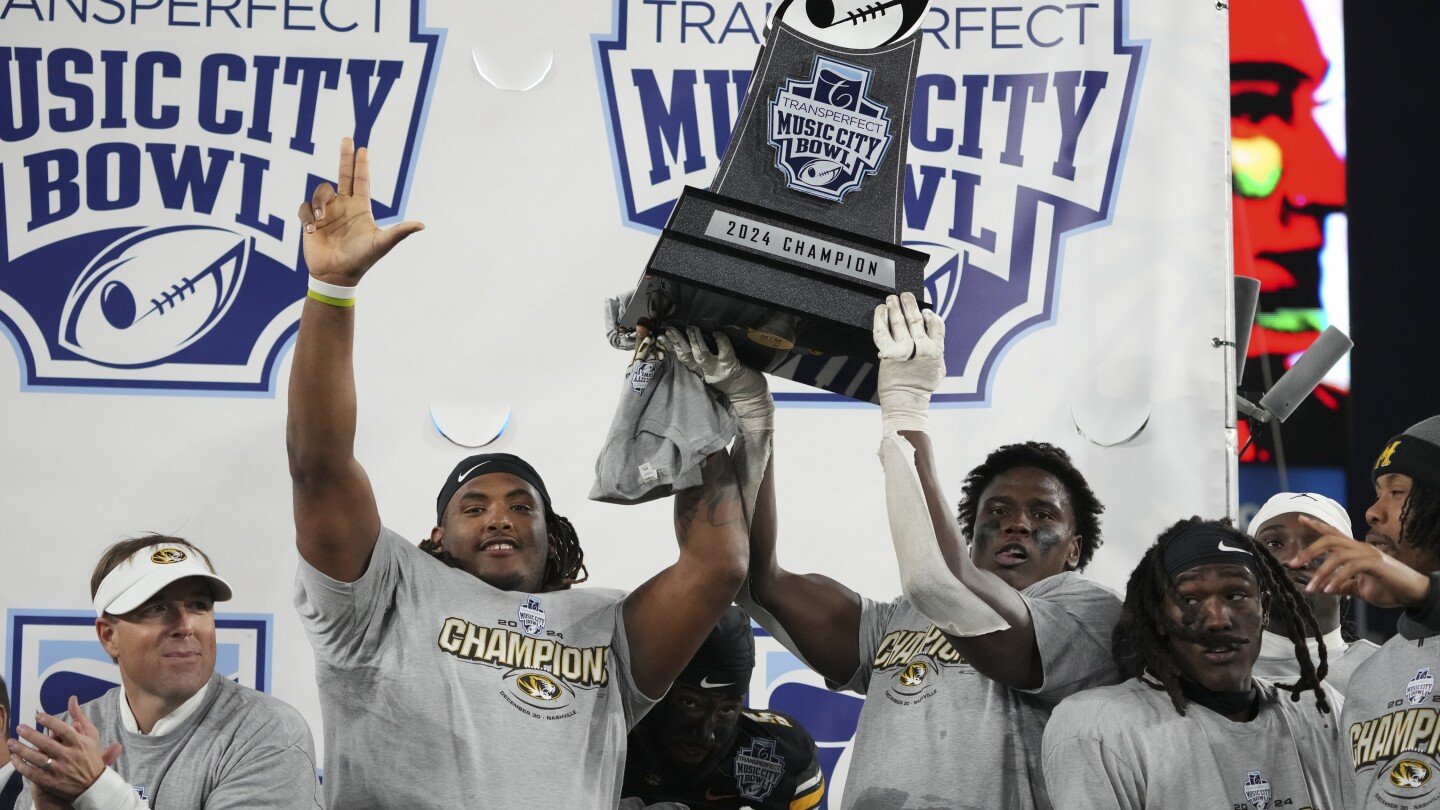
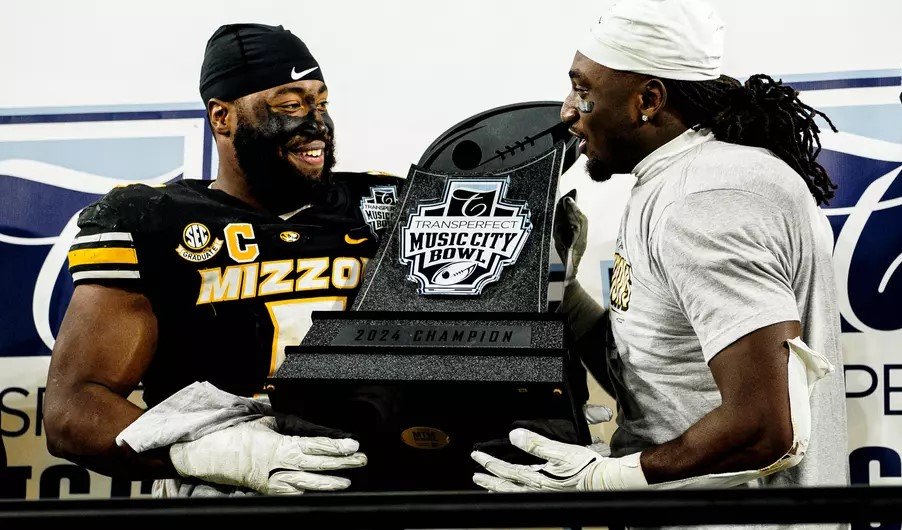
Missouri’s post-game celebration featured the trophy presentation on the field. Confetti rained down as the Tigers accepted the Music City Bowl hardware.
Players celebrated with fans who remained in the stadium. The joyous atmosphere reflected the significance of the victory for Missouri’s program.
The championship trophy became a symbol of Missouri’s successful 2024 season. Players and coaches posed for photos commemorating the achievement.
Impact on College Football Playoff Rankings
While neither team competed for College Football Playoff spots, the bowl performance influenced final rankings. Missouri’s victory solidified their position in final polls.
The win helped Missouri finish the season ranked in the Top 25. This achievement supported recruiting efforts and program prestige.
Iowa’s competitive performance despite the loss maintained their reputation. The Hawkeyes demonstrated they belonged on the national stage.
Recruiting Implications
Bowl victories significantly impact recruiting. Missouri’s comeback win provides positive momentum entering the next recruiting cycle.
Prospects watching the game saw Missouri’s resilience and talent. The national television exposure showcased the program to potential recruits.
Iowa’s strong showing despite the loss also benefits recruiting. The Hawkeyes’ consistent bowl appearances demonstrate program stability.
Looking Ahead to Future Music City Bowls

The 2024 edition’s success ensures the Music City Bowl’s bright future. The combination of competitive football and Nashville’s appeal creates sustainable growth.
Future matchups will continue featuring SEC vs Big Ten/ACC teams. This conference alignment produces competitive, nationally relevant games.
Increasing economic impact demonstrates the bowl’s value to Nashville. The partnership between the bowl and Music City strengthens annually.
Music City Bowl 2025 Preview
The 2025 Music City Bowl has already been announced. Tennessee Volunteers will face Illinois Fighting Illini on December 30, 2025.
Tennessee represents the SEC while Illinois comes from the Big Ten. The matchup continues the bowl’s tradition of power conference showdowns.
Both teams’ fan bases travel well, promising strong attendance. The 2025 edition builds on the success of the 2024 game.
Liberty Mutual Partnership
Liberty Mutual Insurance maintains a partnership with the Music City Bowl. The company’s involvement supports bowl operations and community initiatives.
Corporate partnerships like Liberty Mutual’s ensure financial stability. These relationships allow the bowl to invest in fan experience improvements.
The partnership aligns Liberty Mutual’s brand with college football tradition. The Music City Bowl provides valuable marketing exposure for sponsors.
Community Involvement and Charity
The Music City Bowl supports Nashville-area charities and community organizations. The bowl’s nonprofit status emphasizes community benefit over profit.
Music City Bowl, Inc. organizes charitable initiatives throughout the year. These programs leverage the bowl’s platform for positive community impact.
The economic impact extends beyond hotels and restaurants. Local charities benefit from bowl-related events and fundraising activities.
Merchandise and Memorabilia
The official Music City Bowl Store offers exclusive gear and apparel. Fans purchased commemorative items celebrating the 2024 matchup.
Missouri and Iowa fans bought team-specific merchandise. Game-day essentials and collectibles provided lasting memories of the Nashville experience.
Limited-edition items become valuable keepsakes. Bowl merchandise sales support operations and contribute to economic impact.
Tailgating Experience
Tailgating played a major role in the Music City Bowl experience. The official tailgate location at 100 Woodland Street welcomed fans.
Tailgate Better hosted an all-you-can-eat-and-drink event. The pre-game party ran from 10:15 AM to 1:15 PM before kickoff.
Over 500 fans attended the official tailgate. The festive atmosphere built excitement and camaraderie before the game.
Parking and Transportation
Parking arrangements accommodated thousands of vehicles near Nissan Stadium. Fans accessed various parking lots surrounding the venue.
Rally ride-sharing provided transportation with promotional codes. The partnership offered convenient alternatives to driving and parking.
Public transportation options helped fans reach the stadium. Nashville’s transit system expanded service for the bowl game.
Food and Beverage Options
Nissan Stadium offered diverse food and beverage options. Concession stands featured traditional stadium fare and local Nashville specialties.
Premium seating areas provided enhanced dining experiences. Club-level amenities included upscale food choices and full bar service.
Nashville’s famous hot chicken made appearances on stadium menus. Local culinary touches gave the Music City Bowl unique flavor.
Security and Safety Measures
Security protocols ensured fan safety throughout the event. Metal detectors and bag checks maintained venue security.
Staff members received training for emergency situations. Medical personnel stood ready to assist fans needing attention.
Clear bag policies and prohibited items lists were communicated in advance. These measures balanced security needs with fan convenience.
Media Coverage and Press Credentials
National and local media covered the Music City Bowl extensively. Press credentials provided journalists access for comprehensive coverage.
Pre-game press conferences featured coaches from both teams. Media availability allowed reporters to gather insights and quotes.
Post-game interviews captured immediate reactions. Extensive media coverage amplified the bowl’s national profile and reach.
Award Winners and Game MVPs
Game MVP awards recognized outstanding individual performances. Missouri players received accolades for their comeback victory.
Offensive, defensive, and special teams standouts earned recognition. These honors celebrate excellence and provide players lasting memories.
MVP selections often influence NFL Draft evaluations. Scouts pay close attention to bowl game performances and awards.
Opt-Outs and Player Decisions
Some players opted out of bowl participation to prepare for the NFL Draft. These decisions have become common in modern college football.
Missouri’s depth allowed them to overcome opt-outs. Younger players seized opportunities to showcase talents.
Iowa also managed roster changes effectively. Coaching staffs adapted game plans based on available personnel.
Transfer Portal Implications
Bowl games occur during the transfer portal window. Some players use bowl participation to showcase abilities for potential new schools.
Missouri’s success may influence transfer portal activity. Winning programs attract transfers seeking championship opportunities.
The transfer portal has changed college football’s landscape. Bowl performances can be final opportunities to impress before entering the portal.
Broadcasting Rights and Revenue
ESPN’s broadcasting rights provide crucial revenue for the Music City Bowl. Television contracts fund bowl operations and payouts to participating teams.
The 2.8 million viewers justified ESPN’s investment. Strong viewership attracts advertisers and sponsors.
Bowl payouts help participating schools’ athletic departments. These funds support entire athletic programs beyond just football.
Historical Significance in College Football
The Music City Bowl has established itself among bowl season staples. Twenty-six years of history have created traditions and memorable moments.
The bowl fills an important niche in the postseason landscape. It provides meaningful competition for strong programs outside the CFP.
Nashville’s embrace of the bowl has been crucial to success. The city’s support ensures the Music City Bowl’s continued relevance.

Frequently Asked Questions
When was the Music City Bowl 2024 played?
The Music City Bowl 2024 was played on Monday, December 30, 2024, at Nissan Stadium in Nashville, Tennessee. Kickoff occurred at 1:30 PM Central Time (2:30 PM Eastern Time).
Who played in the Music City Bowl 2024?
The Missouri Tigers (9-3) from the SEC faced the Iowa Hawkeyes (8-4) from the Big Ten. Missouri won 27-24 in a dramatic fourth-quarter comeback victory.
What channel broadcast the Music City Bowl 2024?
ESPN televised the 2024 Music City Bowl nationally. The broadcast team included Taylor Zarzour (play-by-play), Matt Stinchcomb (analyst), and Alyssa Lang (sideline reporter), reaching 2.8 million viewers.
What was the final score of Music City Bowl 2024?
Missouri defeated Iowa 27-24. The Tigers engineered a dramatic fourth-quarter comeback to secure the victory in their first Music City Bowl appearance.
How many people attended the Music City Bowl 2024?
The attendance was 43,375 fans at Nissan Stadium. This brought the Music City Bowl’s total attendance to over 1.4 million across its 27-year history.
Where is the Music City Bowl played?
The Music City Bowl is played at Nissan Stadium in Nashville, Tennessee. The stadium, formerly known as LP Field and Adelphia Coliseum, has a capacity of 69,143.
What is the economic impact of the Music City Bowl?
The 2024 Music City Bowl generated $26.7 million in economic impact for Nashville. Over 27 years, the bowl has contributed $448.9 million total to the city’s economy.
Who sponsors the Music City Bowl?
TransPerfect was the title sponsor for 2024, with Liberty Mutual Insurance as a major partner. Multiple corporate sponsors support the bowl’s operations and community initiatives.
Can I stream the Music City Bowl online?
Yes, ESPN’s digital platforms streamed the 2024 Music City Bowl. Fans accessed live streaming through ESPN.com and the ESPN app with cable provider credentials.
Who won the Music City Bowl 2024?
The Missouri Tigers won the 2024 Music City Bowl, defeating Iowa 27-24. The victory was Missouri’s first Music City Bowl win and capped a successful 9-3 season.
Conclusion
Music City Bowl 2024 delivered everything college football fans love—dramatic competition, memorable performances, and unforgettable moments.
The Missouri Tigers’ 27-24 comeback victory over Iowa Hawkeyes on December 30, 2024, exemplified postseason excellence. Played before 43,375 fans at Nissan Stadium and 2.8 million television viewers on ESPN, the 26th annual edition reinforced the bowl’s status as a holiday tradition.
The $26.7 million economic impact benefited Nashville’s economy while showcasing the perfect blend of SEC and Big Ten football.
The game featured outstanding performances from Brady Cook, Johnny Walker Jr., and Luther Burden III. Missouri’s fourth-quarter resilience demonstrated championship character, overcoming adversity to claim victory.
Iowa’s competitive performance reflected their program’s consistency and disciplined approach.