


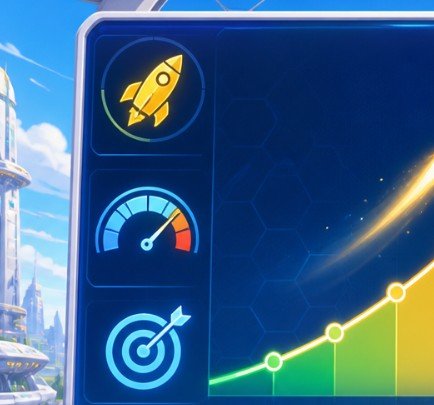
Mission Uncrossable has quickly become a favourite for players who enjoy mission-style games with simple controls yet surprisingly deep strategy. Understanding how the gameplay works, what the odds really mean, and which habits genuinely help over time can turn a casual session into something far more engaging and informed.
For anyone curious about how the experience feels in practice, Mission Uncrossable offers a helpful way to see how the game behaves over many rounds and what players can expect from different play styles.
Core mission structure and flow
At its heart, Mission Uncrossable is built around short, repeatable rounds that follow a clear pattern. Each round begins with the player choosing a stake, locking it in, and then watching the mission unfold on screen. The game then progresses through a sequence that gradually increases the potential payout until the mission reaches its end point.
What keeps players coming back is the blend of predictability and suspense. The steps of each round stay consistent, but the outcome varies every time. There are a few common stages that appear in most versions of the game:
First, the player sets the amount to commit to the mission. Next, the mission launches and a multiplier or progress meter starts to climb in real time. The longer it climbs without ending, the higher the potential payout if the player chooses to end the mission early and lock in the result. If the mission ends before the player acts, the current round is over and the stake is lost.
This simple loop makes the rules easy to understand, but it also introduces frequent decisions. Players constantly weigh whether to secure a smaller but certain payout or hold out for a larger outcome that may not land. This continuous trade-off is where understanding odds and patterns becomes powerful.
How odds and returns really work
Although rounds feel fast and reactive, Mission Uncrossable is ultimately guided by underlying probabilities. Every mission is determined by a random outcome, and no previous round can influence the next. For anyone who wants to play with intention, it helps to know a few key concepts.
One of the most important ideas is the return to player, often shortened to RTP. This is usually given as a percentage and describes how much of the total stakes placed on the game are expected to be paid back to players over a long stretch of time. For example, an RTP of 96 percent means that over many thousands of rounds, the game will on average pay back 96 units for every 100 units staked.
That does not mean any individual player is guaranteed that outcome. In the short term, results will bounce above and below that figure. Some sessions feel very generous, while others feel quiet. Understanding RTP simply gives a realistic view of what the game is designed to do over a broad sample of play.
Volatility is the second pillar. A higher volatility setting generally means the game delivers fewer frequent payouts but with the possibility of larger results when they do land. A lower volatility style game tends to pay out more often, but with smaller amounts. Mission Uncrossable often sits somewhere in the middle, with options for players who enjoy either steadier sessions or high‑tension ones.
Finally, multipliers are central to the experience. Each mission’s multiplier climbs until the round ends. Statistically, most missions will end at lower multipliers, simply because extreme outcomes are rare. Keeping that in mind makes it easier to set realistic targets rather than always aiming for the highest possible number.
Practical tips for smarter sessions
Because the game blends chance with decision-making, players who approach it with a plan usually feel more in control of their experience. While there is no method that can guarantee outcomes in a random game, there are habits that make play more structured and enjoyable.
First, decide on a session budget in advance and treat each round as a small piece of that total, not as an isolated moment. Consistent stake sizes often make it easier to see how the game behaves and to avoid chasing individual outcomes that did not go the preferred way.
Second, predefine multiplier targets. For example, a player might decide that in a standard round, they will usually cash out between 1.5x and 3x, and only occasionally hold out for higher values. This turns impulsive choices into a repeatable approach. Over time, it becomes easier to evaluate whether that pattern suits their style and expectations.
Third, separate experimentation rounds from more serious rounds. In some sessions, a player can deliberately try unusual timings, early exits, or tiny stakes to observe how often high multipliers appear and how the game flow feels. In other sessions, they stick closely to their chosen pattern. This keeps learning and enjoyment intact without blurring them into every single decision.
Lastly, pay attention to emotional cues. Mission Uncrossable is designed to be fast and exciting, which is a big part of its appeal. Taking short breaks, reviewing how the session has gone so far, and pausing after unusually good or bad streaks helps maintain a clear head and a more balanced perspective on the next rounds.
Understanding mission pacing and psychology
Beyond raw numbers, the way missions are timed has a big impact on how players perceive the game. Short missions create quick cycles of anticipation and resolution, which can feel very absorbing. Slightly longer missions, with slower climbing multipliers, build tension and make each decision to stay or exit more deliberate.
Developers use pacing, animation, and sound design to heighten this sense of engagement. As the multiplier climbs, visual cues often become more intense, and audio may subtly shift to create a sense of building momentum. These elements are crafted to make each decision moment feel significant, even though the underlying outcome is still governed by chance.
Recognising these cues does not make the game less enjoyable; instead, it gives players a more informed view of why it feels so compelling. With that awareness, they can enjoy the experience while still keeping their own goals, budget, and time firmly in mind.
Bringing it all together thoughtfully
When players look beyond the surface and take time to understand how Mission Uncrossable actually works, the game becomes more than just a series of quick rounds. The mission loop, the maths behind the multipliers, and the small day‑to‑day choices all come together to create a highly polished experience.
By combining a basic grasp of odds with clear personal limits and a consistent approach to cashing out, players can enjoy each mission as a self-contained story, with its own build‑up and resolution. That mix of structure and excitement is what keeps Mission Uncrossable engaging long after the first few sessions, and it is why many players treat it as a game worth learning as well as playing.

