


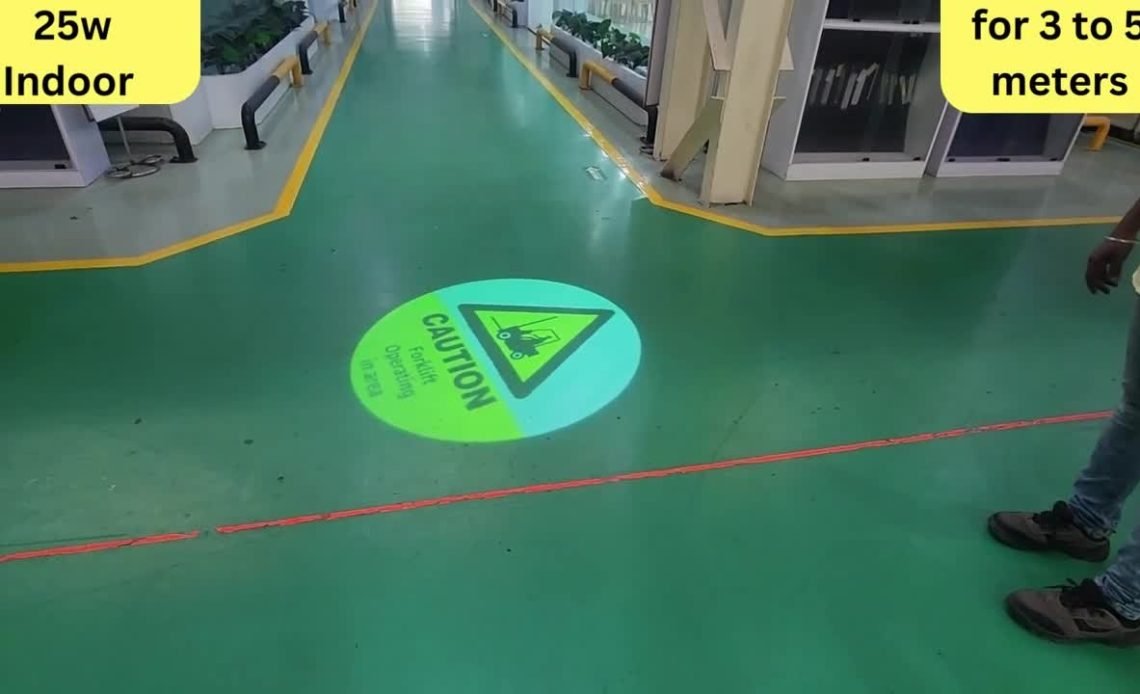
The safety that needs to be implemented in a modern warehouse is a race against time, in the high-stakes environment of a warehouse. Heavy equipment, forklifts and people walking around should all be able to maneuver between a multitude of aisles and loading docks, and communication is critical. Common methods that facilities have used previously to mark paths and indicate hazards include using painted lines and adhesive floor stickers. These physical markings tend to wear down, peel off or get covered in dust and heavy usage, though, however. This has resulted in a new innovative technology, projected warehouse safety signs, which is now available to warn of danger without fading or becoming ineffective, using light technology.
Creating a Virtual Signage with Technology
Virtual signage involves high-power LED projectors that cast clear, vibrant graphics on to the floor, wall or another surface that provides a safety sign. These industrial grade projectors are more robust than a typical boardroom projector, and will work in extremely bright lighting conditions. The centerpiece is a glass slide (called a ‘gobo’) with the exact graphic or text of the safety sign. The light goes through the gobo and casts a clear, large shadow of the warning on the target.
They are highly adaptable systems as they are not in physical contact with the floor. This can include a stop sign or a pedestrian walkway that can be projected over uneven surfaces or grates, or over areas that are always wet, where paint or tape would never be able to be maintained. The ceiling-mounting of the hardware places it out of harms way from mechanical wear and tear, typically created by the scraping of pallets, or the grinding of forklift tires on the floor.
Improving the Visibility in High Traffic Areas
Projected signs are better visible and this is one of the main factors that enhance workplace safety. Humans’ brains are hardwired to see light and movement more than faded and static colors. The projected sign is bright and easy to see – much more difficult for the distracted worker or equipment operator to miss! This can be useful in the “blind spots” where the end of the warehouse aisles are located. A projector may be synced with the motion sensors to give an alarm only when a forklift is coming near, thus giving an alarm at the right time and place to capture the driver’s attention.
Moreover, signage using light reduces the clutter. Many older facilities are littered with years of lines that have been repainted and taped over, making it difficult to determine what’s what. Projected signs provide a clear, crisp alternative which can be switched off or changed in a flash, should the warehouse layout change. This clarity helps lessen the cognitive burden on employees, so they can make quicker and safer decisions within the facility.
Reducing Long-Term Maintenance and Costs
Having to spend more money on the purchase of aGobo Projectorssystem may be more expensive than using a few rolls of safety tape, but the long-term cost savings are great, if it isn’t. Traditional floor markings must be scrubbed, stripped and reapplied often in order to comply with safety regulations, and are a maintenance nightmare. This is sometimes done with the need to close off parts of the warehouse, resulting in expensive downtimes. By comparison, however, signs projected onto the glass are virtually maintenance-free. After mounting and focusing the projector, it can operate for many thousands of hours without any maintenance.
These systems are also long-lasting, which guarantees for a consistent compliance. An out-of-date stop sign on the floor may not be picked up by a safety inspector or, even worse, by a worker, and result in an unnecessary accident. The facility has a high level of safety 24 hours a day because a projected sign is always lit at its maximum brightness irrespective of the amount of foot traffic on the floor. A manager can easily replace the gobo in the projector (which takes minutes) rather than scrap up old tape, when a change in safety protocol is needed.
Conclusion
The projected warehouse safety signs are a big step in the right direction for preventing industrial accidents. Facilities can transform their physical, wearable marks and create a dynamic light-based communication environment to create a much more responsive and visible safety environment. These warehouse solutions overcome core warehouse problems of durability, visibility and flexibility that traditional solutions could not. With the increasing trend toward automation and speed at workplaces, the capacity to ‘light the way’ with virtual signage will play a crucial part in any all-encompassing safety regime. Investing in this technology is more than just about regulations; it’s about utilizing the most effective tools at your disposal to keep your most valuable resource; people, safe within your warehouse.

