


Interstellar Piano Sheet Music 2026 – Beginner Friendly
Interstellar piano sheet music has captivated pianists worldwide since Hans Zimmer’s iconic soundtrack debuted in 2014. This comprehensive guide provides everything you need to learn and master the Interstellar Main Theme and Cornfield Chase on piano, regardless of your skill level.
From complete beginners to advanced players, you’ll discover simplified arrangements, professional tips, and free downloadable resources. Whether you’re searching for easy piano versions with note names or challenging advanced transcriptions, this guide covers all difficulty levels.
Learn about the composer’s creative process, understand different arrangement types, and access the best learning resources available in 2026. Start your cosmic musical journey today with beginner-friendly sheet music that makes this epic soundtrack accessible to everyone.
Quick Facts: Interstellar Piano Sheet Music
| Detail | Information |
|---|---|
| Composer | Hans Zimmer |
| Film | Interstellar (2014), directed by Christopher Nolan |
| Main Pieces | Main Theme, Cornfield Chase, S.T.A.Y., Mountains, No Time for Caution |
| Key Signature | A Minor (Main Theme), C Major (Cornfield Chase variations) |
| Original Instrument | Church Organ with piano adaptation |
| Difficulty Levels | Beginner, Easy, Intermediate, Advanced, Expert |
| Time Signature | 4/4 (Common Time) |
| Tempo | 60-72 BPM (Main Theme), 120-144 BPM (Cornfield Chase) |
| Sheet Music Length | 4-7 pages (simplified), 10-15 pages (advanced) |
| Formats Available | PDF, MIDI, MusicXML, Printable, Interactive |
| Popular Platforms | MuseScore, Musicnotes, Sheet Music Plus, Noviscore, Skoove |
About Interstellar Piano Sheet Music


Interstellar piano sheet music represents one of the most sought-after film music arrangements of the past decade. Hans Zimmer’s masterful composition transcends traditional movie soundtracks, creating emotional depth that resonates with pianists globally.
The Main Theme features repetitive yet profoundly expressive melodies that make it surprisingly accessible for beginners. Unlike complex classical pieces, its structure relies on emotional phrasing rather than technical difficulty.
The Composer’s Vision
Hans Zimmer composed the Interstellar soundtrack before fully understanding the film’s plot. Director Christopher Nolan gave him a single page about a father-son relationship, asking Zimmer to create something deeply personal.
Zimmer wrote the theme in one day, using a church organ to achieve that cosmic, ethereal sound. This organic composition process resulted in music that feels both intimate and infinite.
Why Pianists Love It
The repetitive nature makes memorization easier than most film scores. Simple chord progressions allow beginners to sound professional quickly while providing room for advanced players to add interpretation.
The emotional payoff exceeds the technical investment. Even simplified versions capture the essence of Zimmer’s original, giving players at any level access to its power.
Difficulty Levels Explained
Interstellar piano sheet music comes in multiple difficulty levels. Understanding these classifications helps you choose the right version for your current skill level.
Beginner Level (Grade 1-2)
Beginner arrangements simplify both hands significantly. The right hand typically plays the melody one note at a time, while the left hand provides basic accompaniment with simple chords or single bass notes.
These versions often include note names written directly on the staff. Color-coded options help visual learners identify patterns quickly.
Expect 1-3 years of piano experience to comfortably play beginner versions. Hand movements stay within a five-finger position, minimizing the need for complex shifting.
Easy Level (Grade 2-3)
Easy piano sheet music introduces some two-note chords in the right hand. The melody remains clear and recognizable while adding harmonic depth.
The left hand begins incorporating broken chords and simple arpeggios. These patterns repeat throughout, making them easier to master through practice.
Players with 2-4 years of experience find these arrangements challenging but achievable. Fingering suggestions guide you through slightly more complex passages.
Intermediate Level (Grade 4-5)
Intermediate arrangements closely mirror Zimmer’s original composition. The right hand frequently plays thirds, sixths, and full chords to harmonize the melody.
The left hand develops more elaborate arpeggio patterns. Hand independence becomes essential as both hands work different rhythms simultaneously.
Expect 4-6 years of piano training for these versions. Dynamics and expression markings help you capture the emotional intensity of the original.
Advanced Level (Grade 6-8)
Advanced sheet music includes the full orchestral arrangement transcribed for piano. Octaves, large chord stretches, and rapid passages require strong technical skills.
These versions often span the entire keyboard range. Left hand movements can be extensive, jumping between low bass notes and mid-range harmonies.
Players need 6-10 years of serious study. Conservatory-level technique helps navigate the demanding passages while maintaining musical expression.
Expert Level (Grade 9+)
Expert arrangements add improvisation elements and extended techniques. Some include the full Interstellar Suite, combining multiple themes into one extended piece.
These transcriptions demand virtuoso technique with complex polyrhythms and layered textures. They often exceed 15 pages and require significant practice time.
Professional or near-professional pianists typically tackle these versions. They offer the complete soundtrack experience on solo piano.
Main Theme vs. Cornfield Chase
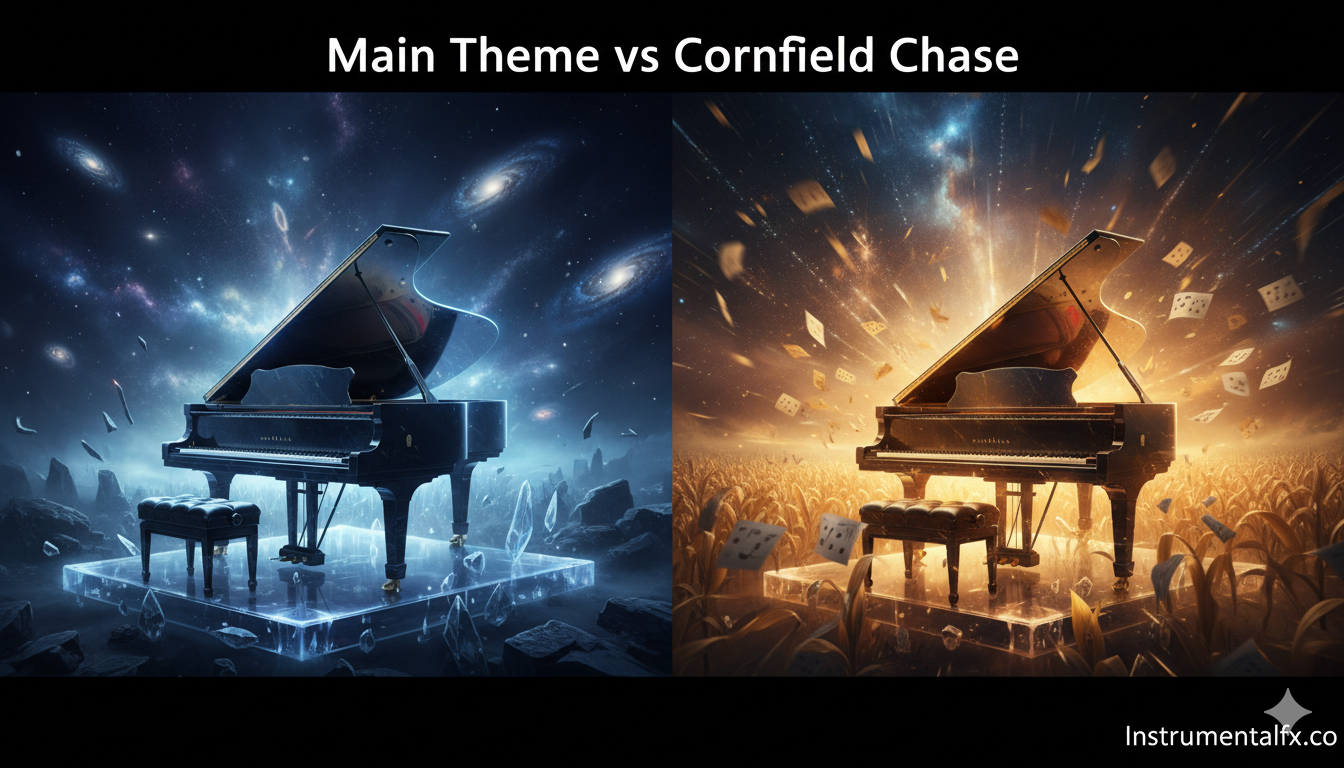
The Interstellar soundtrack features several memorable pieces. The two most popular for piano are the Main Theme and Cornfield Chase, each offering unique musical characteristics.
Interstellar Main Theme
The Main Theme is the soundtrack’s emotional centerpiece. Its slow, contemplative nature makes it ideal for expressive playing and beginner learning.
Built around a simple ascending and descending pattern, the melody repeats with increasing complexity. This structure allows players to master basics before tackling embellishments.
The tempo ranges from 60-72 BPM, giving beginners time to think between notes. Even at slower speeds, the piece maintains its powerful emotional impact.
Typically written in A Minor, the key sits comfortably for most pianists. No excessive sharps or flats make sight-reading more accessible.
Cornfield Chase
Cornfield Chase delivers the soundtrack’s most energetic and uplifting moments. Faster tempo and driving rhythms create urgency and excitement.
The piece features rapid arpeggios in both hands that mimic the orchestral string sections. These patterns require more technical proficiency than the Main Theme.
Tempo typically runs 120-144 BPM, demanding better hand coordination and finger independence. The increased speed makes it more suitable for intermediate players.
Various arrangements place it in C Major or related keys. The brighter tonality matches the piece’s optimistic and adventurous character.
Which Should You Learn First?
Beginners should absolutely start with the Main Theme. Its slower tempo and simpler structure provide a solid foundation while still sounding impressive.
After mastering the Main Theme, progress to Cornfield Chase. The skills developed in the first piece directly apply to the second’s challenges.
Many pianists learn both, creating a mini-recital program. Playing them consecutively showcases different aspects of Zimmer’s compositional genius.
Where to Find Sheet Music
Multiple platforms offer Interstellar piano sheet music ranging from free community arrangements to professional paid versions. Each source provides different benefits depending on your needs.
MuseScore (Free)
MuseScore hosts hundreds of free Interstellar arrangements created by community members. You can download PDF and MIDI files without creating an account.
Quality varies significantly between arrangements. Check ratings, reviews, and preview the first page before downloading.
Advanced search filters help you find specific difficulty levels. Look for arrangements marked “easy,” “beginner,” or your target skill level.
Popular arrangers on MuseScore include Matteo248, philbob1309, and Yannick Langenakens. Their versions receive consistently high ratings and helpful user feedback.
Musicnotes (Paid)
Musicnotes offers professionally edited and licensed sheet music. Arrangements come from verified publishers with guaranteed accuracy to the original composition.
Prices typically range from $5.99 to $14.99 per piece. The investment ensures high-quality notation, proper formatting, and legal licensing.
The platform provides interactive sheet music for tablets and computers. Features include tempo adjustment, playback, and transposition tools.
Customer reviews help identify the best arrangements for your level. Many sheets include difficulty ratings and sample pages.
Sheet Music Plus (Paid)
Sheet Music Plus features arrangements from major publishers including Hal Leonard and Alfred Music. Their catalog includes multiple difficulty levels and arrangement styles.
Digital downloads arrive instantly after purchase. Physical sheet music ships within days for those preferring printed copies.
The “Easy Piano” category specifically targets beginners with simplified versions. Preview pages show exactly what you’re purchasing before checkout.
Noviscore (Paid)
Noviscore specializes in multi-level arrangements of popular music. Their Interstellar collection includes versions from Level 1 (beginner) through Expert.
Each level features the same piece adapted to different skill levels. This allows you to progress through increasingly complex versions as you improve.
The platform offers innovative reading aids including note names and color-coded sheets. These tools help beginners transition to traditional notation reading.
Subscription options provide unlimited access to their entire catalog. Single purchases also available for specific pieces.
Skoove (Interactive Learning)
Skoove provides interactive piano lessons including Interstellar pieces. The platform combines sheet music with step-by-step video tutorials and practice tools.
Real-time feedback listens to your playing and provides correction. This makes it excellent for self-directed learners without regular teacher access.
The app includes both Main Theme and Cornfield Chase with detailed instruction. Monthly subscription required but includes access to hundreds of other songs.
Free Resources
Several websites offer completely free Interstellar sheet music. Pianino, Joyce Music, and various piano teacher blogs provide downloadable PDFs.
Always verify licensing information when downloading free music. Community arrangements fall under different copyright rules than official transcriptions.
YouTube channels often link free sheet music in video descriptions. Tutorial videos pair with the sheets for comprehensive learning support.
Learning Tips for Beginners
Successfully learning Interstellar piano sheet music requires more than just reading notes. These proven strategies accelerate your progress while building proper technique.
Start Hands Separately
Never attempt to learn both hands simultaneously when beginning. Master the right hand melody completely before adding the left hand accompaniment.
Practice each hand until it becomes automatic. You should be able to play while having a conversation or thinking about something else.
Only combine hands once both parts feel comfortable individually. This approach prevents developing bad habits and reduces frustration significantly.
Use the Slow Practice Method
Tempo is your most powerful learning tool. Begin at 40-50% of the final speed, focusing on accuracy over speed.
Set your metronome impossibly slow at first. If the piece should be 72 BPM, start at 40 BPM or even slower.
Increase tempo by just 4-8 BPM increments after achieving complete accuracy. Rushing this process leads to sloppy playing and mistakes that become ingrained.
Break into Small Sections
Divide the sheet music into 2-4 measure segments. Master each segment before connecting them together.
The Interstellar Main Theme naturally divides into clear phrases. Learn phrase by phrase, then connect phrases into larger sections.
Mark your sheet music with bracket symbols showing your practice sections. This organization makes practice sessions more efficient and less overwhelming.
Focus on Rhythm First
Before worrying about expression or dynamics, get the rhythm absolutely correct. Count aloud while playing to internalize the timing.
Use a metronome from day one. This builds steady timing that makes the piece sound professional even at slower speeds.
Clap or tap the rhythm before playing notes. This separates rhythmic learning from note-reading, simplifying the initial learning process.
Add Dynamics Gradually
Once notes and rhythm feel comfortable, introduce dynamic changes. Zimmer’s music relies heavily on crescendos and diminuendos for emotional impact.
Start with just forte and piano distinctions. Add gradual dynamics only after these basic levels feel natural.
Listen to the original soundtrack repeatedly. Understanding Zimmer’s dynamic intentions helps you make informed interpretive choices.
Record Your Practice
Use your phone to record practice sessions. Listening back reveals mistakes your ears miss while playing.
Compare your recordings to the original soundtrack or professional performances. This identifies specific areas needing improvement.
Save recordings from different practice stages. Hearing your progress provides motivation during difficult learning periods.
Practice with Backing Tracks
YouTube offers numerous Interstellar backing tracks without the main melody. These help you practice timing and expression in a fuller musical context.
Playing along with accompaniment reveals timing issues that aren’t obvious in solo practice. It also makes practice more enjoyable and musical.
Start with slower backing tracks, then progress to full tempo. This mimics the experience of playing with an orchestra or ensemble.
Understanding the Musical Structure
Analyzing Interstellar’s musical structure deepens your understanding and improves performance quality. Zimmer employs specific compositional techniques that create the soundtrack’s distinctive character.
Melodic Pattern
The Main Theme builds on a simple ascending and descending scale pattern. This creates a wave-like motion that mirrors space travel and emotional journeys.
The pattern repeats with slight variations throughout. Each repetition adds harmonic complexity while maintaining the recognizable core melody.
Understanding this repetitive structure helps memorization. Instead of learning hundreds of different notes, you’re mastering one pattern with variations.
Harmonic Progression
The piece primarily uses i-VI-III-VII progression in A Minor. This progression creates a melancholic yet hopeful mood perfect for the film’s themes.
The bass line often descends chromatically, adding tension to the simple chord changes. This creates forward momentum even during slow sections.
Recognizing chord patterns helps you anticipate what comes next. This is especially helpful when playing from memory.
Rhythmic Elements
The Main Theme uses predominantly quarter notes and half notes in the melody. This simplicity allows emotional expression to take center stage.
Syncopation appears sparingly, usually at phrase endings for emphasis. The straightforward rhythm makes the piece accessible to beginners.
Cornfield Chase contrasts this with sixteenth-note patterns creating drive and urgency. The rhythmic complexity increases the technical challenge significantly.
Texture and Voicing
The arrangement balances melody, harmony, and bass voices. Each hand has a clear role that contributes to the overall sound.
The left hand typically provides rhythmic and harmonic foundation. The right hand carries the melody with added harmonic support.
Advanced arrangements add a middle voice creating three-part texture. This fuller sound better approximates the orchestral original.
Phrasing
Musical phrases in the Main Theme typically span 4-8 measures. Each phrase follows a question-answer pattern common in Western music.
Breathing between phrases creates natural musical sentences. Think of playing phrases like speaking sentences with appropriate punctuation.
Zimmer’s phrasing builds in intensity throughout the piece. Each repetition should have slightly more emotional weight than the previous one.
Technical Challenges and Solutions
Every difficulty level presents specific technical challenges. Understanding these obstacles and their solutions accelerates learning and prevents frustration.
Hand Independence
The Main Theme requires both hands playing different rhythms simultaneously. This challenges beginners who naturally want hands to move together.
Solution: Practice extremely slowly with a metronome. Count aloud while playing to internalize how the parts fit together.
Start with just one measure combining both hands. Repeat this measure 20-30 times before moving to the next.
Finger Stretches
Some chord voicings require stretching beyond comfortable hand positions. This is especially challenging for players with smaller hands.
Solution: Roll chords slightly instead of playing all notes simultaneously. This technique is standard in piano performance and sounds professional.
Alternatively, remove the lowest or highest note from difficult chords. The essential harmony remains intact with this simplification.
Sustain Pedal Technique
Proper pedaling creates the flowing, connected sound essential to Interstellar’s character. Incorrect pedaling creates muddy, unclear sound.
Solution: Change pedal with each chord change, not measure. Listen carefully to ensure notes don’t blur together.
Practice pedaling separately from playing. Press keys silently while practicing pedal changes to isolate this skill.
Crossing Hands
Advanced arrangements occasionally require the left hand crossing over the right. This feels awkward initially and can cause timing issues.
Solution: Practice the crossover motion without playing notes. Get comfortable with the physical movement before adding musical elements.
Slow practice makes crossovers manageable. At proper tempo, the movement should feel smooth and natural.
Maintaining Tempo
The slow tempo of the Main Theme makes rushing or dragging timing easy. Beginners often unconsciously speed up during easier sections.
Solution: Always practice with a metronome. This external timekeeper prevents tempo fluctuations.
Record yourself and listen critically. Tempo inconsistencies become obvious when listening as an audience member.
Dynamic Control
Creating gradual volume changes while maintaining tone quality challenges players at all levels. Beginners often play everything at one volume.
Solution: Practice dynamic swells on single notes before attempting them in the piece. This isolates the technical skill.
Use your entire arm and body for dynamics, not just fingers. Larger muscle groups provide better control over volume changes.
Reading Ahead
Looking ahead while playing prevents stumbling when encountering difficult passages. Beginners often stare at their hands or the current note.
Solution: Practice sight-reading simpler music to develop this skill. Force yourself to keep eyes on the music, not hands.
Memorize short sections so you can watch your hands during technically demanding passages, then return to reading.
Equipment and Tools You Need
Having the right equipment enhances your learning experience. While a piano or keyboard is essential, additional tools accelerate progress significantly.
Piano or Keyboard
An acoustic piano provides the best touch and sound quality. The weighted keys develop proper finger strength and technique.
Digital pianos offer excellent alternatives with weighted keys and headphone capability. This allows practice without disturbing others.
Minimum 61-key keyboards work for Interstellar pieces, though 88 keys are preferable. Weighted or semi-weighted keys help develop proper technique.
Music Stand
A proper music stand positions sheet music at correct eye level. This prevents neck strain during extended practice sessions.
Adjustable stands accommodate different seating heights and piano types. Sturdy construction prevents sheets from falling during performance.
Clip-on tablet holders work for digital sheet music. These often provide better portability for students moving between locations.
Metronome
Digital metronomes offer precise timing with visual and audible cues. Many apps provide free metronome functionality on smartphones.
Mechanical metronomes create a traditional tick-tock sound some pianists prefer. They require no batteries and never need charging.
Integration with learning apps provides synchronized metronome features. These adjust tempo automatically as you progress through difficulty levels.
Pencil for Annotations
Always keep a pencil at your piano for marking sheet music. Note fingerings, dynamics, and tricky passages directly on the score.
Use erasable pencil rather than pen. Your interpretations and needs will change as skills develop.
Color-coded highlighting can mark different sections or hands. This visual organization helps during practice sessions.
Recording Device
Your smartphone provides adequate recording quality for practice purposes. Regular recordings track progress and identify improvement areas.
External microphones improve sound quality significantly. This helps when sharing recordings or evaluating subtle technique issues.
Video recording captures body posture and hand position. Visual feedback reveals technical issues invisible during playing.
Tablet or Computer
Digital sheet music on tablets eliminates page turns. Many apps offer annotation tools and automatic page-turning features.
Computer access allows downloading sheet music and accessing online tutorials. Larger screens help when initially learning pieces.
Split-screen functionality lets you view sheet music and tutorial videos simultaneously. This maximizes learning efficiency during practice.
Common Mistakes to Avoid
Recognizing and avoiding common mistakes prevents developing bad habits. These pitfalls affect pianists at every skill level learning Interstellar sheet music.
Rushing the Learning Process
Many pianists attempt full tempo too quickly. This leads to mistakes becoming permanent and sloppy technique.
Take weeks or months to properly learn the piece. Professional pianists spend months on new repertoire despite their advanced skills.
Celebrate small victories at each practice session. Progress comes from consistent, patient work rather than heroic marathon sessions.
Ignoring Dynamics
Playing all notes at the same volume creates flat, uninteresting performances. Zimmer’s music specifically requires dynamic variation for emotional impact.
Mark dynamic intentions clearly on your sheet music. Plan your expressive choices rather than hoping they happen spontaneously.
Exaggerate dynamics during practice. What feels too extreme while playing often sounds appropriate to listeners.
Poor Posture
Slouching or sitting too far from the piano causes tension and limits technical ability. Proper posture prevents injury and improves sound quality.
Sit at proper height with forearms parallel to the floor. Your elbows should be slightly higher than the keyboard.
Keep wrists relaxed and slightly elevated. Collapsed or overly arched wrists cause strain and limit finger independence.
Neglecting Fingering
Random fingering forces relearning passages each practice session. Consistent fingering builds muscle memory and reliability.
Write fingering numbers on your sheet music. Follow these consistently until they become automatic.
Use logical fingering that minimizes hand movement. Smooth transitions between positions improve musical flow.
Skipping Warm-ups
Starting with difficult repertoire without warming up risks injury and frustration. Cold muscles don’t respond with the needed precision.
Spend 5-10 minutes on scales, arpeggios, or simple exercises. This prepares your hands physically and mentally for practice.
Play through easier pieces you’ve already mastered. This builds confidence before tackling challenging new material.
Practicing Mistakes
Repeating incorrect passages embeds errors in muscle memory. Once established, mistakes become difficult to correct.
Stop immediately when you make a mistake. Go back and play the passage correctly before continuing.
If a section consistently trips you up, it’s too difficult at current tempo. Slow down until you can play it perfectly.
Comparing to Professionals
Watching virtuoso performances can be discouraging when you’re struggling with basics. Remember that professionals have thousands of practice hours behind them.
Focus on your own progress rather than comparisons. The only meaningful comparison is yourself from previous weeks or months.
Use professional recordings for inspiration and musical ideas, not as standards you must immediately match.
Performance Tips
Performing Interstellar piano sheet music for others requires different preparation than solo practice. These strategies help you deliver confident, musical performances.
Memorization Strategies
Memorize in small sections, combining them gradually. Never attempt to memorize the entire piece at once.
Use multiple memorization methods: visual (seeing the sheet music), aural (hearing the music), kinesthetic (feeling the movements), and analytical (understanding the structure).
Practice performing from memory regularly. The experience of playing without music builds confidence for actual performances.
Managing Performance Anxiety
Everyone experiences nervousness before performing. Channel that energy into excitement rather than fear.
Practice performing for friends and family first. These low-stakes performances build confidence before larger audiences.
Develop a pre-performance routine that calms nerves. Deep breathing, visualization, or physical exercise all help manage anxiety.
Concert Preparation
Simulate performance conditions during practice. Play straight through without stopping, just as you would in concert.
Practice entering, sitting, and beginning multiple times. These transitions often feel awkward without rehearsal.
Plan what you’ll do if you make a mistake. Having a recovery strategy reduces fear of errors derailing your performance.
Stage Presence
Your visual presentation matters as much as your sound. Sit confidently with good posture throughout the performance.
Pause before beginning to collect yourself mentally. This moment of silence creates anticipation and shows professionalism.
Acknowledge applause gracefully with a bow or nod. Your acknowledgment completes the performance experience for the audience.
Choosing Performance Venue
The Interstellar soundtrack works beautifully in intimate settings. Coffee houses, small recitals, or home concerts showcase it perfectly.
Acoustic considerations matter significantly. The piece requires a quiet environment where subtle dynamics can be heard.
Practice in the performance space if possible. Familiarity with the piano and acoustics reduces day-of anxiety.
Beyond the Basics: Advanced Techniques
Once you’ve mastered basic versions, advanced techniques add professional polish and personal interpretation. These concepts elevate performances from accurate to exceptional.
Rubato and Tempo Flexibility
Rubato means “robbed time” – slightly speeding up or slowing down for expressive purposes. The Main Theme benefits tremendously from subtle rubato.
Add slight ritardandos at phrase endings. This creates natural musical breathing that mirrors human speech patterns.
Accelerate slightly during emotional climaxes. The increased energy heightens dramatic moments without sacrificing control.
Voicing Techniques
Voicing emphasizes certain notes within chords while de-emphasizing others. This creates depth and clarity in complex passages.
Bring out the top note in right-hand chords. This keeps the melody prominent even when harmonized.
Balance bass notes to support without overpowering. The foundation should be felt more than heard.
Pedaling Nuances
Advanced pedaling goes beyond basic sustain. Half-pedaling, flutter pedaling, and other techniques add sonic richness.
Use half-pedal for sustained notes that need slight clarity. This technique requires sensitive listening and control.
Change pedal on weak beats occasionally for rhythmic interest. This syncopated pedaling adds subtle momentum.
Creating Your Own Arrangement
Once comfortable with existing arrangements, create your own version. This develops musicianship and personal expression.
Start with a professional transcription as your foundation. Make small modifications that suit your technical ability and musical taste.
Experiment with different voicings and octaves. Sometimes moving a passage up or down an octave improves playability or sound.
Improvisation Elements
The repetitive nature of Interstellar themes invites improvisation. Add personal touches while respecting Zimmer’s core ideas.
Vary the accompaniment pattern each time the theme repeats. Different arpeggios or chord voicings maintain listener interest.
Create an introduction or coda not in the original. These personal touches make the performance uniquely yours.
Sheet Music Formats Explained
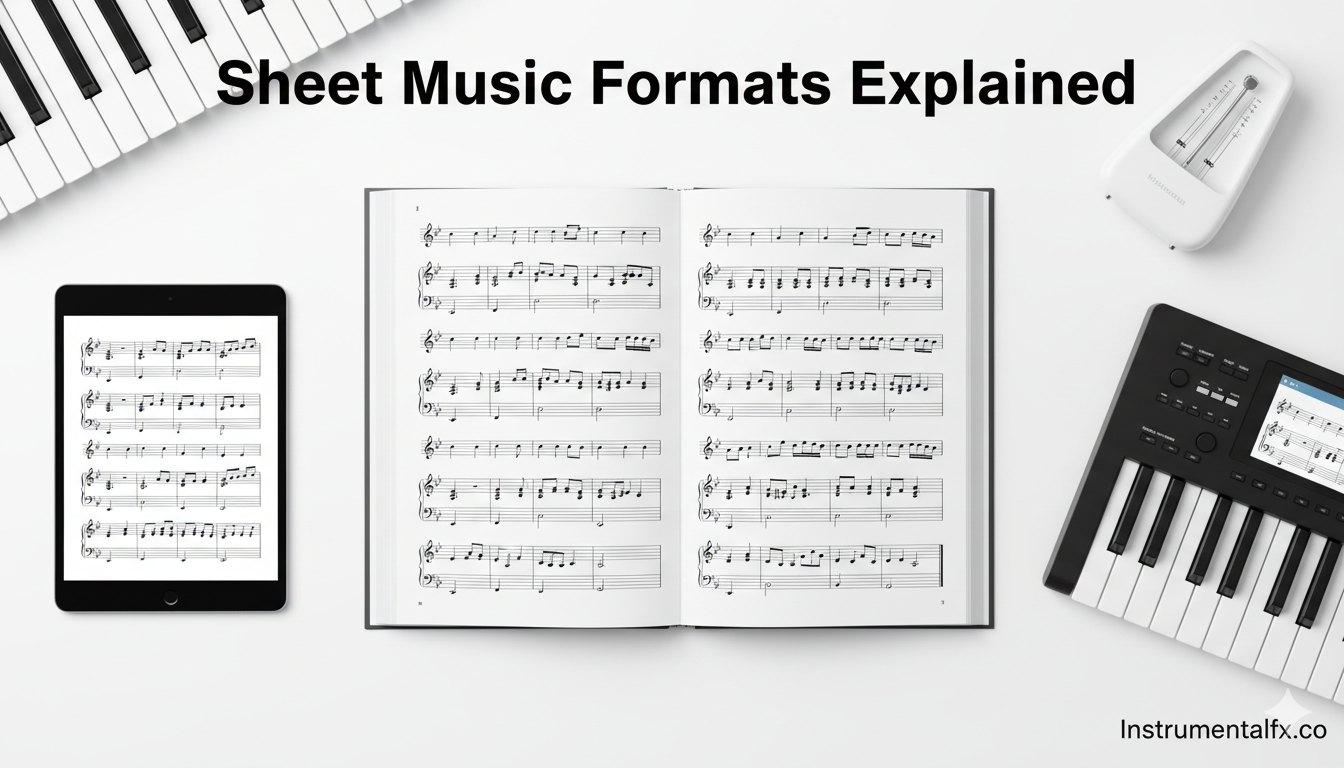
Interstellar piano sheet music comes in various digital and physical formats. Understanding these options helps you choose the best version for your needs.
PDF Format
PDF files maintain consistent formatting across all devices. They print reliably and preserve all notation details exactly as arranged.
Download PDFs to your device for offline access. No internet connection needed once files are saved locally.
Annotation apps allow you to mark PDFs digitally. This eliminates the need for printing while still enabling personalized markings.
MIDI Format
MIDI files contain musical data rather than visual notation. They play back through music software, letting you hear the piece.
Import MIDI files into notation software to create custom sheet music. Adjust keys, tempo, or difficulty to match your needs.
Practice along with MIDI playback at any tempo. Slow down difficult sections without affecting pitch.
MusicXML Format
MusicXML files transfer between different music notation programs. This universal format ensures compatibility across software platforms.
Edit arrangements in your preferred notation software. Change anything from notes to formatting to dynamics.
MusicXML preserves more musical information than MIDI. Dynamics, articulations, and other performance markings transfer correctly.
Interactive Digital Scores
Apps like Musicnotes and Skoove offer interactive sheet music. These respond to your playing and provide real-time feedback.
Auto-scrolling follows your tempo, eliminating page turns. Focus remains on playing rather than managing paper.
Transposition features let you change keys instantly. This helps match your vocal range or explore different tonalities.
Printed Sheet Music
Traditional printed scores offer reliability without technology dependence. No batteries, screens, or software updates required.
High-quality printing ensures clear, professional notation. Properly bound scores last for years with proper care.
The physical connection to music some pianists prefer. Many find printed music more satisfying than digital alternatives.
Learning Resources Beyond Sheet Music
Sheet music provides notes, but comprehensive learning requires additional resources. These tools accelerate progress and deepen understanding.
YouTube Tutorials
Countless pianists have created Interstellar tutorials. These range from complete step-by-step lessons to quick tips for specific passages.
Channels like HDpiano, Piano Tutorial Easy, and Rousseau provide free, high-quality instruction. Many include both hands separately and combined.
Slow-motion tutorials help you see exact fingerings and hand movements. This visual learning complements written sheet music perfectly.
Online Piano Courses
Platforms like Playground Sessions, Simply Piano, and Flowkey offer structured Interstellar lessons. Monthly subscriptions provide access to extensive song libraries.
Interactive features provide feedback on accuracy and timing. This guided practice helps when you don’t have a regular teacher.
Progress tracking motivates continued learning. Seeing your improvement over weeks and months builds confidence.
Piano Teacher Guidance
Nothing replaces personalized instruction from an experienced teacher. They identify specific issues and provide customized solutions.
Teachers prevent bad habits before they form. Early correction saves countless hours of later remediation.
Weekly lessons provide accountability and structure. Regular practice becomes easier with scheduled progress checkpoints.
Sheet Music Communities
Forums like r/piano on Reddit and Piano World offer advice and encouragement. Experienced players answer questions and provide feedback.
Share recordings for constructive criticism. Community feedback identifies blind spots in your playing.
Discover new arrangements and learning resources through community recommendations. Fellow learners often have the best practical tips.
Music Theory Resources
Understanding music theory deepens your interpretation and accelerates learning. Resources like musictheory.net provide free, comprehensive theory education.
Learn how chords function within keys. This knowledge helps you memorize and improvise more effectively.
Analyze Zimmer’s compositional choices with theory knowledge. Understanding why certain progressions work informs your interpretive decisions.
Interstellar in Educational Settings
Music teachers increasingly include Interstellar in their curricula. The piece offers unique educational benefits while engaging students through familiar, loved music.
Benefits for Students
Film music motivates students more than traditional classical repertoire. Students already know and love the piece before beginning lessons.
The emotional connection to the film enhances practice dedication. Learning music from a beloved movie feels purposeful and exciting.
Success with Interstellar builds confidence for tackling classical pieces. Students realize they can master substantial, impressive music.
Curriculum Integration
Teachers use Interstellar to teach various musical concepts. The piece demonstrates phrase structure, dynamics, and emotional expression excellently.
Group classes can perform arrangements together. Multiple difficulty levels allow mixed-ability groups to play the same piece.
Interstellar connects to broader discussions about film scoring and contemporary composition. Students learn how music enhances storytelling.
Recital Programming
The piece works beautifully in student recitals. Its familiarity ensures audience appreciation even from non-musicians.
Different students can perform different difficulty levels of the same piece. This showcases individual growth while maintaining thematic consistency.
Pairing Interstellar with classical pieces demonstrates connections between old and new music. This broadens students’ musical perspective.
Assessment Opportunities
Teachers use Interstellar for evaluating various skills. Technical facility, musicality, and memorization can all be assessed through this piece.
The clear structure makes grading criteria straightforward. Students understand exactly what they’re being evaluated on.
Recording assignments work well with this material. Students’ personal interpretations showcase individual artistry and understanding.
The Cultural Impact
Interstellar’s music transcends the film, becoming a cultural phenomenon in its own right. Understanding this context enriches your relationship with the piece.
Award Recognition
Hans Zimmer received multiple nominations for the Interstellar soundtrack. The Academy Award nomination, Grammy nomination, and numerous other accolades recognized its exceptional quality.
Critics praised Zimmer’s restraint and emotional depth. The soundtrack defied expectations for blockbuster film scores with its intimate approach.
Popularity Among Pianists
Interstellar consistently ranks among the most-requested modern film music. Piano students worldwide cite it as dream repertoire they aspire to play.
Social media features thousands of Interstellar piano covers. Amateur and professional recordings demonstrate the piece’s universal appeal.
The piece has become a gateway to classical piano for many. Film music fans discover piano through their love of soundtracks like Interstellar.
Concert Performances
Professional pianists increasingly program Interstellar in concerts. Its crossover appeal attracts audiences who might not attend traditional classical concerts.
Film-music-focused concerts consistently feature Interstellar pieces. These events sell out venues globally, demonstrating the music’s commercial viability.
Symphony orchestras perform the full soundtrack with piano soloists. These productions bring Zimmer’s music to prestigious concert halls worldwide.
Streaming Statistics
Interstellar soundtrack streams number in the hundreds of millions across platforms. The music has outlived typical soundtrack relevance, remaining popular years after release.
Piano cover videos generate millions of views. This user-generated content keeps the music in public consciousness and introduces it to new listeners.
Frequently Asked Questions
1. What is Interstellar Piano Sheet Music 2026 – Beginner Friendly?
It refers to simplified piano sheet music versions of the famous Interstellar movie soundtrack, arranged in 2026 for beginners with easy notes, slow tempo, and simple hand positions.
2. Is Interstellar piano music suitable for beginners?
Yes, beginner-friendly versions use basic chords, simple melodies, and limited hand movement, making them ideal for new piano learners.
3. Which Interstellar songs are included in beginner sheet music?
Common tracks include Cornfield Chase, Day One, Stay, No Time for Caution, and Main Theme, arranged in easy piano format.
4. Do I need to know how to read music to play it?
Basic knowledge of reading piano notes is helpful, but many 2026 editions also include letter-note versions for absolute beginners.
5. Are finger numbers included in the sheet music?
Yes, most beginner editions provide finger placement numbers to help players know which fingers to use.
6. Can kids play Interstellar piano sheet music?
Yes, simplified versions are perfect for kids learning piano, especially those who enjoy movie soundtracks.
7. Is Interstellar sheet music available in PDF format?
Yes, most 2026 beginner editions are downloadable as PDF files for easy printing or tablet use.
8. How long does it take to learn an Interstellar song?
Beginners can usually play a simple Interstellar theme within 1–2 weeks with regular practice.
9. Can I play this on a keyboard instead of a piano?
Yes, the sheet music works perfectly on both digital keyboards and acoustic pianos.
10. Is Interstellar piano sheet music copyrighted?
The original music is copyrighted, but authorized sheet music editions are legally sold and safe to use.